
Jalapeño vs Poblano Pepper – Heat & Flavor Compared
The jalapeño and poblano are both Mexican-born members of C. annuum, yet they land in completely different heat territories. Jalapeños clock in at 2,500–8,000 SHU while poblanos register so low they're often treated more like a vegetable than a hot pepper. Understanding where each sits changes how you cook with them entirely.

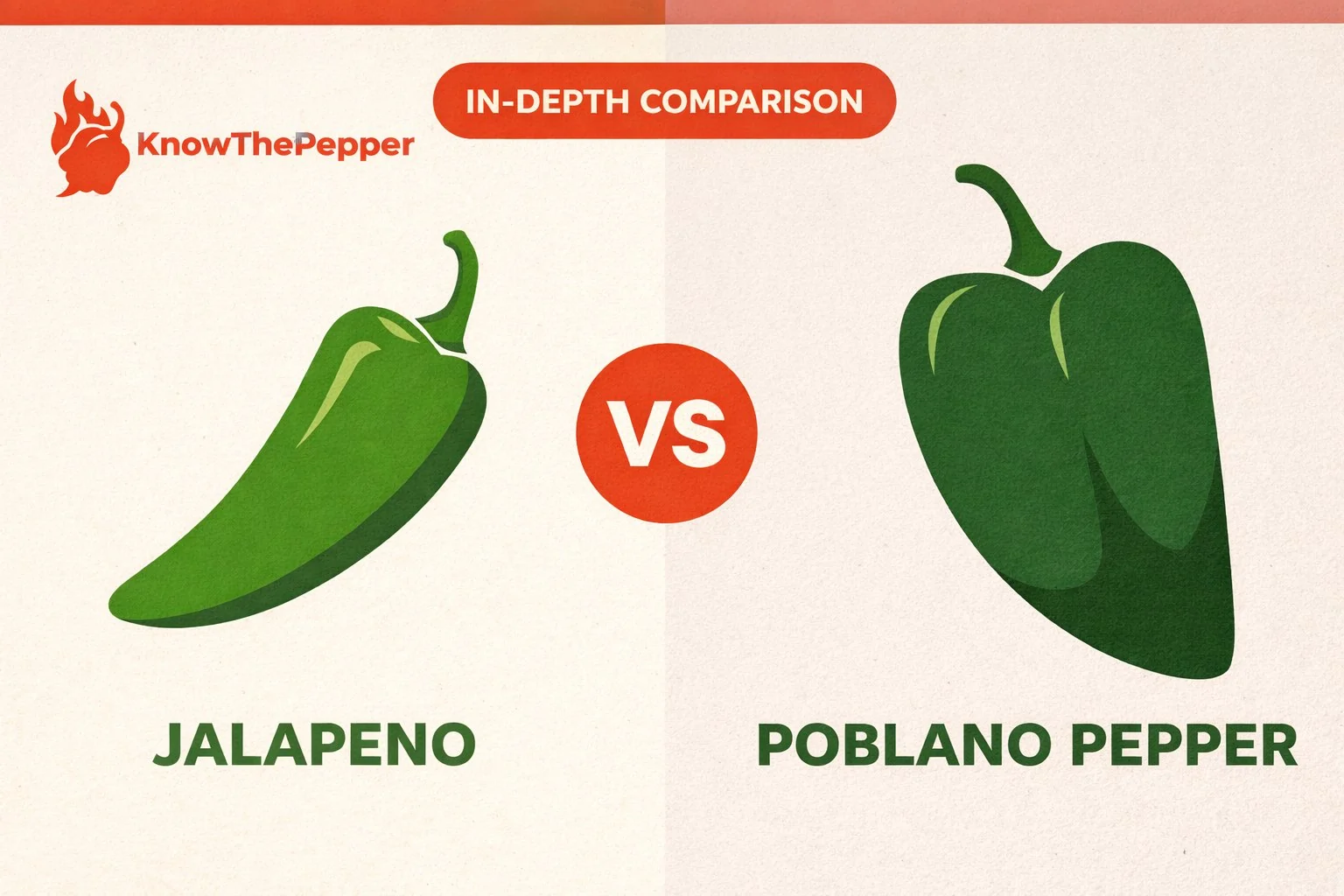
Jalapeño measures 3K–8K SHU while Poblano Pepper registers 1K–2K SHU — making Jalapeño 4× hotter. Jalapeño is known for its bright and grassy flavor (C. annuum), while Poblano Pepper offers earthy and rich notes (C. annuum).
- Heat difference: Jalapeño is 4× hotter
- Species: Both are C. annuum
- Best for: Jalapeño excels in everyday cooking and salsas, Poblano Pepper in fresh salsas and mild recipes
Jalapeño
MediumPoblano Pepper
MediumJalapeño vs Poblano Pepper Comparison
Jalapeño vs Poblano Pepper Heat Levels
The first time I grabbed a poblano thinking it would add some kick to a weeknight stir-fry, I was genuinely surprised — it tasted more like a rich, slightly earthy bell pepper than anything I'd call spicy. That experience clarified something: these two peppers aren't just different in degree, they're different in kind.
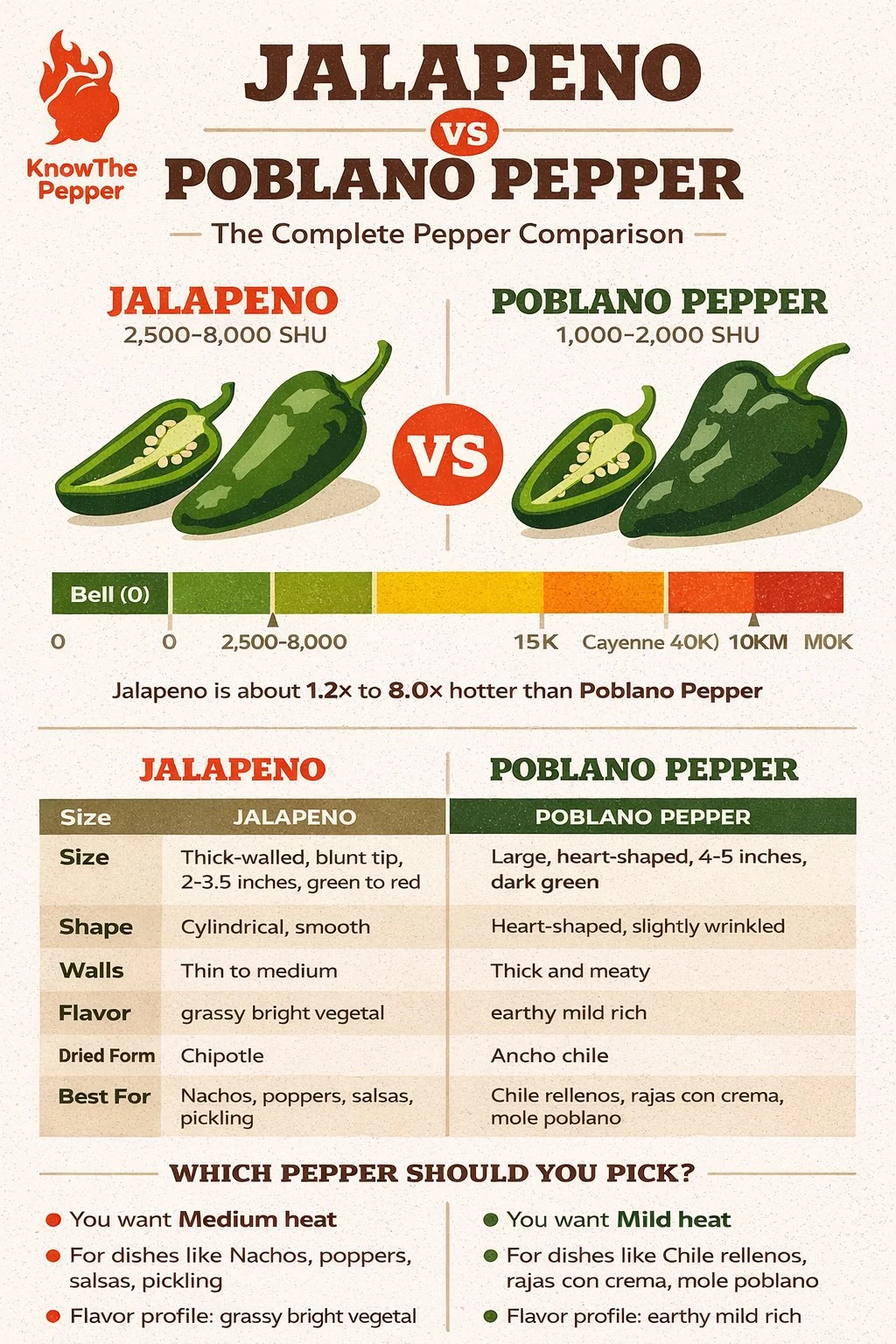
The jalapeño's position on the mild-to-medium scale sits at 2,500–8,000 SHU, with most grocery store specimens landing around 3,500–4,000 SHU. Poblanos, by contrast, measure somewhere in the range of 1,000–2,000 SHU — occasionally creeping toward zero on the Scoville scale, which is why dried poblanos (ancho chiles) can taste almost sweet.
To put that in perspective using a reference point beyond the usual jalapeño comparison: a guajillo's moderate dried-chile heat at roughly 2,500–5,000 SHU still outpaces a typical poblano by two to three times. The jalapeño, at its hottest, is approximately 4–8 times hotter than a poblano.
The burn character differs too. Jalapeño heat hits the front of the tongue and lips quickly — a bright, almost sharp sensation that fades within a minute or two. Poblano heat, when present at all, is a background warmth that you notice more as mild tingle than actual burn. Both belong to the broader C. annuum botanical family, which explains their structural similarities, but capsaicin expression varies wildly within this species. For a deeper look at why peppers trigger that burning sensation, the chemistry behind capsaicin receptor binding is worth understanding.
Flavor Profile Comparison
Few peppers have earned their reputation as thoroughly as the jalapeño.
Pick up a fresh poblano and the first thing you notice is the weight.
Strip the heat out of the equation and you're left with two genuinely distinct flavor profiles. The jalapeño is bright and grassy — there's a green, almost vegetal sharpness that you notice even before the burn registers. Slice one fresh and the aroma alone signals that characteristic snap. It pairs naturally with acidic ingredients like lime and tomato because the flavors reinforce each other rather than competing.
The poblano operates in a different register entirely. Fresh poblanos have a deep, almost smoky sweetness with an earthy undertone — somewhere between a green bell pepper and a mild ancho chile. The flesh is thick and meaty, which is part of why they're the go-to choice for stuffed preparations. When roasted, the skin blisters easily and the interior sweetens further, developing complexity that no amount of jalapeño roasting quite replicates.
Aroma-wise, the jalapeño carries a sharper, more pungent nose — you know it's in the pan. Poblanos are more subtle; their fragrance is almost nutty when charred. These Mexican-origin peppers diverged in their culinary roles precisely because of these flavor differences: jalapeños became the workhorse of fresh salsas and pickled condiments, while poblanos anchored slow-cooked sauces and stuffed dishes.
For cooks who find jalapeños too assertive for certain dishes, the poblano offers a way to add pepper flavor without the heat distraction. The reverse is also true — if a recipe needs that grassy brightness, a poblano simply cannot replicate it, no matter how many you use.
Culinary Uses for Jalapeño and Poblano Pepper
Jalapeños show up in places where you want immediate heat and bright flavor: fresh pico de gallo, nachos, jalapeño poppers, pickled rings on sandwiches, and blended hot sauces. Their firm flesh holds up to pickling exceptionally well, and they're one of the few peppers that works raw in nearly every application without overwhelming a dish.
Poblanos are built for different work. Chiles rellenos — the classic stuffed pepper dish — exists because of the poblano's thick walls and mild flavor. They're large enough to stuff with cheese, picadillo, or rice, then battered and fried without falling apart. Mole negro and mole poblano both rely on dried poblanos (ancho chiles) for body and depth. Roasting and peeling poblanos is a standard prep step in Mexican cooking, and the step-by-step process for roasting and handling peppers makes a real difference in final texture.
When substituting one for the other, the ratio and intent matter:
- Jalapeño → Poblano: Use 1 medium poblano for every 2–3 jalapeños when you want pepper bulk without heat. Expect a flavor shift toward earthy sweetness. - Poblano → Jalapeño: Use 1 jalapeño for every 2–3 poblanos, and expect significant heat increase. Add a small amount of green bell pepper to compensate for lost volume.
For heat-adjacent comparisons, the mild-heat banana pepper versus jalapeño matchup is worth reading if you're trying to dial heat down incrementally rather than jumping straight to poblano territory.
In Tex-Mex cooking, jalapeños dominate. In central Mexican cooking, poblanos take the lead. Knowing which cuisine you're working in often answers the substitution question before you even start measuring.
Which Should You Choose?
If heat is the point, jalapeño wins without contest — its 2,500–8,000 SHU range delivers reliable kick that poblanos simply don't offer. For fresh salsas, quick pickles, or any dish where you want pepper heat front and center, jalapeño is the obvious call.
But for stuffed preparations, moles, roasted pepper dishes, or any recipe where pepper flavor should support rather than dominate, the poblano's thick walls and earthy depth are irreplaceable. No other common pepper replicates that combination of size, mildness, and roastable complexity.
The bird's eye versus jalapeño heat contrast illustrates how much range exists even within 'medium' heat peppers — poblano sits well below that entire conversation. These two peppers don't really compete; they solve different problems. Keep both in your kitchen and treat them as complementary tools rather than interchangeable options.
Can You Substitute One for the Other?
Yes — direct substitution works. Jalapeño and Poblano Pepper are close enough in heat to swap at roughly 1:1. The main difference will be flavor. For more swap options, explore ranked alternatives with conversion ratios.
Growing Jalapeño vs Poblano Pepper
If you’re deciding which pepper to grow at home, consider your climate and patience level. Jalapeño and Poblano Pepper have different maturation times and temperature preferences. Hotter varieties generally need a longer, warmer growing season to develop their full capsaicin content. Our zone-based planting date tool can pinpoint the best sowing window for your area.
Jalapeños are among the most forgiving hot peppers to grow, but they do have preferences worth knowing.
Start seeds indoors 8–10 weeks before your last frost date. Soil temperature for germination should stay between 75–85°F — a heat mat under the seed tray makes a real difference in germination speed and uniformity.
Transplant outdoors once nighttime temps stay consistently above 55°F. Jalapeños want full sun — at least 6 hours daily — and well-drained soil with a pH around **6.
Poblanos are rewarding garden plants, but they need a long season. Start seeds indoors 10-12 weeks before your last frost date — this is one case where rushing transplant time costs you yield.
For a full breakdown of seed-starting methods and timing, the complete pepper growing guide covers everything from soil mix to hardening off. Poblanos specifically want consistent moisture — irregular watering leads to blossom end rot and cracked fruit.
Transplant into full sun once nighttime temps stay above 55°F. Space plants 18-24 inches apart; they can reach 3 feet tall with good conditions.
History & Origin of Jalapeño and Poblano Pepper
Both peppers carry centuries of culinary heritage. Jalapeño traces its roots to Mexico, while Poblano Pepper originates from Mexico. Understanding their backstory helps explain why each pepper developed its distinctive traits.
Buying & Storage
Whether you’re shopping for Jalapeño or Poblano Pepper, the same quality indicators apply. Fresh peppers should feel firm and heavy for their size, with taut, glossy skin and no soft or wet spots. Minor stem cracks known as “corking” are perfectly normal and often indicate a mature, flavorful pod.
- Firm pods with taut skin and consistent color
- Should feel heavy relative to size
- Minor stem cracks (“corking”) are normal
- Avoid anything soft, shriveled, or with dark wet spots
- Fresh: Paper bag, crisper drawer — 1–2 weeks
- Frozen: Wash, dry, freeze on sheet pan — 6+ months
- Dried: Airtight, away from light — up to 1 year
The Verdict: Jalapeño vs Poblano Pepper
Jalapeño and Poblano Pepper sit in the same heat tier but serve different roles. Jalapeño delivers 4× more heat with its distinctive bright and grassy character. Poblano Pepper, with its earthy and rich profile, excels in everyday cooking.
Frequently Asked Questions
Related Comparisons
Sources pending verification.
