Gochugaru vs Urfa Biber: Taste, Heat & When to Use Each
Gochugaru and Urfa Biber are both dried, ground chilies with smoky personalities, but they land in different heat brackets and bring distinctly different characters to the table. Gochugaru runs 1,500-10,000 SHU while Urfa Biber sits at a quieter 500-1,500 SHU - meaning the Korean chili can hit up to six times the heat of its Turkish counterpart. The flavor gap is just as interesting as the heat gap.

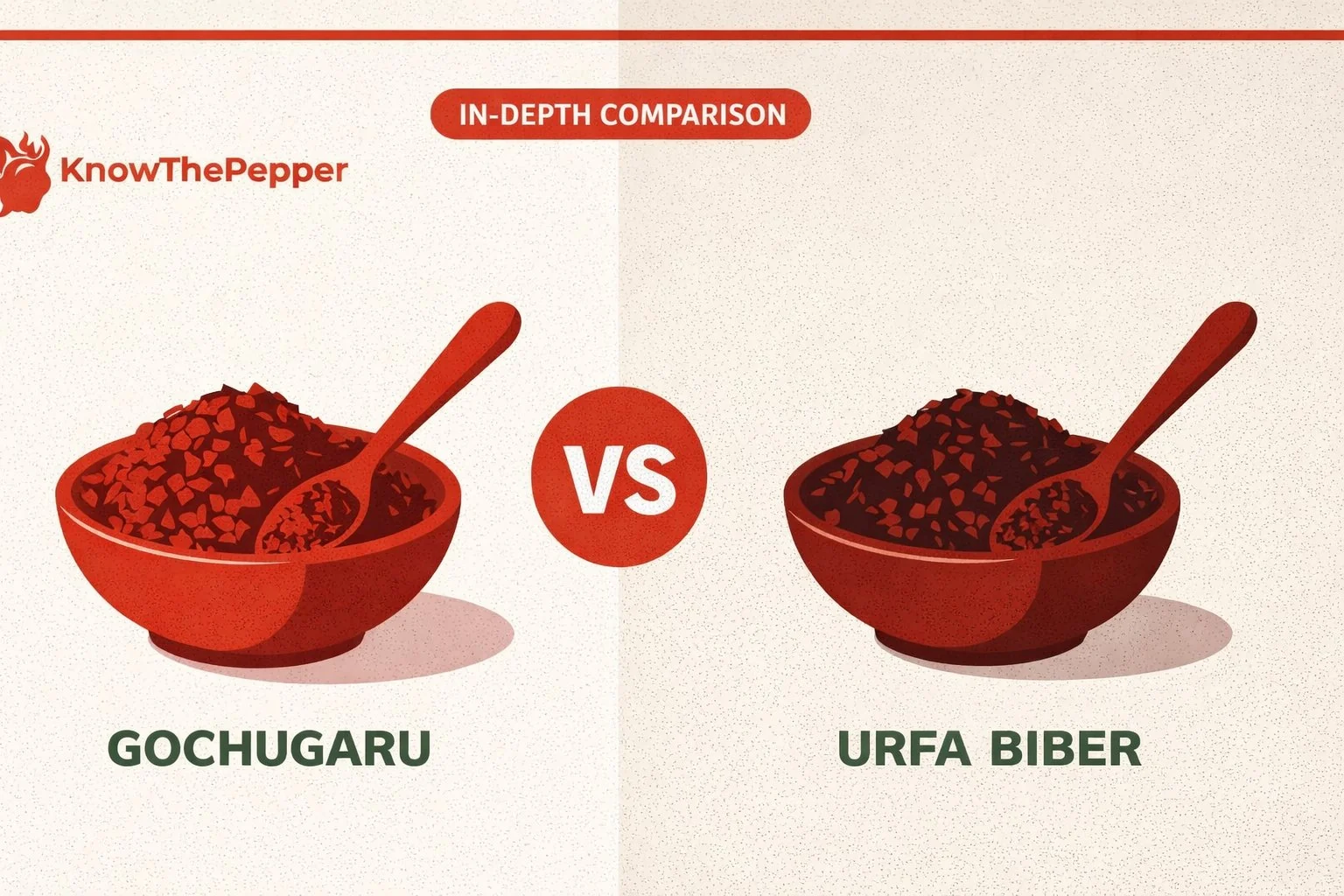
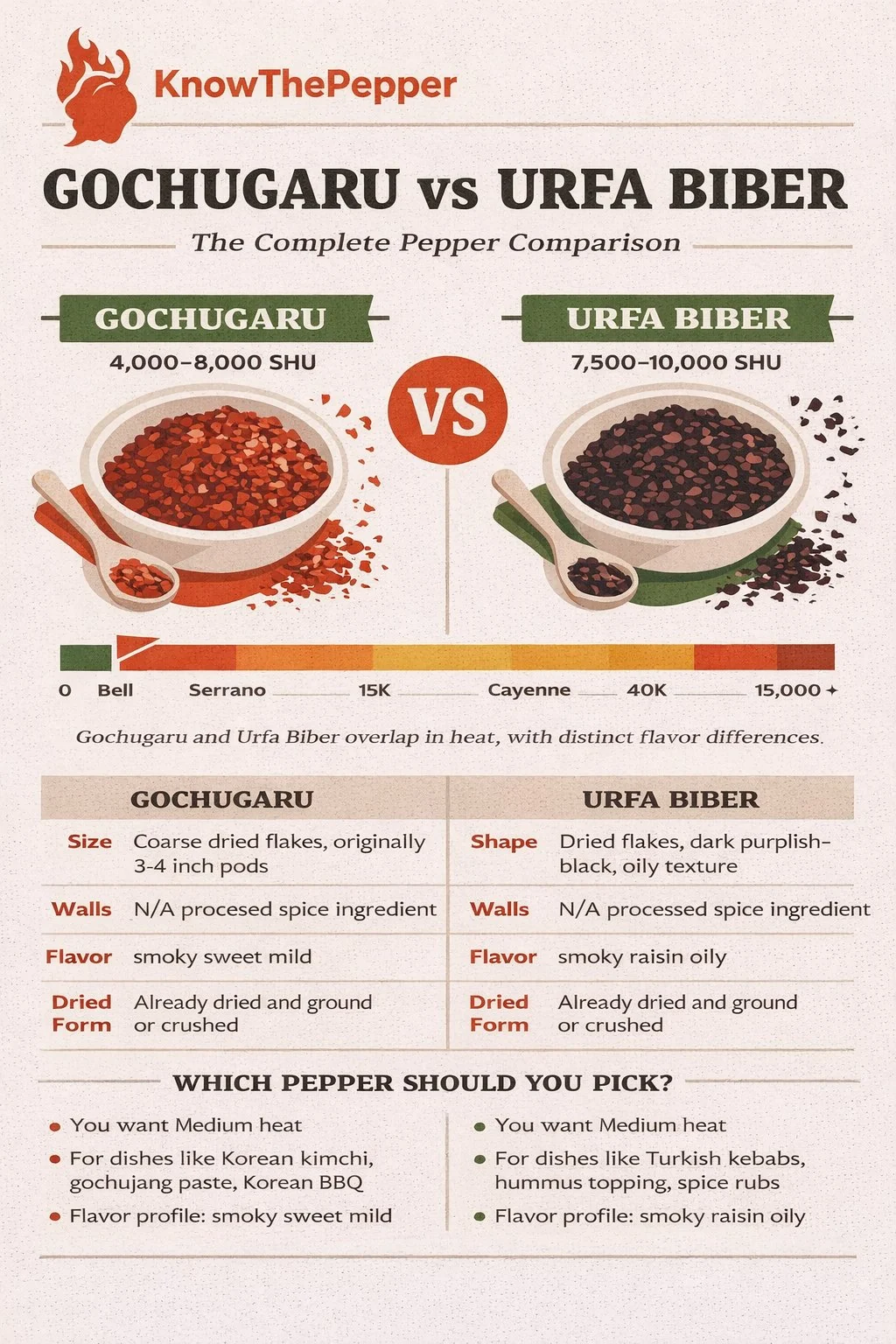
Gochugaru measures 2K–10K SHU while Urfa Biber registers 500–2K SHU — making Gochugaru 7× hotter. Gochugaru is known for its smoky and sweet flavor (C. annuum), while Urfa Biber offers smoky and earthy notes (C. annuum).
- Heat difference: Gochugaru is 7× hotter
- Species: Both are C. annuum
- Best for: Gochugaru excels in everyday cooking and salsas, Urfa Biber in fresh salsas and mild recipes
Gochugaru vs Urfa Biber Comparison
Gochugaru vs Urfa Biber Heat Levels
The first time I cooked with both of these in the same week, I kept reaching for the wrong jar. They look deceptively similar - both reddish-brown, both coarsely ground - but the heat experience is completely different.
Gochugaru sits in the hot pepper intensity band at 1,500-10,000 SHU, a range that puts it at roughly 0.5x to 3x the heat of a guajillo chili. That's a wide internal range - Korean recipes often specify sun-dried gochugaru for milder preparations and shade-dried for more punch. The heat builds gradually and lingers without being aggressive.
Urfa Biber is considerably gentler at 500-1,500 SHU, placing it at the upper edge of the mild-to-medium heat zone. Compared to a guajillo, Urfa Biber is roughly 0.15x to 0.5x as hot. You're getting warmth more than heat - a slow, low simmer rather than a proper burn.
The character of the heat differs too. Gochugaru's capsaicin hits the palate more directly and brightly. Urfa Biber's warmth feels almost muffled by the pepper's natural oiliness - it's there, but wrapped in so much earthy depth that it registers as background warmth. Understanding why peppers produce that burning sensation helps explain why the same SHU number can feel different depending on a pepper's fat and sugar content, and Urfa Biber's high oil content genuinely softens the perceived heat.
Flavor Profile Comparison
The first time I cooked with gochugaru, I expected something close to crushed red pepper flakes.
If you judge urfa biber by its heat, you're missing the point.
Heat aside, the flavor gap between these two is where things get really interesting.
Gochugaru leads with a clean, fruity sweetness before the smoke arrives. There's a brightness to it - almost berry-like - that makes it pop in fresh preparations like kimchi or bibimbap sauce. The smokiness is present but secondary, and the overall profile is more vibrant than heavy. Think of it as smoke with a sunny disposition. This reflects the sun-drying tradition of Korean pepper cultivation, where the drying process preserves more of the pepper's natural sugars.
Urfa Biber is the opposite in temperament. The smokiness here is deep and almost chocolatey, with an earthy, slightly wine-like quality that develops during a unique two-stage drying process - sun-dried during the day, then wrapped at night to sweat. This method, specific to the Urfa region's pepper-making tradition, concentrates oils and creates that characteristic dark, raisin-like depth. The sweetness is there, but it's dried-fruit sweet rather than fresh-fruit sweet.
Gochugaru's aroma is bright and peppery. Urfa Biber smells almost savory from the moment you open the bag - more like a spice blend than a single chili. In cooking, gochugaru adds color and a vivid pop; Urfa Biber adds depth and a brooding richness that's harder to pin down. They're both smoky, but in the same way that a campfire and a whisky barrel are both smoky - technically true, completely different in practice.
Culinary Uses for Gochugaru and Urfa Biber
These two chilies operate in different culinary worlds, even though they share some surface-level characteristics.
Gochugaru is the backbone of Korean cooking. It's non-negotiable in kimchi, where its color, heat, and sweetness all pull equal weight. It shows up in gochujang paste, tteokbokki sauce, sundubu jjigae, and countless banchan preparations. For a direct comparison with another Korean-adjacent dried chili, the gochugaru vs. red pepper flakes matchup is worth reading - they're often swapped in a pinch but behave very differently. Outside Korean cooking, gochugaru works well in marinades, spice rubs, and anywhere you want color plus mild-to-moderate heat. A tablespoon stirred into a tomato-based sauce adds complexity without overwhelming.
Urfa Biber belongs to Turkish and broader Middle Eastern cooking - kebabs, muhammara, braised lamb, lentil soups, and egg dishes. Its high oil content means it blooms beautifully in fat, making it ideal for finishing dishes with a quick drizzle of olive oil. A pinch over hummus, crumbled into labneh, or scattered over roasted eggplant does more than heat - it adds a visual and flavor dimension that's hard to replicate.
For substitution: if a recipe calls for gochugaru and you only have Urfa Biber, use 1.5x the amount and accept a darker, earthier result. Going the other direction - replacing Urfa Biber with gochugaru - use 0.75x the quantity and expect brighter, less oily output.
Both work in fusion contexts. Urfa Biber in a dry rub for short ribs is excellent. Gochugaru in shakshuka adds an unexpected Korean-adjacent warmth. For anyone curious how gochugaru stacks up against another European dried chili, the gochugaru vs. paprika flavor breakdown covers that ground well.
Which Should You Choose?
If your cooking skews Korean or you want a chili that brings both color and heat with some brightness, gochugaru is the pick. It's more versatile across heat levels given its 1,500-10,000 SHU range, and that fruity sweetness makes it adaptable to sauces, marinades, and fermented preparations alike.
If you're after depth over heat - something that adds a dark, oily richness to braises, grilled meats, or finishing oils - Urfa Biber is genuinely irreplaceable. Its 500-1,500 SHU ceiling keeps it accessible to heat-sensitive cooks, and the flavor complexity punches well above its weight class.
For anyone comparing these to other smoky dried chilies, the gochugaru vs. Kashmiri chili comparison is a useful reference point - Kashmiri sits in a similar mild-to-medium bracket but brings a different kind of color and heat character. Both gochugaru and Urfa Biber belong in a serious spice cabinet. They're not interchangeable, but they're not competing either - they solve different problems.
Can You Substitute One for the Other?
Yes — direct substitution works. Gochugaru and Urfa Biber are close enough in heat to swap at roughly 1:1. The main difference will be flavor. For more swap options, explore ranked alternatives with conversion ratios.
Growing Gochugaru vs Urfa Biber
If you’re deciding which pepper to grow at home, consider your climate and patience level. Gochugaru and Urfa Biber have different maturation times and temperature preferences. Hotter varieties generally need a longer, warmer growing season to develop their full capsaicin content. Our zone-based planting date tool can pinpoint the best sowing window for your area.
Growing gochugaru-style peppers is straightforward if you can give them a long, warm season. Start seeds indoors 8-10 weeks before last frost - these are *C.
Transplant after all frost risk passes into full sun with well-draining soil. Plants reach 2-3 feet and produce heavily.
Drying is where most home growers get tripped up. Traditional sun-drying requires consistent heat and low humidity over several weeks.
Urfa biber is a C. annuum variety, which means it's one of the more forgiving species to grow.
For anyone comfortable with seed-starting pepper varieties from scratch, urfa biber presents no unusual challenges. Transplant seedlings once nighttime temperatures stay above 55°F — these plants don't tolerate cold soil.
Full sun and consistent watering matter more here than with hotter varieties. The pepper's flavor complexity comes from stress-free, even growth followed by a specific post-harvest curing process.
History & Origin of Gochugaru and Urfa Biber
Both peppers carry centuries of culinary heritage. Gochugaru traces its roots to Korea, while Urfa Biber originates from Turkey. Understanding their backstory helps explain why each pepper developed its distinctive traits.
Buying & Storage
Whether you’re shopping for Gochugaru or Urfa Biber, the same quality indicators apply. Fresh peppers should feel firm and heavy for their size, with taut, glossy skin and no soft or wet spots. Minor stem cracks known as “corking” are perfectly normal and often indicate a mature, flavorful pod.
- Firm pods with taut skin and consistent color
- Should feel heavy relative to size
- Minor stem cracks (“corking”) are normal
- Avoid anything soft, shriveled, or with dark wet spots
- Fresh: Paper bag, crisper drawer — 1–2 weeks
- Frozen: Wash, dry, freeze on sheet pan — 6+ months
- Dried: Airtight, away from light — up to 1 year
The Verdict: Gochugaru vs Urfa Biber
Gochugaru and Urfa Biber occupy very different positions on the heat spectrum. Gochugaru delivers 7× more heat with its distinctive smoky and sweet character. Urfa Biber, with its smoky and earthy profile, excels in everyday cooking.
Frequently Asked Questions
Related Comparisons
Sources pending verification.