Gochugaru vs Red Pepper Flakes: Heat, Flavor & Uses
Gochugaru and red pepper flakes both come from dried red chilies, but they sit in completely different heat brackets and serve distinct culinary purposes. Gochugaru lands at 1,500-10,000 SHU with a smoky, slightly sweet character, while red pepper flakes run 15,000-45,000 SHU with a sharp, peppery bite. Swapping one for the other without adjustment will either underwhelm or blow out your dish.

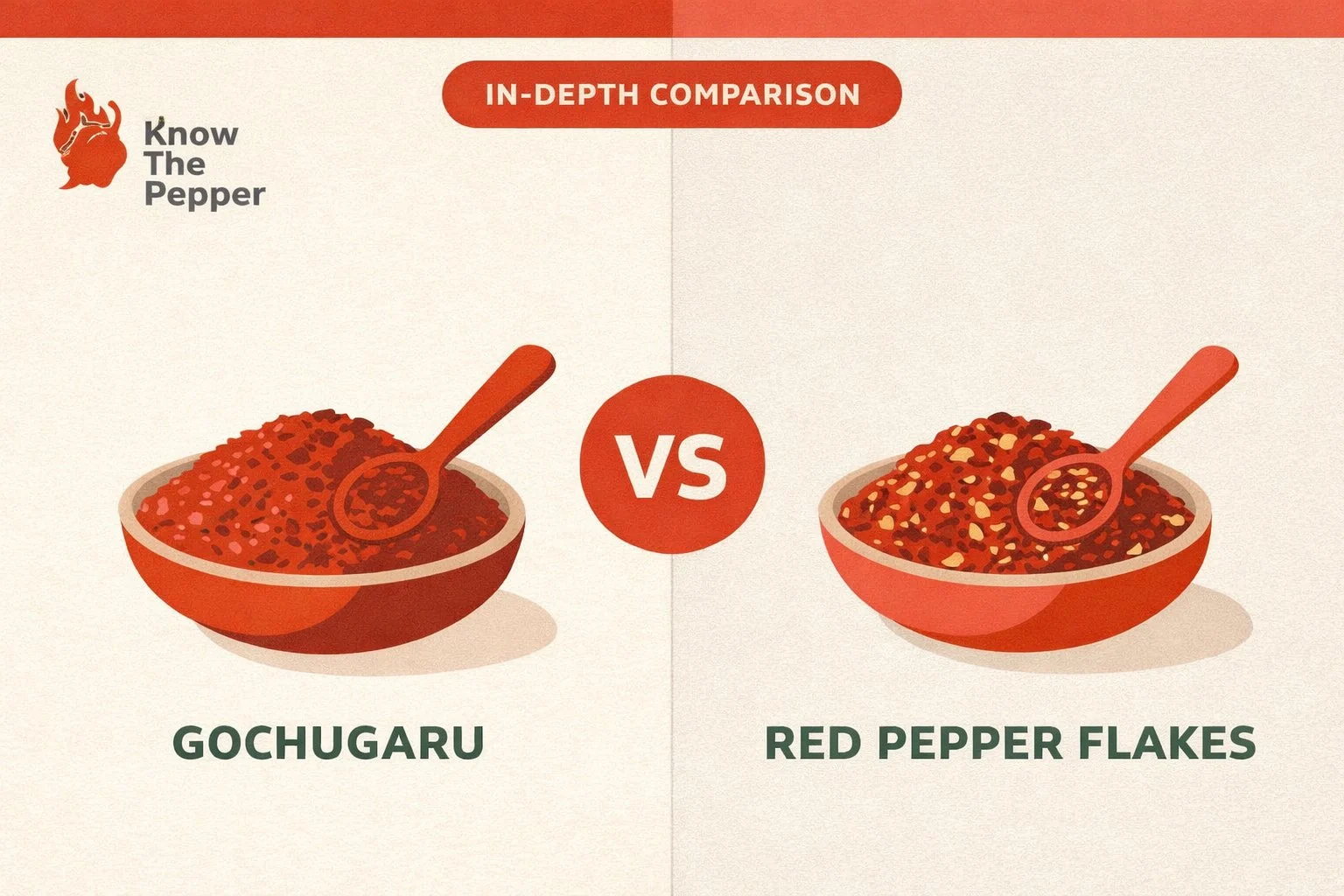
Gochugaru measures 2K–10K SHU while Red Pepper Flakes registers 15K–45K SHU — making Red Pepper Flakes 5× hotter. Gochugaru is known for its smoky and sweet flavor (C. annuum), while Red Pepper Flakes offers sharp and peppery notes (C. annuum).
- Heat difference: Red Pepper Flakes is 5× hotter
- Species: Both are C. annuum
- Best for: Gochugaru excels in everyday cooking and salsas, Red Pepper Flakes in fresh salsas and mild recipes
Gochugaru
HotRed Pepper Flakes
HotGochugaru vs Red Pepper Flakes Comparison
Gochugaru vs Red Pepper Flakes Heat Levels
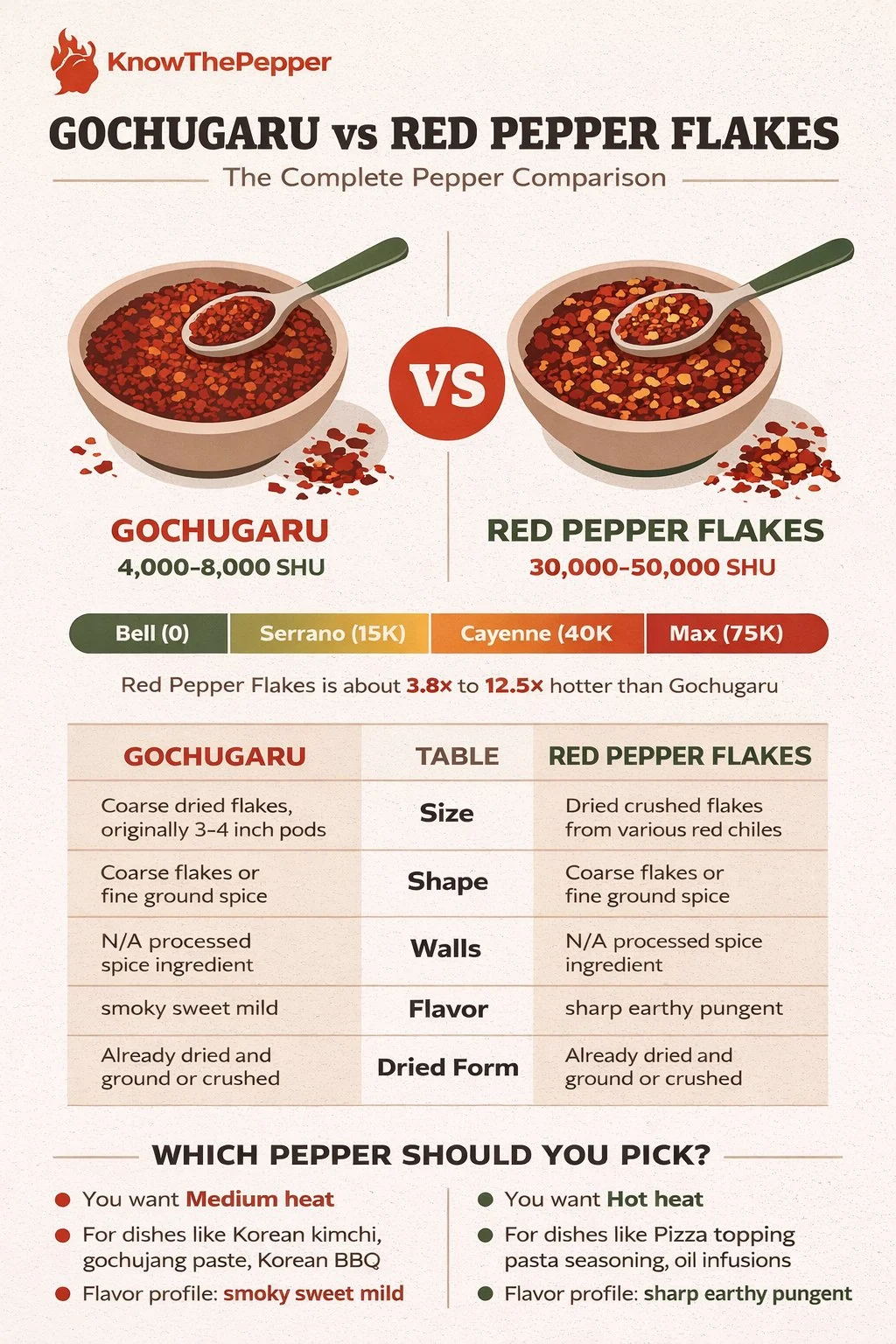
The gap between these two is significant. Gochugaru occupies the lower end of the hot pepper heat band, ranging from 1,500 to 10,000 SHU depending on the specific Korean variety and drying method. Red pepper flakes typically clock in at 15,000-45,000 SHU - roughly the same territory as cayenne.
To put that in perspective using a Fresno chili as a reference point (typically 2,500-10,000 SHU): gochugaru sits right alongside a Fresno at its hotter end, while red pepper flakes run 3 to 4 times hotter than a Fresno at their peak. That is a meaningful difference when you are seasoning a pot of kimchi or a pasta sauce.
The heat character also differs beyond raw numbers. Gochugaru delivers a slow-building warmth that spreads across the palate without a sharp initial spike. Red pepper flakes hit faster and sharper, largely because the crushed seeds and pith included in the flakes carry concentrated capsaicin. Understanding why capsaicin triggers that burning sensation helps explain why gochugaru feels gentler even at overlapping SHU values - the coarser grind and seed-free processing of traditional gochugaru changes how quickly capsaicin contacts heat receptors.
For anyone sensitive to heat, gochugaru is the more forgiving option. Red pepper flakes demand more restraint.
Flavor Profile Comparison
The first time I cooked with gochugaru, I expected something close to crushed red pepper flakes.
The first thing you notice is the smell - a dry, dusty heat that rises off the jar before you've even shaken it.
Heat numbers alone do not tell the full story here. Gochugaru has a flavor profile that sets it apart from virtually every other dried chili product on the market. The traditional Korean drying process - sun-drying or low-heat drying of specific Korean-origin C. annuum varieties - produces a smoky, subtly sweet base note with a mild earthiness underneath. There is almost a dried fruit quality to good gochugaru, reminiscent of a mild ancho but brighter.
The texture matters too. Quality gochugaru is a coarse flake or powder with a vibrant brick-red color and visible oil on the surface. That oiliness signals freshness and carries the aromatic compounds responsible for its distinctive smell.
Red pepper flakes are a different animal entirely. Most commercial blends use cayenne as the primary base, though the exact composition varies by brand. The flavor is sharp, peppery, and one-dimensional by comparison - functional heat delivery without much aromatic complexity. The crushed seeds in the mix add a slightly bitter edge that gochugaru lacks.
For dishes where flavor nuance matters - fermented foods, braises, spice pastes - gochugaru brings something irreplaceable. Red pepper flakes are better understood as a heat adjustment tool rather than a primary flavor ingredient. Both belong to the broad C. annuum botanical family, but selective breeding and processing have pulled them in opposite directions.
Culinary Uses for Gochugaru and Red Pepper Flakes
Doenjang jjigae (Korean fermented soybean paste stew) is the clearest example of where gochugaru is non-negotiable. The smoky-sweet depth it adds cannot be replicated by red pepper flakes without fundamentally changing the dish. The same applies to kimchi, tteokbokki sauce, and gochujang paste - all rely on gochugaru's specific flavor architecture, not just its heat.
Beyond Korean cooking, gochugaru works well in dry rubs for grilled meats, especially pork and chicken where its subtle sweetness complements caramelization. It integrates smoothly into marinades and braising liquids without the sharp spike that red pepper flakes introduce.
Red pepper flakes shine in Italian-American cooking - pizza, arrabbiata sauce, aglio e olio - where a clean, direct heat is the point. A pinch into hot olive oil blooms quickly, releasing sharp capsaicin into the fat. They also work as a finishing sprinkle where visual texture and immediate heat impact are both wanted.
For the gochugaru vs cayenne heat and flavor matchup, the differences are similar: cayenne-based products prioritize heat delivery over flavor complexity.
Substitution ratios: If a recipe calls for 1 tablespoon gochugaru and you only have red pepper flakes, use 1 teaspoon and accept that the smoky-sweet notes will be absent. Going the other direction - replacing red pepper flakes with gochugaru - requires roughly 3 times the volume to match heat, which can overwhelm a dish with color and bulk. Adding a small amount of smoked paprika alongside the gochugaru helps approximate the flavor when substituting in Korean recipes. For more complete substitution options, the gochugaru alternatives guide covers the full range of workable swaps.
Both products store best in airtight containers away from light. Gochugaru loses its color and aroma faster than red pepper flakes - use it within six months of opening for best results.
Which Should You Choose?
Choose gochugaru when flavor is the primary goal. Korean dishes demand it, and its smoky-sweet profile adds dimension to spice rubs, marinades, and braises that red pepper flakes simply cannot match. The lower heat ceiling (1,500-10,000 SHU) also makes it easier to use generously without overwhelming a dish.
Choose red pepper flakes when you need a quick, reliable heat boost with minimal flavor interference. Italian pasta sauces, pizza, and dishes where a clean capsaicin kick is the point - these are red pepper flakes territory. At 15,000-45,000 SHU, a small amount goes a long way.
The cayenne vs red pepper flakes heat difference is a useful reference if you are working with cayenne powder instead, since most commercial flakes are cayenne-dominant. And if you are comparing gochugaru to another mild Korean-adjacent option, the gochugaru vs Kashmiri chili comparison breaks down two peppers that share more common ground in color and mild heat.
Neither pepper replaces the other cleanly. Stock both.
Can You Substitute One for the Other?
Yes — direct substitution works. Gochugaru and Red Pepper Flakes are close enough in heat to swap at roughly 1:1. The main difference will be flavor. For more swap options, explore ranked alternatives with conversion ratios.
Growing Gochugaru vs Red Pepper Flakes
If you’re deciding which pepper to grow at home, consider your climate and patience level. Gochugaru and Red Pepper Flakes have different maturation times and temperature preferences. Hotter varieties generally need a longer, warmer growing season to develop their full capsaicin content. Our zone-based planting date tool can pinpoint the best sowing window for your area.
Growing gochugaru-style peppers is straightforward if you can give them a long, warm season. Start seeds indoors 8-10 weeks before last frost - these are *C.
Transplant after all frost risk passes into full sun with well-draining soil. Plants reach 2-3 feet and produce heavily.
Drying is where most home growers get tripped up. Traditional sun-drying requires consistent heat and low humidity over several weeks.
Red pepper flakes aren't a single variety - they're a product. But growing the peppers that go into them is straightforward if you start with cayenne-type **C.
Start seeds indoors 8–10 weeks before last frost. Germination is reliable at soil temperatures between 75–85°F.
For flake production, the goal is full red ripeness - green or partially ripe pods won't dry with the right color or heat intensity. Most cayenne-type varieties reach maturity in 70–80 days from transplant.
History & Origin of Gochugaru and Red Pepper Flakes
Both peppers carry centuries of culinary heritage. Gochugaru traces its roots to Korea, while Red Pepper Flakes originates from Global. Understanding their backstory helps explain why each pepper developed its distinctive traits.
Buying & Storage
Whether you’re shopping for Gochugaru or Red Pepper Flakes, the same quality indicators apply. Fresh peppers should feel firm and heavy for their size, with taut, glossy skin and no soft or wet spots. Minor stem cracks known as “corking” are perfectly normal and often indicate a mature, flavorful pod.
- Firm pods with taut skin and consistent color
- Should feel heavy relative to size
- Minor stem cracks (“corking”) are normal
- Avoid anything soft, shriveled, or with dark wet spots
- Fresh: Paper bag, crisper drawer — 1–2 weeks
- Frozen: Wash, dry, freeze on sheet pan — 6+ months
- Dried: Airtight, away from light — up to 1 year
The Verdict: Gochugaru vs Red Pepper Flakes
Gochugaru and Red Pepper Flakes sit in the same heat tier but serve different roles. Red Pepper Flakes delivers 5× more heat with its distinctive sharp and peppery character. Gochugaru, with its smoky and sweet profile, excels in everyday cooking.
Frequently Asked Questions
Related Comparisons
Sources pending verification.