Gochugaru vs Paprika: Which Pepper to Use?
Gochugaru and paprika are both ground red peppers from C. annuum, but they land in very different places on the flavor and heat spectrum. Gochugaru brings a smoky, moderately spicy punch ranging up to 10,000 SHU, while paprika sits at the mild, sweet end with virtually no burn. Choosing between them depends on whether you want heat or just color and depth.

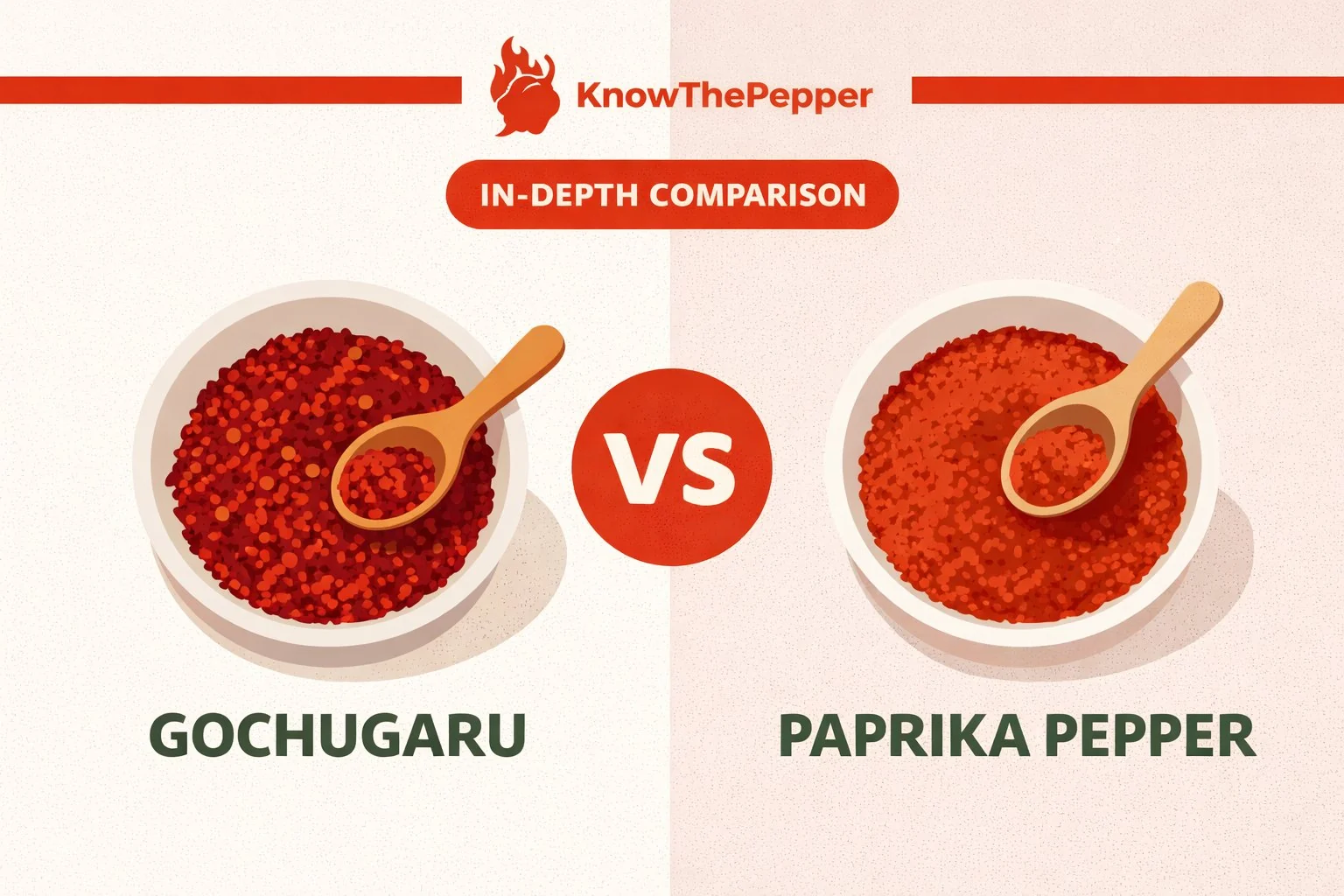
Gochugaru measures 2K–10K SHU while Paprika Pepper registers 0–1K SHU — making Gochugaru 10× hotter. Gochugaru is known for its smoky and sweet flavor (C. annuum), while Paprika Pepper offers sweet and mild notes (C. annuum).
- Heat difference: Gochugaru is 10× hotter
- Species: Both are C. annuum
- Best for: Gochugaru excels in everyday cooking and salsas, Paprika Pepper in fresh salsas and mild recipes
Gochugaru
HotPaprika Pepper
MediumGochugaru vs Paprika Pepper Comparison
Gochugaru vs Paprika Pepper Heat Levels
The gap between these two is significant. Paprika tops out around 1,000 SHU — most commercial sweet paprika hovers near zero, with smoked or hot varieties creeping toward that ceiling. It sits firmly in the mild-heat SHU bracket, where capsaicin is present more as a whisper than a warning.
Gochugaru is a different animal. Its range runs from 1,500 to 10,000 SHU, which places it squarely in the hot pepper intensity zone — though the lower end overlaps with what most people consider moderate. At peak heat, gochugaru can reach roughly 10 times hotter than a mild paprika. Compared to a serrano (typically 10,000–23,000 SHU), even the hottest gochugaru lands at or just below that benchmark — so it is real heat, but not aggressive.
The burn character differs too. Gochugaru delivers a clean, front-of-mouth warmth that builds gradually and fades without lingering harshness. Paprika's minimal capsaicin content — explained well in the chemistry of how capsaicin binds heat receptors — means most people experience no true heat at all, just a mild tingle at most.
For anyone calibrating heat in a dish, paprika is essentially a non-factor. Gochugaru requires actual measurement and adjustment, especially in Korean recipes where the spice load is intentional and structural to the dish's balance.
Flavor Profile Comparison
The first time I cooked with gochugaru, I expected something close to crushed red pepper flakes.
Paprika peppers sit at the mildest end of the pepper spectrum, delivering sweetness with almost no perceptible heat - a stark contrast to even the gentlest Fresno, which runs roughly 2,500 to 10,000 SHU by comparison.
Both peppers share a red pepper base, but their flavor identities diverge sharply from there.
Paprika — particularly the Hungarian styles that define its Central European origin and tradition — tastes sweet, slightly fruity, and earthy. Smoked paprika adds a woodsy, almost bacon-like depth that makes it irreplaceable in dishes like patatas bravas or chicken paprikash. The sweetness is genuine and prominent, not background noise. Comparing espelette vs paprika's mild fruity warmth illustrates just how gentle paprika sits even among mild red pepper powders.
Gochugaru carries that sweetness too, but it is layered under smoke and a moderate savory heat. Korean red pepper flakes — which is what gochugaru is — have a slightly coarse texture compared to fine-ground paprika, and that texture affects how the flavor releases in cooking. The smokiness in gochugaru is inherent to the dried pepper itself, not added through processing. There is also a subtle fruity note, almost like sun-dried tomato, that shows up in well-made batches.
In terms of aroma, paprika smells like sweet dried peppers — mild and approachable. Gochugaru smells spicier and earthier right out of the bag, with a more assertive presence. Drop either into hot oil and the difference becomes even more obvious: paprika blooms into a sweet, rounded fragrance, while gochugaru adds a sharper, more complex sizzle. Both belong to the broad C. annuum botanical family, which explains their shared sweetness — but cultivation, drying method, and regional selection have taken them in very different directions.
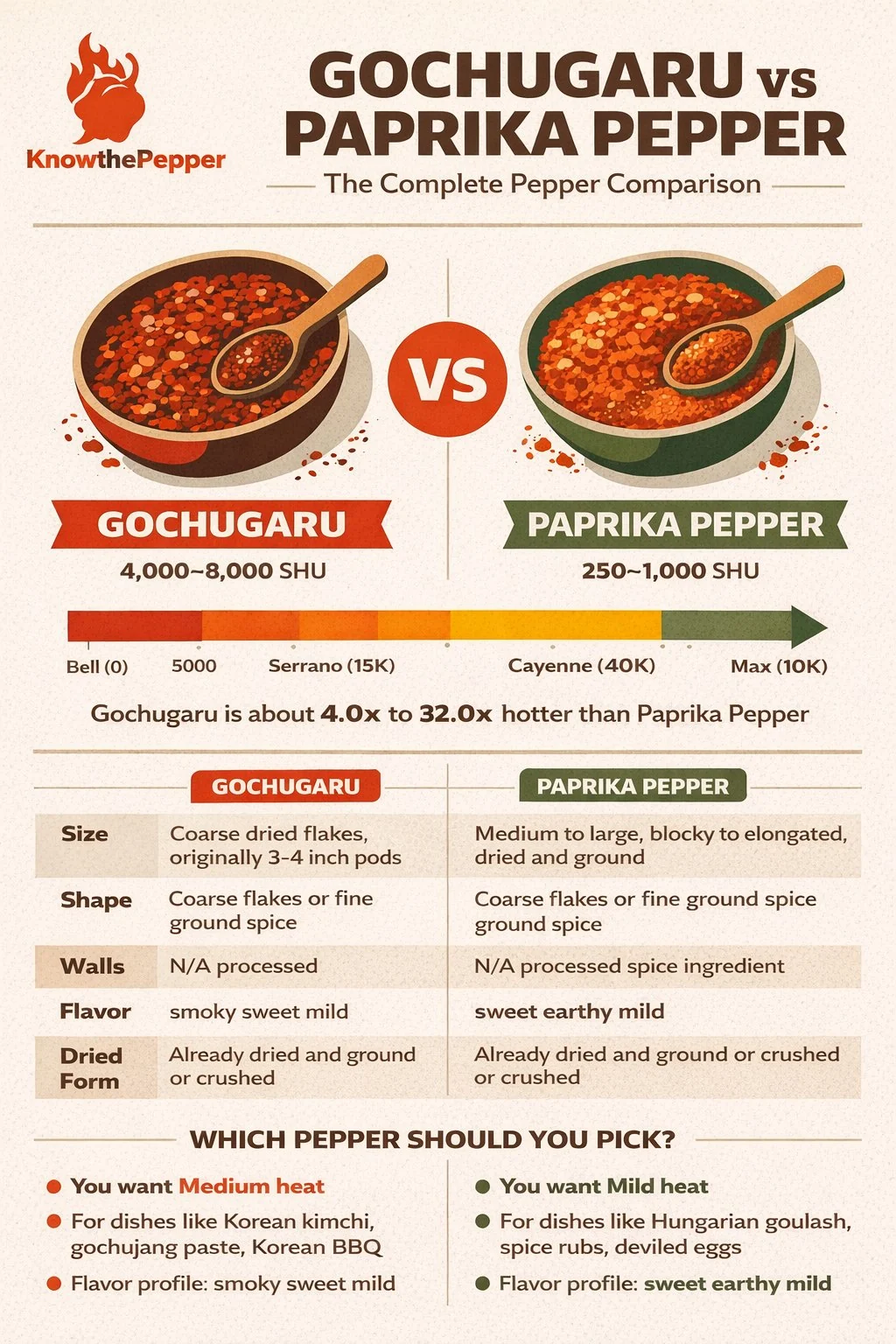
Culinary Uses for Gochugaru and Paprika Pepper
These two powders are not interchangeable in most recipes, but understanding where each excels helps you make smart decisions in the kitchen.
Paprika is the right choice when you want color and mild flavor without heat. It is essential in Hungarian goulash, Spanish chorizo seasoning, and as a finishing dusting on deviled eggs or hummus. Smoked paprika specifically shines in rubs for grilled meats, lentil soups, and anywhere you want that campfire undertone without actual smoke. Use it generously — 1 to 2 tablespoons in a recipe is normal — because its mild profile can handle volume.
Gochugaru is the backbone of Korean cooking. It is non-negotiable in kimchi, where the coarse flakes coat cabbage leaves and ferment into something deeply savory and complex. It also drives the heat in tteokbokki (spicy rice cakes), bibimbap sauce, and Korean BBQ marinades. The smoky depth and moderate heat of gochugaru make it distinct from cayenne-style powders — you cannot simply swap in cayenne without losing that characteristic sweetness.
For substitution: if a recipe calls for gochugaru and you only have paprika, combine smoked paprika with a small amount of cayenne — roughly 3 parts smoked paprika to 1 part cayenne — to approximate the heat and smoke. Going the other direction, gochugaru can sub for paprika in savory dishes where some heat is welcome, but use about half the volume to avoid overwhelming the dish.
The side-by-side flavor contrast with Kashmiri chili is also worth noting — Kashmiri sits closer to paprika in heat but shares gochugaru's vibrant red color, making it a useful middle-ground option in some recipes. For anyone exploring Korean pepper varieties and their regional flavor profiles, gochugaru is the essential starting point.
Which Should You Choose?
Paprika is the pick when color and sweetness matter more than heat — think European stews, spice rubs, or any dish where a red hue and gentle flavor are the goal. It is forgiving, widely available, and works in large quantities without risk.
Gochugaru is the choice when you need that specific Korean flavor profile: smoky, moderately spicy, and slightly sweet all at once. It is not just a heat source — it is a flavor foundation. Replacing it with generic chili powder or cayenne will flatten the complexity that makes Korean dishes distinctive.
If your cooking spans both cuisines, keeping both on hand makes sense. They share almost no functional overlap despite looking similar in the jar. Paprika will not make your kimchi taste right, and gochugaru will add unwanted heat to a paprikash. Treat them as separate tools — because that is exactly what they are.
Can You Substitute One for the Other?
Yes — direct substitution works. Gochugaru and Paprika Pepper are close enough in heat to swap at roughly 1:1. The main difference will be flavor. For more swap options, explore ranked alternatives with conversion ratios.
Growing Gochugaru vs Paprika Pepper
If you’re deciding which pepper to grow at home, consider your climate and patience level. Gochugaru and Paprika Pepper have different maturation times and temperature preferences. Hotter varieties generally need a longer, warmer growing season to develop their full capsaicin content. Our zone-based planting date tool can pinpoint the best sowing window for your area.
Growing gochugaru-style peppers is straightforward if you can give them a long, warm season. Start seeds indoors 8-10 weeks before last frost - these are *C.
Transplant after all frost risk passes into full sun with well-draining soil. Plants reach 2-3 feet and produce heavily.
Drying is where most home growers get tripped up. Traditional sun-drying requires consistent heat and low humidity over several weeks.
Paprika peppers are among the more rewarding varieties to grow - productive, relatively disease-resistant, and visually striking when the plants load up with red fruit in late summer.
Start seeds indoors 8-10 weeks before your last frost date. Germination is reliable at 75-85°F soil temperature; a heat mat helps considerably.
Plants reach 24-36 inches tall and benefit from caging or staking once fruit sets - the heavy load of thick-walled peppers can tip unsupported plants. Space them 18-24 inches apart for good airflow, which reduces fungal pressure.
History & Origin of Gochugaru and Paprika Pepper
Both peppers carry centuries of culinary heritage. Gochugaru traces its roots to Korea, while Paprika Pepper originates from Hungary. Understanding their backstory helps explain why each pepper developed its distinctive traits.
Buying & Storage
Whether you’re shopping for Gochugaru or Paprika Pepper, the same quality indicators apply. Fresh peppers should feel firm and heavy for their size, with taut, glossy skin and no soft or wet spots. Minor stem cracks known as “corking” are perfectly normal and often indicate a mature, flavorful pod.
- Firm pods with taut skin and consistent color
- Should feel heavy relative to size
- Minor stem cracks (“corking”) are normal
- Avoid anything soft, shriveled, or with dark wet spots
- Fresh: Paper bag, crisper drawer — 1–2 weeks
- Frozen: Wash, dry, freeze on sheet pan — 6+ months
- Dried: Airtight, away from light — up to 1 year
The Verdict: Gochugaru vs Paprika Pepper
Gochugaru and Paprika Pepper occupy very different positions on the heat spectrum. Gochugaru delivers 10× more heat with its distinctive smoky and sweet character. Paprika Pepper, with its sweet and mild profile, excels in everyday cooking.
Frequently Asked Questions
Related Comparisons
Sources pending verification.