Chipotle or Guajillo? Side-by-Side Comparison
Both chipotles and guajillos are dried Mexican chilies in the 2,500-8,000 SHU range, but they arrive at that heat through completely different paths. Chipotle is a smoked jalapeño with deep, campfire-forward flavor, while guajillo is a dried mirasol pepper with a bright, tangy-sweet complexity. Choosing between them shapes a dish's entire character.

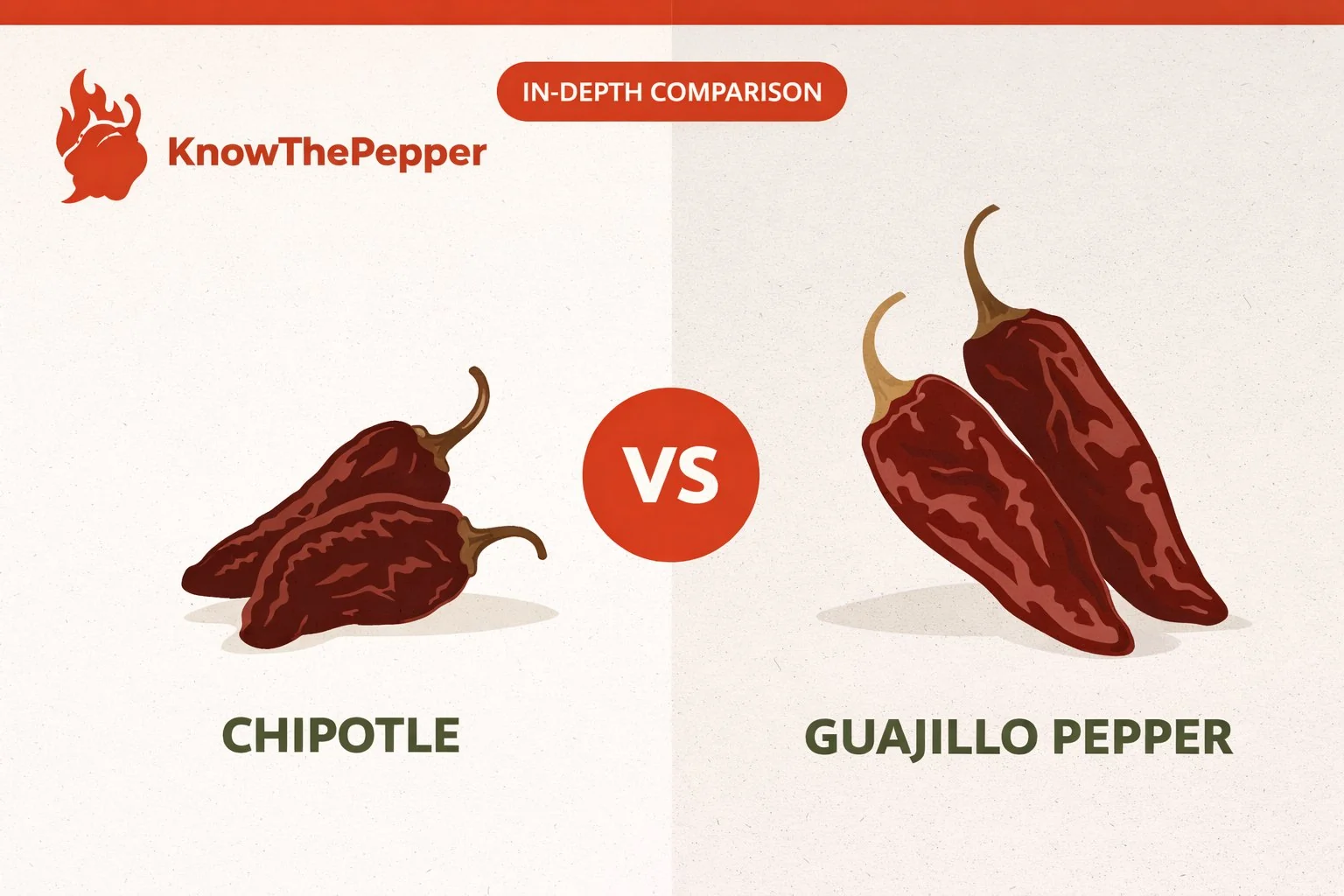
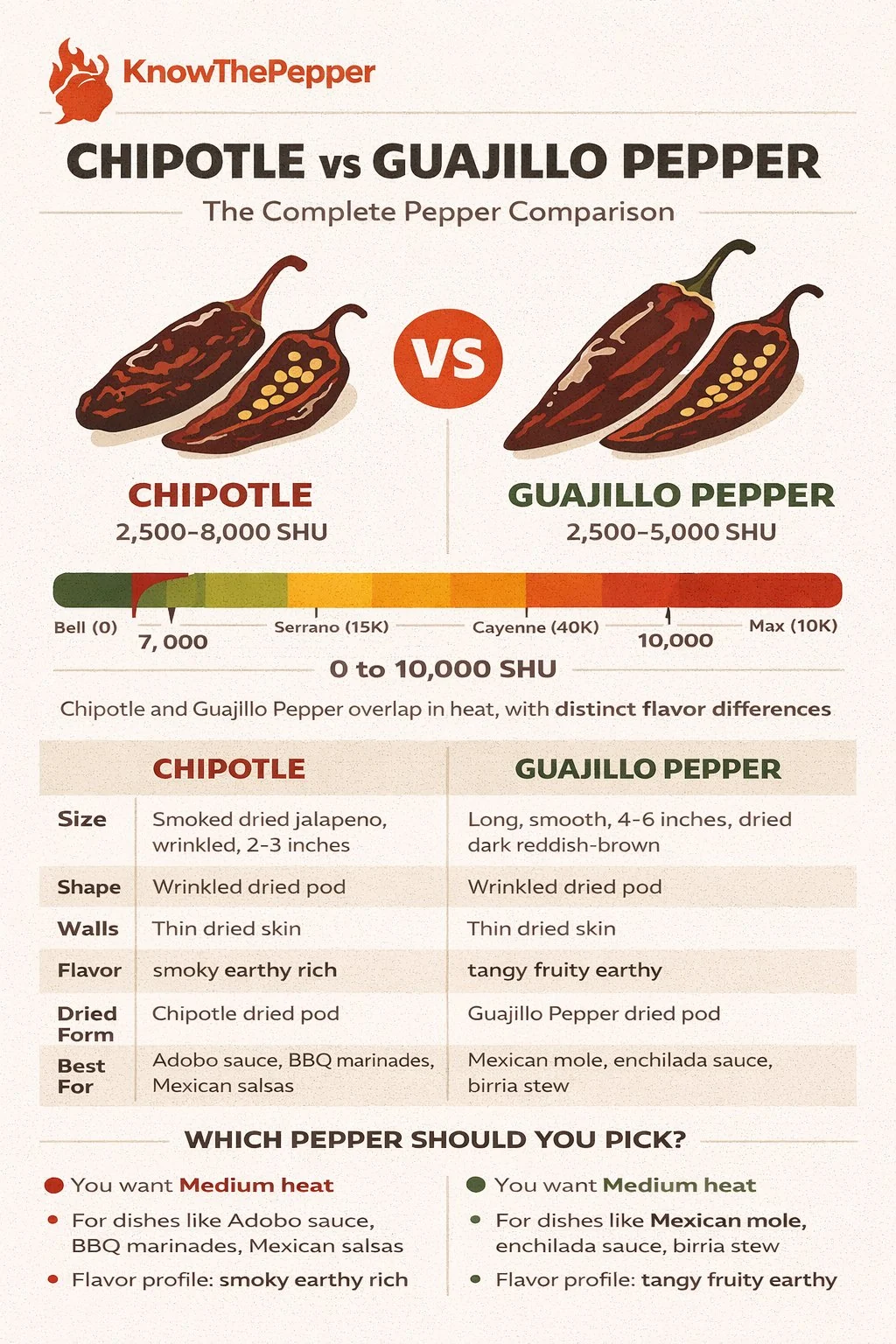
Chipotle measures 3K–8K SHU while Guajillo Pepper registers 3K–5K SHU — making Chipotle 2× hotter. Chipotle is known for its smoky and sweet flavor (C. annuum), while Guajillo Pepper offers tangy and sweet notes (C. annuum).
- Heat difference: Chipotle is 2× hotter
- Species: Both are C. annuum
- Best for: Chipotle excels in everyday cooking and salsas, Guajillo Pepper in fresh salsas and mild recipes
Chipotle
MediumGuajillo Pepper
MediumChipotle vs Guajillo Pepper Comparison
Chipotle vs Guajillo Pepper Heat Levels
On paper, these two sit close together. Chipotle runs 2,500-8,000 SHU, and guajillo's tangy-sweet dried heat lands at 2,500-5,000 SHU — so guajillo's ceiling is notably lower. Both fall comfortably in the medium-heat SHU band that most home cooks can handle without breaking a sweat.
Compared to a serrano (typically 10,000-23,000 SHU), both of these chilies are genuinely mild — roughly 3 to 9 times less intense than that benchmark. Chipotle at its hottest approaches the bottom of the serrano range, while guajillo stays well below it at every point.
The practical heat difference matters more than the numbers suggest. Chipotle's smoke amplifies the perception of heat — that campfire intensity makes the burn feel more aggressive than the SHU reading implies. Guajillo's heat is cleaner and more transparent; it builds gradually and fades without drama. For people sensitive to capsaicin, guajillo is the more predictable choice. For those chasing depth and perceived intensity without actual extreme heat, chipotle punches harder than its Scoville position suggests.
Both belong to C. annuum and share the same botanical lineage, which partly explains why their base heat profiles overlap so neatly. Neither will challenge experienced heat-seekers, but both deliver enough warmth to anchor a dish rather than merely suggest spice.
Flavor Profile Comparison
The first time I tasted a chipotle straight from an adobo can, the smokiness hit before the heat — a slow, woody burn that felt nothing like the fresh medium-heat jalapeño it came from.
Long before supermarkets stocked dried chiles by the bag, guajillo peppers were already a cornerstone of Mexican cooking.
This is where the two diverge completely. Chipotle is defined by smoke — dried, ripe jalapeños slow-smoked over wood until they shrivel into wrinkled, mahogany-colored pods. The flavor is earthy, leathery, and sweet underneath all that campfire character. In adobo sauce (the canned format most cooks encounter), vinegar and tomato add tang, but the smoke dominates every note.
Guajillo is a different animal. Dried from the mirasol pepper, its flavor lands somewhere between dried cranberry, mild tannin, and green tea — a brightness that's genuinely unusual among dried chilies. The tangy-sweet profile carries a mild fruitiness without any smoke whatsoever. Some tasters pick up a faint pine or berry note, which makes guajillo a favorite for complex red sauces where clarity matters.
Aroma tells the story fast: crack open a dried guajillo and you get a clean, almost floral dried-fruit scent. Crack open a chipotle and smoke hits immediately. These aren't interchangeable flavor profiles — they're different instruments.
Guajillo's thin flesh and smooth dried skin make it easy to toast, rehydrate, and blend into silky sauces. Chipotle's thicker, stickier flesh holds up differently. In terms of how these dried forms compare to the ancho's earthier, sweeter profile, chipotle sits smokier and guajillo sits brighter — the ancho falls somewhere between them in richness.
For Mexican-origin dried chilies in general, guajillo represents the clean, bright end of the spectrum while chipotle anchors the smoky, intense end.
Culinary Uses for Chipotle and Guajillo Pepper
Guajillo is one of the workhorses of traditional Mexican cooking. It forms the base of many classic red chile sauces — enchilada sauce, birria broth, and pozole rojo all frequently start with rehydrated guajillos. The process is straightforward: toast briefly in a dry pan, soak in hot water for 20 minutes, then blend with aromatics. The resulting sauce has a deep brick-red color and clean, layered flavor that doesn't compete with other ingredients.
Guajillo also shines in marinades for grilled meats. Its acidity and fruit notes tenderize and brighten simultaneously. For fish tacos or shrimp preparations, guajillo's lightness works where chipotle's smoke would overwhelm.
For a side-by-side look at how guajillo compares against pasilla in sauce applications, the difference in body and earthiness becomes clear — guajillo is notably brighter.
Chipotle earns its place wherever smoke is the goal. Chipotle en adobo (the canned version) is the fastest route — one or two peppers with sauce drop into braised beans, chili, barbecue sauce, or a smoky mayo in under a minute. The dried whole pods require more prep but offer cleaner smoke without the adobo's vinegar.
Chipotle works especially well in slow-cooked dishes: pulled pork, beef short ribs, and black bean soup all benefit from hours of melding. The smoke integrates rather than shouts.
Substitution ratios: When swapping guajillo for chipotle, expect to lose smoke and gain brightness — use equal amounts by weight but add a small amount of smoked paprika to approximate chipotle's character. Going the other direction, replace chipotle with guajillo plus a few drops of liquid smoke if the dish depends on that campfire note.
The ancho-versus-guajillo flavor comparison is worth consulting if you're building a complex multi-chili sauce — ancho adds raisin and chocolate tones that balance guajillo's acidity well.
Which Should You Choose?
Pick guajillo when the dish needs clarity — when you want a clean red sauce, a bright marinade, or a backdrop that lets other flavors speak. It's the more versatile everyday dried chili, easier to find at Latin grocery stores and predictable in its heat delivery. Guajillo works across seafood, poultry, vegetables, and pork without risk of overpowering.
Pick chipotle when smoke is the point. Braised meats, smoky salsas, chipotle mayo, bean soups — these dishes want that leathery, campfire depth that no amount of paprika fully replicates. Canned chipotle in adobo is one of the most efficient flavor bombs in any pantry.
They're not substitutes for each other in any meaningful sense — they solve different problems. A kitchen stocked with both covers far more ground than either one alone. For cooks just starting with dried Mexican chilies, guajillo is the gentler entry point; chipotle rewards those who already know they want smoke at the center of a dish.
Can You Substitute One for the Other?
Yes — direct substitution works. Chipotle and Guajillo Pepper are close enough in heat to swap at roughly 1:1. The main difference will be flavor. For more swap options, explore ranked alternatives with conversion ratios.
Growing Chipotle vs Guajillo Pepper
If you’re deciding which pepper to grow at home, consider your climate and patience level. Chipotle and Guajillo Pepper have different maturation times and temperature preferences. Hotter varieties generally need a longer, warmer growing season to develop their full capsaicin content. Our zone-based planting date tool can pinpoint the best sowing window for your area.
Growing chipotle starts with growing jalapeños — because that is exactly what they are before smoking. The distinction is purely in post-harvest processing.
Capsicum annuum jalapeños thrive in well-drained soil with full sun and consistent moisture. Start seeds indoors 8–10 weeks before your last frost date.
For chipotles specifically, you want the peppers to ripen fully to red before harvest. Most growers pick jalapeños green, but chipotle production requires patience — leave them on the plant until they turn deep red and the skin begins to show slight wrinkling.
Growing guajillo means starting with the mirasol variety — the fresh pepper that becomes guajillo after drying. If you're new to starting chiles from seed indoors, mirasol is a forgiving choice: germination is reliable, and the plants are vigorous once established.
Start seeds 8–10 weeks before your last frost date. Mirasol plants prefer full sun and well-drained soil, thriving in USDA zones 9–11 or as annuals in cooler climates.
The upward-pointing fruit habit (the 'looking at the sun' trait) means pods dry naturally on the plant in hot, dry climates. In humid regions, harvest before the first frost and finish drying indoors using a dehydrator set to 135°F for 8–12 hours.
History & Origin of Chipotle and Guajillo Pepper
Both peppers carry centuries of culinary heritage. Chipotle traces its roots to Mexico, while Guajillo Pepper originates from Mexico. Understanding their backstory helps explain why each pepper developed its distinctive traits.
Buying & Storage
Whether you’re shopping for Chipotle or Guajillo Pepper, the same quality indicators apply. Fresh peppers should feel firm and heavy for their size, with taut, glossy skin and no soft or wet spots. Minor stem cracks known as “corking” are perfectly normal and often indicate a mature, flavorful pod.
- Firm pods with taut skin and consistent color
- Should feel heavy relative to size
- Minor stem cracks (“corking”) are normal
- Avoid anything soft, shriveled, or with dark wet spots
- Fresh: Paper bag, crisper drawer — 1–2 weeks
- Frozen: Wash, dry, freeze on sheet pan — 6+ months
- Dried: Airtight, away from light — up to 1 year
The Verdict: Chipotle vs Guajillo Pepper
Chipotle and Guajillo Pepper sit in the same heat tier but serve different roles. Chipotle delivers 2× more heat with its distinctive smoky and sweet character. Guajillo Pepper, with its tangy and sweet profile, excels in everyday cooking.
Frequently Asked Questions
Related Comparisons
Sources pending verification.