Chipotle vs Jalapeño: Which Pepper Should You Use?
Chipotle and jalapeño are the same pepper at different stages — one fresh, one smoked and dried. Understanding what separates them helps you choose the right form for any dish, whether you need bright vegetal punch or deep, smoky complexity.

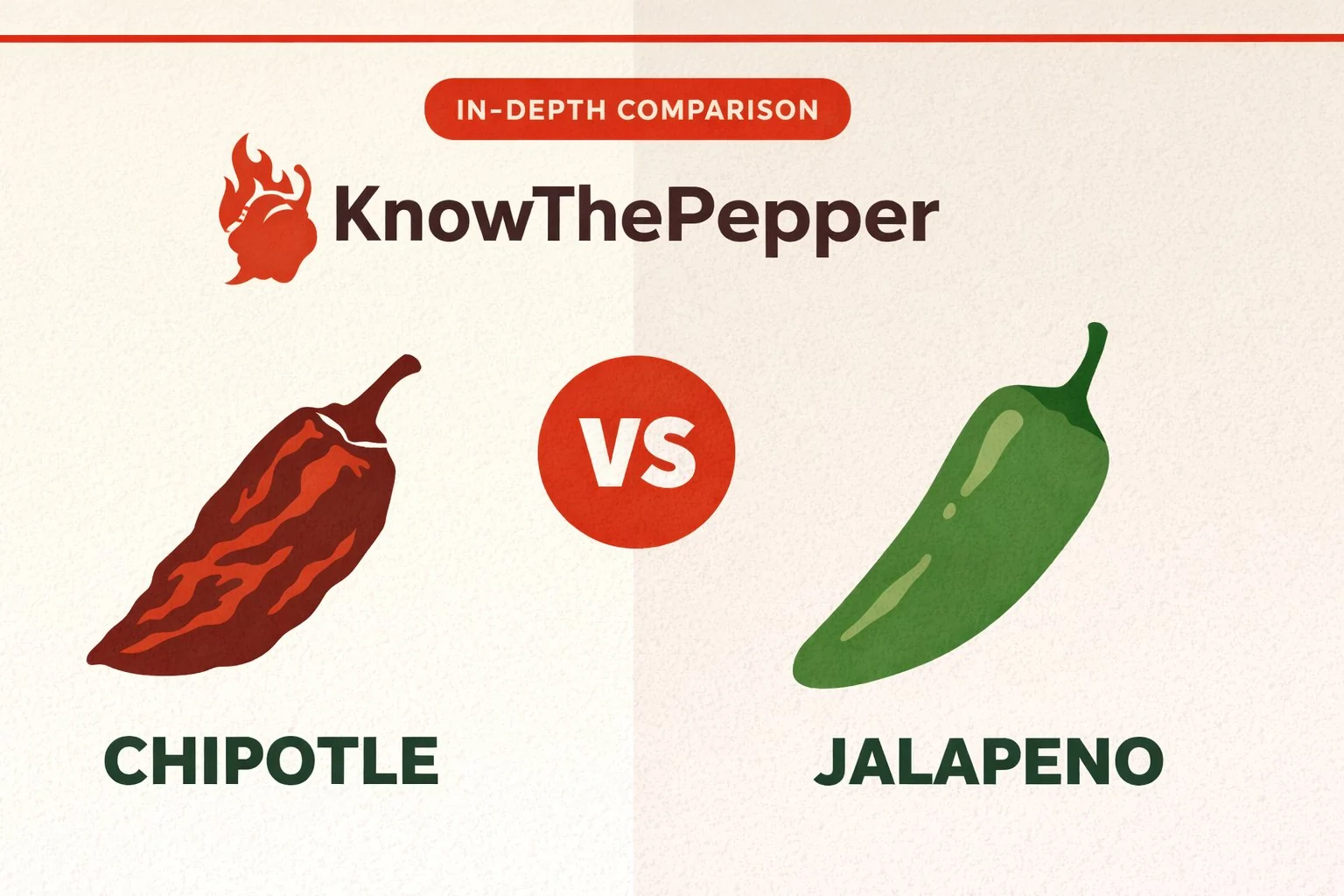
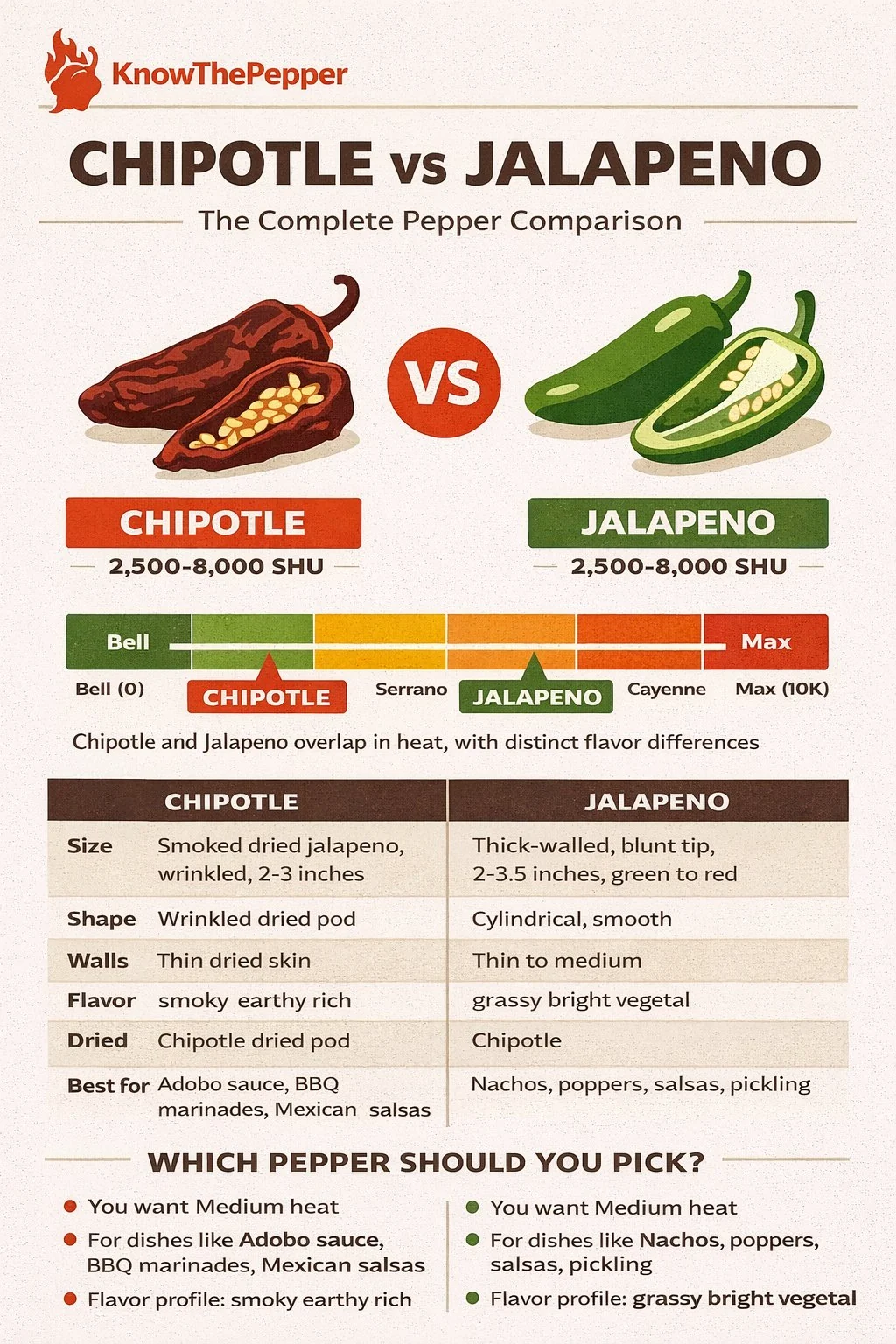
Chipotle measures 3K–8K SHU while Jalapeño registers 3K–8K SHU — roughly equal in heat. Chipotle is known for its smoky and sweet flavor (C. annuum), while Jalapeño offers bright and grassy notes (C. annuum).
- Species: Both are C. annuum
- Best for: Chipotle excels in everyday cooking and salsas, Jalapeño in fresh salsas and mild recipes
Chipotle vs Jalapeño Comparison
Chipotle vs Jalapeño Heat Levels
The heat relationship here is unusual: chipotle is simply a dried, smoked jalapeño, so both originate from the same C. annuum plant with a botanical family that includes most common sweet and hot peppers. Fresh jalapeños clock in at 2,500-8,000 SHU on the Scoville ranking system, placing them firmly in the medium heat classification — hot enough to notice, mild enough for most palates.
Because drying concentrates capsaicin, chipotles can register slightly higher perceived heat per gram of weight. That said, chipotles are typically used in smaller quantities — a few pieces in a braise versus several sliced jalapeños in a salsa — so the practical heat delivery often ends up comparable.
The burn character differs more than the numbers suggest. A fresh jalapeño hits fast, with a clean sharp sting at the front of the mouth. Chipotle heat arrives slower, layered under smoke and dried fruit notes, and it lingers longer. The TRPV1 receptor response to capsaicin is the same molecule either way, but the fat and sugar content of the dish interacts differently with dried versus fresh pepper cell walls, affecting how quickly heat releases.
For heat-sensitive cooks, jalapeño is the more predictable option — you can taste as you add. Chipotle in adobo sauce carries additional acids that can amplify perceived heat in some preparations.
Flavor Profile Comparison
The first time I tasted a chipotle straight from an adobo can, the smokiness hit before the heat — a slow, woody burn that felt nothing like the fresh medium-heat jalapeño it came from.
Few peppers have earned their reputation as thoroughly as the jalapeño.
Fresh jalapeño's bright grassy character is one of the most recognizable flavors in Mexican cooking — clean, vegetal, slightly bitter at the skin, with a crisp snap when raw. That brightness is what makes it ideal for fresh salsas, pico de gallo, and anything where you want pepper flavor without heaviness.
Chipotle transforms all of that. The smoking process — traditionally over pecan or fruit woods for days — eliminates the grassy notes entirely and replaces them with leather, dried cherry, cocoa undertones, and a savory depth that borders on meaty. The distinct smoky dried-pepper contrast between chipotle and guajillo illustrates how dramatically drying method shapes flavor, even between two peppers from the same regional tradition.
Chipotle in adobo (canned chipotles packed in tomato-vinegar sauce) adds yet another flavor layer — tangy, slightly sweet, with the sauce itself contributing as much as the pepper. Dried chipotle morita and chipotle meco are two distinct subtypes: morita is smaller, fruitier, smoked briefly; meco is larger, smoked longer, and tastes closer to tobacco and coffee.
For raw applications — guacamole, ceviche, fresh salads — jalapeño is the clear choice. Its brightness doesn't compete with delicate ingredients. Chipotle belongs in cooked contexts: braises, marinades, barbecue sauces, soups, and anywhere smoke is a welcome presence. The two aren't really interchangeable; they serve different flavor purposes entirely.
Culinary Uses for Chipotle and Jalapeño
Fresh jalapeños are workhorses across Mexican pepper traditions. Slice them raw into tacos, mince into guacamole, roast them for chile rellenos on the smaller end, or pickle them in escabeche. They hold up to high heat without turning bitter, which makes them excellent for stir-fries and egg dishes. Stuffed jalapeños (poppers) rely on the pepper's firm walls and moderate heat to balance rich cheese fillings.
For a head-to-head look at how jalapeño stacks against cayenne in hot sauces and dry rubs, the comparison highlights how form factor — fresh versus dried — changes application entirely. The same logic applies here.
Chipotle shines in slow-cooked applications. A single chipotle in adobo, minced, transforms a pot of black beans. Two or three chipotles blended with tomatoes, garlic, and cumin become the base for a serious enchilada sauce. Chipotle powder works in dry rubs for grilled meats, mixed into mayo for smoky aioli, or stirred into buttermilk for fried chicken brine.
Substitution ratios matter. One fresh jalapeño does not equal one chipotle in any recipe. If a dish calls for chipotle and you only have fresh jalapeño, add 1/4 teaspoon smoked paprika per jalapeño to approximate the smoke — it won't be identical, but it bridges the gap. Going the other direction (chipotle standing in for fresh jalapeño), use half the volume and expect the dish to shift toward smoky-savory territory.
For a comparison of jalapeño against another fresh pepper with similar heat but different flavor, that contrast reinforces why matching the right form to the recipe matters more than chasing a specific SHU number.
Chipotle powder keeps for 12-18 months in a sealed container. Fresh jalapeños stay crisp for up to two weeks refrigerated.
Which Should You Choose?
These two peppers answer different questions in the kitchen. Fresh jalapeño is the right call when you need brightness, crunch, and clean heat — raw salsas, quick pickles, anything where the pepper's texture and vegetal character carry the dish. It's forgiving, widely available, and easy to calibrate.
Chipotle is the answer when a dish needs smoke, depth, and complexity that only hours of wood-fired drying can produce. It transforms braises, marinades, and sauces in ways no fresh pepper can replicate.
If you grow your own jalapeños — and transplanting seedlings at the right stage makes a real difference in yield — you're one smoke session away from making your own chipotles. The flavor payoff is worth it.
For everyday cooking, keep both on hand: fresh jalapeños in the fridge, chipotles in adobo in the pantry. They're not rivals — they're the same pepper living two very different lives.
Can You Substitute One for the Other?
Yes — direct substitution works. Chipotle and Jalapeño are close enough in heat to swap at roughly 1:1. The main difference will be flavor. For more swap options, explore ranked alternatives with conversion ratios.
Growing Chipotle vs Jalapeño
If you’re deciding which pepper to grow at home, consider your climate and patience level. Chipotle and Jalapeño have different maturation times and temperature preferences. Hotter varieties generally need a longer, warmer growing season to develop their full capsaicin content. Our zone-based planting date tool can pinpoint the best sowing window for your area.
Growing chipotle starts with growing jalapeños — because that is exactly what they are before smoking. The distinction is purely in post-harvest processing.
Capsicum annuum jalapeños thrive in well-drained soil with full sun and consistent moisture. Start seeds indoors 8–10 weeks before your last frost date.
For chipotles specifically, you want the peppers to ripen fully to red before harvest. Most growers pick jalapeños green, but chipotle production requires patience — leave them on the plant until they turn deep red and the skin begins to show slight wrinkling.
Jalapeños are among the most forgiving hot peppers to grow, but they do have preferences worth knowing.
Start seeds indoors 8–10 weeks before your last frost date. Soil temperature for germination should stay between 75–85°F — a heat mat under the seed tray makes a real difference in germination speed and uniformity.
Transplant outdoors once nighttime temps stay consistently above 55°F. Jalapeños want full sun — at least 6 hours daily — and well-drained soil with a pH around **6.
History & Origin of Chipotle and Jalapeño
Both peppers carry centuries of culinary heritage. Chipotle traces its roots to Mexico, while Jalapeño originates from Mexico. Understanding their backstory helps explain why each pepper developed its distinctive traits.
Buying & Storage
Whether you’re shopping for Chipotle or Jalapeño, the same quality indicators apply. Fresh peppers should feel firm and heavy for their size, with taut, glossy skin and no soft or wet spots. Minor stem cracks known as “corking” are perfectly normal and often indicate a mature, flavorful pod.
- Firm pods with taut skin and consistent color
- Should feel heavy relative to size
- Minor stem cracks (“corking”) are normal
- Avoid anything soft, shriveled, or with dark wet spots
- Fresh: Paper bag, crisper drawer — 1–2 weeks
- Frozen: Wash, dry, freeze on sheet pan — 6+ months
- Dried: Airtight, away from light — up to 1 year
The Verdict: Chipotle vs Jalapeño
Chipotle and Jalapeño sit in the same heat tier but serve different roles. Chipotle delivers its distinctive smoky and sweet character. Jalapeño, with its bright and grassy profile, excels in everyday cooking.
Frequently Asked Questions
Related Comparisons
Sources pending verification.