Chipotle vs Guajillo Pepper: Heat, Flavor & Key Differences
Chipotle and guajillo are two of Mexico's most essential dried peppers, but they take completely different paths to your dish. Chipotle brings smoky fire from smoked jalapeños, while guajillo offers a bright, tangy dried heat that forms the backbone of countless sauces. Understanding when to reach for each one changes everything about the final result.

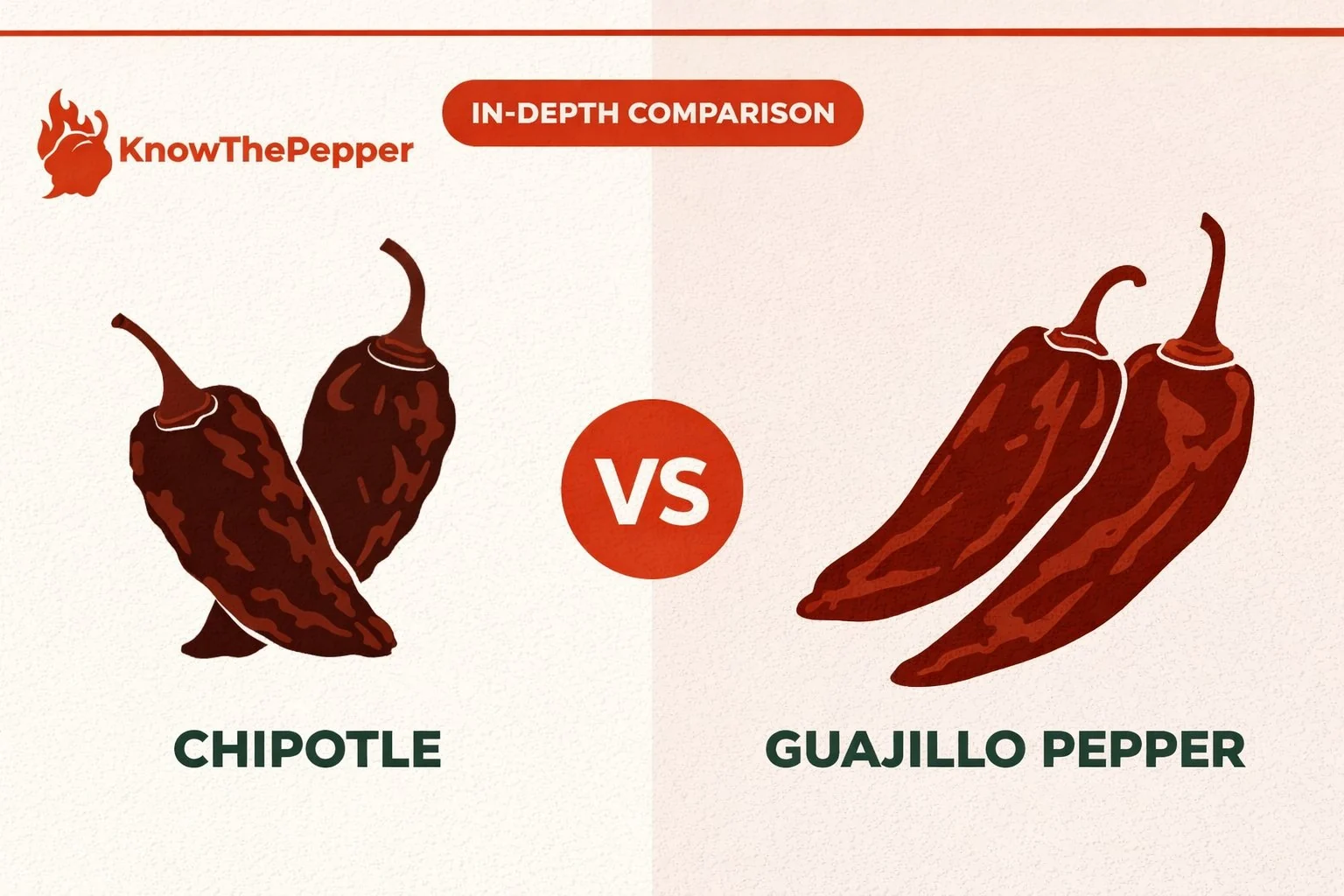
Chipotle measures 3K–8K SHU while Guajillo Pepper registers 3K–5K SHU — making Chipotle 2× hotter. Chipotle is known for its smoky and sweet flavor (C. annuum), while Guajillo Pepper offers tangy and sweet notes (C. annuum).
- Heat difference: Chipotle is 2× hotter
- Species: Both are C. annuum
- Best for: Chipotle excels in everyday cooking and salsas, Guajillo Pepper in fresh salsas and mild recipes
Chipotle
MediumGuajillo Pepper
MediumChipotle vs Guajillo Pepper Comparison
Chipotle vs Guajillo Pepper Heat Levels
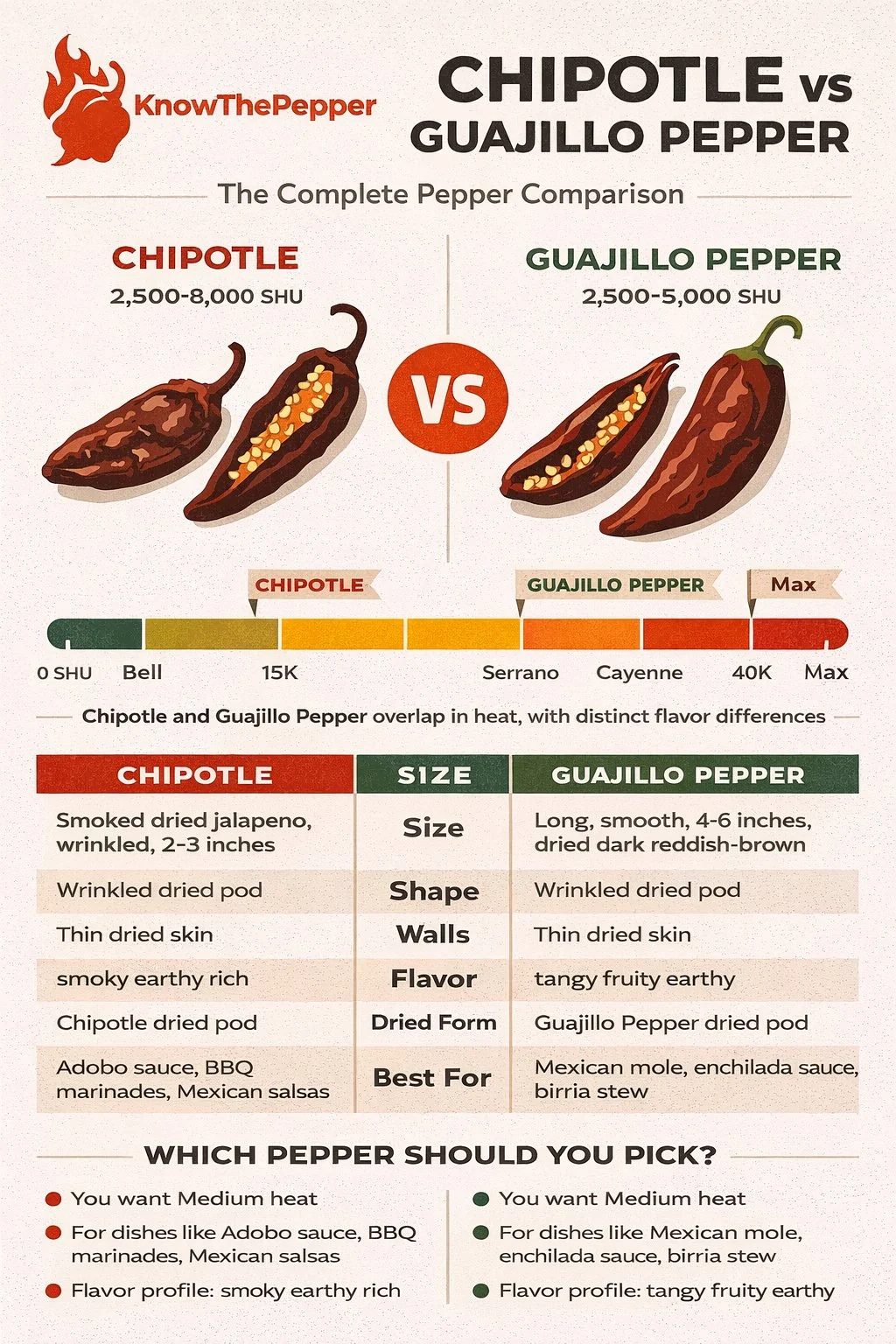
Both peppers sit in what most heat charts classify as the mild-to-medium tier, but their SHU ranges tell different stories. Chipotle peppers land between 2,500 and 8,000 SHU — the full range of the jalapeño they're made from, just dried and smoked. Guajillo peppers clock in at 1,000 to 5,000 SHU, making chipotle roughly 1.5 to 2 times hotter than guajillo at comparable points in their ranges.
For context on that mild-to-medium intensity feel, neither pepper is going to challenge experienced heat seekers. A guajillo sits closer to the floor of that range — approachable even for people who find jalapeños aggressive. Chipotle pushes toward the upper edge, with occasional batches from hotter jalapeño harvests reaching toward 8,000 SHU.
The way the heat presents matters as much as the number. Guajillo's burn is clean and relatively quick — it builds, peaks, and fades without much lingering. Chipotle heat comes wrapped in smoke, which creates a slower, more diffuse burn that feels warmer than the SHU suggests. The smoke essentially masks the sharpness, so a 5,000 SHU chipotle often feels gentler than a 5,000 SHU guajillo despite identical measurements.
For a technical breakdown of how these numbers get assigned, the Scoville rating methodology explains why two peppers at the same SHU can feel so different on the palate.
Flavor Profile Comparison
The first time I tasted a chipotle straight from an adobo can, the smokiness hit before the heat — a slow, woody burn that felt nothing like the fresh medium-heat jalapeño it came from.
Long before supermarkets stocked dried chiles by the bag, guajillo peppers were already a cornerstone of Mexican cooking.
Start with aroma, because that's where these two peppers diverge most dramatically before you've even tasted anything. Guajillo opens with a dried fruit fragrance — cranberry, dried cherry, a hint of green tea — that smells almost sweet before any heat registers. Chipotle's first impression is pure smoke, that deep mesquite-meets-wood-fire quality that immediately signals what you're working with.
On the palate, guajillo delivers a layered tartness. There's a bright acidity — almost tangy — followed by notes of plum skin and mild earthiness. The finish is clean, which is why guajillo forms the base of so many Mexican dried chili sauces and mole-style preparations. It adds complexity without dominating.
Chipotle tastes exactly like it smells: smoky first, hot second, with underlying sweetness from the ripe red jalapeño beneath all that char. The smokiness isn't a background note — it's the feature. Any dish that gets chipotle will taste smoked, full stop.
This distinction matters enormously in cooking. Guajillo can blend into a sauce and let other ingredients speak. Chipotle announces itself. The flavor difference between ancho and guajillo follows a similar pattern — ancho leans sweet and earthy while guajillo stays bright — which helps explain why Mexican cuisine uses them for different applications rather than interchangeably.
In terms of color contribution, guajillo bleeds a vivid brick-red into sauces. Chipotle adds a darker, browner hue. Both affect the visual presentation of a dish, not just the taste.
Culinary Uses for Chipotle and Guajillo Pepper
Guajillo is a structural pepper. It builds the foundation of dishes rather than finishing them. Rehydrated and blended, it creates the base for birria, enchilada sauce, and adobo marinades. The dried skin softens beautifully in hot water — about 15 to 20 minutes — and the resulting pulp blends smooth without much bitterness. For a complete walkthrough on rehydrating dried chilies, the technique applies directly here.
One classic ratio: 3 to 4 guajillo peppers per cup of sauce, seeded and stemmed, soaked then blended with garlic, cumin, and tomato. This produces a sauce mild enough for a full family dinner but complex enough to hold up to braised meats.
For the comparison between guajillo and pasilla, the key difference is that pasilla runs darker and earthier while guajillo stays bright — pasilla works better in mole negro, guajillo in red sauces.
Chipotle operates differently. It comes most commonly in two forms: dried whole chipotles (mora or meco varieties) or canned chipotles in adobo sauce. The canned version is more accessible and adds both the pepper and a vinegary, tomato-based sauce in one ingredient. A single chipotle in adobo, minced, can season an entire pot of black beans for 4 to 6 people.
Chipotle excels in: smoked salsas, BBQ-style marinades, chipotle mayo, and anywhere you want that characteristic smoke without actually firing up a smoker. The smoky depth versus ancho's sweetness comparison shows why chipotle is the go-to when smoke is the goal and ancho when you want pure dried pepper richness.
Substitution guidance: Replace guajillo with chipotle at a 1:1 ratio by count, but expect the smoke to dominate and reduce heat slightly. Going the other direction — replacing chipotle with guajillo — add a few drops of liquid smoke to approximate the missing smokiness. For a full guajillo substitution ratio guide, other options like New Mexico chiles or ancho are worth considering depending on your application.
Which Should You Choose?
Choose guajillo when the pepper is one voice in a chorus. It integrates, brightens, and adds complexity without stealing focus. It's the better choice for traditional red sauces, braises, and any dish where you want dried chili character without smoke.
Choose chipotle when smoke is the point. It's a single-ingredient flavor statement — perfect for marinades, dips, and anywhere that wood-fire depth is the whole idea. The heat and flavor contrast between ancho and chipotle makes it clear that chipotle occupies a unique lane among Mexican dried peppers precisely because of that smoke.
For cooks stocking a pantry, both belong there. They don't duplicate each other — guajillo and chipotle solve different problems. If you're only buying one, guajillo's versatility edges it out for everyday cooking. But any serious attempt at Mexican regional cuisine needs both on the shelf.
Can You Substitute One for the Other?
Yes — direct substitution works. Chipotle and Guajillo Pepper are close enough in heat to swap at roughly 1:1. The main difference will be flavor. For more swap options, explore ranked alternatives with conversion ratios.
Growing Chipotle vs Guajillo Pepper
If you’re deciding which pepper to grow at home, consider your climate and patience level. Chipotle and Guajillo Pepper have different maturation times and temperature preferences. Hotter varieties generally need a longer, warmer growing season to develop their full capsaicin content. Our zone-based planting date tool can pinpoint the best sowing window for your area.
Growing chipotle starts with growing jalapeños — because that is exactly what they are before smoking. The distinction is purely in post-harvest processing.
Capsicum annuum jalapeños thrive in well-drained soil with full sun and consistent moisture. Start seeds indoors 8–10 weeks before your last frost date.
For chipotles specifically, you want the peppers to ripen fully to red before harvest. Most growers pick jalapeños green, but chipotle production requires patience — leave them on the plant until they turn deep red and the skin begins to show slight wrinkling.
Growing guajillo means starting with the mirasol variety — the fresh pepper that becomes guajillo after drying. If you're new to starting chiles from seed indoors, mirasol is a forgiving choice: germination is reliable, and the plants are vigorous once established.
Start seeds 8–10 weeks before your last frost date. Mirasol plants prefer full sun and well-drained soil, thriving in USDA zones 9–11 or as annuals in cooler climates.
The upward-pointing fruit habit (the 'looking at the sun' trait) means pods dry naturally on the plant in hot, dry climates. In humid regions, harvest before the first frost and finish drying indoors using a dehydrator set to 135°F for 8–12 hours.
History & Origin of Chipotle and Guajillo Pepper
Both peppers carry centuries of culinary heritage. Chipotle traces its roots to Mexico, while Guajillo Pepper originates from Mexico. Understanding their backstory helps explain why each pepper developed its distinctive traits.
Buying & Storage
Whether you’re shopping for Chipotle or Guajillo Pepper, the same quality indicators apply. Fresh peppers should feel firm and heavy for their size, with taut, glossy skin and no soft or wet spots. Minor stem cracks known as “corking” are perfectly normal and often indicate a mature, flavorful pod.
- Firm pods with taut skin and consistent color
- Should feel heavy relative to size
- Minor stem cracks (“corking”) are normal
- Avoid anything soft, shriveled, or with dark wet spots
- Fresh: Paper bag, crisper drawer — 1–2 weeks
- Frozen: Wash, dry, freeze on sheet pan — 6+ months
- Dried: Airtight, away from light — up to 1 year
The Verdict: Chipotle vs Guajillo Pepper
Chipotle and Guajillo Pepper sit in the same heat tier but serve different roles. Chipotle delivers 2× more heat with its distinctive smoky and sweet character. Guajillo Pepper, with its tangy and sweet profile, excels in everyday cooking.
Frequently Asked Questions
Related Comparisons
Sources pending verification.