Cayenne vs Jalapeño: Heat Levels & When to Use Each
Cayenne and jalapeño are both C. annuum peppers, but they sit in very different heat brackets — cayenne runs 30,000-50,000 SHU while jalapeño tops out at 8,000 SHU. That gap changes everything about how you cook with them. One is a background heat-builder; the other is a fresh, grassy centerpiece.

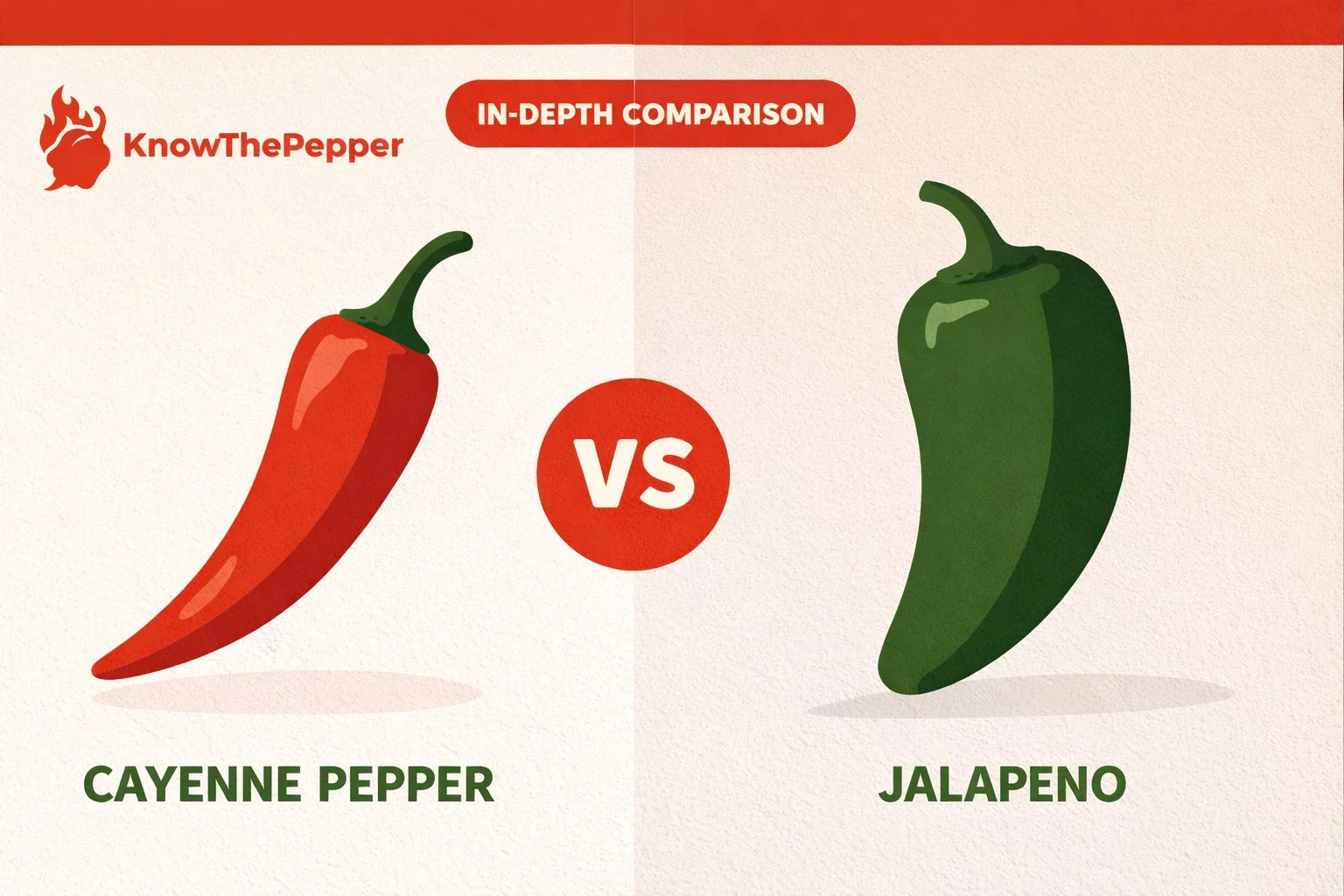
Cayenne Pepper measures 30K–50K SHU while Jalapeño registers 3K–8K SHU — making Cayenne Pepper 6× hotter. Cayenne Pepper is known for its neutral and peppery flavor (C. annuum), while Jalapeño offers bright and grassy notes (C. annuum).
- Heat difference: Cayenne Pepper is 6× hotter
- Species: Both are C. annuum
- Best for: Cayenne Pepper excels in everyday cooking and salsas, Jalapeño in fresh salsas and mild recipes
Cayenne Pepper
HotJalapeño
MediumCayenne Pepper vs Jalapeño Comparison
Cayenne Pepper vs Jalapeño Heat Levels
Before getting to numbers, the burn itself tells the story. Jalapeño heat is immediate and localized — you feel it on the front of the tongue, and it fades within a minute or two. Cayenne's heat builds differently, spreading across the palate and lingering longer, driven by a higher concentration of capsaicin. Understanding how capsaicin interacts with your pain receptors explains why these two peppers feel so different even at moderate amounts.
On the Scoville scale testing methodology, jalapeño ranges from 2,500 to 8,000 SHU — placing it squarely in the medium heat bracket. Cayenne clocks in at 30,000 to 50,000 SHU, which puts it firmly in the hot pepper classification tier. At minimum values, cayenne is about 12 times hotter than jalapeño. At peak values, that multiplier drops to around 6x, but you're comparing the hottest jalapeño to the hottest cayenne — in practice, most cayenne powder you buy is closer to the 40,000 SHU mark, making it roughly 5-16 times hotter depending on which jalapeño you grab.
Jalapeño heat also varies significantly by growing conditions — stress, drought, and soil composition all push SHU higher. A supermarket jalapeño might barely register at 2,500 SHU, while a garden-grown one from dry soil can approach 8,000. Cayenne is more consistent, especially in dried/powdered form where you know what you're getting.
Both peppers share the same Capsicum annuum species, so neither produces the deep, fruity heat character you'd get from a chinense variety. The burn is clean and direct — just at very different intensities.
Flavor Profile Comparison
Few peppers have traveled as far or worked as hard as cayenne.
Few peppers have earned their reputation as thoroughly as the jalapeño.
This is where the comparison gets interesting, because flavor — not just heat — should drive which pepper you reach for.
Jalapeño has a distinct, recognizable taste: bright, grassy, slightly vegetal, with a fresh green pepper character when raw. That flavor holds up beautifully in fresh applications — salsas, guacamole, pickles, stuffed preparations. When you roast or smoke a jalapeño (the smoked-dried version becomes chipotle), the flavor shifts dramatically toward earthy and sweet, but the underlying complexity remains. It's a pepper with personality.
Cayenne is almost the opposite in flavor terms. The taste is neutral and peppery — functional rather than distinctive. Dried cayenne powder adds heat without steering the dish in any particular flavor direction. That's not a knock; it's actually what makes cayenne so versatile as a spice. You can add it to chocolate, soups, dry rubs, or cocktails without worrying about introducing grassy or vegetal notes.
Fresh cayenne (the long, thin red pods) has slightly more flavor than the powder — a bit fruity and sharp — but most cooks encounter cayenne in dried form. Fresh jalapeño has a strong aroma when cut, that characteristic green-pepper smell that cayenne simply doesn't have.
For dishes where pepper flavor matters as much as heat — nachos, poppers, fresh salsa — jalapeño is the obvious choice. For dishes where you want heat as a background element without altering the flavor profile, cayenne powder is the cleaner tool. The South American pepper origin of cayenne (French Guiana) versus jalapeño's Mexican pepper heritage reflects this functional divide — one was cultivated for spice-rack use, the other for fresh cooking.
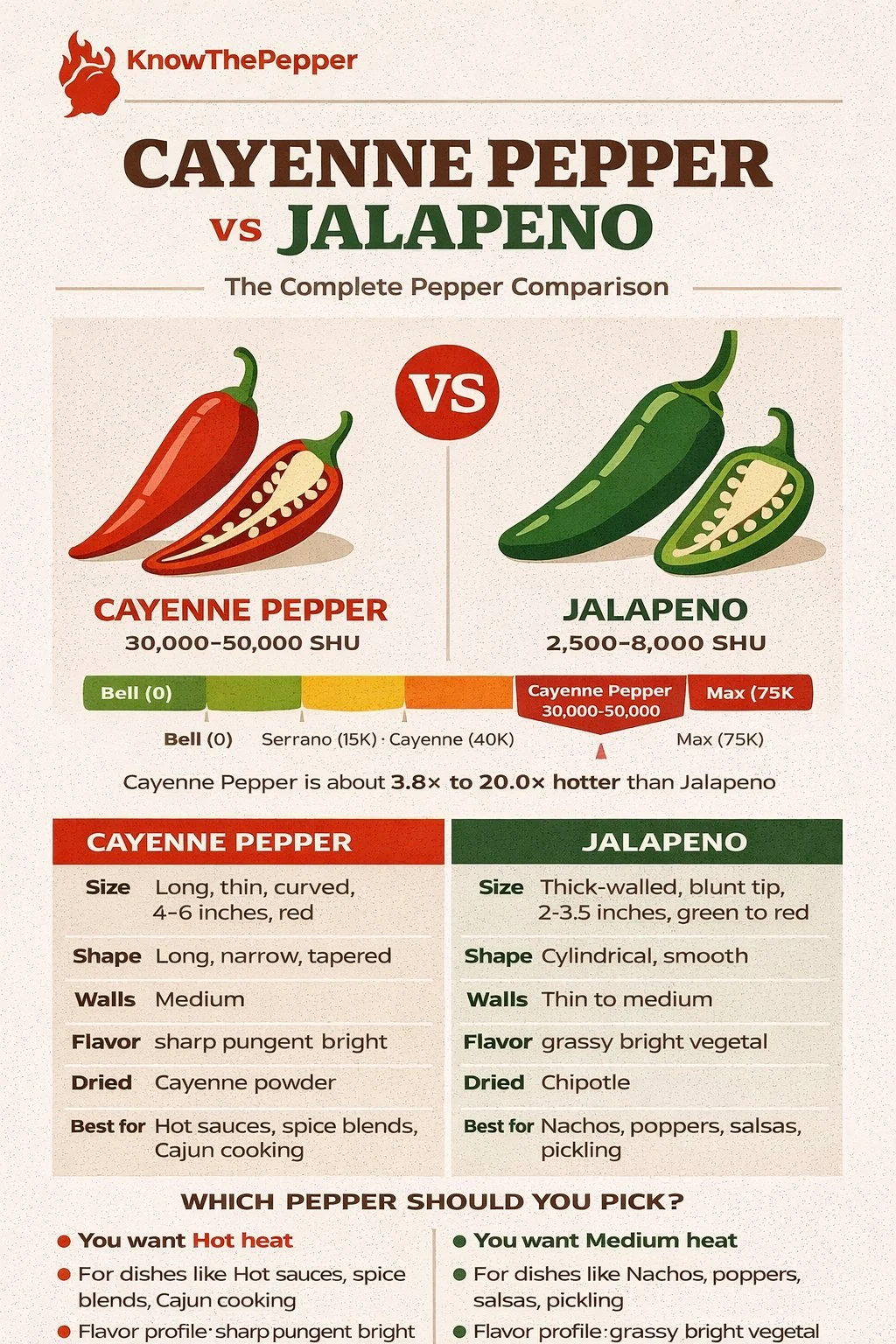
Culinary Uses for Cayenne Pepper and Jalapeño
These two peppers rarely compete for the same role in a recipe, which makes substitution trickier than it sounds.
Jalapeño excels in fresh and pickled applications. Pico de gallo, jalapeño poppers, nachos, ceviche, and escabeche all rely on the pepper's texture and flavor — not just its heat. You can't replicate that with cayenne powder. Jalapeño also works well roasted and blended into sauces, or sliced thin over tacos and grain bowls. The side-by-side heat gap between Anaheim and jalapeño shows just how jalapeño sits in the middle of fresh pepper cooking — hotter than mild roasting peppers, milder than anything truly hot.
Cayenne dominates in dry spice applications: rubs for grilled meat, seasoning blends, hot sauces, soups, stews, and anything that benefits from background heat without visible pepper pieces. A pinch in mac and cheese, chili, or even brownies adds warmth that most people can't identify but would miss if absent.
Substitution math: If a recipe calls for 1 fresh jalapeño and you only have cayenne powder, start with 1/8 to 1/4 teaspoon — you'll get comparable heat but lose all the fresh flavor and texture. Going the other direction is harder; replacing cayenne powder with fresh jalapeño means adding significant volume and moisture to a dish. Use 1-2 tablespoons of minced jalapeño per 1/4 teaspoon of cayenne, and expect the flavor profile to shift.
For heat comparisons in the fresh-pepper world, it helps to know where jalapeño sits relative to neighbors. The mild sweetness versus jalapeño heat contrast illustrates how jalapeño is already a step up from most everyday fresh peppers, while the bird's eye versus jalapeño intensity difference shows what happens when you push significantly hotter in a similar small-pepper format.
Both peppers work in hot sauces, though cayenne-based sauces (like classic Louisiana-style) are thinner and heat-forward, while jalapeño-based sauces carry more body and green flavor. If you grow your own, the full seed-starting and care guide for peppers covers both varieties — they have similar growing requirements as fellow C. annuum members.
Which Should You Choose?
Pick jalapeño when the pepper is part of the dish's identity — when you want people to taste the pepper, not just feel it. Fresh applications, pickling, stuffing, and any recipe where green vegetal flavor belongs. It's the botanical C. annuum species at its most food-forward.
Pick cayenne when heat is the goal and flavor neutrality is an asset. Dry rubs, spice blends, soups, and sauces that need warmth without a grassy note. At 30,000-50,000 SHU, cayenne gives you real heat impact in small quantities — a quarter-teaspoon does the work of several fresh jalapeños without adding moisture or texture.
If your pantry has room for both, keep them. They don't actually overlap much in practice — jalapeño lives in the fridge or pickle jar, cayenne lives in the spice drawer. The only time substitution makes sense is in a pinch, and even then, expect the dish to change character noticeably. These are tools for different jobs.
Can You Substitute One for the Other?
Yes — direct substitution works. Cayenne Pepper and Jalapeño are close enough in heat to swap at roughly 1:1. The main difference will be flavor. For more swap options, explore ranked alternatives with conversion ratios.
Growing Cayenne Pepper vs Jalapeño
If you’re deciding which pepper to grow at home, consider your climate and patience level. Cayenne Pepper and Jalapeño have different maturation times and temperature preferences. Hotter varieties generally need a longer, warmer growing season to develop their full capsaicin content. Our zone-based planting date tool can pinpoint the best sowing window for your area.
Cayenne is one of the more forgiving hot peppers to grow, which explains its global reach. Start seeds indoors 8-10 weeks before last frost.
For practical guidance on growing cayenne from transplant to harvest, the key variables are consistent heat and full sun. Cayenne wants at least 6-8 hours of direct light daily and struggles in cool, wet summers.
Transplant outdoors once nighttime temps stay above 55°F. Space plants 18-24 inches apart.
Jalapeños are among the most forgiving hot peppers to grow, but they do have preferences worth knowing.
Start seeds indoors 8–10 weeks before your last frost date. Soil temperature for germination should stay between 75–85°F — a heat mat under the seed tray makes a real difference in germination speed and uniformity.
Transplant outdoors once nighttime temps stay consistently above 55°F. Jalapeños want full sun — at least 6 hours daily — and well-drained soil with a pH around **6.
History & Origin of Cayenne Pepper and Jalapeño
Both peppers carry centuries of culinary heritage. Cayenne Pepper traces its roots to French Guiana, while Jalapeño originates from Mexico. Understanding their backstory helps explain why each pepper developed its distinctive traits.
Buying & Storage
Whether you’re shopping for Cayenne Pepper or Jalapeño, the same quality indicators apply. Fresh peppers should feel firm and heavy for their size, with taut, glossy skin and no soft or wet spots. Minor stem cracks known as “corking” are perfectly normal and often indicate a mature, flavorful pod.
- Firm pods with taut skin and consistent color
- Should feel heavy relative to size
- Minor stem cracks (“corking”) are normal
- Avoid anything soft, shriveled, or with dark wet spots
- Fresh: Paper bag, crisper drawer — 1–2 weeks
- Frozen: Wash, dry, freeze on sheet pan — 6+ months
- Dried: Airtight, away from light — up to 1 year
The Verdict: Cayenne Pepper vs Jalapeño
Cayenne Pepper and Jalapeño occupy very different positions on the heat spectrum. Cayenne Pepper delivers 6× more heat with its distinctive neutral and peppery character. Jalapeño, with its bright and grassy profile, excels in everyday cooking.
Frequently Asked Questions
Related Comparisons
Sources pending verification.