Cayenne Pepper vs Serrano Pepper: What's the Difference?
Cayenne and serrano are both kitchen staples, but they sit in different heat brackets and bring genuinely different flavors to the table. Cayenne runs hotter and drier, built for powders and hot sauces, while serrano delivers a bright, grassy bite that shines fresh. Knowing which to reach for changes a dish more than most cooks expect.

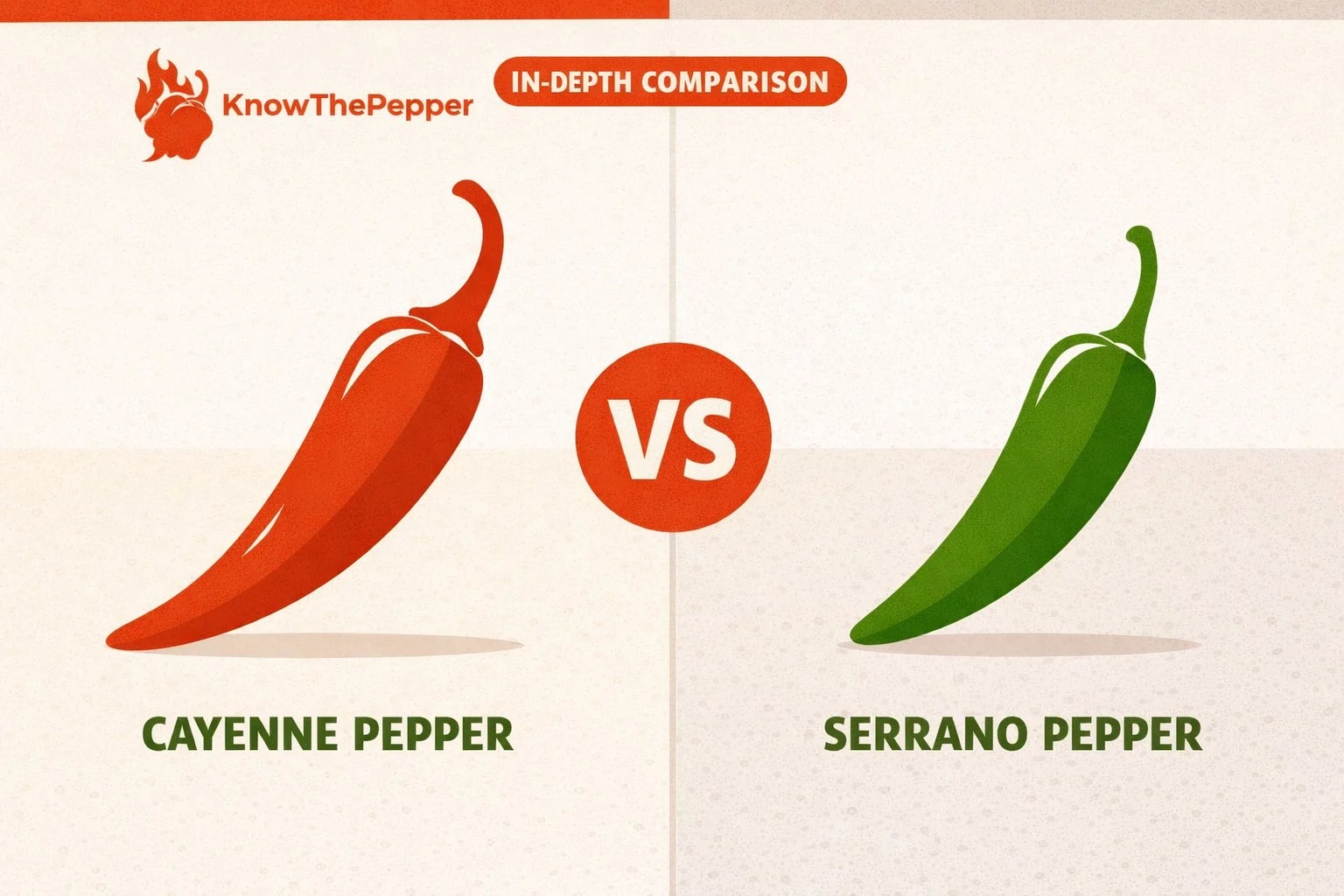
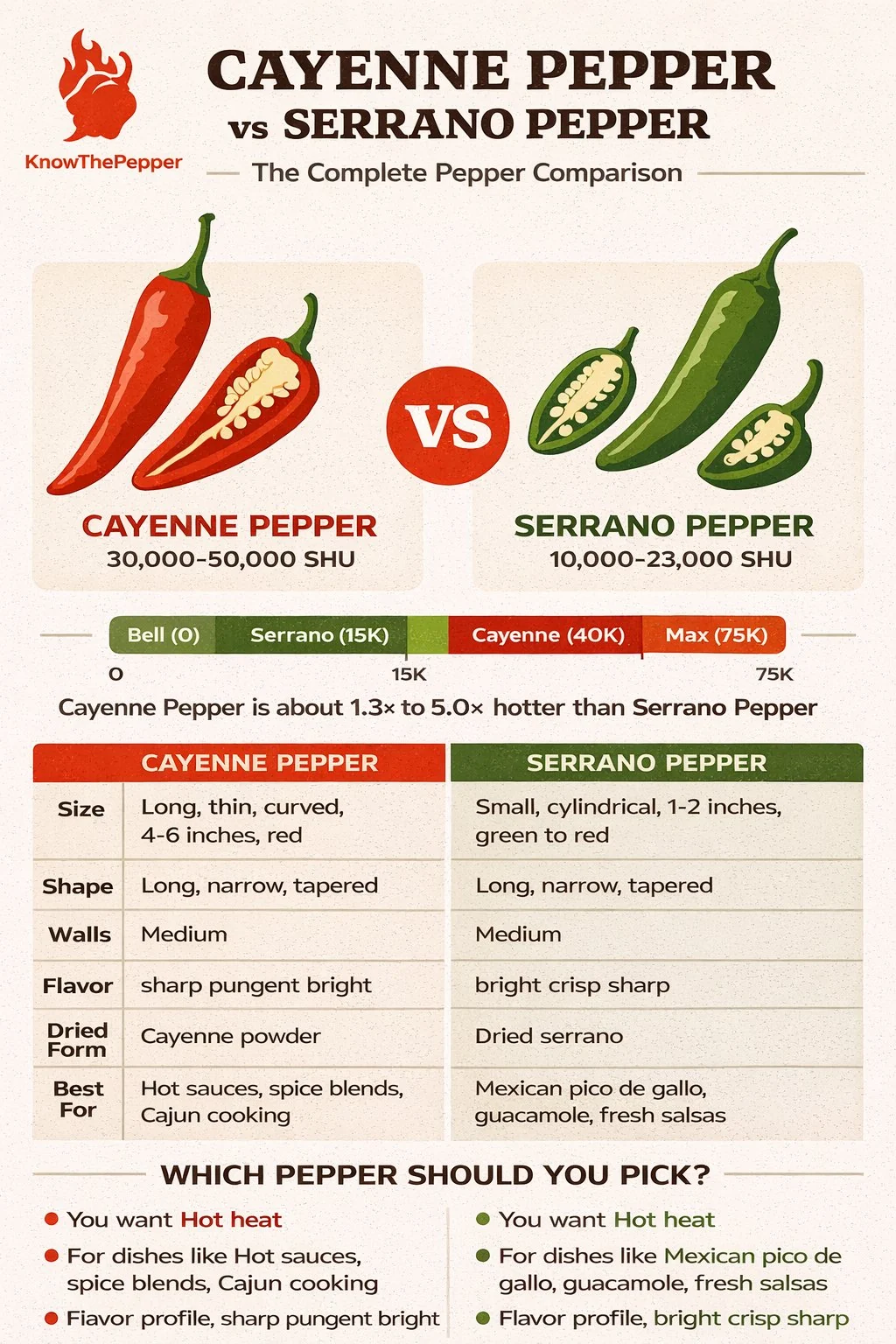
Cayenne Pepper measures 30K–50K SHU while Serrano Pepper registers 10K–23K SHU — making Cayenne Pepper 2× hotter. Cayenne Pepper is known for its neutral and peppery flavor (C. annuum), while Serrano Pepper offers bright and crisp notes (C. annuum).
- Heat difference: Cayenne Pepper is 2× hotter
- Species: Both are C. annuum
- Best for: Cayenne Pepper excels in everyday cooking and salsas, Serrano Pepper in fresh salsas and mild recipes
Cayenne Pepper
HotSerrano Pepper
HotCayenne Pepper vs Serrano Pepper Comparison
Cayenne Pepper vs Serrano Pepper Heat Levels
Bite into a raw serrano and you get an immediate, clean spike of heat — sharp at the front of the mouth, fading relatively quickly. Cayenne is a slower, deeper burn that lingers in the throat.
Cayenne pepper measures between 30,000 and 50,000 SHU on the Scoville scale's capsaicin testing method. Serrano comes in at 10,000 to 23,000 SHU. That puts cayenne roughly 2 to 5 times hotter than serrano depending on individual pods.
For a more grounded comparison: a Fresno pepper's milder, fruitier burn sits around 2,500-10,000 SHU. Serrano runs about 2-4x hotter than Fresno, and cayenne pushes that further still — roughly 5-12x above Fresno's ceiling.
Both peppers belong to the high-heat SHU bracket that most home cooks consider genuinely spicy rather than merely warm. Neither will hospitalize you, but cayenne can easily overwhelm a dish if you treat it like serrano.
The heat character differs too. Serrano's capsaicin load produces a quick, punchy burn that pairs with its vegetal brightness. Cayenne's burn, driven by a different capsaicinoid ratio, spreads more broadly across the palate. The receptor science behind capsaicin's lingering effect explains why dried cayenne powder often feels hotter than its SHU number suggests — concentration and particle size both matter.
Flavor Profile Comparison
Few peppers have traveled as far or worked as hard as cayenne.
Bite into a raw serrano and the first thing you notice is the aroma — green, grassy, almost herbal, like a jalapeño that decided to be serious.
Strip away the heat and these two peppers taste nothing alike. Serrano is grassy, bright, and almost citrusy — closer in flavor to a jalapeño than to cayenne, but sharper and less sweet. Fresh serranos have a clean vegetal quality that holds up well when sliced raw into pico de gallo or salsa verde.
Cayenne in its fresh form is thin-walled and mildly fruity, but most cooks never encounter it that way. Dried and ground cayenne develops an earthier, slightly smoky character with very little of the fresh fruit notes intact. The drying process concentrates heat while muting the brighter flavors.
This is the core culinary divide: serrano is a fresh pepper with a distinct flavor identity, while cayenne is primarily a heat delivery system — especially in powder form. When a recipe calls for cayenne, it usually wants heat without much flavor interference. When a recipe calls for serrano, the pepper's own taste is part of the point.
Aroma also separates them. Fresh serrano smells green and peppery, almost herbaceous. Dried cayenne smells warm and dusty, with a faint sweetness that deepens when it hits hot oil. Neither has the fruity, tropical aroma of hotter peppers like habanero — you can see that contrast in the habanero versus serrano flavor difference.
In cooked applications, serrano softens and mellows but retains some structure. Cayenne — whether fresh or dried — essentially dissolves into whatever it touches, contributing heat and a mild earthiness without textural presence.
Culinary Uses for Cayenne Pepper and Serrano Pepper
These peppers don't really compete for the same role in a kitchen. They occupy different niches, and substituting one for the other requires adjustment.
Serrano is the fresh-pepper workhorse of Mexican cooking. Slice it raw into salsas, chop it into guacamole, or roast it whole for salsa roja. It holds up to heat well — unlike jalapeños, serranos don't turn mushy when cooked briefly. Pickling serrano slices in lime juice and salt is a classic taco topping that takes about 20 minutes. The de arbol's sharper, drier heat versus serrano's grassy brightness shows why serrano is often preferred when you want heat with fresh flavor rather than pure fire.
Cayenne dominates spice blends, hot sauces, and dry rubs. It's the backbone of most commercial hot sauces and a standard ingredient in Cajun and Creole seasoning. A quarter teaspoon of cayenne powder in a pot of chili adds heat without muddying the other flavors. Fresh cayenne can be used like serrano, but it's harder to find and the thin walls make it less satisfying to chop.
Substitution ratios: If a recipe calls for 1 serrano, you can approximate the heat (not the flavor) with about 1/4 teaspoon of cayenne powder. Going the other direction — replacing cayenne powder with serrano — is trickier. Use 1-2 fresh serranos per teaspoon of cayenne called for, but expect a flavor shift toward grassy and bright rather than earthy.
For hot sauce projects, cayenne is easier to control in dried form. For fresh salsas and relishes, serrano is almost always the better call. Neither pepper is ideal for stuffing — cayenne is too thin, and serrano is too small for most fillings.
If you grow your own, check out the seed-starting full guide for hot peppers — both varieties are relatively easy, though serrano tends to be more productive per plant in humid climates.
Which Should You Choose?
Cayenne is the better choice when you need pure, controllable heat — in spice blends, sauces, or any dish where you want fire without a distinct pepper flavor getting in the way. It's also the more practical pantry item since dried cayenne keeps for months and measures predictably.
Serrano wins when fresh pepper flavor matters — in raw preparations, quick salsas, or anywhere the grassy brightness of the pepper is part of the dish's identity. It's a better eating pepper in the traditional sense.
For most home cooks, having both makes more sense than choosing one. Keep ground cayenne in the spice drawer for heat-on-demand. Keep fresh serranos in the fridge for the week's salsa and taco nights.
If you're trying to replace one with the other, go in with realistic expectations — the heat transfer is manageable, but the flavor swap is real. Neither pepper is a perfect stand-in for the other.
Can You Substitute One for the Other?
Yes — direct substitution works. Cayenne Pepper and Serrano Pepper are close enough in heat to swap at roughly 1:1. The main difference will be flavor. For more swap options, explore ranked alternatives with conversion ratios.
Growing Cayenne Pepper vs Serrano Pepper
If you’re deciding which pepper to grow at home, consider your climate and patience level. Cayenne Pepper and Serrano Pepper have different maturation times and temperature preferences. Hotter varieties generally need a longer, warmer growing season to develop their full capsaicin content. Our zone-based planting date tool can pinpoint the best sowing window for your area.
Cayenne is one of the more forgiving hot peppers to grow, which explains its global reach. Start seeds indoors 8-10 weeks before last frost.
For practical guidance on growing cayenne from transplant to harvest, the key variables are consistent heat and full sun. Cayenne wants at least 6-8 hours of direct light daily and struggles in cool, wet summers.
Transplant outdoors once nighttime temps stay above 55°F. Space plants 18-24 inches apart.
Serranos are reliable producers that reward patient gardeners. Start seeds indoors 8–10 weeks before last frost — germination takes 10–21 days at soil temperatures around 80–85°F.
Transplant outdoors once nighttime temps stay above 55°F. Space plants 18–24 inches apart in full sun with well-draining soil amended with compost.
Days to maturity runs 70–80 days from transplant to green-ripe. Letting pods fully ripen to red adds another 2–3 weeks but intensifies both flavor and heat.
History & Origin of Cayenne Pepper and Serrano Pepper
Both peppers carry centuries of culinary heritage. Cayenne Pepper traces its roots to French Guiana, while Serrano Pepper originates from Mexico. Understanding their backstory helps explain why each pepper developed its distinctive traits.
Buying & Storage
Whether you’re shopping for Cayenne Pepper or Serrano Pepper, the same quality indicators apply. Fresh peppers should feel firm and heavy for their size, with taut, glossy skin and no soft or wet spots. Minor stem cracks known as “corking” are perfectly normal and often indicate a mature, flavorful pod.
- Firm pods with taut skin and consistent color
- Should feel heavy relative to size
- Minor stem cracks (“corking”) are normal
- Avoid anything soft, shriveled, or with dark wet spots
- Fresh: Paper bag, crisper drawer — 1–2 weeks
- Frozen: Wash, dry, freeze on sheet pan — 6+ months
- Dried: Airtight, away from light — up to 1 year
The Verdict: Cayenne Pepper vs Serrano Pepper
Cayenne Pepper and Serrano Pepper sit in the same heat tier but serve different roles. Cayenne Pepper delivers 2× more heat with its distinctive neutral and peppery character. Serrano Pepper, with its bright and crisp profile, excels in everyday cooking.
Frequently Asked Questions
Related Comparisons
Sources pending verification.