Cascabel Pepper vs Guajillo Pepper: What's the Difference?
Cascabel and guajillo are both dried Mexican chilies central to traditional sauces and moles, but they differ meaningfully in heat, flavor depth, and kitchen application. The cascabel is a small, round dried pepper with a nutty, earthy warmth, while the guajillo brings a longer, leathery pod with brighter berry-like acidity and moderate heat. Understanding these differences helps you choose the right pepper for the right dish.

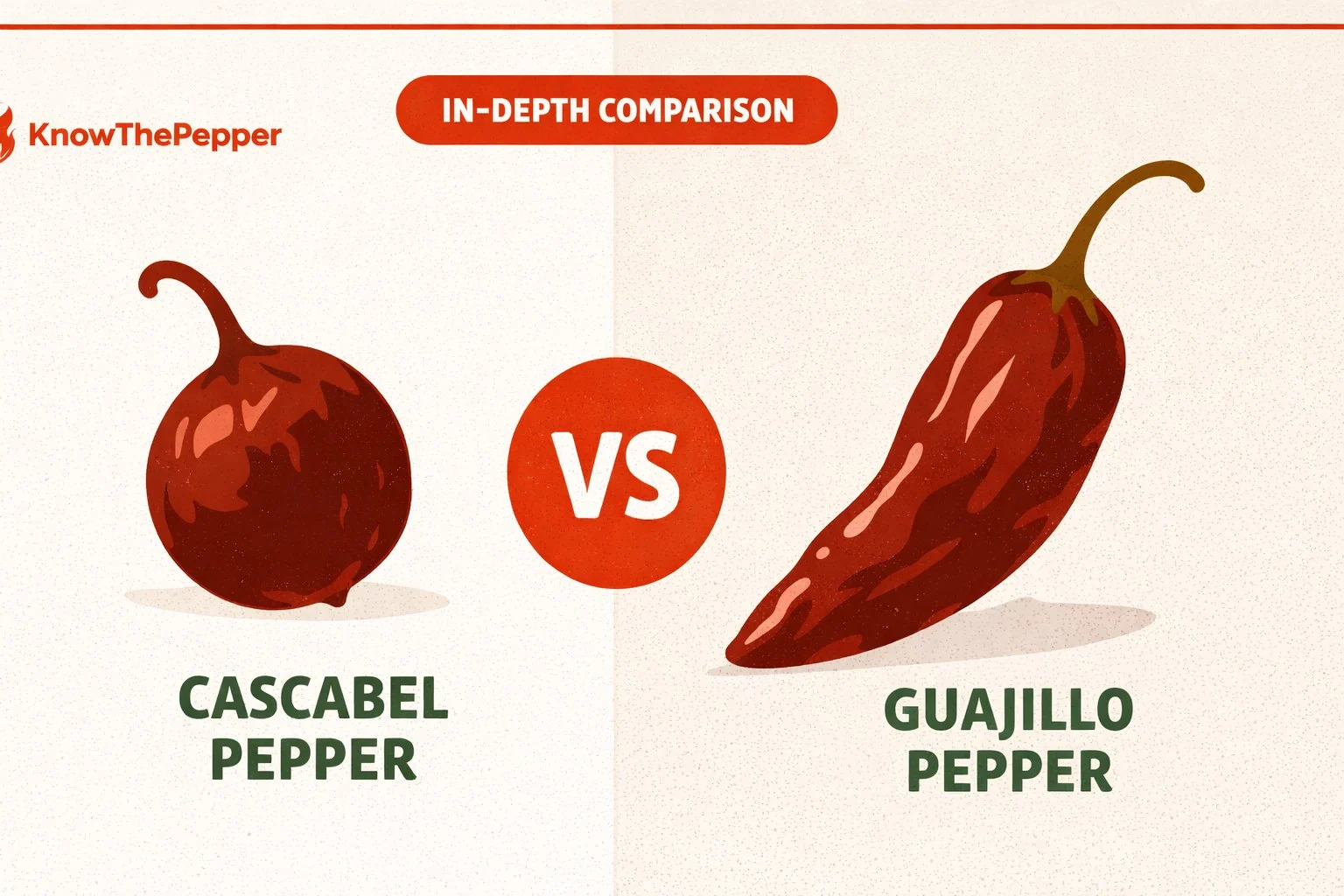
Cascabel Pepper measures 1K–3K SHU while Guajillo Pepper registers 3K–5K SHU — making Guajillo Pepper 2× hotter. Cascabel Pepper is known for its nutty and smoky flavor (C. annuum), while Guajillo Pepper offers tangy and sweet notes (C. annuum).
- Heat difference: Guajillo Pepper is 2× hotter
- Species: Both are C. annuum
- Best for: Cascabel Pepper excels in everyday cooking and salsas, Guajillo Pepper in fresh salsas and mild recipes
Cascabel Pepper
MediumGuajillo Pepper
MediumCascabel Pepper vs Guajillo Pepper Comparison
Cascabel Pepper vs Guajillo Pepper Heat Levels
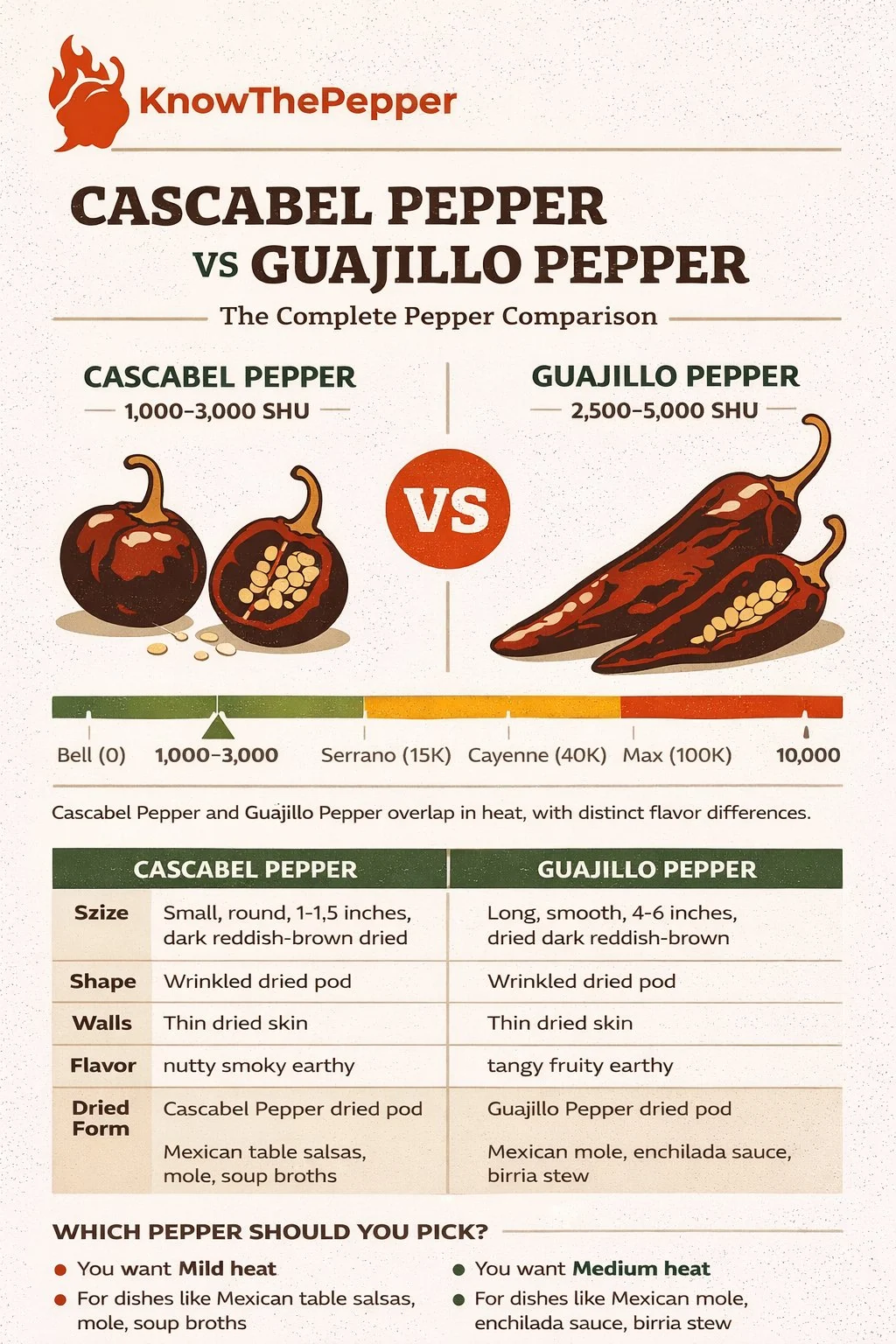
Both peppers sit in the mild-to-medium heat range, but there is a clear gap between them. Cascabel registers at roughly 1,000-3,000 SHU on the Scoville heat measurement scale, placing it firmly in the mild SHU bracket. Guajillo runs hotter at 2,500-5,000 SHU, putting it at the lower end of the medium heat tier.
For context, a fresh serrano pepper typically reaches 10,000-23,000 SHU - meaning cascabel is roughly 5-10 times milder than serrano, and guajillo is still 3-5 times milder. Neither pepper is going to challenge experienced heat-seekers, but the difference between them matters in delicate sauces where you want control over the final burn.
The heat character also differs in texture. Cascabel's warmth builds slowly and sits at the back of the palate - a gentle, smoldering quality that doesn't announce itself immediately. Guajillo's heat is slightly sharper and arrives sooner, though it still fades quickly without the lingering intensity you'd find in something like a de arbol's sharp heat gap compared to guajillo.
For dishes where heat precision matters - a traditional mole negro or a chile-braised short rib - cascabel gives you more forgiveness. Guajillo offers a bit more presence without crossing into uncomfortable territory for heat-sensitive diners.
Flavor Profile Comparison
Few dried chiles carry as much personality as the cascabel.
Long before supermarkets stocked dried chiles by the bag, guajillo peppers were already a cornerstone of Mexican cooking.
Flavor is where these two peppers diverge most dramatically, and it's the real reason cooks treat them as distinct ingredients rather than interchangeable.
Cascabel - the name means 'rattle' in Spanish, a reference to the seeds that shake inside the dried pod - delivers a flavor that is distinctly nutty and earthy, with hints of tobacco, dried cherry, and a faint woodiness. There's a roundness to it, a depth that comes from the thick flesh drying down into a concentrated, almost chocolatey base note. The aroma when toasted is reminiscent of roasted nuts and dried fruit simultaneously.
Guajillo, by contrast, leads with tangy berry acidity - cranberry and dried plum are common comparisons - layered over a mild tea-like quality. The skin is thinner and more leathery, which concentrates a brighter, fruitier character rather than the dense earthiness you get from cascabel. Toasted guajillo fills the kitchen with a slightly sweet, almost floral fragrance.
In a sauce or mole, cascabel contributes body and depth without asserting a dominant flavor note - it supports and rounds. Guajillo tends to be more expressive, contributing a recognizable fruity-tangy backbone that you can actually taste as a distinct element.
This is partly why guajillo appears so frequently in chipotle-versus-guajillo side-by-side comparisons - its brightness contrasts sharply with smoky peppers. Cascabel, meanwhile, blends seamlessly into complex multi-pepper sauces where no single flavor should dominate.
Culinary Uses for Cascabel Pepper and Guajillo Pepper
Both peppers are almost always used in their dried form, and both benefit from a quick dry-toast in a hot skillet before rehydrating - 20-30 seconds per side until fragrant but not bitter.
Cascabel shines in slow-cooked applications: braised meats, pozole rojo, hearty bean soups, and complex moles where you want layered earthiness without sharp edges. Its round shape and thick walls mean it rehydrates into a meaty, substantial piece that blends smoothly into sauces. It pairs naturally with dark chocolate, cumin, and dried herbs. Use 2-3 cascabel peppers per cup of sauce as a starting point for a moderate flavor presence.
Guajillo is one of the most versatile dried chilies in Mexican cooking. It forms the base of classic enchilada sauce, chile colorado, and the red adobo used for birria and carnitas. Its acidity makes it particularly effective in marinades where you want the pepper flavor to penetrate meat. Guajillo also works well in chilhuacle preparations where guajillo's fruitier profile contrasts interestingly with earthier dried peppers. A typical enchilada sauce calls for 4-6 guajillo pods per batch.
For substitution: cascabel can replace guajillo at a 1:1 ratio but expect a nuttier, less acidic result - add a small squeeze of lime to compensate for the missing brightness. Going the other direction, guajillo replacing cascabel will produce a sharper, fruitier flavor; consider adding a small piece of dried ancho or mulato to restore the earthy depth.
Both peppers store well. Dried pods keep in an airtight container for up to 12 months without significant flavor loss. Ground cascabel or guajillo powder extends shelf life further but loses aromatic complexity faster than whole pods.
Which Should You Choose?
Choose cascabel when you want depth without dominance - it is the supporting actor of the dried chili world, adding body and earthiness to complex preparations without taking over. It's the right call for moles, pozole, and any dish where multiple chili varieties are working together.
Choose guajillo when you want a pepper that brings its own distinct voice to the dish. Its fruity acidity and moderate heat make it ideal as the primary or sole chili in enchilada sauces, marinades, and braises where you want a recognizable red-chili character.
For cooks building a pantry, guajillo is the higher-priority purchase - it's more broadly applicable and appears in more classic recipes. Cascabel is the next logical addition once you've mastered guajillo-based sauces and want to add complexity to multi-pepper preparations. Neither is a substitute for the other in recipes where they're specified, but both reward the cook who understands what each one actually does.
Can You Substitute One for the Other?
Yes — direct substitution works. Cascabel Pepper and Guajillo Pepper are close enough in heat to swap at roughly 1:1. The main difference will be flavor. For more swap options, explore ranked alternatives with conversion ratios.
Growing Cascabel Pepper vs Guajillo Pepper
If you’re deciding which pepper to grow at home, consider your climate and patience level. Cascabel Pepper and Guajillo Pepper have different maturation times and temperature preferences. Hotter varieties generally need a longer, warmer growing season to develop their full capsaicin content. Our zone-based planting date tool can pinpoint the best sowing window for your area.
Growing cascabel is straightforward for anyone comfortable with standard C. annuum species cultivation.
Start seeds indoors 8–10 weeks before the last frost date. The small round fruits set heavily once the plant matures, and they ripen from green to red.
For indoor starting and transplanting, cascabels need the same basics as other annuums: consistent soil temps around 80°F for germination, full sun after transplant, and well-draining soil. They're less finicky than some thin-walled varieties.
Growing guajillo means starting with the mirasol variety — the fresh pepper that becomes guajillo after drying. If you're new to starting chiles from seed indoors, mirasol is a forgiving choice: germination is reliable, and the plants are vigorous once established.
Start seeds 8–10 weeks before your last frost date. Mirasol plants prefer full sun and well-drained soil, thriving in USDA zones 9–11 or as annuals in cooler climates.
The upward-pointing fruit habit (the 'looking at the sun' trait) means pods dry naturally on the plant in hot, dry climates. In humid regions, harvest before the first frost and finish drying indoors using a dehydrator set to 135°F for 8–12 hours.
History & Origin of Cascabel Pepper and Guajillo Pepper
Both peppers carry centuries of culinary heritage. Cascabel Pepper traces its roots to Mexico, while Guajillo Pepper originates from Mexico. Understanding their backstory helps explain why each pepper developed its distinctive traits.
Buying & Storage
Whether you’re shopping for Cascabel Pepper or Guajillo Pepper, the same quality indicators apply. Fresh peppers should feel firm and heavy for their size, with taut, glossy skin and no soft or wet spots. Minor stem cracks known as “corking” are perfectly normal and often indicate a mature, flavorful pod.
- Firm pods with taut skin and consistent color
- Should feel heavy relative to size
- Minor stem cracks (“corking”) are normal
- Avoid anything soft, shriveled, or with dark wet spots
- Fresh: Paper bag, crisper drawer — 1–2 weeks
- Frozen: Wash, dry, freeze on sheet pan — 6+ months
- Dried: Airtight, away from light — up to 1 year
The Verdict: Cascabel Pepper vs Guajillo Pepper
Cascabel Pepper and Guajillo Pepper sit in the same heat tier but serve different roles. Guajillo Pepper delivers 2× more heat with its distinctive tangy and sweet character. Cascabel Pepper, with its nutty and smoky profile, excels in everyday cooking.
Frequently Asked Questions
Related Comparisons
Sources pending verification.