Calabrian Chili vs Red Pepper Flakes: Key Differences
Calabrian chili and red pepper flakes overlap in heat range but diverge sharply in flavor, texture, and culinary purpose. Calabrian chili brings fruity, smoky depth from a single Italian landrace variety, while red pepper flakes are a blended product with a sharper, more generic burn. Knowing which to reach for can transform a dish.

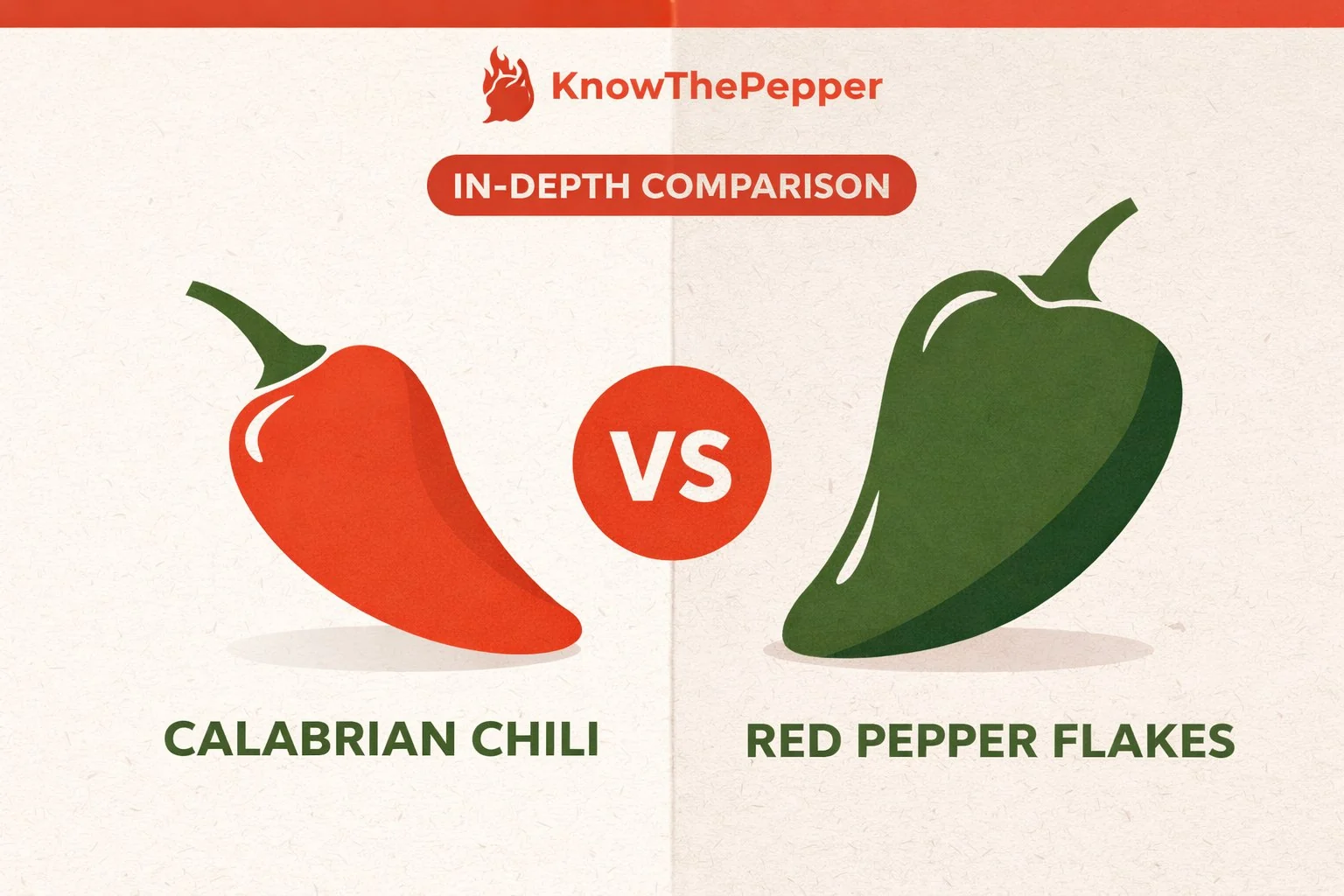
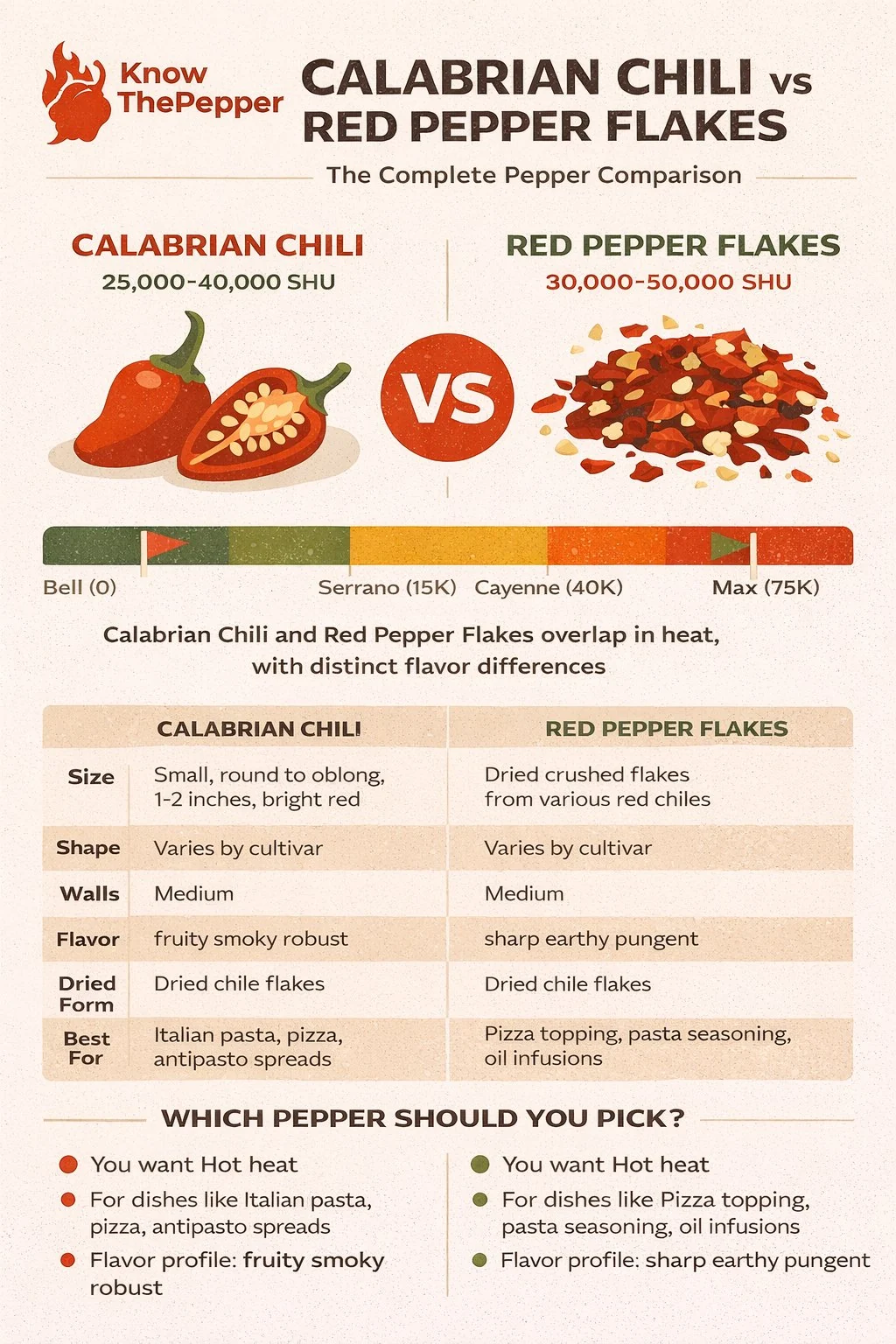
Calabrian Chili measures 25K–40K SHU while Red Pepper Flakes registers 15K–45K SHU — roughly equal in heat. Calabrian Chili is known for its fruity and smoky flavor (C. annuum), while Red Pepper Flakes offers sharp and peppery notes (C. annuum).
- Species: Both are C. annuum
- Best for: Calabrian Chili excels in everyday cooking and salsas, Red Pepper Flakes in fresh salsas and mild recipes
Calabrian Chili
HotRed Pepper Flakes
HotCalabrian Chili vs Red Pepper Flakes Comparison
Calabrian Chili vs Red Pepper Flakes Heat Levels
Calabrian chili clocks in at 25,000-40,000 SHU, while red pepper flakes span a wider 15,000-45,000 SHU depending on which dried peppers went into the blend. On paper, they overlap significantly - but that range tells different stories.
Anaheim peppers sit around 500-2,500 SHU, which makes Calabrian chili roughly 10-80 times hotter than an Anaheim. Red pepper flakes at their hottest edge hit about 18 times that same reference point. Both sit firmly in the hot pepper intensity band on the Scoville scale.
The key difference isn't the peak number - it's consistency. Calabrian chili comes from one specific cultivar grown in Calabria, Italy, so the heat stays predictable batch to batch. Red pepper flakes are typically a blend of cayenne, serrano, and other dried C. annuum varieties, which means the SHU can shift noticeably between brands or even between jars of the same brand.
Calabrian chili's heat also builds more gradually - it comes layered with fruity and oily notes that slow the initial burn. Red pepper flakes hit faster and sharper, with less warmth behind them. For a deeper look at how capsaicin triggers that TRPV1 heat response in your mouth, the mechanism is the same for both, but the delivery differs because of fat content and particle size.
If you want precision and depth, Calabrian wins on heat character. If you want variable punch at lower cost, flakes do the job.
Flavor Profile Comparison
Calabria, the sun-scorched toe of Italy's boot, produces a pepper that reflects its terroir completely — intense, complex, and a little wild.
The first thing you notice is the smell - a dry, dusty heat that rises off the jar before you've even shaken it.
This is where the two peppers genuinely part ways. Calabrian chili carries a fruity, almost wine-like sweetness underneath its heat - think dried cherry and sun-dried tomato with a faint smokiness. It's preserved in oil most often, which rounds out the edges and adds richness that dried flakes simply can't replicate.
Red pepper flakes taste sharp and peppery, sometimes with a dusty dried-herb quality. There's no real fruit character, no smoke, and the flavor dissipates faster on the palate. That's not a knock - that sharpness is exactly what you want when you're blooming flakes in olive oil for pasta aglio e olio or topping a pizza.
The texture plays into flavor perception too. Calabrian chili in paste or whole-preserved form releases its oils slowly as it cooks, infusing sauces with a sustained background heat and complexity. Flakes rehydrate unevenly and can turn bitter if they sit in a dry pan too long.
Aroma is another dividing line. Open a jar of good Calabrian chili paste and you get something close to fermented pepper and olive brine. Red pepper flakes smell like dried capsicum - clean and one-dimensional by comparison.
For Italian-focused cooking, this comparison with Aleppo pepper's smoky-fruity contrast against Calabrian chili is worth reading if you want to understand where Calabrian sits on the fruity-pepper spectrum. It's genuinely complex fruit-forward heat, not just heat with color.
Culinary Uses for Calabrian Chili and Red Pepper Flakes
Red pepper flakes are the workhorse. They bloom fast in hot oil, distribute evenly across pizza, pasta, and grain bowls, and add heat without changing the flavor profile of a dish. Use them when you want pure heat delivery without altering the base flavor - finishing a soup, seasoning a dry rub, or adding kick to a vinaigrette.
Calabrian chili works better as a flavor builder. A spoonful of Calabrian chili paste stirred into tomato sauce, nduja, or aioli adds heat plus dimension. The oily, fruity character integrates into fats beautifully - it's why you see it in everything from Italian-American pasta dishes to high-end pizza toppings.
Substitution ratios matter here. Replacing Calabrian chili with red pepper flakes requires adjustment: use about 1/2 teaspoon flakes for every 1 teaspoon Calabrian paste, and add a small amount of olive oil to compensate for the lost fat content. Going the other direction - replacing flakes with Calabrian - use roughly 1 teaspoon paste per 3/4 teaspoon flakes, and expect the dish to taste fruitier and richer.
For braised meats, Calabrian wins outright. The preserved chili holds up to long cooking times and contributes to the sauce body. Flakes can turn acrid after extended heat exposure.
The gochugaru versus red pepper flakes breakdown is useful context here - it shows how different dried pepper formats affect final dish flavor, and the same logic applies when choosing between Calabrian and standard flakes.
For dishes rooted in the regional cooking traditions of Italian peppers, Calabrian chili is the authentic choice. Red pepper flakes belong in your pantry too - they just serve a different function. The sweet-versus-spicy contrast of Peperone di Senise against Calabrian chili shows how even within Calabria itself, pepper character varies dramatically by variety.
Which Should You Choose?
Calabrian chili is the better choice when flavor complexity matters - braises, pasta sauces, dips, and anything where you want heat to carry fruit and smoke alongside it. The 25,000-40,000 SHU range is consistent and the oily preservation format makes it easy to control how much you add.
Red pepper flakes win on accessibility and versatility. They're cheaper, shelf-stable for longer, and deliver clean heat without altering the flavor direction of a dish. For finishing, blooming in oil, or seasoning dry applications, they're hard to beat.
Both belong to the broader C. annuum botanical family, which explains the overlapping heat ranges - but species alone doesn't determine flavor. If your recipe calls for red pepper flakes and you have Calabrian chili, you can substitute with the ratios above and get a better result. The reverse is trickier - flakes can't replicate Calabrian's depth.
For most home cooks, keep both on hand. Reach for Calabrian when building flavor from the ground up, and flakes when you just need heat.
Can You Substitute One for the Other?
Yes — direct substitution works. Calabrian Chili and Red Pepper Flakes are close enough in heat to swap at roughly 1:1. The main difference will be flavor. For more swap options, explore ranked alternatives with conversion ratios.
Growing Calabrian Chili vs Red Pepper Flakes
If you’re deciding which pepper to grow at home, consider your climate and patience level. Calabrian Chili and Red Pepper Flakes have different maturation times and temperature preferences. Hotter varieties generally need a longer, warmer growing season to develop their full capsaicin content. Our zone-based planting date tool can pinpoint the best sowing window for your area.
Growing Calabrian chilies follows the standard C. annuum playbook, but they particularly reward warm, dry conditions — which makes sense given their origin.
Transplant outdoors once nighttime temps stay above 55°F. These plants prefer full sun and well-drained soil; they'll tolerate drought better than many peppers but produce more flavorful pods with consistent moderate watering.
Pods mature in 80–90 days from transplant. Harvest when fully red for maximum fruity character.
Red pepper flakes aren't a single variety - they're a product. But growing the peppers that go into them is straightforward if you start with cayenne-type **C.
Start seeds indoors 8–10 weeks before last frost. Germination is reliable at soil temperatures between 75–85°F.
For flake production, the goal is full red ripeness - green or partially ripe pods won't dry with the right color or heat intensity. Most cayenne-type varieties reach maturity in 70–80 days from transplant.
History & Origin of Calabrian Chili and Red Pepper Flakes
Both peppers carry centuries of culinary heritage. Calabrian Chili traces its roots to Italy, while Red Pepper Flakes originates from Global. Understanding their backstory helps explain why each pepper developed its distinctive traits.
Buying & Storage
Whether you’re shopping for Calabrian Chili or Red Pepper Flakes, the same quality indicators apply. Fresh peppers should feel firm and heavy for their size, with taut, glossy skin and no soft or wet spots. Minor stem cracks known as “corking” are perfectly normal and often indicate a mature, flavorful pod.
- Firm pods with taut skin and consistent color
- Should feel heavy relative to size
- Minor stem cracks (“corking”) are normal
- Avoid anything soft, shriveled, or with dark wet spots
- Fresh: Paper bag, crisper drawer — 1–2 weeks
- Frozen: Wash, dry, freeze on sheet pan — 6+ months
- Dried: Airtight, away from light — up to 1 year
The Verdict: Calabrian Chili vs Red Pepper Flakes
Calabrian Chili and Red Pepper Flakes sit in the same heat tier but serve different roles. Red Pepper Flakes delivers its distinctive sharp and peppery character. Calabrian Chili, with its fruity and smoky profile, excels in everyday cooking.
Frequently Asked Questions
Related Comparisons
Sources pending verification.