
Bird's Eye Chili vs Thai Chili: Which Pepper Should You Use?
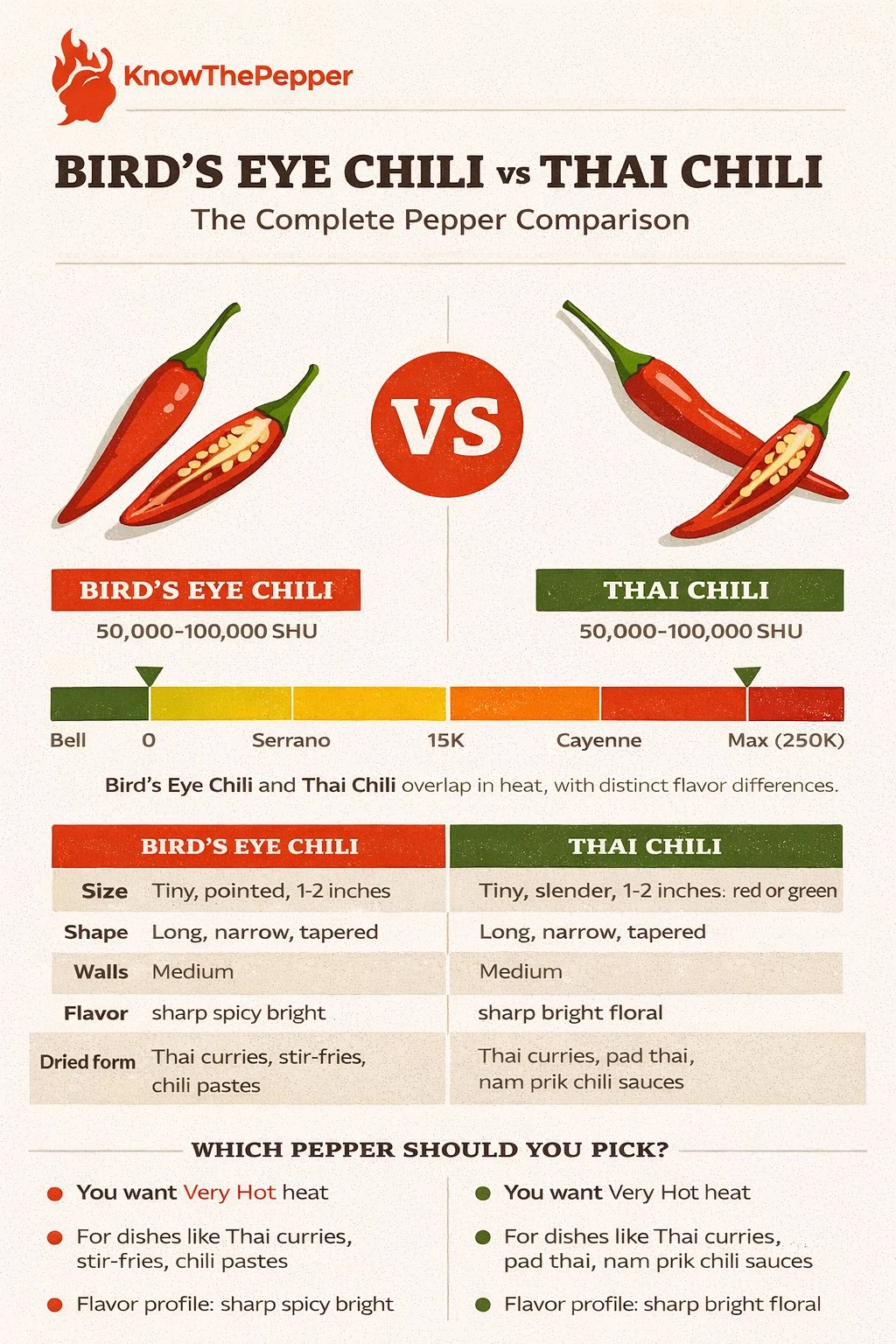
Bird's eye chili and Thai chili are so closely related that most cooks — and many vendors — use the names interchangeably. Both measure 50,000-100,000 SHU, share the same C. annuum species, and trace their roots to Thailand. The real differences come down to regional naming conventions, pod size, and subtle flavor nuances that matter more in the kitchen than on paper.

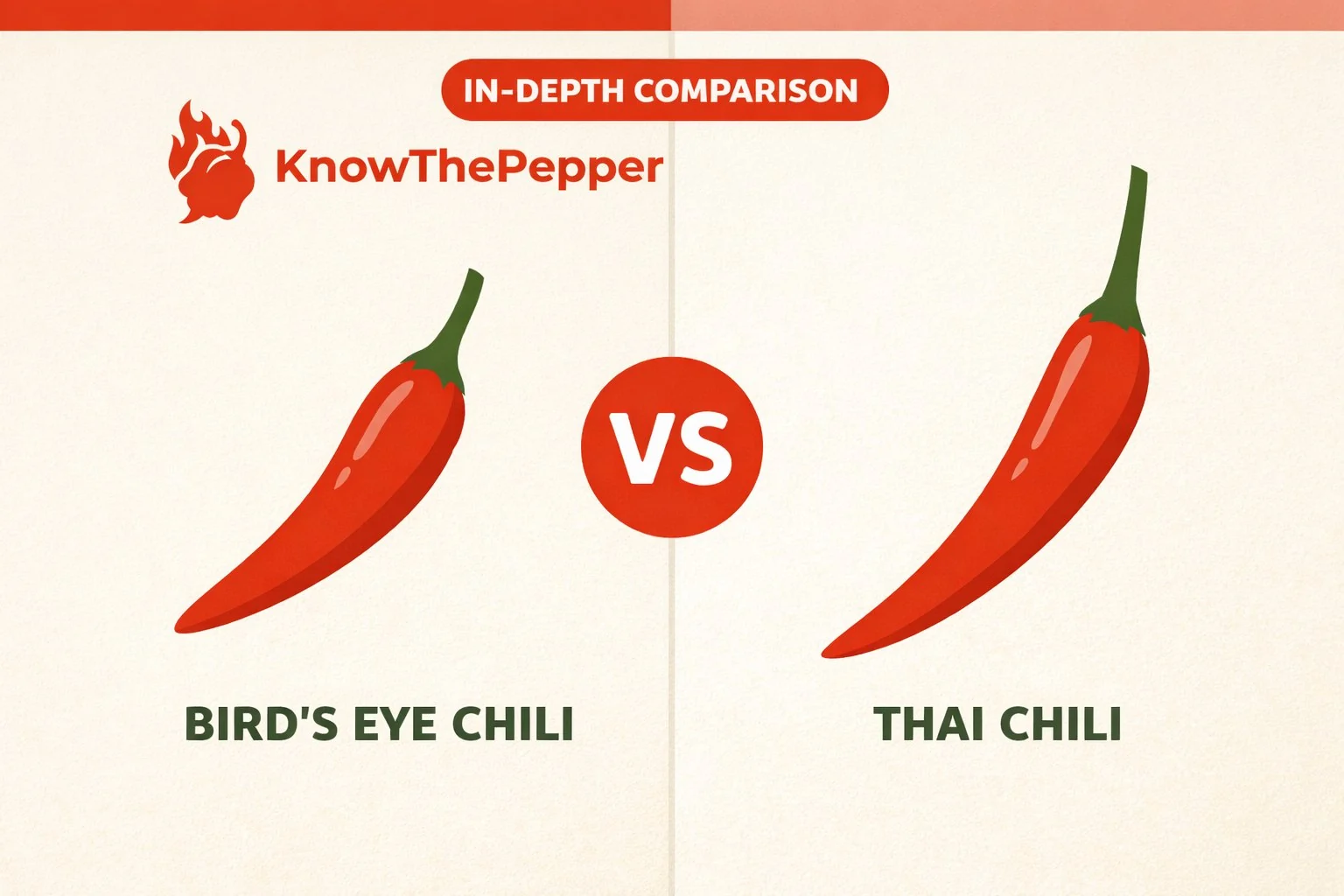
Bird's Eye Chili measures 50K–100K SHU while Thai Chili registers 50K–100K SHU — roughly equal in heat. Bird's Eye Chili is known for its peppery and bright flavor (C. annuum), while Thai Chili offers bright and peppery notes (C. annuum).
- Species: Both are C. annuum
- Best for: Bird's Eye Chili excels in hot sauces and extreme dishes, Thai Chili in hot sauces and spicy dishes
Bird's Eye Chili
Extra-HotThai Chili
Extra-HotBird's Eye Chili vs Thai Chili Comparison
Bird's Eye Chili vs Thai Chili Heat Levels
Start with the flavor, and the heat almost sneaks up on you. Both peppers open with a bright, clean peppery note before the burn arrives — and when it does, it's sharp and immediate rather than the slow creeping heat you get from something like a habanero's delayed fruity fire.
On the Scoville scale's official testing methodology, both peppers land in the 50,000-100,000 SHU range — which puts them squarely in the hot pepper tier alongside cayenne and peri-peri. For context, a standard jalapeño tops out around 8,000 SHU, making these peppers roughly 6 to 12 times hotter than the jalapeño most people use as their mental benchmark.
The heat character is virtually identical between the two: a fast-hitting, front-of-mouth burn that fades within a few minutes. Neither pepper carries the prolonged throat heat of a ghost pepper or the oil-slick intensity of a habanero. That makes them aggressive but manageable — hot enough to genuinely challenge the unprepared, mild enough that experienced heat-seekers can use them liberally.
Where things get complicated is individual variation. A small bird's eye pod picked early might land at 50,000 SHU; a fully ripe Thai chili from a different growing region could push past 90,000. Soil, climate, and water stress all shift the capsaicin concentration. The chemistry behind why that capsaicin burns involves TRPV1 receptor binding — the same mechanism regardless of which name is on the label.
Bottom line on heat: these peppers are functionally equivalent. Use them at the same ratio in any recipe without adjustment.
Flavor Profile Comparison
Size is genuinely deceptive here.
Small enough to overlook, fierce enough to remember — the Thai chili punches well above its size.
Flavor is where the "are these the same pepper?" question gets its most interesting answer. Both are described as bright and peppery — and that's accurate — but the nuance lies in what surrounds that core flavor.
Bird's eye chili tends to carry a slightly grassier, more vegetal edge, especially when used fresh. There's a crispness to the raw pod that reads almost like a concentrated bell pepper note underneath the heat. Thai chili, as the name is typically applied in Western markets, often skews a touch fruitier — though this difference is subtle enough that swapping one for the other in a recipe rarely produces a noticeable result.
Aroma is similarly close. Both peppers release a sharp, almost citrus-adjacent fragrance when cut, which is part of what makes them so effective in Thai cooking — they perfume a dish while heating it. Compare this to cayenne's more neutral, powder-forward heat profile and you start to see why fresh Southeast Asian cooking relies on these rather than dried alternatives.
Cooking transforms both peppers in similar ways. Heat mellows the grassiness and pushes the fruitier notes forward. In a coconut-based curry, both dissolve into the sauce and contribute heat without dominating the flavor architecture. In a fresh nam prik or larb, the raw brightness is the point — and either pepper delivers it.
One practical difference: pod size. Bird's eye chilies are often smaller and thinner-walled, concentrating flavor more intensely per gram. If your recipe calls for whole pods and you're using larger Thai chilies, you may want to use slightly fewer by count while keeping weight consistent.
Culinary Uses for Bird's Eye Chili and Thai Chili
These peppers are workhorses of Thai regional pepper traditions — appearing in everything from nam prik pastes to stir-fries, curries, and dipping sauces. Their heat-to-flavor ratio makes them genuinely irreplaceable in dishes where you need both punch and brightness in the same ingredient.
Fresh applications are where both peppers shine brightest. Slice them thin and scatter over larb or som tum. Drop whole pods into a simmering curry and fish them out before serving (they'll have released their heat into the sauce). Pound them into a paste with garlic and fish sauce for a fast dipping sauce that takes minutes to make.
For stir-fries, the classic Thai technique is to fry whole or halved pods in oil before adding other ingredients — this blooms the capsaicin into the fat and distributes heat throughout the dish rather than concentrating it in bites that contain a piece of pepper.
Substitution guidance: If you have bird's eye and a recipe calls for Thai chili (or vice versa), use a 1:1 ratio with confidence. The flavor difference is negligible in cooked applications. For dishes where raw pepper is prominent — fresh salsas, relishes, or garnishes — you might taste a slight variation, but most people won't flag it.
For those who want a milder substitute, the heat gap between these and a jalapeño is significant — you'd need roughly 8-10 jalapeños to approximate the heat of 1 bird's eye, and the flavor profile shifts considerably. Serrano peppers are a closer substitute at about 10,000-23,000 SHU, though they still fall well short on heat.
Dried and powdered versions work in slow-cooked dishes, soups, and marinades. Whole dried pods can be rehydrated and blended into curry pastes. The C. annuum botanical lineage these peppers share means they dry predictably without losing their characteristic peppery sharpness — unlike some chinense varieties that change character significantly when dried.
Pickling is underrated for both peppers. A quick brine of rice vinegar, sugar, and salt turns them into a condiment that keeps for weeks and cuts through rich dishes beautifully.
Which Should You Choose?
If your recipe specifies one and you only have the other, don't hesitate — swap freely at a 1:1 ratio. The heat range (50,000-100,000 SHU) and flavor profile are close enough that no dish will suffer.
The more useful distinction is freshness and availability. Bird's eye chili is the name you'll see in Southeast Asian grocery stores and specialty markets; Thai chili is what most mainstream supermarkets label the same or similar pepper. Buy whichever is fresher and better-looking.
For heat seekers who want to understand the broader landscape, these peppers sit at the aggressive end of everyday cooking heat — far above the side-by-side heat gap versus jalapeño that most Western cooks are used to, but well below the extreme end of the spectrum. They're the right tool when you want food that's genuinely hot without being a endurance exercise.
Use them fresh in Thai cooking, dried in spice blends, or pickled as a condiment. Either name on the label points to the same essential pepper.
Can You Substitute One for the Other?
Yes — direct substitution works. Bird's Eye Chili and Thai Chili are close enough in heat to swap at roughly 1:1. The main difference will be flavor. For more swap options, explore ranked alternatives with conversion ratios.
Growing Bird's Eye Chili vs Thai Chili
If you’re deciding which pepper to grow at home, consider your climate and patience level. Bird's Eye Chili and Thai Chili have different maturation times and temperature preferences. Hotter varieties generally need a longer, warmer growing season to develop their full capsaicin content. Our zone-based planting date tool can pinpoint the best sowing window for your area.
Bird's eye chili is among the more forgiving hot peppers to grow, provided you give it heat and full sun. Start seeds indoors 8-10 weeks before last frost - these need soil temperatures above 75°F to germinate reliably.
The plant stays compact, typically 18-24 inches tall, which makes it suitable for containers. A 3-gallon pot works fine for a single plant.
For pest and disease management, see the practical guidance on common pepper pests and diseases - aphids and spider mites are the main threats, particularly in dry conditions. Good airflow around plants prevents fungal issues.
The hardest part of growing Thai chilies is not germination — it is managing heat stress during fruiting. These plants originate from a tropical climate and expect warmth, but sustained temperatures above 95°F (35°C) cause flower drop before pods can set.
Germination itself is straightforward at 80–85°F soil temperature, typically within 10–14 days. Start seeds indoors 8–10 weeks before last frost.
They prefer well-draining soil with consistent moisture but will tolerate brief dry spells better than waterlogging. Feed with a low-nitrogen fertilizer once flowering begins; too much nitrogen pushes leaf growth at the expense of pods.
History & Origin of Bird's Eye Chili and Thai Chili
Both peppers carry centuries of culinary heritage. Bird's Eye Chili traces its roots to Thailand, while Thai Chili originates from Thailand. Understanding their backstory helps explain why each pepper developed its distinctive traits.
Buying & Storage
Whether you’re shopping for Bird's Eye Chili or Thai Chili, the same quality indicators apply. Fresh peppers should feel firm and heavy for their size, with taut, glossy skin and no soft or wet spots. Minor stem cracks known as “corking” are perfectly normal and often indicate a mature, flavorful pod.
- Firm pods with taut skin and consistent color
- Should feel heavy relative to size
- Minor stem cracks (“corking”) are normal
- Avoid anything soft, shriveled, or with dark wet spots
- Fresh: Paper bag, crisper drawer — 1–2 weeks
- Frozen: Wash, dry, freeze on sheet pan — 6+ months
- Dried: Airtight, away from light — up to 1 year
The Verdict: Bird's Eye Chili vs Thai Chili
Bird's Eye Chili and Thai Chili sit in the same heat tier but serve different roles. Bird's Eye Chili delivers its distinctive peppery and bright character. Thai Chili, with its bright and peppery profile, excels in everyday cooking.
Frequently Asked Questions
Related Comparisons
Sources pending verification.
