Ancho Pepper vs Pasilla Pepper: Which Pepper Should You Use?
Ancho and pasilla are two of Mexico's most essential dried chiles, and they get mixed up constantly — even in well-stocked grocery stores. Both sit in the mild-to-medium heat range with 0-1,000 SHU, but they come from different fresh peppers and bring distinct flavor profiles to the pot. Knowing which one to reach for can make or break a mole, enchilada sauce, or braised dish.

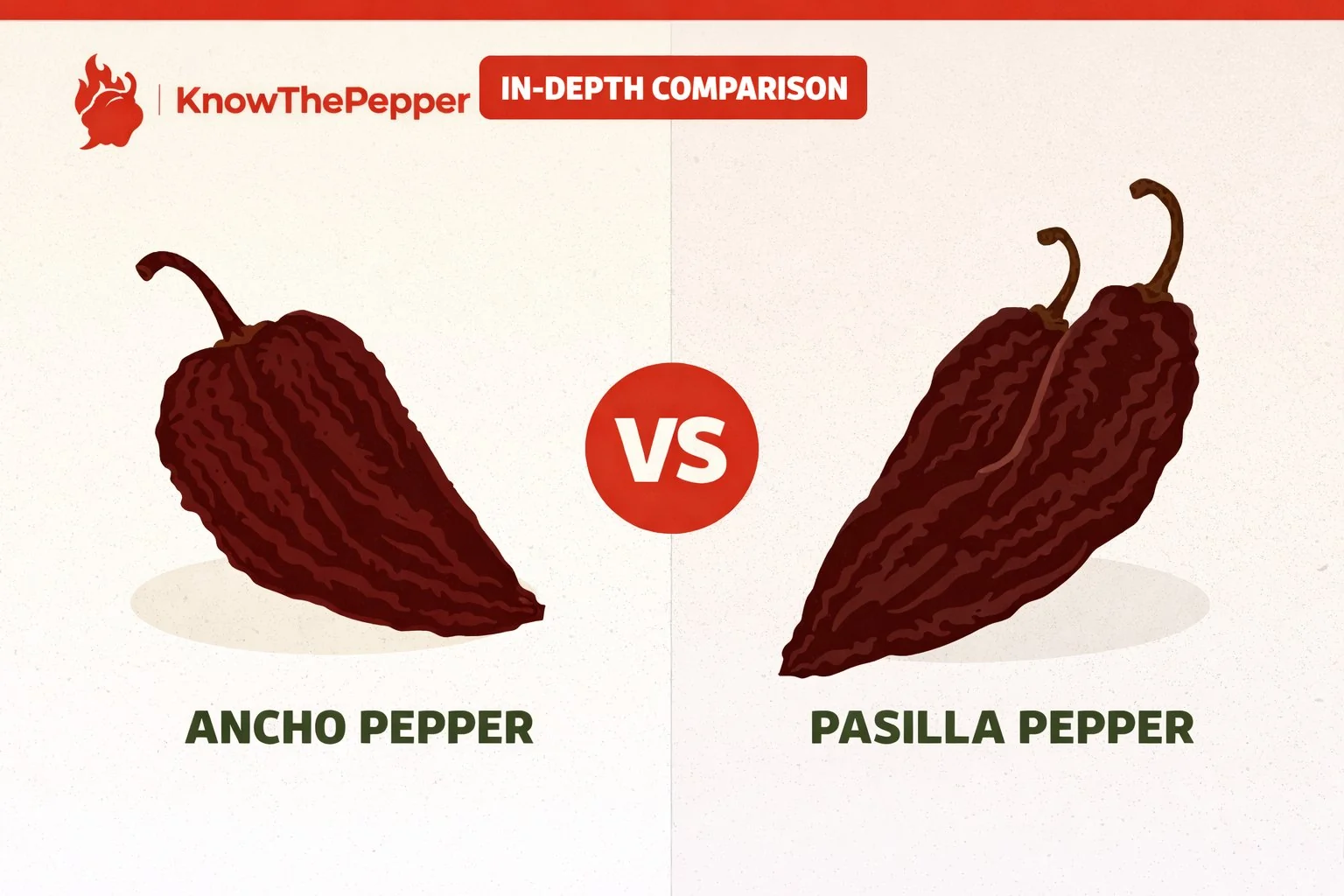
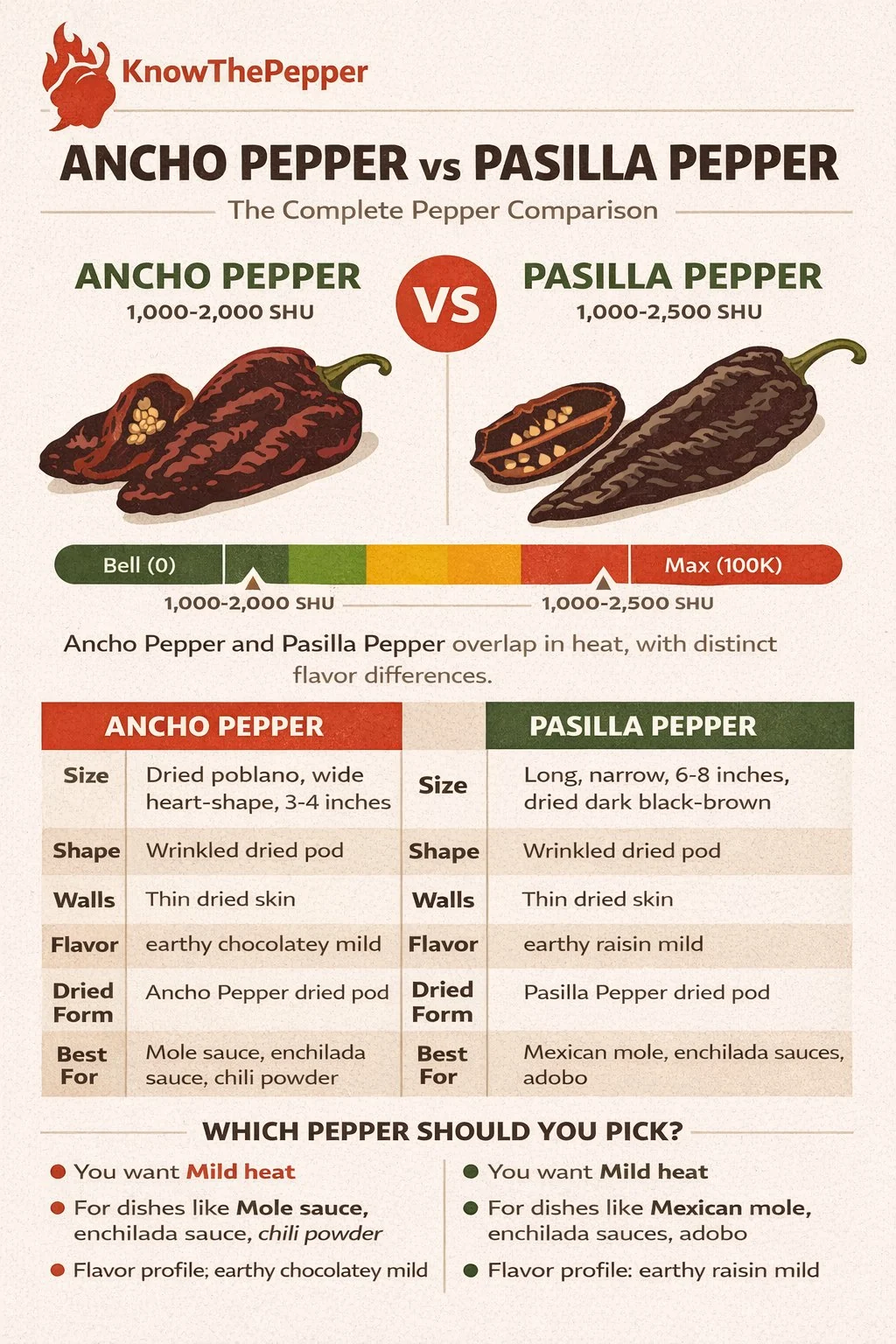
Ancho Pepper measures 1K–2K SHU while Pasilla Pepper registers 1K–3K SHU — roughly equal in heat. Ancho Pepper is known for its sweet and raisin-like flavor (C. annuum), while Pasilla Pepper offers earthy and rich notes (C. annuum).
- Species: Both are C. annuum
- Best for: Ancho Pepper excels in everyday cooking and salsas, Pasilla Pepper in fresh salsas and mild recipes
Ancho Pepper
MediumPasilla Pepper
MediumAncho Pepper vs Pasilla Pepper Comparison
Ancho Pepper vs Pasilla Pepper Heat Levels
Both ancho and pasilla register in the 0-1,000 SHU range on the Scoville unit scale, which puts them firmly in the mild dried chile category — gentler than a guajillo by a noticeable margin. A guajillo typically runs 2,500-5,000 SHU, meaning both ancho and pasilla can be roughly 2-5 times milder than that workhorse chile.
In practical cooking terms, neither pepper will challenge your heat tolerance. The ancho leans toward the lower end of even this mild range — its heat is almost an afterthought, a faint warmth that lingers briefly at the back of the throat. Pasilla sits in a similar zone but can occasionally push slightly higher within the range, though the difference is rarely perceptible without a controlled tasting.
The heat trigger in both peppers is capsaicin, the same compound responsible for all chile burn, but at these concentrations it functions more as a background note than a defining characteristic. Neither pepper is chosen for heat — they are chosen for what they taste like when the heat is barely there.
For cooks concerned about spice levels, both are safe choices for heat-sensitive diners. If you need more fire, adding a dried arbol or a small guajillo alongside either one is the standard approach in Mexican cooking.
Flavor Profile Comparison
Long before dried chiles appeared on supermarket shelves, the ancho was already central to Mexican cuisine — a staple ground into sauces, rehydrated for stews, and layered into moles that could take days to prepare.
Pasilla sits in the medium heat intensity range — warm enough to notice, gentle enough to let flavor lead.
This is where the two peppers genuinely diverge, and why treating them as interchangeable is a mistake worth correcting.
The ancho — the dried form of the poblano — carries a deep, raisin-dark sweetness with notes of dried plum, chocolate, and a hint of tobacco. Its aroma when toasted is rich and slightly smoky even before any smoke is introduced. The skin is broad and wrinkled, dark mahogany-red to near-black, and the flesh rehydrates into something almost velvety. This sweetness is assertive enough to anchor an entire sauce on its own.
The pasilla (dried chilaca) is more austere. Its flavor profile runs toward dried berry, bitter chocolate, and earthy herb — less sweet than ancho, with a slightly sharper, more tannic edge. The name "pasilla" means "little raisin" in Spanish, which is somewhat misleading since the pasilla's raisin quality is drier and less jammy than the ancho's. Toasted pasilla releases an almost tea-like, herbaceous aroma that ancho doesn't have.
In blended sauces, ancho adds body and sweetness while pasilla adds complexity and a mild bitterness that prevents sauces from tasting one-dimensional. Classic mole negro uses both for exactly this reason — the fresh-to-dried transformation of the chilaca produces flavors that ancho simply cannot replicate on its own.
Aroma-wise, pasilla is the more nuanced of the two. Ancho is louder and more immediately appealing; pasilla rewards slower cooking where its subtler notes have time to develop.
Culinary Uses for Ancho Pepper and Pasilla Pepper
Ancho is arguably the most versatile dried chile in Mexican cooking, and for good reason. Its wide, flat shape makes it easy to toast, soak, and blend. It forms the backbone of red enchilada sauce, shows up in tamale masa, and appears in countless pozole and braising liquid recipes. Because of its sweetness and body, it works beautifully in dishes where you want the chile to read as a primary flavor — not just heat or background spice.
For a straightforward ancho sauce: toast 3-4 anchos in a dry skillet until fragrant (about 30 seconds per side), soak in hot water for 20 minutes, then blend with garlic, cumin, and a splash of the soaking liquid. This becomes a base for everything from enchiladas to braised short ribs.
Pasilla shines in more complex preparations. It is one of the "holy trinity" of mole negro alongside mulato and ancho, and its bitter-herbal edge is what gives that sauce its characteristic depth. Pasilla also works well in adobo marinades, black bean soups, and anywhere you want a dried chile flavor that doesn't trend sweet.
Substitution ratios: if a recipe calls for ancho and you only have pasilla, use a 1:1 ratio but expect a slightly drier, less sweet result — add a small amount of tomato or a dried fig to compensate. Going the other direction (pasilla called for, using ancho), the result will be sweeter and softer; reduce any added sugar in the recipe.
For cooks exploring the dried chile matchup between ancho and poblano, it helps to understand that ancho IS the dried poblano — same pepper, different moisture content and flavor concentration. The chilhuacle versus ancho comparison is another useful reference point, as chilhuacles are often confused with anchos in northern Mexican markets.
Both peppers benefit from a 15-20 minute soak in hot (not boiling) water before blending. Boiling water can turn the skins bitter.
Which Should You Choose?
Reach for ancho when sweetness and body are the goal — red sauces, braising liquids, tamale preparations, and any dish where you want the chile to be clearly present and approachable. It is the friendlier pepper, easier to find, and more forgiving in recipes that aren't specifically designed around complex chile layering.
Choose pasilla when you need that bitter-herbal counterpoint — mole negro, dark bean soups, adobo marinades, and sauces where sweetness alone would feel flat. Its more restrained flavor profile means it often works best alongside other dried chiles rather than solo.
For most home cooks, keeping both on hand is the right answer. They are cheap, shelf-stable for months in an airtight container, and together they cover most of what traditional Mexican dried-chile cooking requires. If you can only stock one, ancho is the more broadly useful choice — but you will eventually hit a recipe where pasilla's specific character is exactly what is missing.
Can You Substitute One for the Other?
Yes — direct substitution works. Ancho Pepper and Pasilla Pepper are close enough in heat to swap at roughly 1:1. The main difference will be flavor. For more swap options, explore ranked alternatives with conversion ratios.
Growing Ancho Pepper vs Pasilla Pepper
If you’re deciding which pepper to grow at home, consider your climate and patience level. Ancho Pepper and Pasilla Pepper have different maturation times and temperature preferences. Hotter varieties generally need a longer, warmer growing season to develop their full capsaicin content. Our zone-based planting date tool can pinpoint the best sowing window for your area.
Growing anchos means growing poblanos and drying them yourself — the transformation happens post-harvest. Plants thrive in USDA zones 9–11 as perennials and are treated as annuals elsewhere.
Transplant outdoors after all frost risk passes, spacing plants 18–24 inches apart in full sun. Poblanos are heavy feeders — a balanced fertilizer at transplant followed by a phosphorus-forward feed once flowering begins keeps production strong.
Fruits are ready to dry when they turn fully red — this is when sugar content peaks and the dried ancho will have its characteristic sweetness. Hang or dehydrate at 125–135°F until completely leathery with no soft spots.
Pasilla plants are tall growers, often reaching 24–36 inches with good support. Start seeds indoors 8–10 weeks before last frost — the long growing season (roughly 80–85 days to maturity) means early starts matter.
Transplant after soil temperatures stabilize above 60°F. Space plants 18–24 inches apart — they branch outward as they mature, and crowding invites fungal issues on the dense foliage.
Water consistently but avoid waterlogged soil. These plants are somewhat drought-tolerant once established, but irregular watering during pod development causes blossom drop and misshapen fruit.
History & Origin of Ancho Pepper and Pasilla Pepper
Both peppers carry centuries of culinary heritage. Ancho Pepper traces its roots to Mexico, while Pasilla Pepper originates from Mexico. Understanding their backstory helps explain why each pepper developed its distinctive traits.
Buying & Storage
Whether you’re shopping for Ancho Pepper or Pasilla Pepper, the same quality indicators apply. Fresh peppers should feel firm and heavy for their size, with taut, glossy skin and no soft or wet spots. Minor stem cracks known as “corking” are perfectly normal and often indicate a mature, flavorful pod.
- Firm pods with taut skin and consistent color
- Should feel heavy relative to size
- Minor stem cracks (“corking”) are normal
- Avoid anything soft, shriveled, or with dark wet spots
- Fresh: Paper bag, crisper drawer — 1–2 weeks
- Frozen: Wash, dry, freeze on sheet pan — 6+ months
- Dried: Airtight, away from light — up to 1 year
The Verdict: Ancho Pepper vs Pasilla Pepper
Ancho Pepper and Pasilla Pepper sit in the same heat tier but serve different roles. Pasilla Pepper delivers its distinctive earthy and rich character. Ancho Pepper, with its sweet and raisin-like profile, excels in everyday cooking.
Frequently Asked Questions
Related Comparisons
Sources pending verification.