Ancho Pepper vs Mulato Pepper – Heat & Flavor Compared
Ancho and mulato peppers are both dried forms of the poblano, yet they diverge meaningfully in color, flavor depth, and how they behave in the kitchen. The ancho dries to a deep brick-red and carries a mild, chocolatey sweetness, while the mulato reaches near-black and adds earthier, more tobacco-like complexity. Neither pepper registers significant heat — both sit at 0-0 SHU on measured samples — making the choice between them almost entirely a flavor decision.

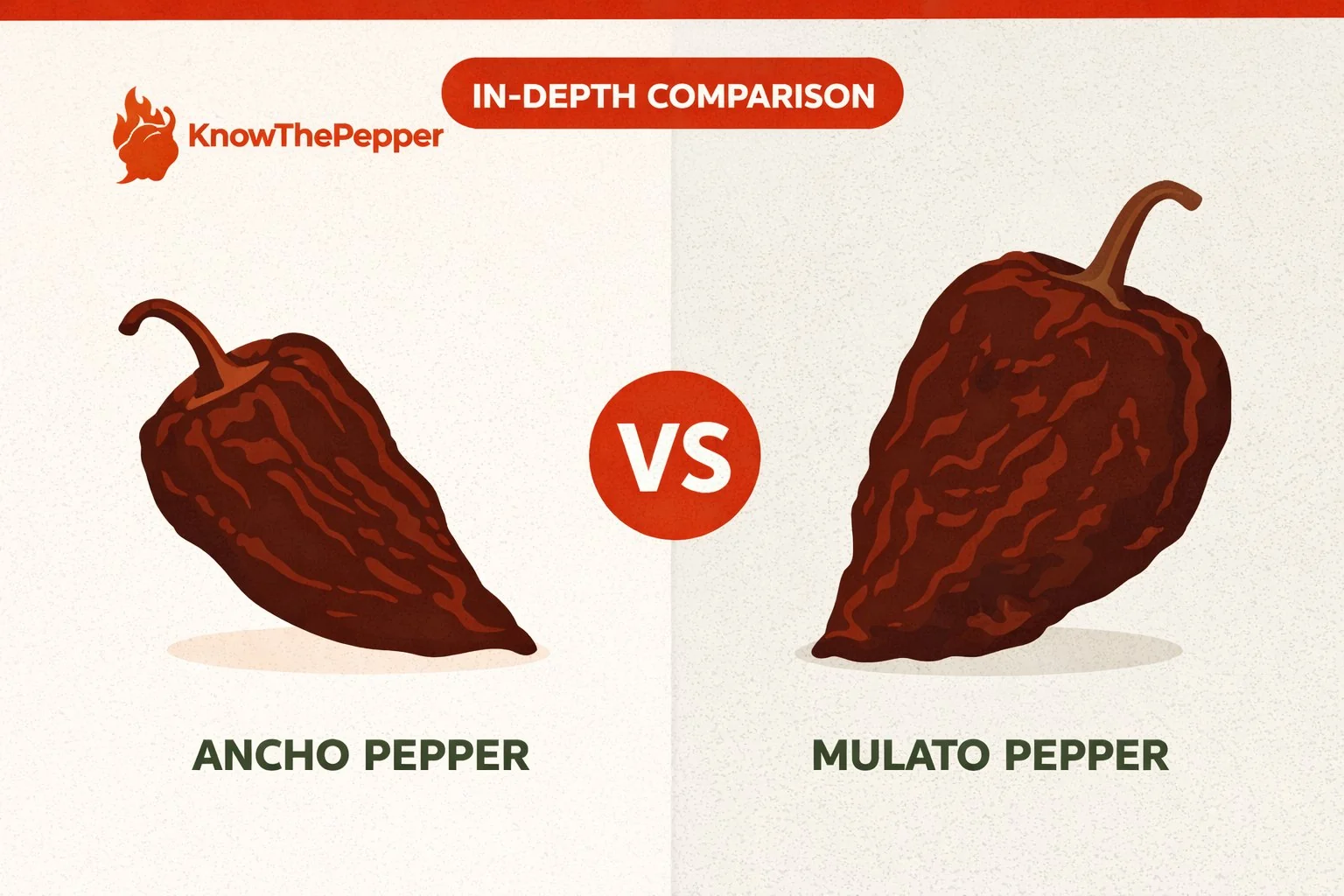
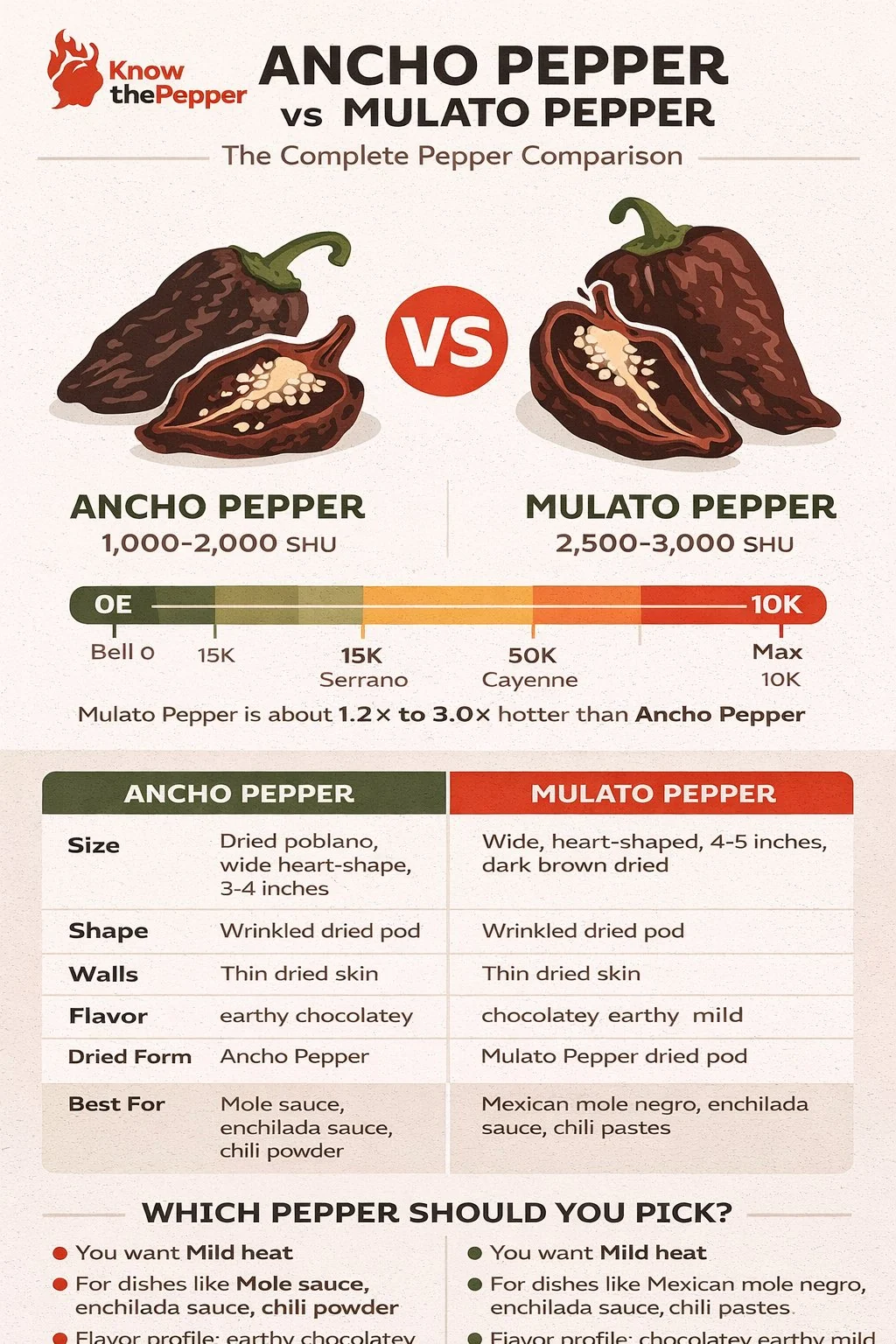
Ancho Pepper measures 1K–2K SHU while Mulato Pepper registers 3K–3K SHU — making Mulato Pepper 2× hotter. Ancho Pepper is known for its sweet and raisin-like flavor (C. annuum), while Mulato Pepper offers smoky and chocolatey notes (C. annuum).
- Heat difference: Mulato Pepper is 2× hotter
- Species: Both are C. annuum
- Best for: Ancho Pepper excels in everyday cooking and salsas, Mulato Pepper in fresh salsas and mild recipes
Ancho Pepper
MediumMulato Pepper
MediumAncho Pepper vs Mulato Pepper Comparison
Ancho Pepper vs Mulato Pepper Heat Levels
On the Scoville scale's unit definition and measurement method, both the ancho and mulato register at the floor — effectively 0 SHU in standardized testing. For practical purposes, treat both as heatless flavor carriers rather than spice sources.
For context, an Anaheim pepper typically measures 500-2,500 SHU. Both the ancho and mulato fall well below that range, making them among the mildest dried chiles in Mexican cooking. Even the gentlest Anaheim would deliver noticeably more capsaicin than either of these.
The mild end of the heat scale is where these peppers live permanently. That positioning is actually a feature — it means a cook can use them in generous quantities without worrying about overwhelming a dish with heat. A mole sauce might call for three or four ancho or mulato peppers per serving, a quantity that would be unthinkable with almost any other dried chile.
The heat character, such as it is, differs subtly between the two. Ancho, when present at all, shows a very faint warmth at the back of the throat — more a whisper than a burn. Mulato's profile is so dominated by its roasted, chocolatey bitterness that any trace heat is essentially imperceptible. Neither pepper activates the TRPV1 response that registers capsaicin as heat in any meaningful way.
If you need actual heat alongside their flavor profiles, the standard approach is pairing them with a guajillo or chipotle in the same sauce rather than substituting a hotter pepper for either one.
Flavor Profile Comparison
Long before dried chiles appeared on supermarket shelves, the ancho was already central to Mexican cuisine — a staple ground into sauces, rehydrated for stews, and layered into moles that could take days to prepare.
Pull a mulato out of a bag and the first thing you notice is the color: near-black, with a dark reddish-brown cast that signals the chocolatey depth inside.
This is where the two peppers genuinely diverge. Ancho — the dried red poblano — carries a flavor profile built around dried fruit and mild chocolate. There are notes of raisin, plum, and a faint sweetness that makes it the most approachable dried chile in the Mexican pantry. Its aroma when toasted is warm and slightly fruity, almost like dark cocoa mixed with dried cranberry.
The mulato is a dried poblano too, but harvested at a different ripeness stage and dried to near-black. That extra maturation produces a dramatically different flavor: earthy, tobacco-like, with bitter chocolate and a hint of licorice. Some tasters pick up dried cherry underneath, but it's buried under layers of roasted depth that ancho simply doesn't have.
In terms of aroma, mulato has a more complex, almost smoky quality even without any actual smoking — just from the extended drying process. Ancho smells cleaner and sweeter by comparison.
Culinary implications are significant. Ancho works beautifully anywhere you want mild, sweet chile flavor without complication — enchilada sauces, simple red salsas, marinades. Mulato demands more of a dish. It's the pepper that makes a mole negro worth the effort, contributing the kind of layered bitterness that balances against chocolate and fruit in ways ancho alone cannot achieve.
The two are often used together precisely because they complement rather than duplicate each other. Ancho provides sweetness and color; mulato provides depth and complexity. Think of them as bass and baritone in the same chord rather than two instruments playing the same note.
Culinary Uses for Ancho Pepper and Mulato Pepper
Both peppers require rehydration before use in most applications. The standard method: toast lightly in a dry skillet until fragrant (about 30 seconds per side), then soak in hot water for 15-20 minutes. Avoid over-toasting either one — mulato especially can turn bitter quickly given its already-roasted character.
Ancho is the workhorse of the two. It forms the base of countless red sauces, enchilada preparations, and braising liquids across Mexican cooking. Its mild sweetness makes it easy to use in large quantities, and its deep red color contributes a rich, brick-red hue to sauces. For a straightforward ancho substitute guide with ratios, the options include guajillo for brightness or pasilla for a slightly earthier swap.
For a direct flavor comparison between these two dried chiles and how they sit against each other in mole applications, the ancho vs. guajillo flavor and heat breakdown covers the brightness difference clearly.
Mulato is less commonly found outside specialty markets and Latin grocery stores, but it's irreplaceable in mole negro and mole mulato (which takes its name from this pepper). It pairs exceptionally well with dark chocolate, dried fruit, and toasted seeds — all the components of a complex mole. Using mulato in place of ancho in a simple enchilada sauce would likely produce something murkier and more bitter than intended.
Substitution ratios: if a recipe calls for mulato and you only have ancho, use a 1:1 ratio but add a small amount of unsweetened cocoa powder (1 teaspoon per 2 peppers) to approximate the depth. Going the other direction — ancho for mulato — works at 1:1 but expect a sweeter, less complex result.
For the smoky dried-chile contrast between ancho and chipotle, the heat difference becomes the dominant factor, which is a different dynamic than the ancho-mulato comparison where heat is a non-issue for both.
Both peppers freeze well after rehydration. Blend rehydrated chiles into a paste and freeze in ice cube trays — each cube equals roughly one rehydrated pepper and keeps for up to 6 months.
Which Should You Choose?
Choose ancho when you want accessible, crowd-pleasing dried chile flavor — sweet, mild, and versatile enough for everyday sauces, marinades, and braises. It's the pepper to reach for when the chile flavor should support a dish without dominating it.
Choose mulato when depth and complexity are the goal. It belongs in long-cooked moles, dark braises, and preparations where bitter chocolate notes and tobacco-like earthiness are assets rather than surprises. It rewards patience and pairing.
For home cooks building a dried chile pantry, ancho comes first — it's more widely available and more broadly applicable. Mulato earns its place once you're cooking dishes where its specific character matters.
For a look at how ancho compares against another earthy dried chile, the chilhuacle vs. ancho heat and flavor contrast is worth reading alongside this one — the chilhuacle occupies a similar flavor space but with more regional specificity.
Neither pepper is a heat tool. Both are flavor tools, and the right choice depends entirely on what you're building.
Can You Substitute One for the Other?
Yes — direct substitution works. Ancho Pepper and Mulato Pepper are close enough in heat to swap at roughly 1:1. The main difference will be flavor. For more swap options, explore ranked alternatives with conversion ratios.
Growing Ancho Pepper vs Mulato Pepper
If you’re deciding which pepper to grow at home, consider your climate and patience level. Ancho Pepper and Mulato Pepper have different maturation times and temperature preferences. Hotter varieties generally need a longer, warmer growing season to develop their full capsaicin content. Our zone-based planting date tool can pinpoint the best sowing window for your area.
Growing anchos means growing poblanos and drying them yourself — the transformation happens post-harvest. Plants thrive in USDA zones 9–11 as perennials and are treated as annuals elsewhere.
Transplant outdoors after all frost risk passes, spacing plants 18–24 inches apart in full sun. Poblanos are heavy feeders — a balanced fertilizer at transplant followed by a phosphorus-forward feed once flowering begins keeps production strong.
Fruits are ready to dry when they turn fully red — this is when sugar content peaks and the dried ancho will have its characteristic sweetness. Hang or dehydrate at 125–135°F until completely leathery with no soft spots.
Growing mulatos means growing the specific poblano variant that produces dark-ripening fruit. Start seeds 8-10 weeks before last frost - the pepper growing calendar matters here because these plants need a long warm season to develop fully.
Soil temperature for germination should stay above 70°F; 75-80°F is ideal. Transplant outdoors after nighttime temperatures reliably stay above 55°F.
Mulato plants grow similarly to standard poblanos - bushy, 2-3 feet tall, relatively tolerant of dry spells once established. They prefer full sun and well-drained soil amended with compost.
History & Origin of Ancho Pepper and Mulato Pepper
Both peppers carry centuries of culinary heritage. Ancho Pepper traces its roots to Mexico, while Mulato Pepper originates from Mexico. Understanding their backstory helps explain why each pepper developed its distinctive traits.
Buying & Storage
Whether you’re shopping for Ancho Pepper or Mulato Pepper, the same quality indicators apply. Fresh peppers should feel firm and heavy for their size, with taut, glossy skin and no soft or wet spots. Minor stem cracks known as “corking” are perfectly normal and often indicate a mature, flavorful pod.
- Firm pods with taut skin and consistent color
- Should feel heavy relative to size
- Minor stem cracks (“corking”) are normal
- Avoid anything soft, shriveled, or with dark wet spots
- Fresh: Paper bag, crisper drawer — 1–2 weeks
- Frozen: Wash, dry, freeze on sheet pan — 6+ months
- Dried: Airtight, away from light — up to 1 year
The Verdict: Ancho Pepper vs Mulato Pepper
Ancho Pepper and Mulato Pepper sit in the same heat tier but serve different roles. Mulato Pepper delivers 2× more heat with its distinctive smoky and chocolatey character. Ancho Pepper, with its sweet and raisin-like profile, excels in everyday cooking.
Frequently Asked Questions
Related Comparisons
Sources pending verification.