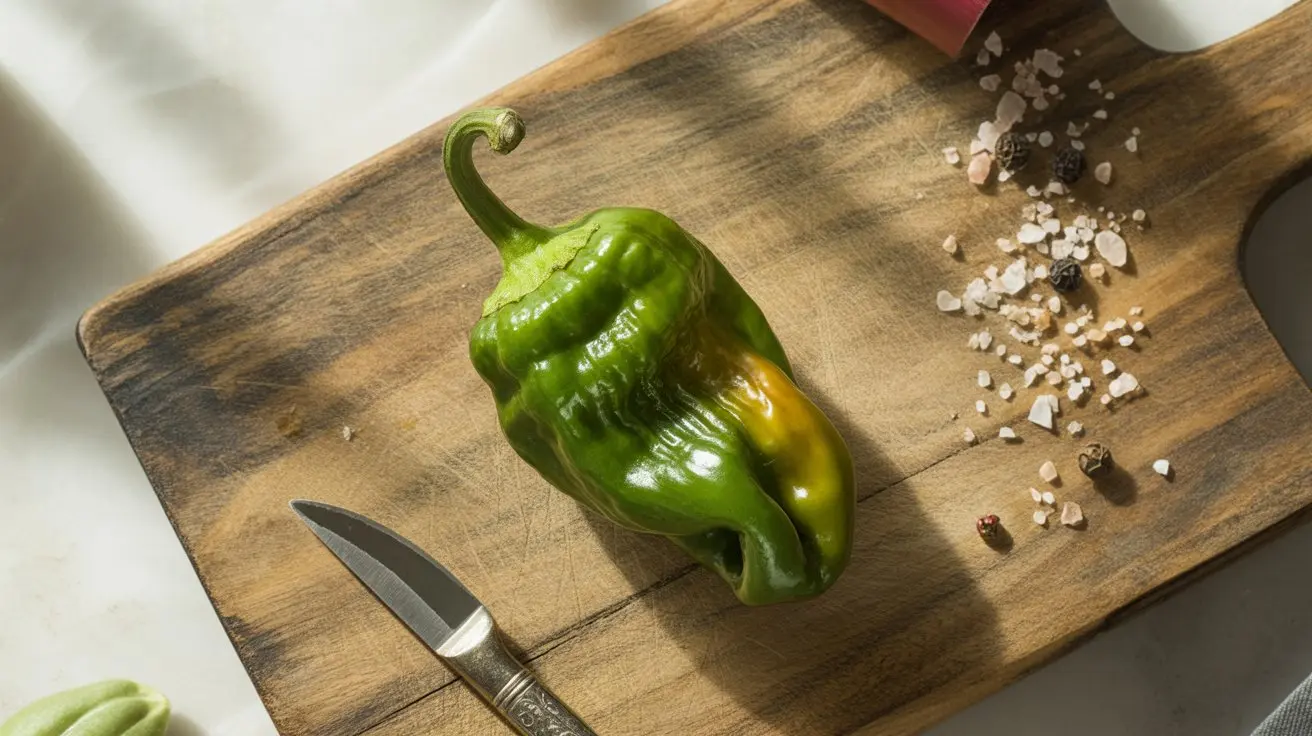
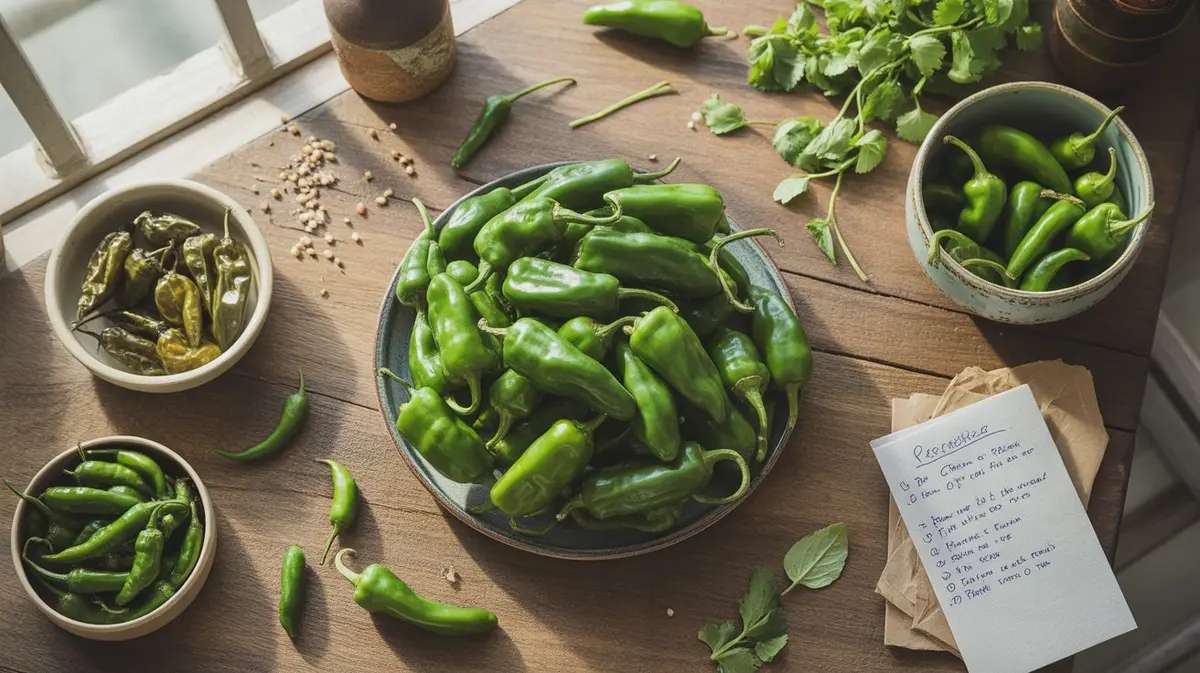
Padrón peppers have a quirk that makes them genuinely hard to replace: most are mild, but roughly one in ten fires hot without warning. That roulette quality is part of their charm, especially when blistered in olive oil as pimientos de Padrón. When fresh Padróns aren't available, the right substitute depends on whether you need that same thin-skinned blister, the grassy mild flavor, or just a pepper in the 500-2,500 SHU window.
These alternatives are ranked by how closely they match Padrón Pepper’s heat level and flavor profile. Use the conversion ratios to adjust quantities in your recipe.
#1
Anaheim Pepper Closest Match
At 500-2,500 SHU, the mild, sweet heat of the Anaheim sits in an almost identical range to Padrón. The flavor skews sweeter and less grassy, but the thin walls blister beautifully in a cast-iron pan — which is the whole point of most Padrón preparations.
Use a 1:1 ratio. Because Anaheims run longer (6-8 inches), slice them into 2-inch pieces before blistering so they cook at the same rate. Flavor-wise, expect something slightly sweeter and less vegetal than Padrón, but close enough that most guests won't notice.
#2
Chilaca Pepper Runner-Up
The dark, earthy character of the fresh Chilaca makes it a surprisingly good stand-in, landing at 1,000-2,500 SHU. It's richer and more complex than Padrón — less grassy, more savory — but that depth works well when you're blistering with good olive oil and flaky salt.
Substitute at 1:1 by count. Chilacas are longer and thinner than Padróns, so they blister quickly. Watch them closely; they go from perfect to charred fast. Their relationship to the dried pasilla form is worth knowing if you want to understand the full flavor arc of this pepper.
#3
Pasilla Pepper Also Great
Fresh pasilla peppers clock in at 1,000-2,500 SHU with a flavor that's earthy and rich, closer to dried fruit than fresh grass. They lack Padrón's bright vegetal note, but the heat range overlaps almost exactly and the thin skin blisters well.
Use 1:1 by count. If you're making a tapas-style dish, the earthier flavor actually pairs nicely with Manchego or jamón — arguably better than Padrón in that context. Fresh pasillas can be hard to find outside Latin grocery stores, but they're worth seeking out.
#4
Cascabel Pepper
Cascabels run 1,000-3,000 SHU, so the top end nudges slightly above Padrón's ceiling — but the overlap zone is substantial. The nutty, smoky profile of the cascabel is distinctly different from Padrón's grassy freshness, making this a better fit for cooked applications than raw preparations.
Substitute at 1:1 by count for blistering or roasting. The round shape means they blister unevenly; turn them frequently. If the slightly higher ceiling heat concerns you, taste one raw before committing — most fall well within the mild zone.
#5
Kashmiri Chili
Kashmiri chilies sit at 1,000-2,000 SHU, making them one of the mildest options on this list. The mild, sweet character of the Kashmiri skews toward warmth rather than bite, with a vibrant red color that Padróns (typically harvested green) don't share.
Use 1:1 by count. These are most often found dried, so if you're working with dried Kashmiris, rehydrate them first or use them in a sauce rather than a blister preparation. As a fresh substitute for pan-fried Padróns, they're less common but effective.
#6
Chilhuacle Pepper
The smoky complexity of the Chilhuacle tops out at 2,500 SHU — right at Padrón's upper limit. The flavor profile is richer and more complex, with a smoky depth that pairs well with the charred notes you get from blistering.
Substitute at 1:1 by count. Chilhuacles are typically found dried in the US, so fresh substitution may require a specialty market. When available fresh, they blister well. The smokier flavor shifts the dish's character noticeably, so pair accordingly — bold accompaniments like aged cheese or cured meat hold up better than delicate ones.
#7
Mulato Pepper
The chocolatey, smoky depth of the Mulato pushes the heat ceiling to 2,500-3,000 SHU — slightly above Padrón's top end. It's the boldest flavor on this list, with a richness that's more appropriate for sauces and stews than a simple blister preparation.
Use at a 1:1 ratio but expect a noticeably different result. Mulatos are thicker-walled than Padróns, so they take longer to blister and benefit from higher heat. If you want to replicate the mild heat classification of a Padrón dish, Mulato works — just know the flavor direction shifts significantly toward earthy-sweet rather than grassy-mild. For a direct head-to-head look at how these peppers compare in terms of heat and flavor, that context helps clarify where Mulato fits in the mild-to-medium spectrum.
Shishito peppers seem like the obvious answer — they're thin-skinned, blister-friendly, and have the same roulette heat pattern as Padrón. But shishitos run 50-200 SHU, which is dramatically milder. You lose almost all the heat character that makes Padrón interesting, and the flavor is more neutral. They work as a visual substitute but not a flavor match.
Banana peppers are another common suggestion that falls short. At 0-500 SHU, they're too mild and too sweet. The thick flesh doesn't blister the same way, and the flavor is distinctly vinegary when pickled (the most common form). Fresh banana peppers in a hot pan turn soft and watery rather than charring crisply.
Poblano peppers at 1,000-1,500 SHU hit the right heat range, but the thick walls and large size make them a poor blister substitute. They're better suited to stuffing or roasting whole. The flavor is earthy and pleasant, but the texture and cooking behavior are so different from Padrón that the technique doesn't translate.
Substitution Tip
When substituting Padrón Pepper (500–3K SHU), always start with less of a hotter substitute and add more to taste. For milder substitutes, you can increase the quantity. Our swap ratio calculator gives precise conversion amounts, and the heat unit converter translates between Scoville and other scales.
Fact-Checked & Expert Reviewed
Editorial Standards: All facts verified against authoritative sources. Content reviewed by subject matter experts before publication.
Review Process:
Written by
Sofia Torres
(Lead Culinary Reviewer)
, reviewed by
Karen Liu
(Lead Fact-Checker & Science Editor)
. Last updated February 19, 2026.
Padrón peppers are grown primarily in Galicia, Spain, and have a short fresh season that limits export volume. Most specialty grocers and farmers markets carry them briefly in summer, but the supply is inconsistent compared to widely cultivated varieties like Anaheim or poblano.
Shishitos are the most visually similar substitute and share the same blister-friendly thin skin, but they top out at 200 SHU compared to Padrón's 2,500 SHU ceiling. The heat character is substantially different, though the cooking technique translates perfectly.
Anaheim peppers cut into 2-inch pieces are the most practical option — the heat range matches, the skin blisters well, and they're widely available. Chilacas are a closer flavor match but harder to source fresh outside of Latin grocery stores.
Not really — the random heat variation in Padrón comes from stress during cultivation specific to the Galician growing region. Cascabel peppers have some variability in their heat, but none of the substitutes listed deliver that same roulette experience reliably.
Yes — pimientos de Padrón is the traditional Spanish name, referring to peppers from the municipality of Padrón in Galicia. The shortened 'Padrón pepper' is the common English usage, and all three terms refer to the same C. annuum variety at 500-2,500 SHU.