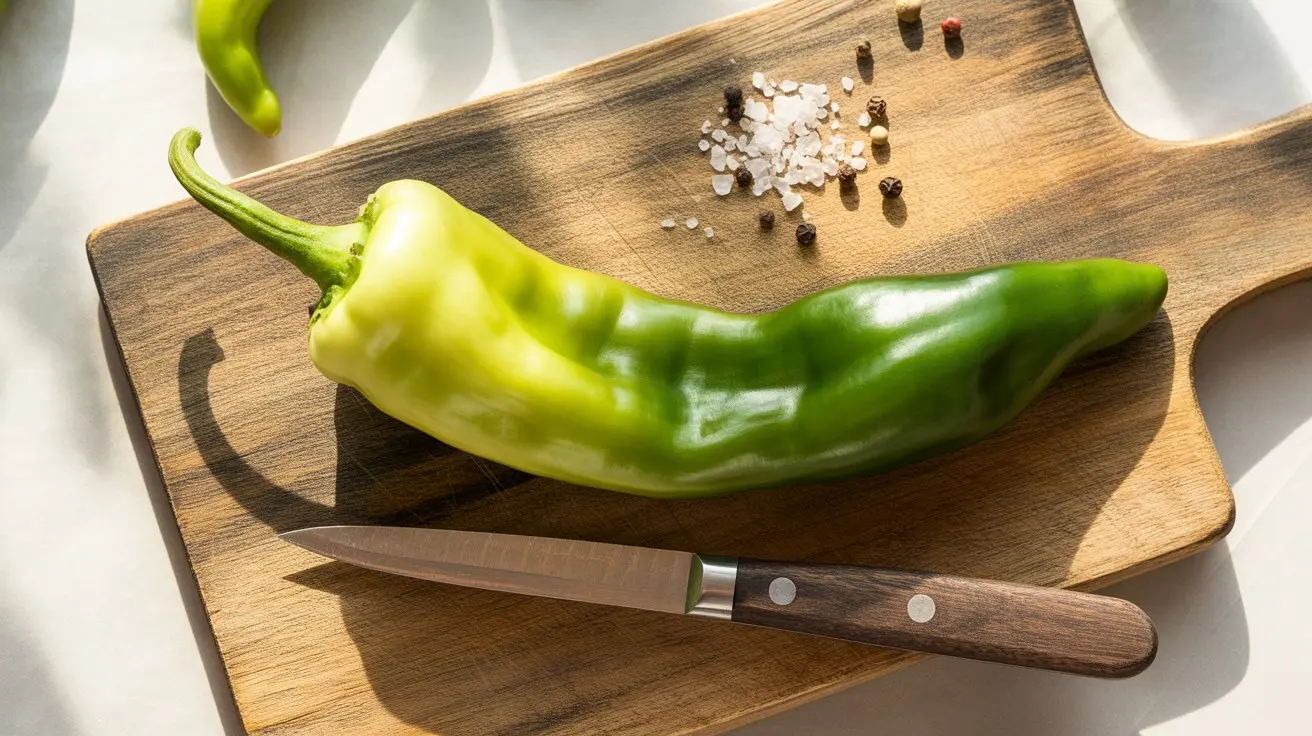
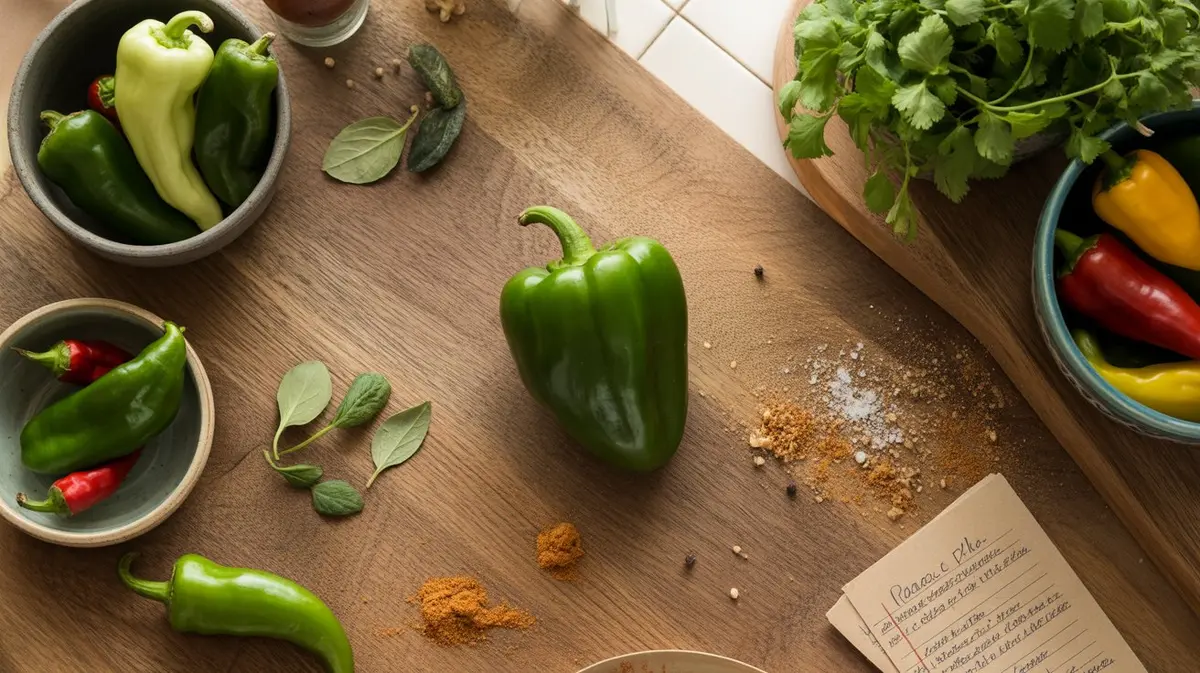
The Anaheim pepper sits in the 500-2,500 SHU range with a mild, sweet flavor that makes it one of the most versatile peppers in American and Mexican cooking. Stocks run out, seasons end, and not every grocery carries them fresh — so knowing which pepper fills that role matters. The substitutes below cover everything from stuffing and roasting to sauces and dried applications.
These alternatives are ranked by how closely they match Anaheim Pepper’s heat level and flavor profile. Use the conversion ratios to adjust quantities in your recipe.
#1
Pasilla Pepper Closest Match
At 1,000-2,500 SHU, the pasilla lands squarely in the same mild pepper intensity range as an Anaheim. The flavor runs earthier and richer — think dried fruit and mild tobacco notes rather than sweet green pepper — but in cooked applications like enchilada sauce or chile rellenos, that depth actually improves the dish.
The earthy, rich character of the pasilla makes it especially good as a dried substitute. Use a 1:1 ratio in any recipe calling for dried or roasted Anaheim.
#2
Padrón Pepper Runner-Up
Padrón peppers clock in at 500-2,500 SHU — an almost identical range. The flavor is grassy and mildly bitter when raw, mellowing to something sweeter under heat. They're smaller than Anaheims, so for stuffed pepper applications you'll want to use 2 Padróns per 1 Anaheim.
For sauces and roasted preparations, the grassy mild bite of a Padrón swaps at 1:1 without any adjustment needed.
#3
Chilaca Pepper Also Great
The fresh chilaca is essentially the Anaheim's Mexican counterpart — same 1,000-2,500 SHU range, similar elongated shape, and a flavor profile that's earthy and rich rather than purely sweet. It's the fresh form of the pasilla, which matters when you're choosing between them: use chilaca fresh, pasilla dried.
The fresh earthy heat of the chilaca substitutes at 1:1 in any recipe where Anaheims are used raw or lightly cooked. Roasted, it gets slightly smokier than an Anaheim, which is rarely a problem.
#4
Kashmiri Chili
Kashmiri chilis run 1,000-2,000 SHU and are almost always used dried or as powder, which limits their application as an Anaheim substitute. Where they shine is in sauces, stews, and braises where you want that same mild sweetness with a vivid red color.
The mild sweet heat of Kashmiri chili works best as a 1:1 powder substitute when a recipe calls for dried or ground Anaheim. Don't try to use them fresh — the texture and structure don't translate.
#5
Cascabel Pepper
Cascabels push slightly higher at 1,000-3,000 SHU, so they can occasionally surprise you with more heat than an Anaheim would deliver. The flavor is nutty and smoky with a round, full quality that dried Anaheims lack.
The nutty smoky depth of the cascabel works well in mole-style sauces and slow-cooked dishes. Use a 1:1 ratio but taste as you go — if you draw a hotter cascabel, you may want to pull back slightly. Still well below a serrano, which typically runs 6,000-23,000 SHU, so the heat ceiling is manageable.
#6
Chilhuacle Pepper
Chilhuacle peppers sit at 1,500-2,500 SHU with a smoky, complex flavor that runs considerably more intense than a mild Anaheim. These are almost exclusively used dried, and they bring a depth to red sauces that Anaheims can't quite match.
The smoky complex profile of the chilhuacle is a strong choice when you're making pozole, enchilada sauce, or any dish where the pepper is a background flavor element. Substitute at 1:1 by weight in dried applications, but expect the dish to taste noticeably different — richer and smokier rather than sweet and mild.
#7
Mulato Pepper
The mulato is the hottest option on this list at 2,500-3,000 SHU — still mild by most standards, but pushing the upper edge of where Anaheims sit. The flavor is smoky and chocolatey, almost like a darker ancho, and it belongs in the same low-to-mid SHU bracket that makes Anaheims so approachable.
The smoky chocolatey character of the mulato is best used in mole negro, braised meats, and rich sauces rather than fresh preparations. Use 1:1 by weight in dried form, and if heat sensitivity is a concern, reduce by about 20%. The flavor payoff is substantial for anyone comfortable with the slightly elevated heat.
Bell peppers seem like the obvious swap — they're everywhere, they're mild, and they're the right size for stuffing. The problem is zero heat and an entirely different flavor profile. Bell peppers taste sweet and grassy but lack the subtle pepper bite that Anaheims carry even at their mildest. In a stuffed pepper recipe, the swap works structurally but the dish tastes flatter.
Poblano peppers are a common recommendation, but at 1,000-1,500 SHU with a distinctly earthy, almost vegetal flavor, they push the dish in a different direction. Poblanos are thicker-walled and roast differently, which matters in chile rellenos where the Anaheim's thinner skin is part of the technique.
Banana peppers look similar fresh but max out at 500 SHU with a tangy, vinegary quality that dominates cooked applications. That acidic edge clashes in enchilada sauces and braises where Anaheim's neutral sweetness is the point. Save banana peppers for sandwiches and pickles, not Anaheim replacements.
Substitution Tip
When substituting Anaheim Pepper (500–3K SHU), always start with less of a hotter substitute and add more to taste. For milder substitutes, you can increase the quantity. Our swap ratio calculator gives precise conversion amounts, and the heat unit converter translates between Scoville and other scales.
Fact-Checked & Expert Reviewed
Editorial Standards: All facts verified against authoritative sources. Content reviewed by subject matter experts before publication.
Review Process:
Written by
Sofia Torres
(Lead Culinary Reviewer)
, reviewed by
Karen Liu
(Lead Fact-Checker & Science Editor)
. Last updated February 19, 2026.
Poblanos work in a pinch but bring a noticeably earthier, heavier flavor than the mild sweetness of an Anaheim. The thicker walls also change the texture in stuffed or roasted applications, so the swap is structural but not seamless.
The fresh chilaca's elongated shape and mild earthy heat makes it the closest structural match for chile rellenos. Pasilla (dried chilaca) won't work fresh, but a chilaca sourced from a Mexican grocery is nearly identical in size and wall thickness to an Anaheim.
Botanically they're the same variety — New Mexico No. 9 — but Hatch chiles are grown in the Hatch Valley of New Mexico and tend to have more heat and complexity due to the regional soil and climate. An Anaheim grown in California is milder and sweeter than a true Hatch.
Cascabels top out around 3,000 SHU versus the Anaheim's 2,500 SHU ceiling, so the difference is minimal — both sit well below a serrano, which starts at 6,000 SHU. The bigger difference is flavor: cascabels are nuttier and smokier rather than mild and sweet.
Kashmiri chili powder works only in cooked sauces, braises, and spice blends — not as a fresh pepper replacement. The mild sweet heat of Kashmiri chili matches the Anaheim's heat level closely, but the powder format limits it to applications where dried or ground pepper is appropriate.