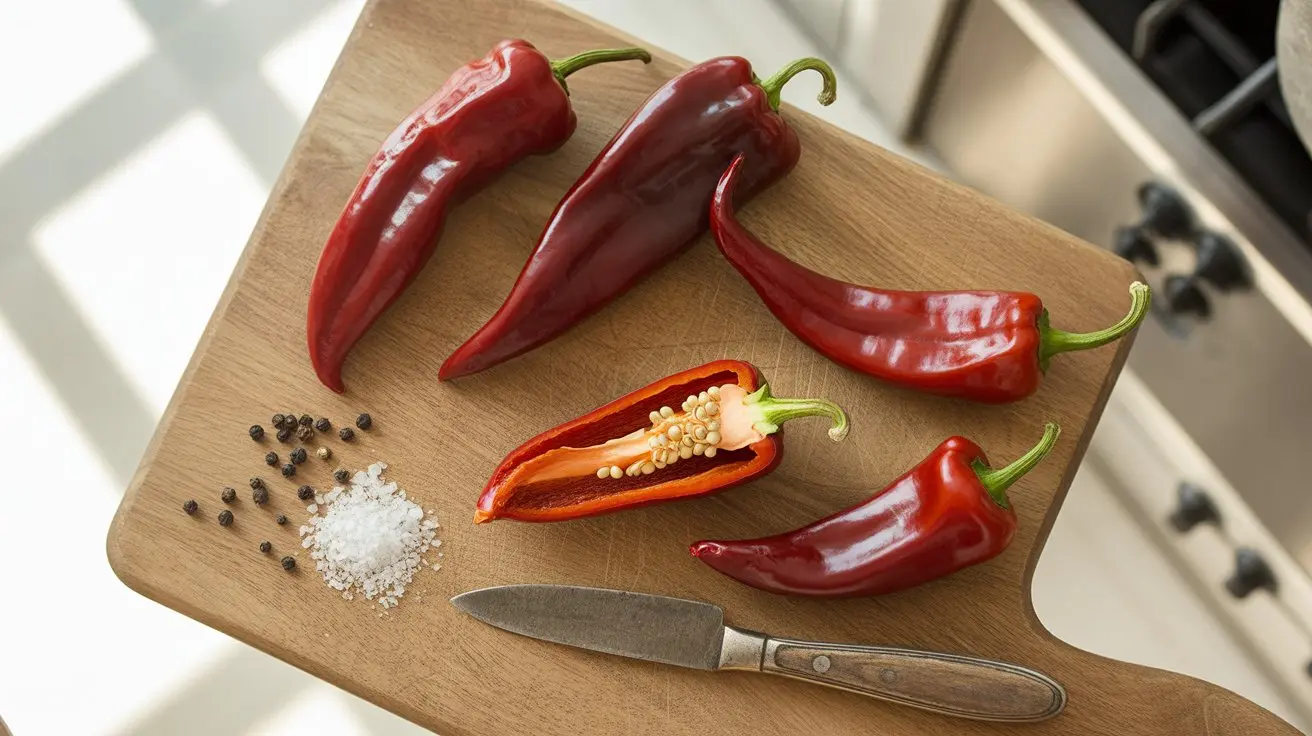
Guajillo Pepper

The guajillo is Mexico's most widely used dried chile, registering 2,500–5,000 SHU on the Scoville heat index — roughly on par with a mild jalapeño. Its defining character is a tangy, sweet-fruity flavor with a smooth, steady heat that builds slowly. Dried guajillo skins have a distinctive deep red color and a slightly waxy texture that releases beautifully into sauces and braises.
- Species: C. annuum
- Heat tier: Medium (1K–10K SHU)
What is Guajillo Pepper?
Long before supermarkets stocked dried chiles by the bag, guajillo peppers were already a cornerstone of Mexican cooking. The fresh form, called mirasol (meaning 'looking at the sun' — a reference to how the fruits point upward on the plant), transforms into guajillo after drying. That drying process concentrates the flavor dramatically, shifting a relatively mild fresh pepper into something with real complexity.
At 2,500–5,000 SHU, the guajillo sits in the medium heat pepper range — accessible enough for people who avoid extreme spice, but with enough presence to anchor a dish. The heat builds gradually rather than hitting immediately, which is part of why it works so well in slow-cooked sauces where flavors meld over time.
The dried pods are long and tapered, typically 4–6 inches, with a smooth, brick-red to deep burgundy skin. When rehydrated, the flesh softens into a silky paste with a flavor profile that hits tangy first, then sweet-fruity, then a mild burn that lingers. Some describe notes of cranberry or green tea in the finish.
Guajillo belongs to C. annuum, the same botanical family as bell peppers, jalapeños, and hundreds of other varieties. That species connection explains the guajillo's relatively approachable heat — C. annuum rarely produces extreme capsaicin loads. What it lacks in firepower, it more than compensates for in flavor depth.
History & Origin of Guajillo Pepper
Guajillo's roots stretch back centuries in central and northern Mexico, where the mirasol pepper was cultivated long before Spanish contact. The name 'guajillo' likely derives from 'guaje,' a Mexican Spanish term for a small gourd — a reference to the rattling seeds inside a fully dried pod.
Historically, guajillo was integral to Aztec and pre-Columbian cooking, used in ritual foods and everyday mole preparations. After Spanish colonization, dried chile trade routes formalized, and guajillo became a commercial staple throughout Mexico's regional pepper traditions.
Today it remains one of the 'holy trinity' of Mexican dried chiles alongside ancho and pasilla. The guajillo versus pasilla flavor and heat comparison reflects centuries of parallel development — both are workhorses of Mexican cuisine, but guajillo's tanginess sets it apart.
How Hot is Guajillo Pepper? Heat Level & Flavor
The Guajillo Pepper delivers 3K–5K Scoville Heat Units, placing it in the Medium tier (1K–10K SHU).
Flavor notes: tangy and sweet.
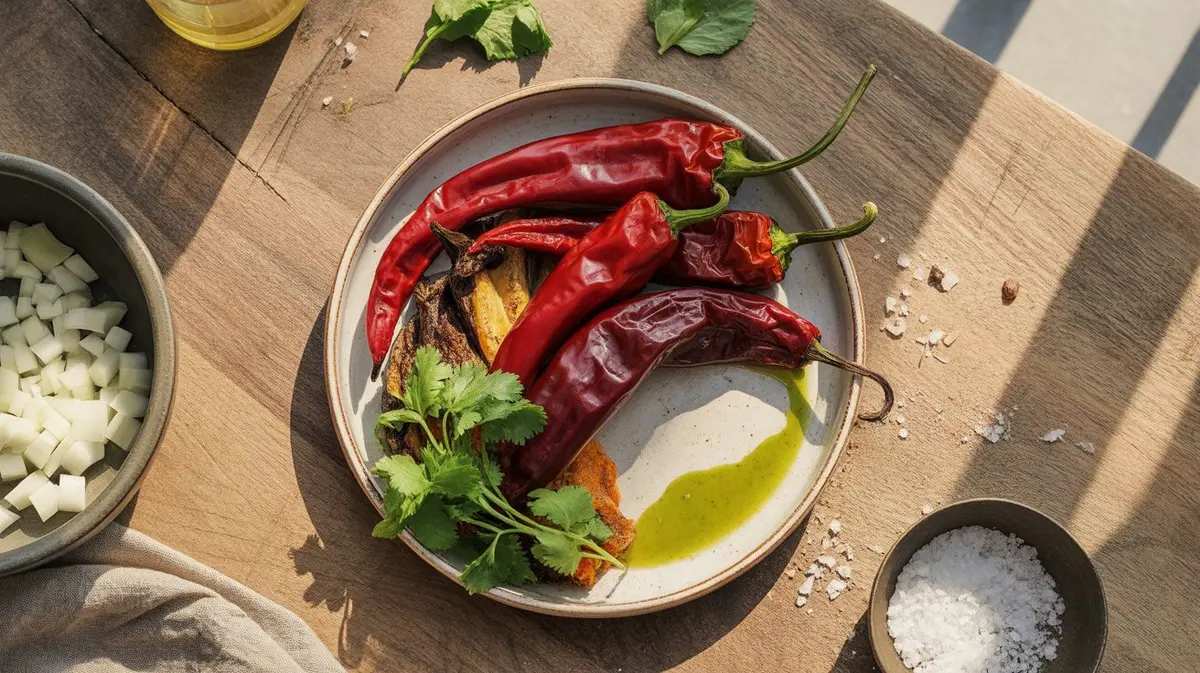
Guajillo Pepper Nutrition Facts & Health Benefits
Dried guajillo is nutrient-dense relative to its culinary usage. A one-pod serving (about 15g dried) provides roughly 50 calories, 2g protein, 9g carbohydrates, and **4g dietary fiber.
Guajillo is rich in vitamin A (from beta-carotene in the red pigment), vitamin C, and iron. The capsaicin present at 2,500–5,000 SHU activates thermogenic pathways — the chemistry behind why capsaicin produces heat involves TRPV1 receptor binding, which also triggers endorphin release.
Dried chiles generally concentrate nutrients compared to fresh, making guajillo a flavorful way to add micronutrients to sauces and braises.
Best Ways to Cook with Guajillo Peppers
Guajillo is the backbone of chile colorado, birria, and countless enchilada sauces. Its tangy-sweet profile adds a brightness that earthy chiles like the deep, raisin-forward dried ancho can't provide on their own — most traditional mole recipes use both for exactly this reason.
To use dried guajillo, toast the pods briefly in a dry skillet (30–45 seconds per side) until fragrant, then soak in hot water for 15–20 minutes. The soaking liquid is mildly bitter; taste it before adding it to your sauce. Blend the rehydrated flesh with garlic, onion, and broth for a base that works in braises, marinades, and soups.
Guajillo powder — made from ground dried pods — is a direct substitute for paprika when you want more complexity and a touch of heat. It works beautifully as a dry rub on pork or chicken.
Paired with the mild, sweet heat of New Mexico-style dried chiles, guajillo adds the acidity that balances richer, sweeter chile blends. The 2,500–5,000 SHU range means it rarely overwhelms a dish — even sensitive palates can handle a guajillo-forward sauce without distress. For heat reference, it runs noticeably milder than a serrano, which typically lands at 10,000–23,000 SHU.
Where to Buy Guajillo Pepper & How to Store
Guajillo is available year-round in dried form — fresh mirasol peppers appear at farmers markets and Latin grocery stores from late summer through fall. Dried pods are stocked consistently at Mexican grocery stores, specialty food shops, and online retailers.
Look for pods that are pliable and deep red, not crumbling or faded brown. Brittle, pale pods have lost their essential oils and won't deliver the full tangy-sweet profile.
Store dried guajillos in an airtight container away from light and heat — a pantry or cabinet works well. Properly stored, they keep for up to one year without significant flavor loss. For longer storage, vacuum-seal and freeze.
Best Guajillo Pepper Substitutes & Alternatives
Whether you ran out of guajillo pepper or just want to try something different, these peppers make solid stand-ins. We picked them based on heat range, flavor overlap, and how well they actually work in the same dishes.
Our top pick: Mirasol Pepper (3K–5K SHU). Same species (C. annuum) and nearly the same heat, so it swaps in at a 1:1 ratio without changing the character of the dish. The flavor leans fruity and bright, which is close enough that most people won’t notice the difference in a cooked recipe.
How to Grow Guajillo Peppers
Growing guajillo means starting with the mirasol variety — the fresh pepper that becomes guajillo after drying. If you're new to starting chiles from seed indoors, mirasol is a forgiving choice: germination is reliable, and the plants are vigorous once established.
Start seeds 8–10 weeks before your last frost date. Mirasol plants prefer full sun and well-drained soil, thriving in USDA zones 9–11 or as annuals in cooler climates. They reach 2–3 feet tall and produce prolifically — a single plant can yield dozens of pods per season.
The upward-pointing fruit habit (the 'looking at the sun' trait) means pods dry naturally on the plant in hot, dry climates. In humid regions, harvest before the first frost and finish drying indoors using a dehydrator set to 135°F for 8–12 hours.
Understanding pepper anatomy and pod structure helps when assessing drying readiness — the skin should feel leathery and pliable, not brittle. Compare growing habits with the ornamental yet similarly compact cultivation of the Medusa variety if you're planning a mixed chile garden. Space mirasol plants 18–24 inches apart for good air circulation.
Frequently Asked Questions
-
Guajillo has a tangy, slightly sweet flavor with fruity undertones — some tasters detect hints of cranberry or green tea in the finish. The heat arrives slowly and sits at 2,500–5,000 SHU, making it mild enough to use generously without overwhelming a dish.
-
Yes — mirasol is the fresh form of the pepper, and guajillo is what it becomes after drying. The drying process concentrates the flavor and shifts the color from green-red to a deep brick-red or burgundy.
-
Guajillo and jalapeño overlap significantly — both range around 2,500–5,000 SHU for guajillo versus 2,500–8,000 SHU for jalapeño. In practice, guajillo is often perceived as milder because its heat builds more gradually and the flavor complexity distracts from the burn.
-
They work in many of the same dishes but taste quite different — ancho is earthy and slightly sweet, while guajillo is tangier and brighter. For a closer match, check the side-by-side heat and flavor breakdown of ancho vs guajillo before swapping.
-
Toast the dried pods in a dry skillet for 30–45 seconds per side until fragrant, then submerge in hot (not boiling) water for 15–20 minutes until pliable. Blend the softened flesh with your sauce ingredients — the soaking liquid can be added in small amounts but taste it first, as it can be slightly bitter.
- Chile Pepper Institute — Pepper Varieties Database
- USDA FoodData Central — Dried Chile Nutritional Data
- Diana Kennedy, 'The Essential Cuisines of Mexico' — Guajillo in Traditional Cooking
Species classification: C. annuum — based on published botanical taxonomy.