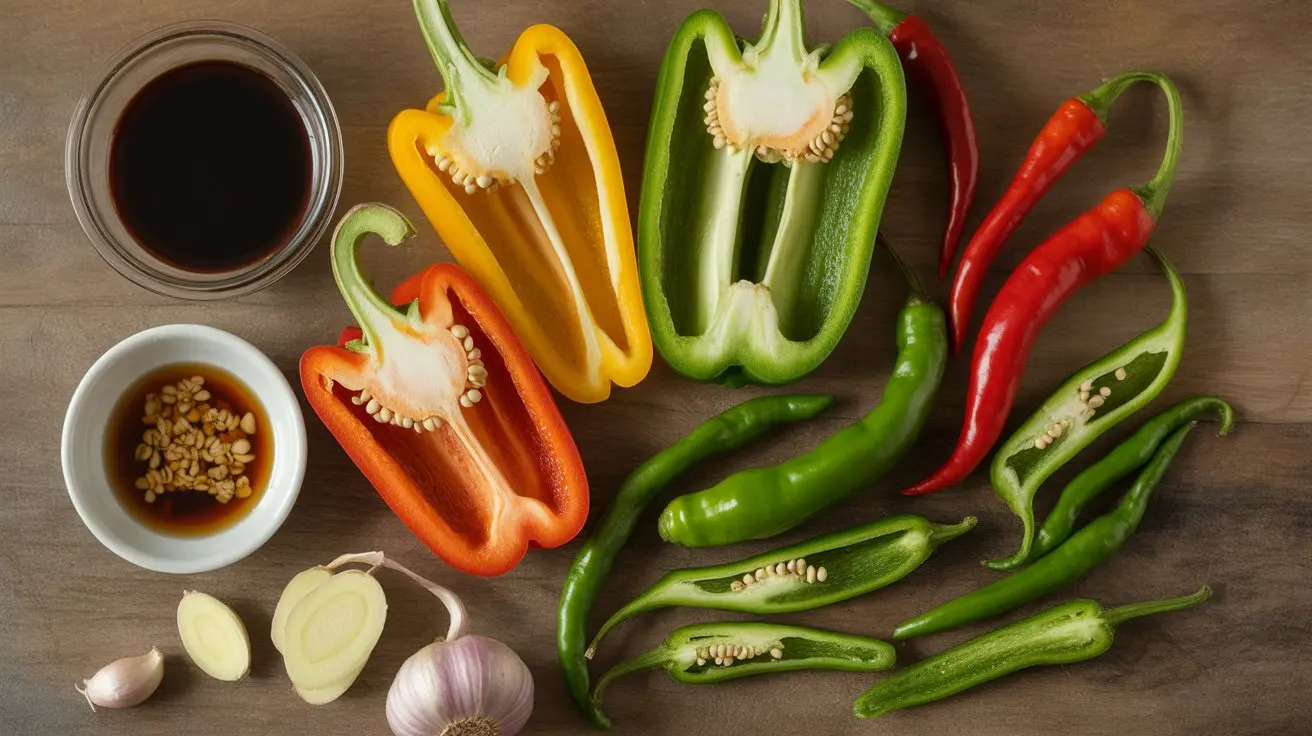
Best Peppers for Stir Fry
Top peppers for stir fry include Thai chili, Tien Tsin, and bell peppers. Find your perfect heat level.

Why Pepper Choice Defines the Stir Fry
Stir fry is one of the oldest cooking techniques in the world, originating in China over 2,000 years ago when fuel was scarce and high heat was essential. The peppers you choose determine not just heat, but color, texture, and the way aromatics bloom in a screaming-hot wok.
Bell peppers bring sweetness and structure. Thai chilies bring fire. The right combination depends entirely on what you're cooking and who's eating it.
Bell Peppers: The Foundation
At 0 SHU, bell peppers are technically not hot peppers at all — they lack the capsaicin gene entirely. But they're arguably the most important stir fry pepper in terms of volume and versatility.
Red bells are sweeter and more mature than green; yellow and orange land somewhere in between. Their thick walls hold up to high heat without turning mushy, and they caramelize beautifully against the wok surface in under two minutes.
Cut them into strips rather than chunks so they cook evenly and pick up char on the edges. If you want the mild end of the pepper spectrum with maximum visual impact, bells are the answer.
Poblanos are worth mentioning here too — earthy, slightly smoky, and only mildly warm. They're underused in stir fry but work brilliantly with beef and black bean sauce.
Fresno and Anaheim: Medium Heat, Big Flavor
When you want some heat without committing to a chili bomb, Fresno chilies hit the sweet spot at 2,500-10,000 SHU. They look like red jalapeños but taste fruitier and slightly smokier, especially when they've fully ripened to that deep crimson color.
Slice them thin and add them mid-cook so they soften but don't completely disappear. They work especially well in chicken stir fries with ginger and scallion.
Anaheim peppers are longer, milder (1,000-2,500 SHU), and bring a grassy sweetness that complements pork and tofu dishes. Roast them first if you have time — that char adds a layer of complexity that raw Anaheims simply don't have.
Both of these fall into the medium heat classification that most home cooks find approachable without sacrificing flavor depth.
Thai Bird's Eye: The Classic Stir Fry Chili
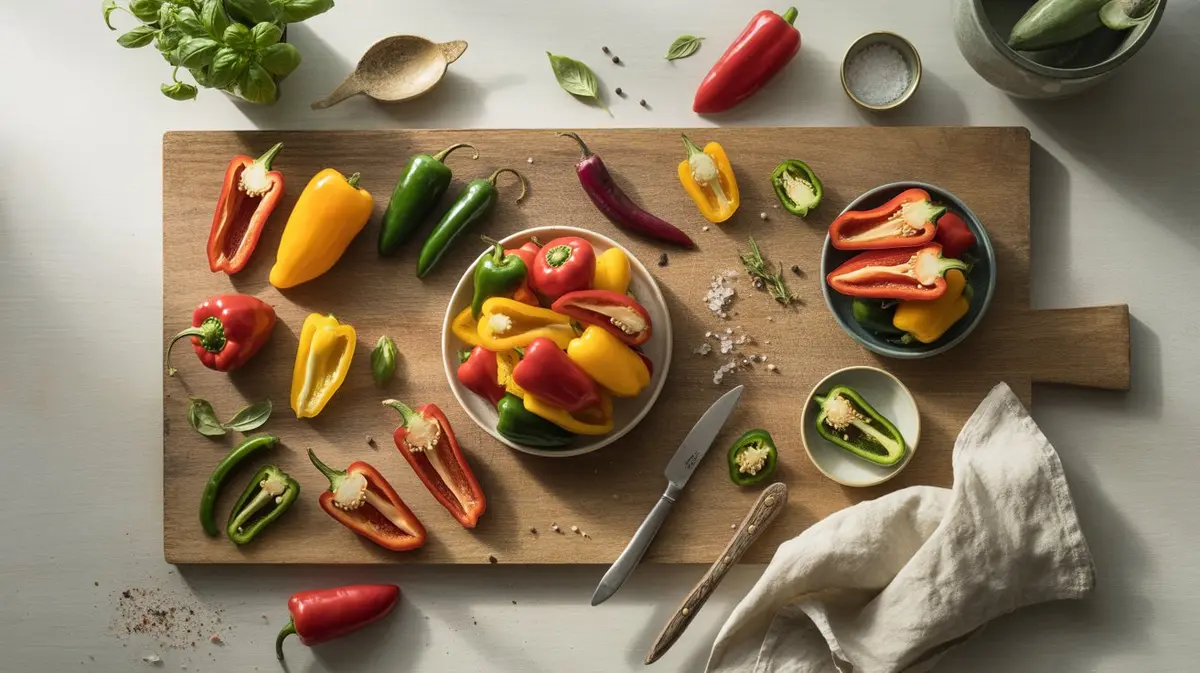
If there's one pepper that defines Southeast Asian stir fry, it's the bird's eye chili. Sitting at 50,000-100,000 SHU, these tiny red or green chilies punch far above their size. A single bird's eye can heat an entire wok of vegetables for four people.
The heat is immediate and clean — it hits the front of the mouth and lingers without the fruity complexity you get from habaneros. That directness is exactly what you want when building the flavor base of a Thai basil stir fry or pad kra pao.
Leave them whole for moderate heat, slice them for more intensity, or crush them directly into the oil at the start of cooking to infuse the entire dish. The Thai pepper tradition built an entire cuisine around this approach.
Two to three birds' eyes is a reasonable starting point for most dishes. Beyond five, you're testing your guests.
Tien Tsin: China's Stir Fry Workhorse
Tien Tsin peppers — also called Chinese red peppers or Tianjin chilies — are the dried red chilies you see floating in kung pao chicken and Sichuan dry-fried dishes. At 30,000-75,000 SHU, they're hot but not extreme, and their dried form concentrates both heat and a slightly smoky, earthy flavor.
The standard technique: heat oil in the wok, add whole dried Tien Tsins, and let them blister for 30-45 seconds before adding aromatics. The oil absorbs their flavor and color, building a base that carries through the entire dish.
These peppers are from the Chinese pepper tradition and have been central to Sichuan and Hunan cooking for centuries. They're not meant to be eaten whole — most cooks remove them before serving, though the adventurous leave them in as a warning label.
Dried Tien Tsins keep for months in an airtight container, making them one of the most practical pantry peppers for frequent stir fry cooks.
Chiltepin and Piquin: Wild Heat for Bold Dishes
The tiny round wild-harvested chiltepin clocks in at 50,000-100,000 SHU and is considered the ancestral pepper of many modern varieties. In stir fry, it functions similarly to bird's eye — intense, fast-hitting heat — but with a slightly more complex, almost smoky finish that comes from its wild growing conditions.
Crush a few into the wok oil at the start, or add them whole and let diners know what they're dealing with. The Mexican pepper heritage behind the chiltepin makes it an interesting cross-cultural addition to Asian-style dishes.
The small but fiercely hot piquin is closely related and behaves similarly in cooking. Both are available dried from specialty spice retailers and Latin grocery stores. Their small size means they integrate into sauces and oil infusions quickly — no slicing required.
These peppers sit firmly in the hot pepper intensity zone, which means they're manageable for experienced palates but demanding for newcomers.
Manzano: An Unusual Stir Fry Option
The apple-shaped Capsicum pubescens manzano is an outlier worth knowing about. At 12,000-30,000 SHU, it delivers moderate heat alongside a distinctly fruity, almost citrusy flavor that sets it apart from most stir fry peppers.
Unlike most common peppers, manzano belongs to Capsicum pubescens — a cold-tolerant species with black seeds and thick-walled flesh. That thick flesh holds up exceptionally well to wok heat without disintegrating.
Slice manzanos thin and add them with your aromatics. They work particularly well in dishes where you want fruity heat rather than pure fire — think pork with pineapple, or shrimp with citrus-forward sauces. They're harder to find than Thai chilies but worth seeking out at Latin markets.
Dundicut: The Pakistani Stir Fry Pepper
The deep red, round-bodied dundicut from Pakistan ranges from 55,000-65,000 SHU and carries a flavor profile that's earthy and slightly sweet beneath the heat. It's widely used in Pakistani and North Indian cooking, often dried and ground, but the whole dried peppers work beautifully in stir fry applications.
Treat them like Tien Tsins: blister in hot oil first to release their color and aroma, then build your dish around that infused base. The Indian subcontinent pepper tradition uses this technique extensively in dry-fried preparations that translate directly to wok cooking.
Dundicut's rounded heat and earthy depth make it especially good with lamb, eggplant, and mushroom stir fries where you want warmth without sharp, aggressive fire.
Extreme Heat Options: For the Committed
Most stir fry recipes don't need super-hot peppers — the technique itself concentrates flavor, so a little goes a very long way. But if you're cooking for heat seekers, a few options exist beyond the standard range.
The British-developed Bedfordshire Super Naga exceeds 1,000,000 SHU and should be treated as a seasoning, not an ingredient. A quarter of a fresh pod, finely minced, is enough to heat a full wok for eight people. Handle with gloves and keep it away from your eyes.
The Chocolate Bhutlah's extreme capsaicin concentration pushes even further, reportedly hitting 2,000,000+ SHU. These sit in the super-hot tier and require serious caution. For stir fry, a rice-grain-sized piece is genuinely sufficient.
If you want to understand the molecular reason these peppers feel so different from moderate chilies, the TRPV1 receptor response to capsaicin explains why super-hots overwhelm the system in ways that milder peppers simply can't.
Technique: Getting the Most from Your Peppers
The wok must be screaming hot before peppers go in — at least 450°F (230°C) for a carbon steel wok. Lower temperatures steam the peppers instead of searing them, and you lose the char and caramelization that make stir fry distinctive.
Dried chilies go in first, with the oil, to infuse flavor. Fresh peppers go in based on their thickness: thin-walled birds' eyes early, thick-walled bells and manzanos mid-cook. Aromatics like garlic and ginger follow the dried chilies and precede everything else.
Don't overcrowd the wok. Peppers need direct contact with the hot surface to char properly. Cook in batches if you're making a large quantity.
For heat control, remove seeds and membranes from fresh chilies before adding — that's where most of the capsaicin concentrates. Leaving them in roughly doubles perceived heat.
Matching Peppers to Proteins and Sauces
Beef and lamb handle aggressive heat well — bird's eye, Tien Tsin, and dundicut all work. Chicken is more neutral and benefits from fruity heat like Fresno or manzano. Tofu and vegetables need peppers that contribute flavor, not just fire — poblano, Anaheim, and mild Fresno are better choices.
Soy-based sauces amplify heat slightly because salt intensifies capsaicin perception. If your sauce is already salty, dial back the chili count by one or two. Coconut milk-based sauces dampen heat because fat binds capsaicin — you can push heat levels higher in those dishes.
Oyster sauce and hoisin are both sweet, which means they need a counterbalancing heat element. Two to three birds' eyes or a single Tien Tsin per serving is the right range for most palates.
Buying and Storing Stir Fry Peppers
Fresh Thai chilies, Fresnos, and bells are widely available at most grocery stores. For Tien Tsins, dundicut, and chiltepin, Asian and Latin specialty markets are your best bet. Dried peppers from all these categories are also available online from reputable spice retailers.
Store fresh chilies unwashed in the crisper drawer — they keep for 1-2 weeks. Dried chilies belong in an airtight container away from light; they hold flavor for up to a year but start losing potency after six months.
If you want to grow your own supply, the extra-hot heat bracket peppers like birds' eye and chiltepin are surprisingly manageable plants. They're compact, prolific, and dry easily on the vine. The Scoville ranking method is useful for comparing varieties before you commit to growing a specific one.
Frequently Asked Questions
-
Bell peppers and Anaheim chilies are ideal for low-heat stir fry. They add color, sweetness, and texture without any significant burn, making them accessible for all palates.
-
Dried chilies like Tien Tsin and dundicut are actually preferred in many Chinese and Pakistani stir fry traditions. Blister them in hot oil first to release their flavor before adding other ingredients.
-
Two to three bird's eye chilies per serving is a reasonable baseline for moderate heat. Slice them for more intensity, or leave them whole to infuse gentler heat into the dish.
-
Manzano belongs to Capsicum pubescens, a distinct species with thick-walled flesh and black seeds. Its fruity, citrusy flavor is unlike most stir fry peppers and holds up exceptionally well to wok heat.
-
Removing seeds and membranes reduces heat by roughly half, since that's where capsaicin concentrates. Leave them in if you want full intensity, remove them if you want flavor without the full burn.