
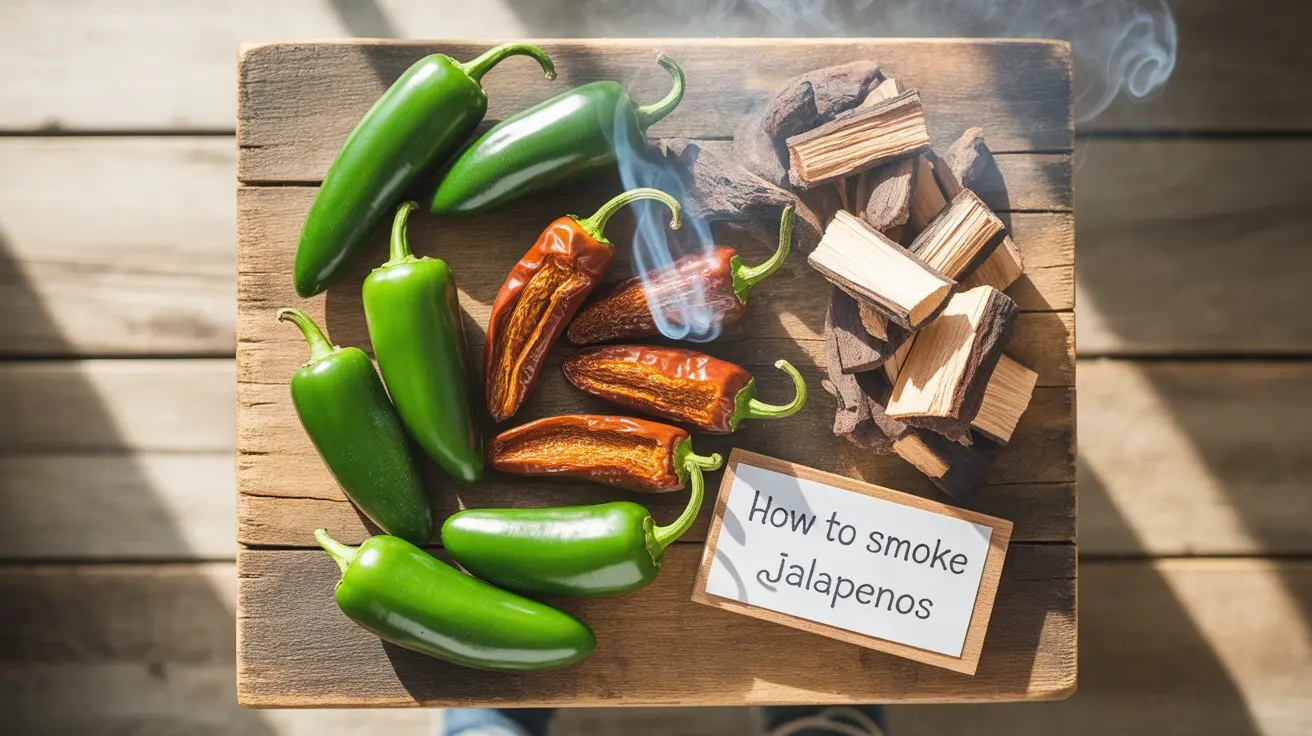
How to Smoke Jalapeños (Make Chipotles)
Turn fresh jalapeños into smoky chipotles with a smoker or grill. Complete guide to smoking, drying, and storing homemade chipotles.

What Chipotle Actually Is
Long before chipotle became a burrito chain, it was a preservation technique developed in Mexico's centuries-old pepper traditions — a way to keep jalapeños edible long after harvest season ended.
The word chipotle comes from the Nahuatl chilpoctli, meaning smoked chili. Aztec-era cooks smoked jalapeños because the thick walls of Capsicum annuum varieties resist air-drying on their own — the moisture content is too high, so smoke-drying became the solution.
Making chipotles at home means you control the wood, the temperature, and the drying time. The result is something far more complex than anything from a can.
Choosing Your Jalapeños
Red jalapeños make the best chipotles. Green ones work but produce a sharper, grassier result — red jalapeños have ripened fully, developing more sugars that caramelize during the smoke.
Look for firm pods with no soft spots or wrinkled skin. Blemishes become concentrated during drying, so start with the best fruit you can find. Farmers markets in late summer often have red jalapeños; grocery stores rarely stock them, so you may need to let green ones ripen on your counter for a week or two.
Size matters for even drying. Try to select pods of similar diameter so they finish at roughly the same time. Jalapeños sit at 2,500-8,000 SHU on the medium heat classification range — not punishing, but enough to remind you what you're working with.
Quantity: plan for significant shrinkage. Fresh jalapeños lose 80-85% of their weight during smoking and drying. Two pounds of fresh pods yields roughly 3-4 ounces of finished chipotles.
Equipment You'll Need
A dedicated smoker gives the most consistent results, but a standard kettle grill works well with the right setup. The key requirement is indirect heat — you're not grilling, you're smoking at low temperatures for extended periods.
For a kettle grill, you'll use a two-zone fire: coals on one side, peppers on the other, with wood chips added periodically to maintain smoke.
Wood selection shapes the final flavor more than almost anything else. Fruit woods like apple and cherry produce a milder, sweeter smoke that complements jalapeño's natural flavor. Hickory and mesquite are more assertive — mesquite especially can turn bitter if used too heavily. Pecan sits in the middle and is a traditional choice in Texas and northern Mexico.
You'll also need:
- Instant-read thermometer (for monitoring smoker temperature)
- Wire rack or grill grate (to allow airflow under the peppers)
- Wood chips or chunks, soaked 30 minutes if using chips
- Aluminum foil pan (for a water pan to moderate temperature)
- Airtight jars for storage
Setting Up Your Smoker or Grill
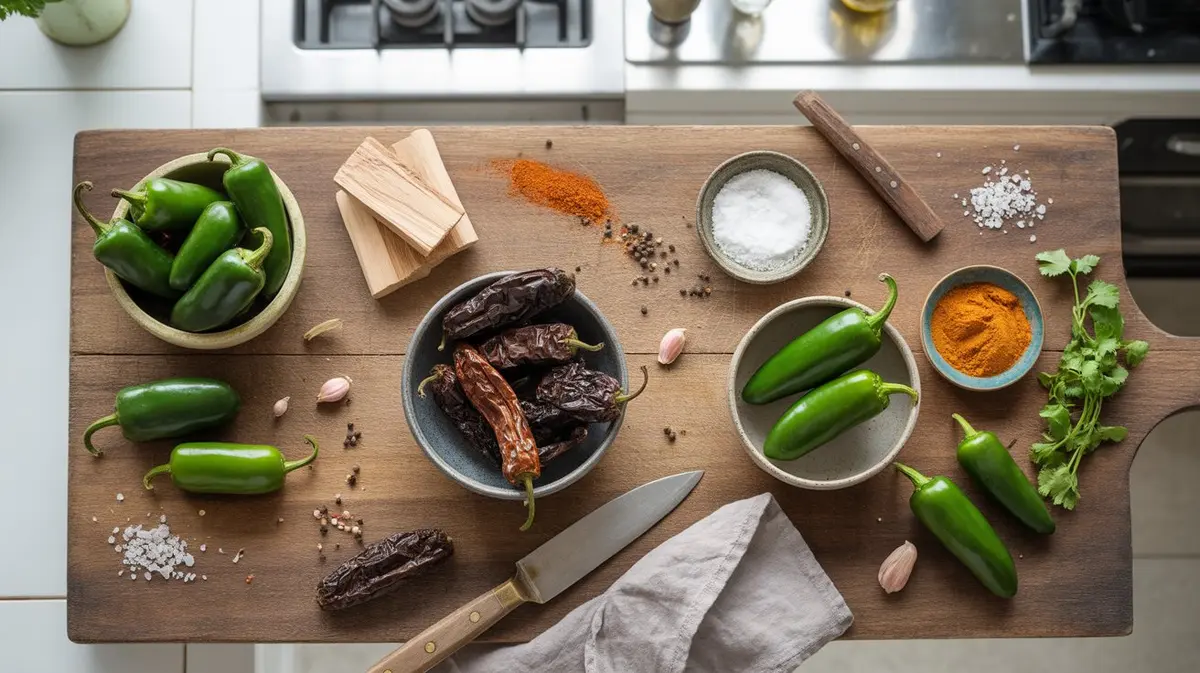
Target temperature is 180-200°F (82-93°C). This is lower than most BBQ smoking — you want to dry the peppers slowly, not cook them aggressively.
For a kettle grill: light a chimney starter with about 20 briquettes. Once ashed over, bank them to one side. Add a small chunk of your chosen wood directly on the coals. Place a foil pan with 1 cup of water on the opposite side to moderate heat. Position the grill grate and place peppers over the water pan side, away from direct heat. Keep vents about 25% open to restrict airflow and maintain low temperature.
For a bullet or offset smoker: follow your smoker's standard indirect setup. Fill the water pan. Maintain your target temperature range by adjusting intake vents. Add wood every 45-60 minutes to keep smoke going.
A pellet smoker makes this almost effortless — set it to 180-190°F, load your preferred pellets, and let it run. The automated feed handles smoke maintenance.
The Smoking Process, Step by Step
- Prepare the peppers: Rinse and dry jalapeños thoroughly. Leave them whole — don't cut or pierce them. Halving speeds drying but reduces the complexity of the final product.
- Arrange on the rack: Place peppers in a single layer with space between each one. Airflow around every pod matters for even drying.
- Start the smoke: Once your smoker or grill is at temperature and producing thin blue smoke (not billowing white smoke), add the peppers.
- Maintain temperature: Check every 30-45 minutes. Add wood as needed. Adjust vents to keep the temperature in the 180-200°F range. Spikes above 225°F will cook the peppers rather than dry them.
- Flip at the halfway point: After 3-4 hours, flip each pepper. They should have darkened and started to shrink but still feel somewhat pliable.
- Continue smoking: Total time runs 6-12 hours depending on pepper size, smoker efficiency, and ambient humidity. High humidity days add significant time.
- Check for doneness: Finished chipotles feel leathery and dry, not soft or spongy. They should be dark reddish-brown and have lost most of their volume. They'll still flex slightly but won't feel moist inside.
If peppers aren't fully dry after 12 hours on the smoker, finish them in an oven at 170-180°F with the door cracked slightly, or in a food dehydrator at 135°F until completely leathery throughout.
Recognizing When They're Done
The most common mistake is pulling chipotles too early. Under-dried chipotles mold within days, even in a sealed jar.
A properly finished chipotle feels like thick, dry leather. Squeeze it firmly — it shouldn't give the way a fresh or partially dried pepper does. The skin should be wrinkled and almost papery in texture. Shake one near your ear; you should hear the seeds rattling freely inside.
Color ranges from deep red-brown to almost chocolate-dark, depending on how long they smoked and what wood you used. That dark color isn't burning — it's caramelized sugars and concentrated pigments.
If you're uncertain, leave them longer. An extra hour or two of drying won't hurt the flavor but pulling them too early will ruin the batch.
Storing Your Chipotles
Properly dried chipotles store for 12-18 months at room temperature in an airtight container. Keep them away from light and heat — a pantry shelf works fine, a cabinet above the stove does not.
For longer storage or if you're in a humid climate, freeze them in a zip-lock bag with the air pressed out. Frozen chipotles maintain quality for up to 3 years and can be used straight from the freezer.
You can also grind dried chipotles into chipotle powder using a spice grinder. Powder stores well and is easier to measure for rubs and marinades. Grind in small batches — the oils in the pepper skin can go rancid faster once ground.
Chipotle en adobo (the canned version) is a different product — chipotles rehydrated and packed in a tomato-vinegar sauce. You can replicate this at home by simmering dried chipotles in a mixture of tomatoes, vinegar, garlic, and oregano until soft.
Using Homemade Chipotles
Rehydrate whole dried chipotles by soaking in hot water for 20-30 minutes until pliable. The soaking liquid is intensely flavored — use it in the same dish or freeze it for later.
Rehydrated chipotles blend smoothly into sauces, braises, and marinades. A single chipotle adds meaningful smoke and heat to a pot of beans, a batch of barbecue sauce, or a slow-cooked pork shoulder.
Chipotle powder works directly in dry rubs for grilled meats, seasoning for roasted vegetables, and as a finishing spice for soups. The heat level after smoking stays close to the original jalapeño range — 2,500-8,000 SHU — but the smoke adds a perceived warmth that makes it feel more intense.
For context, if you want significantly more heat in a smoked preparation, peppers like the intensely sharp Guntur chili or the crisp, fiery Tien Tsin can be smoked using the same method, though they dry faster due to thinner walls.
At the opposite end, mildly fruity peppers like the bright, tropical aji amarillo from South American traditions can be cold-smoked briefly to add complexity without overwhelming their delicate flavor.
Troubleshooting Common Problems
Bitter or acrid flavor: Too much smoke, or the wood was producing thick white smoke rather than thin blue smoke. Let the fire establish clean combustion before adding peppers. Mesquite is particularly prone to this — use it sparingly or blend with a milder wood.
Mold appearing within days of storage: Peppers weren't fully dried. If you catch it early, wipe off the mold, and finish drying in the oven. If mold is throughout, discard the batch.
Uneven drying: Peppers were different sizes, or airflow was blocked. Sort by size before smoking and leave space between pods on the rack.
Color too pale: Either the peppers started green rather than red, or smoking time was too short. Pale chipotles are still usable but lack the depth of fully ripened, long-smoked pods.
Variations and Experiments
The chipotle technique applies to other thick-walled peppers worth experimenting with. The dense, apple-shaped manzano — a Capsicum pubescens species member with black seeds — has walls thick enough to benefit from smoke-drying, though the process takes longer than jalapeños.
Peppers from the Caribbean pepper tradition like the small, round wiri-wiri with its tomato-like appearance smoke quickly due to their small size and produce a fruity, intensely smoky result in just 3-4 hours.
The deeply red, round dundicut from South Asian traditions responds well to smoke at slightly higher temperatures — around 200-210°F — and produces a chipotle-style product that works beautifully in spiced meat preparations.
Wood experimentation is its own rabbit hole. Cherry wood with red jalapeños is a combination worth trying at least once. Oak produces a clean, neutral smoke that lets the pepper flavor lead. Avoid treated wood, pine, or any resinous softwoods — they produce toxic compounds.
If you grow your own jalapeños, timing the harvest for fully red pods gives you the best raw material. The South American pepper tradition offers insight into how different smoke methods developed across cultures — each region adapting preservation techniques to local woods and pepper varieties.
Cold smoking is another option for those who want smoke flavor without the drying — run peppers through smoke at under 90°F for 2-3 hours, then finish drying in a dehydrator. The result has a more delicate smoke character.
Why Homemade Beats Store-Bought
Commercial chipotles — both dried and canned — are made from a specific jalapeño type called morita (smaller, smoked shorter) or meco (larger, smoked longer and drier). Most canned chipotles in the US use morita-style processing.
When you make them at home, you choose the ripeness of the starting pepper, the wood species, the smoke duration, and the final dryness level. That's four variables that commercial production standardizes away. The result of controlling those variables yourself is a chipotle with a character that reflects actual decisions — not the lowest common denominator of mass production.
The process takes patience — a full day of occasional attention — but the active work is minimal. Most of it is waiting, adjusting vents, and adding wood. It's a good project for a day when you're already home.
Frequently Asked Questions
-
Expect 6-12 hours at 180-200°F, depending on pepper size and ambient humidity. High-humidity days add significant time, so always check for leathery texture and rattling seeds rather than relying on the clock alone.
-
Green jalapeños work but produce a sharper, grassier flavor compared to the sweeter, more complex result from fully ripened red pods. If you only have green jalapeños, let them ripen on the counter for one to two weeks before smoking.
-
Pecan, apple, and cherry are the most reliable choices - they produce clean smoke that complements jalapeño's natural flavor without overwhelming it. Mesquite works but should be used sparingly, as it turns bitter if the smoke runs too long.
-
A finished chipotle feels like thick leather and the seeds rattle freely when you shake the pod. Any softness or sponginess means more drying time is needed - under-dried chipotles will mold within days even in a sealed jar.
-
A standard kettle grill with a two-zone fire setup works well - bank coals to one side, place peppers on the opposite side over a water pan, and add wood chunks periodically. The process requires more attention than a dedicated smoker but produces excellent results.