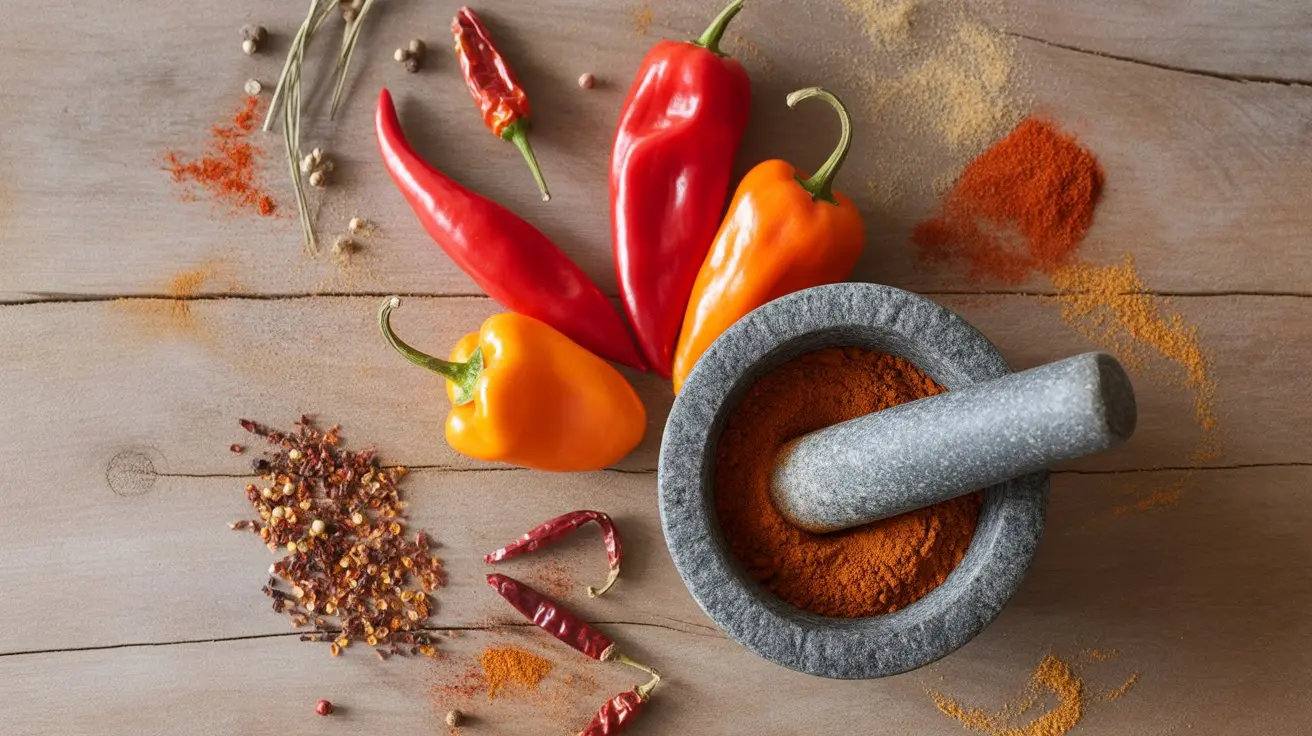
What Is Capsaicin?
The compound that makes peppers hot. Health benefits, pain relief, and how it works. Find your perfect heat level.

The Compound That Makes Peppers Hot
Capsaicin is an alkaloid compound produced naturally in the placental tissue of chili peppers — the white membrane where seeds attach. It belongs to a family of related compounds called capsaicinoids, which includes dihydrocapsaicin, nordihydrocapsaicin, and several others, though capsaicin itself accounts for roughly 70% of the total capsaicinoid content in most peppers.
The chemical formula is C18H27NO3, and unlike most flavor compounds, capsaicin has no smell and no taste in the traditional sense. What it does instead is trigger a specific protein receptor in your nerve cells, producing a sensation that your brain interprets as heat — even though no actual temperature change occurs.
How Capsaicin Activates Pain Receptors
The receptor responsible is called TRPV1 (Transient Receptor Potential Vanilloid 1), a protein channel that normally responds to temperatures above 43°C (109°F) and to acidic conditions. Capsaicin fits into this receptor like a key in a lock, triggering the same nerve signal that genuine heat would produce.
This is why eating a hot pepper feels like your mouth is on fire — your nervous system is receiving an authentic pain signal, even though no tissue damage is occurring. The brain responds by releasing endorphins, which is partly why some people find very spicy food genuinely pleasurable.
The TRPV1 receptor is found throughout the body, not just in the mouth. It explains why capsaicin causes burning sensations in eyes, skin, and the digestive tract — anywhere the compound contacts mucous membranes or is absorbed through tissue. For a closer look at the receptor science behind this process, the chemistry of how capsaicin binds to nerve receptors is worth understanding before you start cooking with high-heat varieties.
Measuring Capsaicin: The Scoville Scale
Wilbur Scoville developed his organoleptic test in 1912, which involved diluting pepper extract in sugar water until trained tasters could no longer detect heat. The resulting unit — Scoville Heat Units (SHU) — remains the standard measurement today, though modern labs use high-performance liquid chromatography (HPLC) rather than human tasters.
Pure capsaicin measures approximately 16,000,000 SHU. Most cooking peppers sit far below that ceiling. A serrano's sharp, grassy heat typically registers between 10,000 and 23,000 SHU — a useful middle reference point when thinking about everyday cooking heat. For a full breakdown of how the Scoville rating system tests and ranks pepper heat, the methodology is more nuanced than most people realize.
Capsaicin content varies significantly even within a single variety, affected by growing conditions, soil stress, water availability, and ripeness stage. A pepper grown in dry, hot conditions will almost always be hotter than the same variety grown with consistent irrigation.
Capsaicin Across the Heat Spectrum
Understanding how capsaicin concentration translates into real eating experiences helps calibrate expectations. Mild SHU ranges — roughly 0 to 2,500 — include peppers where capsaicin is barely perceptible. The Espelette pepper's gently warm, fruity character sits at around 1,500 to 2,500 SHU, producing a warmth that lingers without any real discomfort.
Moving into medium-heat SHU brackets — 2,500 to 30,000 — capsaicin becomes a genuine flavor element rather than just background warmth. The cascabel's nutty, tobacco-edged heat falls in this range, where the burn is present but doesn't overwhelm the other flavors in a dish.
At the hot-tier intensity level, roughly 30,000 to 100,000 SHU, capsaicin starts demanding attention. Cayenne's clean, direct heat sits around 30,000 to 50,000 SHU — roughly twice to five times hotter than a serrano — and this is where many people begin to feel the endorphin response that makes hot food addictive.
The extra-hot SHU tier (100,000 to 350,000) and the super-hot category above 1,000,000 SHU represent concentrations where capsaicin becomes genuinely physiologically intense, triggering sweating, elevated heart rate, and significant endorphin release.
Why Dairy Neutralizes the Burn (And Water Doesn't)
Capsaicin is hydrophobic — it repels water and binds to fats. This is why drinking water after eating something spicy does almost nothing; you're just spreading the capsaicin around. Milk, yogurt, and other dairy products contain casein, a protein that physically binds to capsaicin molecules and removes them from receptor contact.
Alcohol also dissolves capsaicin, which is why a sip of beer provides some relief — though the alcohol concentration in most beer is low enough that the effect is modest. Bread and starchy foods help by physically absorbing capsaicin from the mouth's surface.
Oil-based foods work well too, for the same reason dairy does. A spoonful of peanut butter or a bite of avocado will often provide more relief than a glass of water ever could.
Health Benefits: What the Research Shows
Capsaicin has been studied extensively for its therapeutic potential. The most well-established application is topical pain relief. Capsaicin creams and patches (typically 0.025% to 8% concentration) work by initially activating TRPV1 receptors — causing a brief burning sensation — and then desensitizing them through prolonged exposure, reducing their ability to transmit pain signals.
The FDA has approved high-concentration capsaicin patches (8%, brand name Qutenza) for treating postherpetic neuralgia — nerve pain following shingles — and peripheral neuropathy in non-diabetic adults. This is well beyond folk remedy territory; it's peer-reviewed clinical medicine.
Research published in various journals suggests capsaicin may also support metabolic rate increases, though the effect is modest (roughly 4-5% temporary increase in caloric expenditure). Some studies have examined capsaicin's role in appetite suppression, though findings remain inconsistent across populations.
Antimicrobial properties have been documented in laboratory settings, and there is ongoing research into capsaicin's potential role in cardiovascular health. A 2015 study published in PLOS ONE found associations between regular chili consumption and reduced mortality risk, though causation remains difficult to establish definitively.
Capsaicin in Cooking: Practical Implications
Heat in cooking is not just about pain tolerance — it's about understanding how capsaicin interacts with other ingredients and techniques. Since capsaicin is fat-soluble, cooking peppers in oil extracts and distributes their heat more effectively than cooking them in water-based liquids.
The Bishop's Crown pepper's mild, bell-like sweetness demonstrates how pepper varieties can carry distinct flavor profiles with minimal capsaicin. Comparing it to something like cayenne in a dish shows how capsaicin concentration shapes the entire cooking approach — lower-heat peppers can be used generously for body and flavor, while high-heat varieties function more like seasoning.
Roasting peppers reduces capsaicin content somewhat, as heat degrades capsaicinoids over time. This is why roasted versions of the same pepper often taste noticeably milder than their raw counterparts. Fermentation, by contrast, tends to preserve heat levels fairly well.
The Sugar Rush Peach's sweet, fruity burn is a good example of how breeders have developed peppers where capsaicin heat coexists with strong fruit notes — a combination that works particularly well in hot sauces and fruit-forward salsas where the burn enhances rather than overwhelms.
Growing Peppers: Managing Capsaicin Production
The hardest part of growing hot peppers isn't germination — it's maintaining the environmental stress conditions that push capsaicin production higher without stressing the plant to the point of dropping fruit or reducing yield. Capsaicin synthesis is triggered by abiotic stress, particularly water deficit and high temperatures during fruit development.
Reducing irrigation frequency during the fruiting stage — not cutting water off entirely, but allowing the soil to dry more between waterings — consistently produces hotter fruit. The plant reads drought stress as a threat and increases capsaicinoid production as a defensive response.
Soil nutrient levels matter too. Excess nitrogen encourages vegetative growth at the expense of fruit capsaicin content. Phosphorus and potassium during the fruiting stage support better capsaicin production. For anyone wanting to get into the specifics of timing, variety selection, and soil management, a full germination and cultivation guide covers the complete process from seed to harvest.
Temperature swings between day and night during fruit development also seem to influence capsaicin levels. Peppers grown in climates with warm days and cool nights often show higher SHU readings than those grown in more uniform temperature conditions.
Capsaicin Beyond the Kitchen
Capsaicin's applications extend well outside food. Bear spray and personal defense sprays use oleoresin capsicum (OC), a concentrated extract, as the active ingredient. Law enforcement-grade OC sprays typically measure 1,000,000 to 2,000,000 SHU — concentrations that cause immediate eye closure, mucous membrane irritation, and disorientation.
Agricultural applications include capsaicin-based repellents for deer, rabbits, and squirrels. The compound is also used in anti-fouling marine paints to deter barnacle and organism attachment on boat hulls.
In neuroscience research, capsaicin and its synthetic analogs are used as tools to study pain pathways, temperature sensing, and TRPV1 receptor function. The discovery of TRPV1 by David Julius (who won the 2021 Nobel Prize in Physiology or Medicine for related work on temperature and touch receptors) has made capsaicin central to understanding how the nervous system processes pain and temperature.
Species Differences in Capsaicinoid Profiles
Not all capsaicin is the same, and different pepper species produce different ratios of capsaicinoids. Capsicum chinense varieties — habaneros, Scotch bonnets, and the super-hots — tend to produce very high total capsaicinoid content with a particular ratio that creates a delayed, building heat. Capsicum annuum varieties, which include most common cooking peppers, typically produce a faster-onset, shorter-duration burn.
Capsicum frutescens peppers like Tabasco have a distinctive sharp, vinegary heat character partly attributable to their capsaicinoid profile. Capsicum baccatum varieties from South America, and Capsicum pubescens — the rocotos — each produce heat with different onset timing and duration, which explains why experienced chili eaters can often identify a pepper's species from the character of the burn alone.
This variation matters in cooking. A dish built around chinense heat will behave differently than the same dish made with annuum peppers at the same SHU level — the timing and persistence of the burn changes how other flavors are perceived throughout the eating experience.
Frequently Asked Questions
-
Capsaicin is hydrophobic and bonds to fat molecules, not water. Casein protein in dairy physically binds to capsaicin and pulls it away from TRPV1 receptors. Water just spreads the compound around without neutralizing it.
-
Yes, prolonged heat degrades capsaicinoids, so roasted or slow-cooked peppers are typically milder than raw ones from the same batch. The reduction depends on cooking temperature and time — a quick sauté removes less capsaicin than a long braise.
-
At normal food consumption levels, capsaicin causes no tissue damage despite the pain signals it triggers. TRPV1 receptors fire without any actual injury occurring. High-concentration forms like OC spray can cause temporary but significant irritation to eyes and airways.
-
Tolerance to capsaicin builds with repeated exposure — TRPV1 receptors desensitize over time, requiring more stimulation to produce the same response. Genetics also plays a role, with some individuals having more heat-sensitive receptor variants than others.
-
Generally yes, but the relationship isn't perfectly linear because peppers contain multiple capsaicinoids with different potencies. Dihydrocapsaicin, for example, is slightly less potent than capsaicin itself, so two peppers with identical SHU scores can have different capsaicinoid profiles.