Serrano Pepper vs Thai Chili: Taste, Heat & When to Use Each
Serrano peppers and Thai chilies occupy very different positions on the heat spectrum, yet both show up in fresh salsas, stir-fries, and hot sauces worldwide. Serranos bring moderate, crisp heat with a grassy brightness, while Thai chilies deliver a sharp, fiery punch that can hit 50,000-100,000 SHU. Knowing which to reach for depends on the dish, your heat tolerance, and what flavor you're actually after.

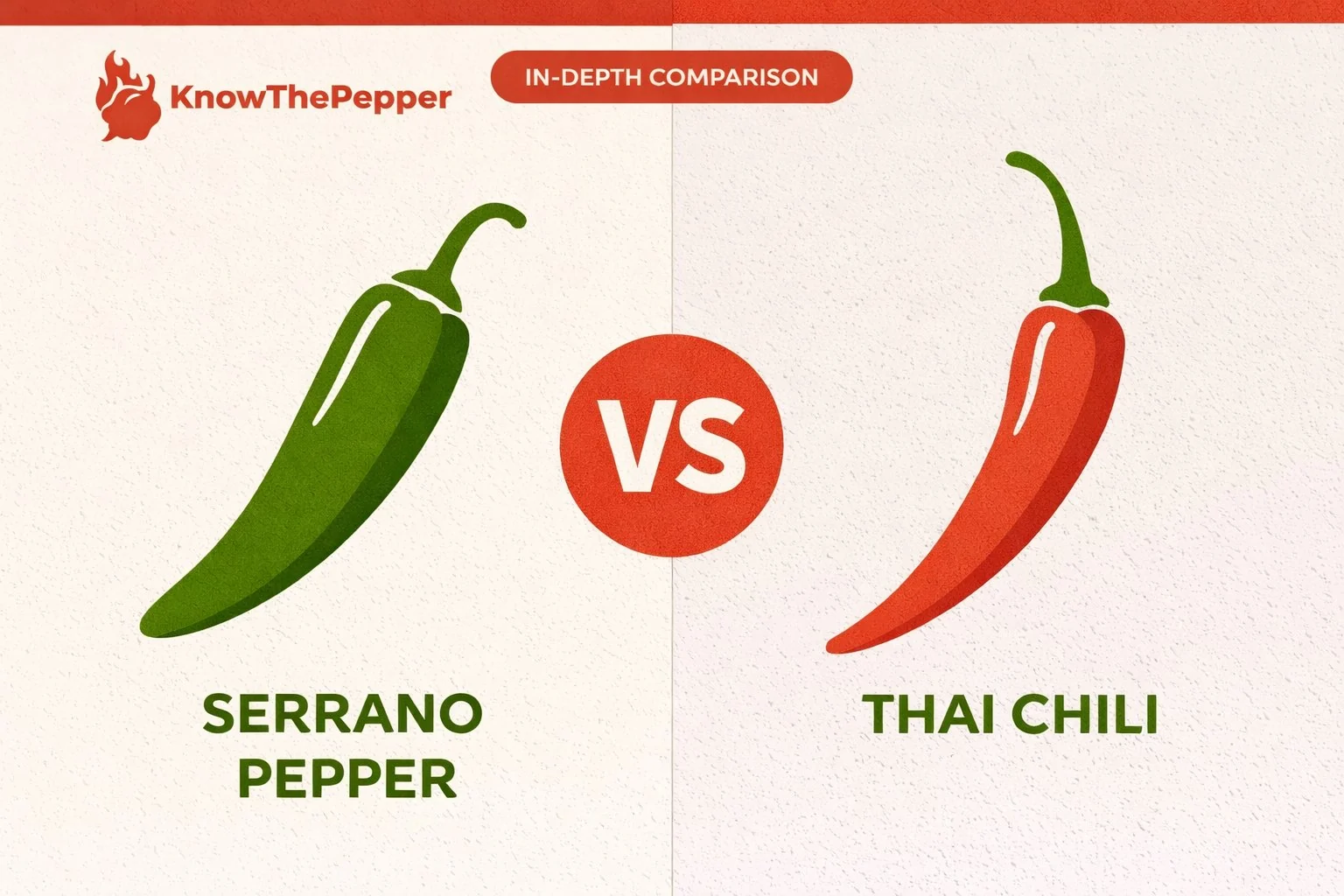
Serrano Pepper measures 10K–23K SHU while Thai Chili registers 50K–100K SHU — making Thai Chili 4× hotter. Serrano Pepper is known for its bright and crisp flavor (C. annuum), while Thai Chili offers bright and peppery notes (C. annuum).
- Heat difference: Thai Chili is 4× hotter
- Species: Both are C. annuum
- Best for: Serrano Pepper excels in everyday cooking and salsas, Thai Chili in hot sauces and spicy dishes
Serrano Pepper
HotThai Chili
Extra-HotSerrano Pepper vs Thai Chili Comparison
Serrano Pepper vs Thai Chili Heat Levels
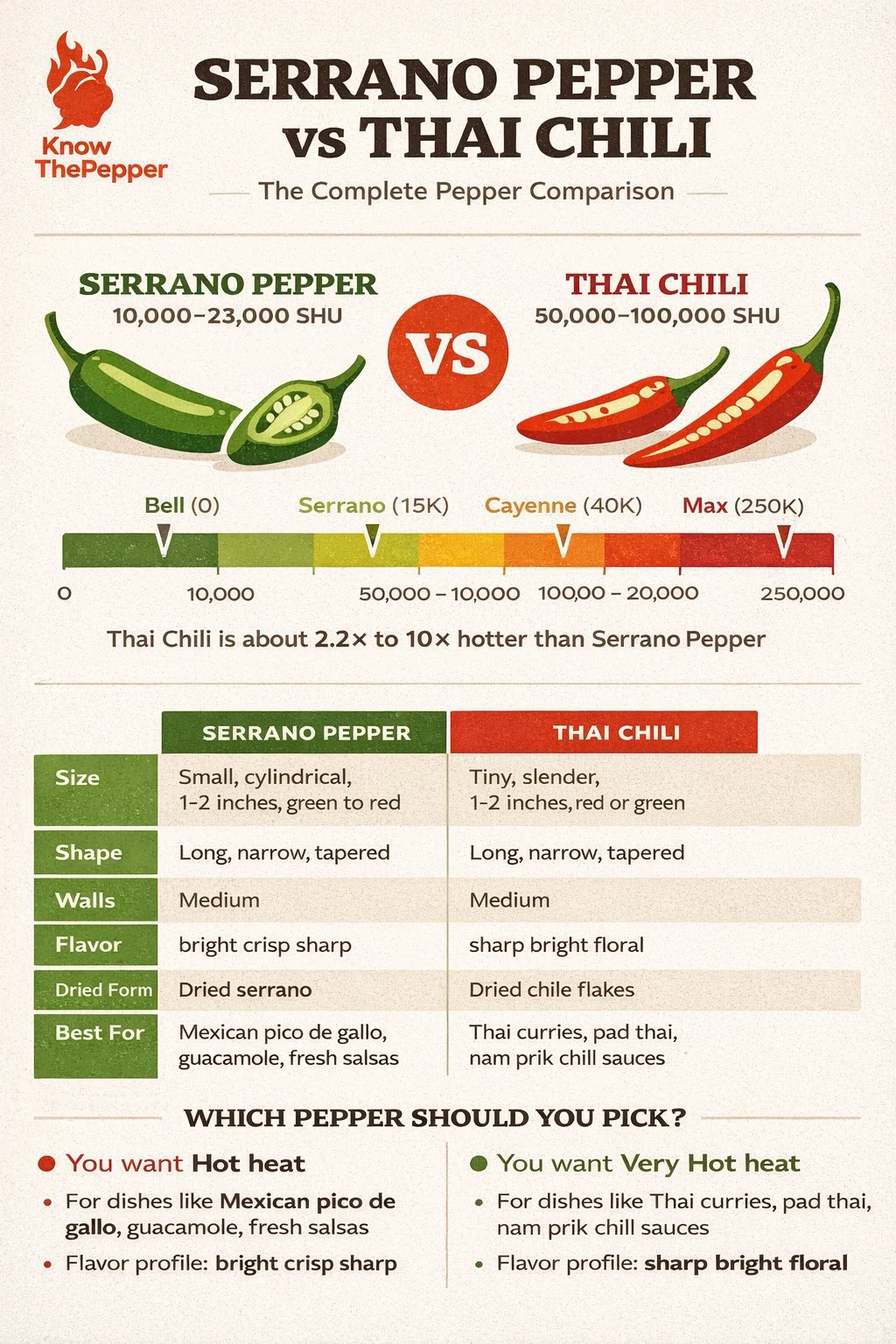
The heat gap between these two peppers is significant. Thai chilies register between 50,000 and 100,000 SHU on the Scoville rating system for pepper heat — placing them firmly in the hot pepper intensity range alongside cayenne and tabasco. Serranos, by contrast, typically land around 10,000-23,000 SHU, making them a solid medium-heat pepper but nowhere near Thai chili territory.
To put that in perspective using a pepper most cooks know: a guajillo averages around 2,500-5,000 SHU. A Thai chili is roughly 15-20 times hotter than a guajillo. A serrano sits at about 3-5 times hotter than a guajillo — meaningful heat, but a completely different league.
The character of the burn differs too. Serranos build gradually, spreading across the tongue with a clean, even heat that fades at a reasonable pace. Thai chilies hit faster and sharper — the capsaicin activates TRPV1 receptors quickly, producing an intense front-of-mouth sting that lingers. If you want to understand why peppers burn at the receptor level, Thai chilies are an excellent case study because their heat is so immediate and pronounced.
For anyone comparing the heat difference between tabasco and Thai chili, Thai chilies generally run hotter than tabasco peppers, which top out around 50,000 SHU on the high end. Serranos are the milder option by a wide margin in any of these matchups.
Flavor Profile Comparison
Bite into a raw serrano and the first thing you notice is the aroma — green, grassy, almost herbal, like a jalapeño that decided to be serious.
Small enough to overlook, fierce enough to remember — the Thai chili punches well above its size.
Start with the nose: serranos carry a fresh, green aroma with grassy, slightly herbal notes — almost like a more intense bell pepper before it ripens. Thai chilies smell brighter and sharper, with a peppery, almost floral top note that cuts through quickly. That aromatic difference hints at what you get on the palate.
Serrano flavor is clean and vegetal. There is a mild sweetness underneath the heat, especially in red-ripe serranos, and a crispness that holds up well in raw preparations. They taste like a pepper first, heat second — which is why they work so well in fresh pico de gallo or sliced directly onto tacos.
Thai chilies, native to Southeast Asian pepper-growing traditions and classified under Capsicum annuum, deliver bright and peppery flavor with very little sweetness. The taste is direct and assertive — you get a flash of fruity sharpness before the heat takes over. Dried Thai chilies develop a slightly smoky, more concentrated character that works differently than fresh.
Culinary context matters here. Serranos shine in dishes where pepper flavor is part of the foreground — green salsas, ceviche, fresh relishes. Thai chilies function more as a heat delivery mechanism in many preparations; their flavor integrates into a curry paste or stir-fry sauce rather than standing alone. That said, in dishes like larb or som tam, fresh Thai chilies contribute noticeable brightness that you cannot replicate with a milder pepper.
Culinary Uses for Serrano Pepper and Thai Chili
Serranos are workhorses in Mexican cooking. Roasted and blended into salsa verde, sliced raw over tacos, or charred whole alongside tomatoes for a smoky base — they handle heat without overwhelming a dish. Their firm flesh holds up to quick cooking, and they pickle beautifully. A serrano's fresh preparation and substitution options make it one of the more flexible medium-heat peppers in any kitchen.
For anyone curious about the heat and flavor contrast between sport peppers and serranos, serranos generally run hotter with a cleaner, greener flavor compared to sport peppers' tangy brine.
Thai chilies dominate Southeast Asian cooking — stir-fries, curry pastes, dipping sauces, and noodle soups. They are used both fresh and dried, and the two forms behave differently. Fresh Thai chilies add bright, sharp heat; dried ones bring depth and a more concentrated punch. Nam prik, the family of Thai chili-based condiments, relies almost entirely on this pepper's particular combination of heat and flavor.
Substitution ratios matter when swapping between these two. If a recipe calls for 1 Thai chili, start with 3-4 serranos to approximate the heat — and expect the flavor profile to shift toward something greener and more vegetal. Going the other direction, replace 1 serrano with roughly 1/4 to 1/3 of a Thai chili and taste as you go. The ratio guide for Thai chili substitutes covers more specific applications if you are adapting a recipe.
For the birds eye vs Thai chili flavor matchup, the two are close enough that bird's eye chilies often substitute directly in Thai recipes — both share that sharp, peppery profile.
In practical terms: use serranos when you want pepper flavor with moderate heat, Thai chilies when you need serious firepower with a bright, peppery edge.
Which Should You Choose?
These two peppers solve different problems in the kitchen. Serranos are the better choice when pepper flavor matters as much as heat — fresh salsas, guacamole, ceviche, or any dish where the pepper is a featured ingredient rather than a background element. Their moderate heat makes them approachable for a wider range of diners.
Thai chilies belong in dishes that demand real heat with a sharp, bright character — Southeast Asian stir-fries, curry pastes, dipping sauces, and anywhere you need a small pepper to do serious work. One or two Thai chilies can transform a dish in a way that would require a handful of serranos.
If you are growing your own, serranos are productive and relatively straightforward; a complete guide to pepper germination and growing covers both species well. Thai chilies are prolific producers that dry easily on the plant.
Neither pepper is universally better — they come from different culinary traditions and serve different functions. Match the pepper to the dish, not the other way around.
Can You Substitute One for the Other?
Proceed with caution. Thai Chili is 4× hotter than Serrano Pepper.
Need a different option altogether? Search for peppers that match your target heat and flavor with precise swap ratios.
Growing Serrano Pepper vs Thai Chili
If you’re deciding which pepper to grow at home, consider your climate and patience level. Serrano Pepper and Thai Chili have different maturation times and temperature preferences. Hotter varieties generally need a longer, warmer growing season to develop their full capsaicin content. Our zone-based planting date tool can pinpoint the best sowing window for your area.
Serranos are reliable producers that reward patient gardeners. Start seeds indoors 8–10 weeks before last frost — germination takes 10–21 days at soil temperatures around 80–85°F.
Transplant outdoors once nighttime temps stay above 55°F. Space plants 18–24 inches apart in full sun with well-draining soil amended with compost.
Days to maturity runs 70–80 days from transplant to green-ripe. Letting pods fully ripen to red adds another 2–3 weeks but intensifies both flavor and heat.
The hardest part of growing Thai chilies is not germination — it is managing heat stress during fruiting. These plants originate from a tropical climate and expect warmth, but sustained temperatures above 95°F (35°C) cause flower drop before pods can set.
Germination itself is straightforward at 80–85°F soil temperature, typically within 10–14 days. Start seeds indoors 8–10 weeks before last frost.
They prefer well-draining soil with consistent moisture but will tolerate brief dry spells better than waterlogging. Feed with a low-nitrogen fertilizer once flowering begins; too much nitrogen pushes leaf growth at the expense of pods.
History & Origin of Serrano Pepper and Thai Chili
Both peppers carry centuries of culinary heritage. Serrano Pepper traces its roots to Mexico, while Thai Chili originates from Thailand. Understanding their backstory helps explain why each pepper developed its distinctive traits.
Buying & Storage
Whether you’re shopping for Serrano Pepper or Thai Chili, the same quality indicators apply. Fresh peppers should feel firm and heavy for their size, with taut, glossy skin and no soft or wet spots. Minor stem cracks known as “corking” are perfectly normal and often indicate a mature, flavorful pod.
- Firm pods with taut skin and consistent color
- Should feel heavy relative to size
- Minor stem cracks (“corking”) are normal
- Avoid anything soft, shriveled, or with dark wet spots
- Fresh: Paper bag, crisper drawer — 1–2 weeks
- Frozen: Wash, dry, freeze on sheet pan — 6+ months
- Dried: Airtight, away from light — up to 1 year
The Verdict: Serrano Pepper vs Thai Chili
Serrano Pepper and Thai Chili occupy very different positions on the heat spectrum. Thai Chili delivers 4× more heat with its distinctive bright and peppery character. Serrano Pepper, with its bright and crisp profile, excels in everyday cooking.
Frequently Asked Questions
Related Comparisons
Sources pending verification.