Pasilla vs Ancho: Are They the Same?
Pasilla and ancho are two of Mexico's most important dried chiles, and they get confused constantly — even by professional cooks. Both are dark, wrinkled, and mild, but they come from different fresh peppers and deliver noticeably different flavors. Understanding the distinction matters most when you're building a mole or sourcing chiles from a market that mislabels them.

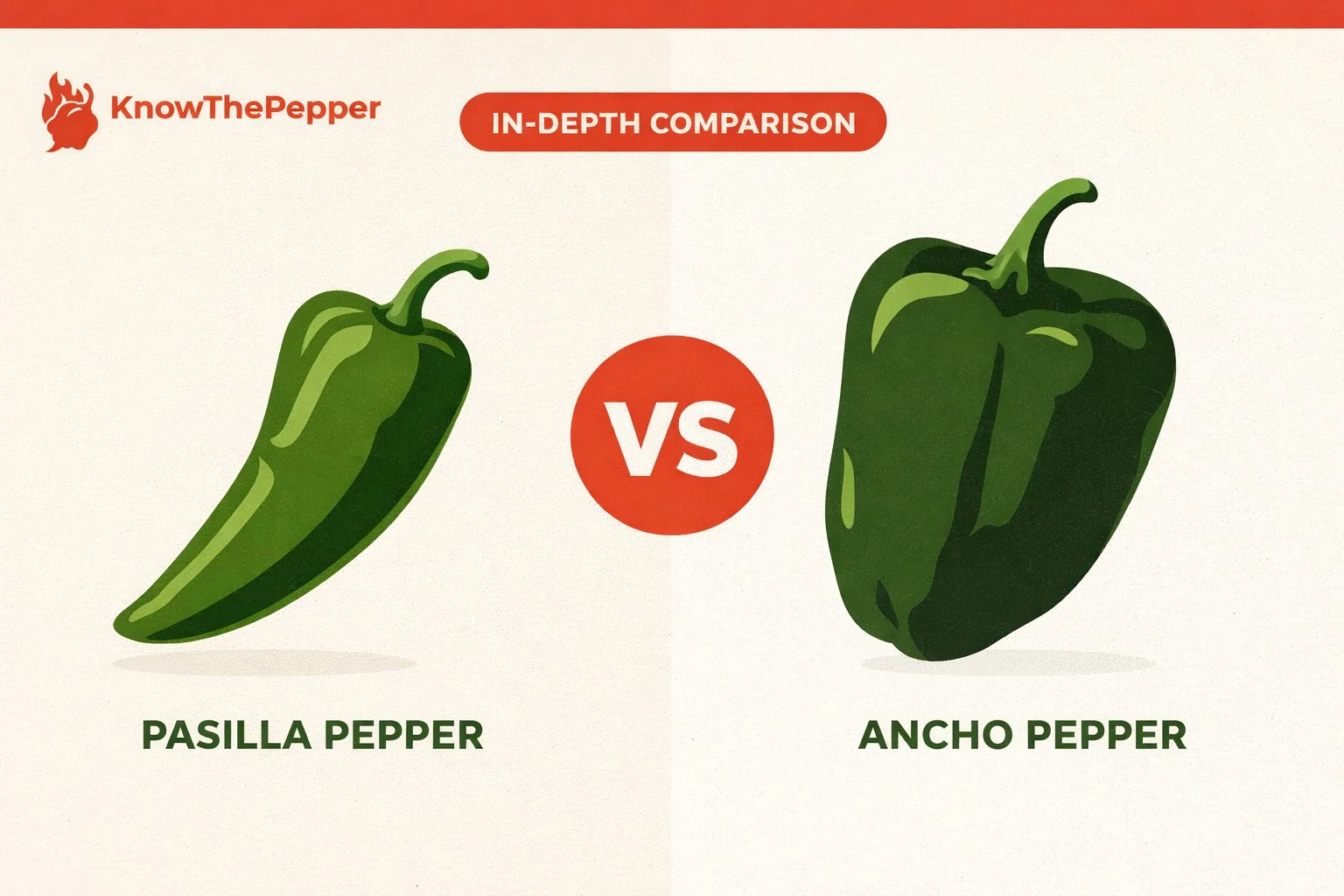
Pasilla Pepper measures 1K–3K SHU while Ancho Pepper registers 1K–2K SHU — roughly equal in heat. Pasilla Pepper is known for its earthy and rich flavor (C. annuum), while Ancho Pepper offers sweet and raisin-like notes (C. annuum).
- Species: Both are C. annuum
- Best for: Pasilla Pepper excels in everyday cooking and salsas, Ancho Pepper in fresh salsas and mild recipes
Pasilla Pepper
MediumAncho Pepper
MediumPasilla Pepper vs Ancho Pepper Comparison
Pasilla Pepper vs Ancho Pepper Heat Levels
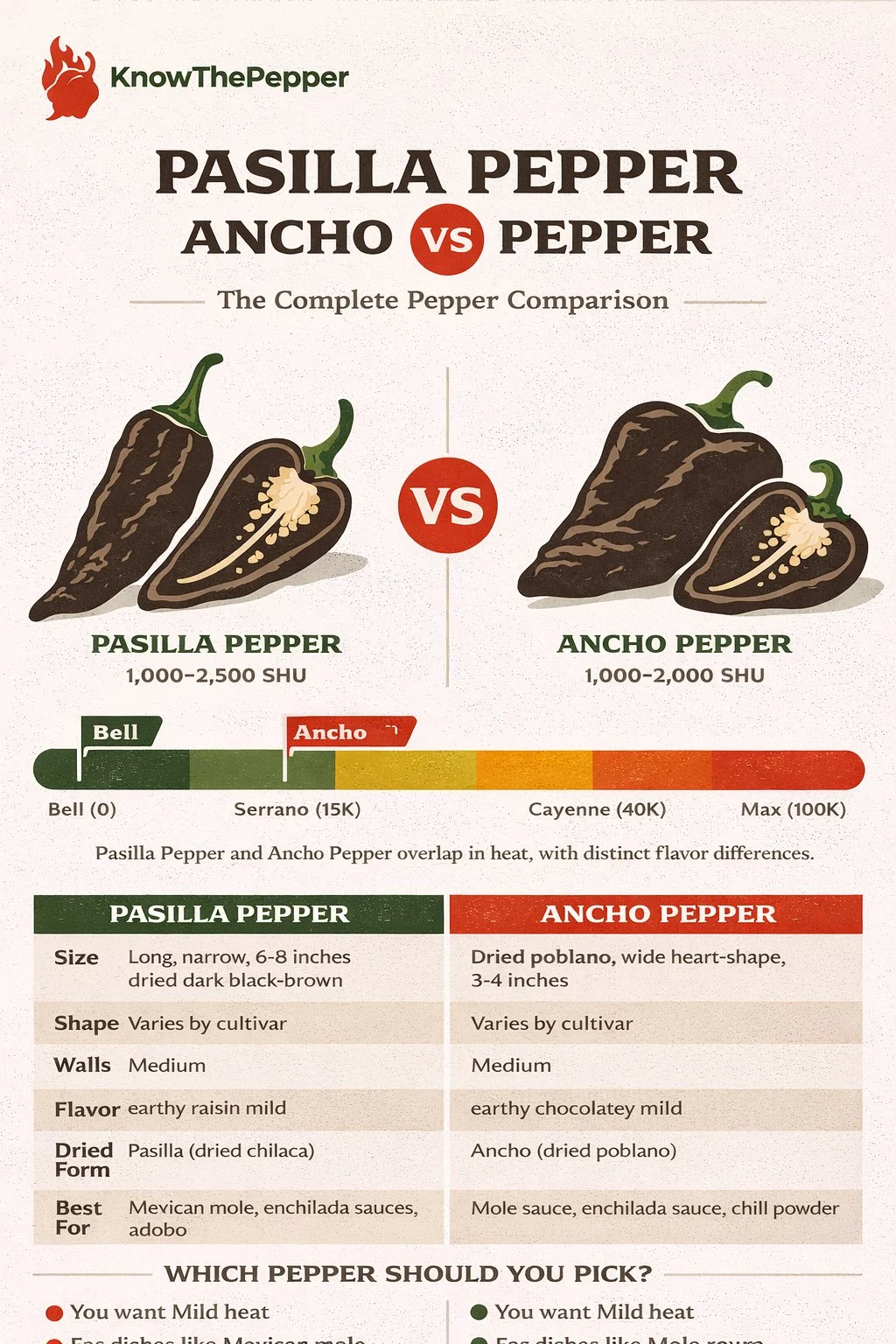
On the Scoville heat index, pasilla registers 1,000-2,500 SHU and ancho comes in at 1,000-2,000 SHU. The overlap is nearly total — both sit firmly in the mild heat zone where a standard jalapeño (roughly 5,000 SHU) would be two to five times hotter than either of these dried chiles.
At their hottest, a pasilla reaches about half the heat of a jalapeño's floor. An ancho rarely climbs past 2,000 SHU, making it one of the gentlest dried chiles in Mexican cooking. Neither pepper will challenge heat-seekers — that's not their purpose.
The practical heat difference between the two is minimal. A pasilla can run slightly hotter at its ceiling (2,500 SHU vs. 2,000 SHU), but that 500-unit gap disappears entirely in a pot of braising liquid or a blended sauce. Both belong to Capsicum annuum, the same botanical family as bell peppers and cayennes, which partly explains their restrained capsaicin output.
For context: if you've ever thought a dish made with either chile tasted 'spicy,' the heat was almost certainly coming from something else in the recipe — black pepper, chipotle, or fresh serrano. These two are built for flavor, not fire.
Flavor Profile Comparison
Pasilla sits in the medium heat intensity range — warm enough to notice, gentle enough to let flavor lead.
Long before dried chiles appeared on supermarket shelves, the ancho was already central to Mexican cuisine — a staple ground into sauces, rehydrated for stews, and layered into moles that could take days to prepare.
This is where pasilla and ancho genuinely diverge, and why getting them mixed up actually matters in the kitchen.
Pasilla — dried chilaca peppers — carries an earthy, rich flavor with notes of dark chocolate, dried fruit, and a faint herbal edge. Some tasters pick up on a slight bitterness, almost like black coffee, that gives pasilla its depth in complex sauces. The name itself means 'little raisin' in Spanish, referring to its wrinkled appearance, but the flavor leans more savory-earthy than sweet.
Ancho — dried poblano peppers — goes in a sweeter, fruitier direction. The flavor profile is often described as sweet and raisin-like, with hints of plum, mild chocolate, and a gentle warmth. Where pasilla has edges, ancho is rounded. It's one of the sweeter dried chiles in the Mexican pantry, which makes it a natural base for mole negro and enchilada sauces.
Aroma matters here too. Rehydrated ancho smells almost dessert-like — warm, fruity, faintly sweet. Pasilla smells more savory, closer to dried mushrooms or dark stock. Side by side, they're clearly different peppers.
Both are grown across Mexico's diverse chile-producing regions, but their distinct flavor identities come from the different fresh peppers they start as — chilaca for pasilla, poblano for ancho. That botanical gap drives everything downstream.
Culinary Uses for Pasilla Pepper and Ancho Pepper
Despite their differences, pasilla and ancho share a lot of kitchen territory. Both are foundational dried chiles for Mexican cooking traditions — appearing in moles, adobos, tamale sauces, and braised meat dishes. The choice between them shifts depending on what flavor direction you want.
Ancho is the default choice when sweetness and body are the goal. It's one of the 'holy trinity' of mole chiles alongside mulato and pasilla. Its mild, fruity character plays well with chocolate, cinnamon, and dried fruit in complex sauces. It also rehydrates beautifully — the flesh stays plump and the skin softens without turning bitter. Use it in enchilada sauces, pozole rojo, and ancho-rubbed meats. The smoky-sweet ancho versus chipotle heat gap is worth understanding if you're deciding between them for a recipe.
Pasilla brings earthiness and savory depth that ancho can't replicate. It's essential in mole negro and pairs naturally with mushrooms, black beans, and braised pork. When a sauce needs more complexity and less sweetness, pasilla is the adjustment. The earthy pasilla versus guajillo brightness contrast illustrates why pasilla is the richer, darker choice of the two.
Substitution: In most recipes, ancho and pasilla can swap at a 1:1 ratio — the heat difference is negligible. Flavor-wise, replacing pasilla with ancho makes a sauce slightly sweeter; going the other direction adds more savory depth. For a closer match, combine ancho with a small amount of dried mulato when substituting for pasilla.
Both chiles benefit from a dry toast in a skillet before rehydrating — 30 seconds per side over medium heat, just until fragrant. Then soak in hot (not boiling) water for 20-30 minutes. The soaking liquid from ancho is mild enough to use in the recipe; pasilla's can be slightly more bitter, so taste it first.
For a broader look at how ancho compares to other mild dried chiles, the ancho versus guajillo flavor and heat breakdown covers that ground well.
Which Should You Choose?
If the recipe calls for one and you only have the other, swap freely — the heat difference won't register. But if you're building a mole or a sauce where flavor architecture matters, the distinction is real.
Choose ancho when you want sweetness, body, and that fruity-chocolate warmth. It's more forgiving in unfamiliar recipes and pairs naturally with sweeter spice blends.
Choose pasilla when depth and earthiness are the priority — braised meats, bean dishes, or any sauce where you want a darker, more savory foundation.
The confusion between them is partly a labeling problem: in some Mexican pepper-producing regions, 'pasilla' gets applied to what is technically an ancho, and vice versa. In California markets especially, the fresh poblano is sometimes sold as 'pasilla.' When buying dried, look at the shape — ancho is heart-shaped and wide-shouldered; pasilla is longer, narrower, and almost cylindrical. Shape is more reliable than the label.
Can You Substitute One for the Other?
Yes — direct substitution works. Pasilla Pepper and Ancho Pepper are close enough in heat to swap at roughly 1:1. The main difference will be flavor. For more swap options, explore ranked alternatives with conversion ratios.
Growing Pasilla Pepper vs Ancho Pepper
If you’re deciding which pepper to grow at home, consider your climate and patience level. Pasilla Pepper and Ancho Pepper have different maturation times and temperature preferences. Hotter varieties generally need a longer, warmer growing season to develop their full capsaicin content. Our zone-based planting date tool can pinpoint the best sowing window for your area.
Pasilla plants are tall growers, often reaching 24–36 inches with good support. Start seeds indoors 8–10 weeks before last frost — the long growing season (roughly 80–85 days to maturity) means early starts matter.
Transplant after soil temperatures stabilize above 60°F. Space plants 18–24 inches apart — they branch outward as they mature, and crowding invites fungal issues on the dense foliage.
Water consistently but avoid waterlogged soil. These plants are somewhat drought-tolerant once established, but irregular watering during pod development causes blossom drop and misshapen fruit.
Growing anchos means growing poblanos and drying them yourself — the transformation happens post-harvest. Plants thrive in USDA zones 9–11 as perennials and are treated as annuals elsewhere.
Transplant outdoors after all frost risk passes, spacing plants 18–24 inches apart in full sun. Poblanos are heavy feeders — a balanced fertilizer at transplant followed by a phosphorus-forward feed once flowering begins keeps production strong.
Fruits are ready to dry when they turn fully red — this is when sugar content peaks and the dried ancho will have its characteristic sweetness. Hang or dehydrate at 125–135°F until completely leathery with no soft spots.
History & Origin of Pasilla Pepper and Ancho Pepper
Both peppers carry centuries of culinary heritage. Pasilla Pepper traces its roots to Mexico, while Ancho Pepper originates from Mexico. Understanding their backstory helps explain why each pepper developed its distinctive traits.
Buying & Storage
Whether you’re shopping for Pasilla Pepper or Ancho Pepper, the same quality indicators apply. Fresh peppers should feel firm and heavy for their size, with taut, glossy skin and no soft or wet spots. Minor stem cracks known as “corking” are perfectly normal and often indicate a mature, flavorful pod.
- Firm pods with taut skin and consistent color
- Should feel heavy relative to size
- Minor stem cracks (“corking”) are normal
- Avoid anything soft, shriveled, or with dark wet spots
- Fresh: Paper bag, crisper drawer — 1–2 weeks
- Frozen: Wash, dry, freeze on sheet pan — 6+ months
- Dried: Airtight, away from light — up to 1 year
The Verdict: Pasilla Pepper vs Ancho Pepper
Pasilla Pepper and Ancho Pepper sit in the same heat tier but serve different roles. Pasilla Pepper delivers its distinctive earthy and rich character. Ancho Pepper, with its sweet and raisin-like profile, excels in everyday cooking.
Frequently Asked Questions
Related Comparisons
Sources pending verification.