Comparing Kashmiri Chili and Paprika: Differences
Kashmiri chili and paprika are two of the most color-forward, low-heat peppers in any spice cabinet, but they serve different purposes. Kashmiri sits at 1,000-2,000 SHU while paprika ranges from 0-1,000 SHU, making both firmly mild-heat peppers — though their flavor profiles and culinary roles diverge considerably. If you want brilliant red color with a whisper of heat, Kashmiri is your pick; if pure sweetness and zero burn matter most, paprika delivers.

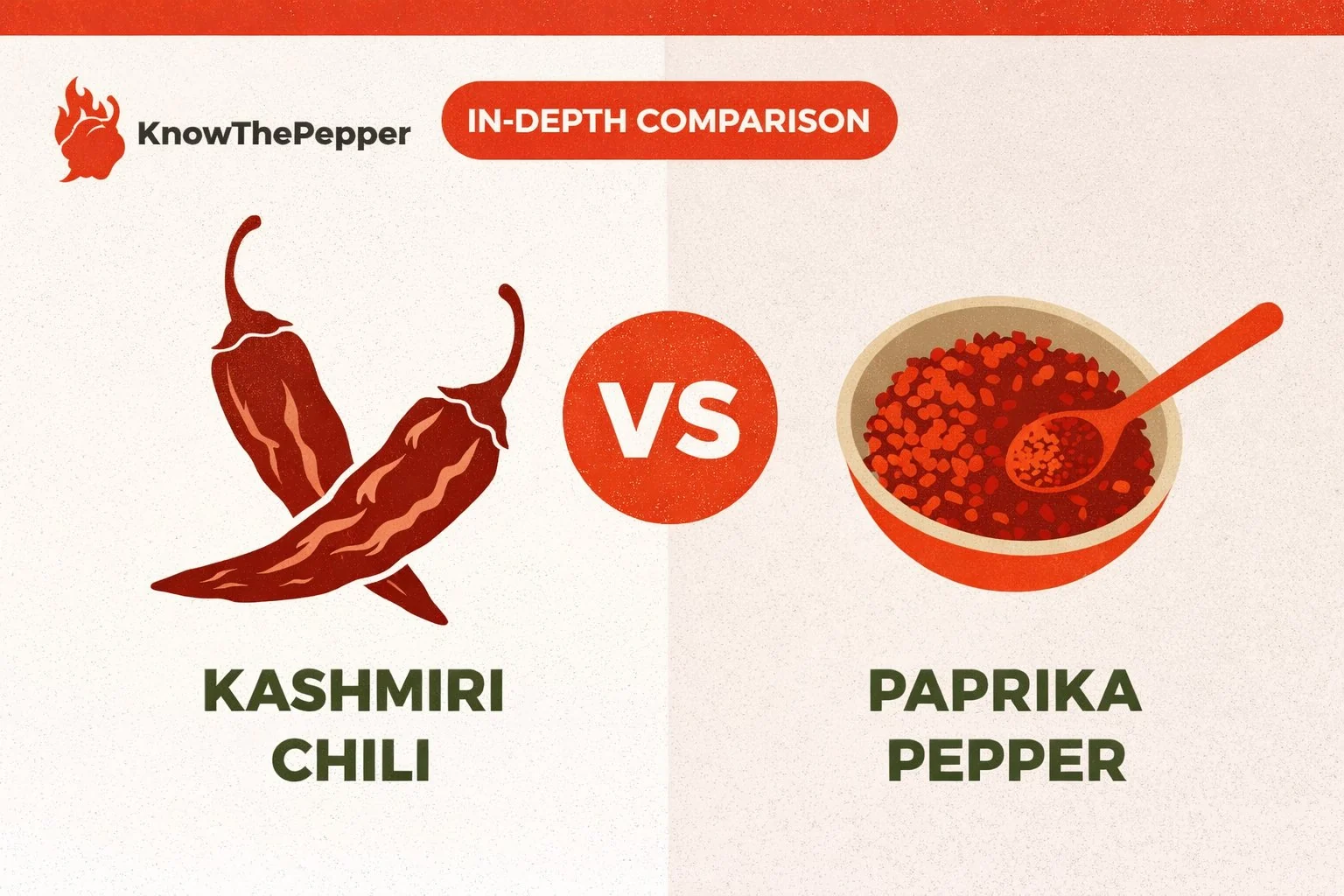
Kashmiri Chili measures 1K–2K SHU while Paprika Pepper registers 0–1K SHU — making Kashmiri Chili 2× hotter. Kashmiri Chili is known for its mild and sweet flavor (C. annuum), while Paprika Pepper offers sweet and mild notes (C. annuum).
- Heat difference: Kashmiri Chili is 2× hotter
- Species: Both are C. annuum
- Best for: Kashmiri Chili excels in everyday cooking and salsas, Paprika Pepper in fresh salsas and mild recipes
Kashmiri Chili
MediumPaprika Pepper
MediumKashmiri Chili vs Paprika Pepper Comparison
Kashmiri Chili vs Paprika Pepper Heat Levels
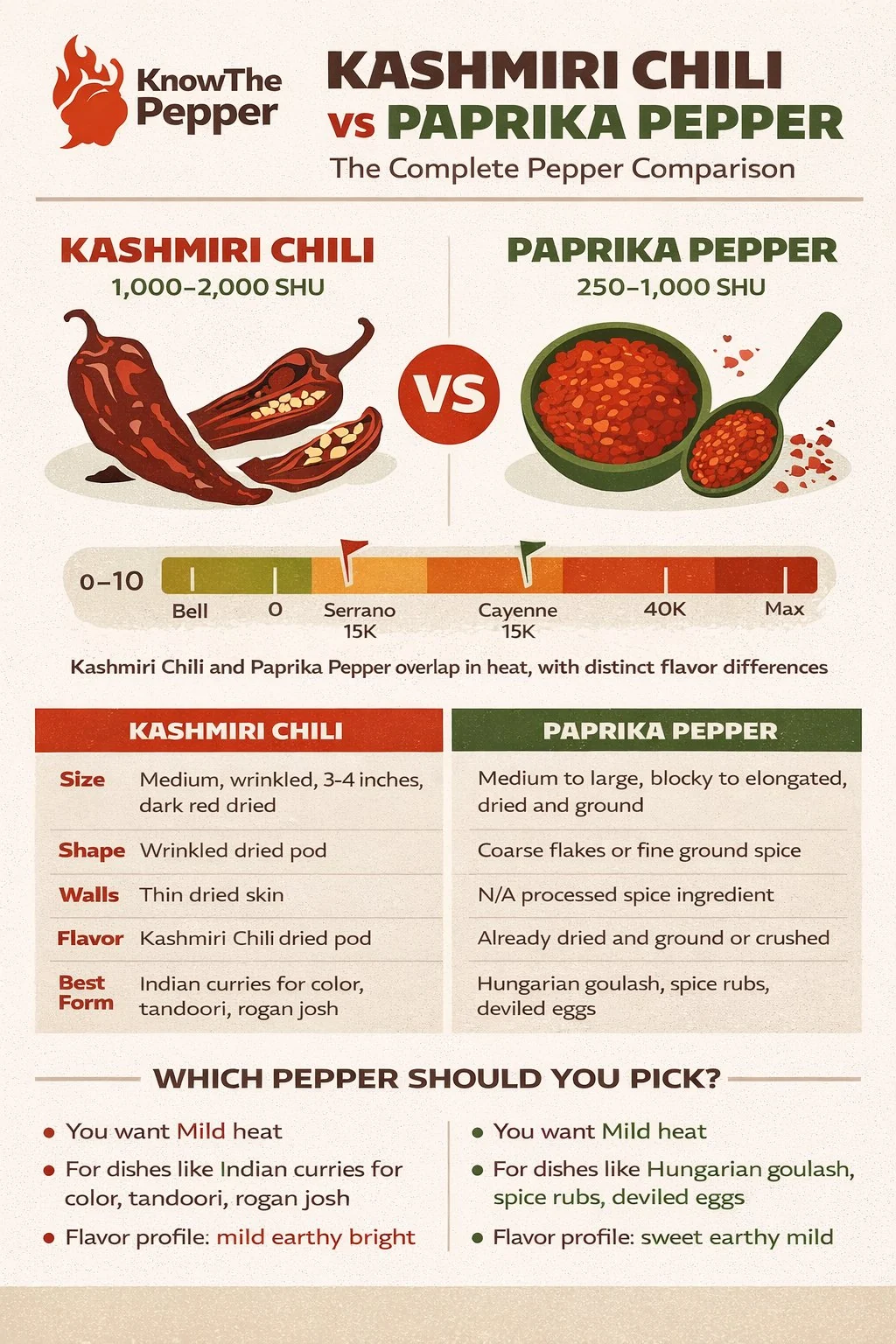
Both peppers occupy the gentler end of the C. annuum species heat spectrum, but there is a measurable gap between them.
Paprika tops out at 1,000 SHU — and most commercial sweet paprika sits well below that, often closer to 250-500 SHU. For practical purposes, many paprikas register almost no heat at all.
Kashmiri chili runs 1,000-2,000 SHU, which puts its ceiling at roughly double paprika's maximum. To put that in perspective against a hot pepper benchmark: a serrano typically lands around 10,000-23,000 SHU, meaning Kashmiri chili is approximately 5-20 times milder than a serrano. Paprika is milder still — potentially 10-90 times below serrano territory depending on the specific variety.
In real kitchen terms, neither pepper will challenge anyone's heat tolerance. The difference between them is felt as a faint, slow warmth from Kashmiri versus essentially none from sweet paprika. Smoked paprika adds complexity without adding any capsaicin-driven heat.
The Scoville heat index for both peppers reflects their shared purpose: delivering color and flavor rather than fire. Neither triggers significant TRPV1 receptor response at typical cooking doses, which is precisely why both are staples in dishes where vibrant red color is the goal and heat is secondary. If you want a step up in intensity, the gochugaru vs. Kashmiri chili side-by-side shows how quickly heat escalates once you move beyond this mild range.
Flavor Profile Comparison
Color is the whole point with Kashmiri chili.
Paprika peppers sit at the mildest end of the pepper spectrum, delivering sweetness with almost no perceptible heat - a stark contrast to even the gentlest Fresno, which runs roughly 2,500 to 10,000 SHU by comparison.
The flavor gap between these two peppers is wider than the heat gap — and that distinction matters more in cooking.
Kashmiri chili carries a fruity, mildly tangy sweetness with an earthy undertone. There is a subtle sharpness that paprika lacks — not heat exactly, but a slight peppery brightness that keeps dishes from tasting flat. The aroma is distinctly fruity and slightly floral, which is part of why it is prized in Indian cooking beyond just its color contribution.
Paprika — particularly the sweet Hungarian style — leans into pure, clean sweetness with almost no edge. Its flavor is rounder and softer, with a mild vegetable-forward character. Smoked paprika introduces an entirely different dimension: a deep, wood-smoke complexity that can anchor a dish on its own. Hot paprika varieties exist but remain relatively rare compared to the sweet style that dominates supermarket shelves.
Both peppers are celebrated for producing deep brick-red to crimson color in dishes. Kashmiri's color tends toward a more intense, slightly orange-red hue, while paprika's can range from bright orange-red to deeper burgundy depending on the grind and variety. Hungarian paprika's regional flavor profile reflects centuries of selective cultivation for sweetness, while Indian Kashmiri chili characteristics reflect a preference for color intensity alongside subtle complexity.
For the Espelette vs. paprika flavor contrast, the differences are even more pronounced — worth reading if you want to understand how geography shapes pepper flavor.
Culinary Uses for Kashmiri Chili and Paprika Pepper
Understanding where each pepper excels prevents the most common substitution mistakes.
Kashmiri chili is the backbone of color in North Indian cooking — butter chicken, rogan josh, and tandoori marinades all rely on it for that signature red-orange hue. It is used both as whole dried chilis and as ground powder. The mild heat means generous quantities can be added without overwhelming a dish, and the fruity undertone complements cream-based and tomato-based sauces equally well. A tablespoon or two of Kashmiri powder in a marinade produces dramatic color without any heat penalty.
Paprika dominates Hungarian, Spanish, and Central European cooking. Goulash, chicken paprikash, chorizo, and patatas bravas all depend on it. Smoked paprika (pimentón) is the defining spice in Spanish cooking, adding depth to paella and roasted vegetables. Sweet paprika functions more as a coloring and flavoring agent than a spice in the traditional sense.
For substitutions: Kashmiri chili can stand in for paprika at a 1:1 ratio when you want slightly more complexity and a touch of warmth. Going the other direction — replacing Kashmiri with paprika — works at 1:1 for color, but you will lose the faint fruity edge. If the dish calls for Kashmiri's characteristic depth, adding a small pinch of cayenne to paprika gets closer.
Both peppers bloom beautifully in hot oil or ghee, releasing fat-soluble pigments that color the entire dish. This technique — called tarka in Indian cooking — is where Kashmiri chili shines. For dishes where smokiness matters, paprika has no real Kashmiri substitute.
The Dundicut vs. Kashmiri heat and flavor gap is worth checking if you need a Pakistani alternative for similar applications.
Which Should You Choose?
Choose Kashmiri chili when color intensity plus a hint of fruity complexity is the goal — it earns its place in spiced braises, marinades, and any dish where you want that vivid red without fire. It sits comfortably in the mild-heat range but brings more personality than paprika.
Choose paprika — especially smoked — when you need pure, clean sweetness or wood-smoke depth without any pepper edge. It is more versatile across European cuisines and easier to source in most markets.
For everyday cooking, keeping both on hand makes sense. They are not true interchangeable substitutes despite the surface-level similarity. Kashmiri is the better choice for South Asian dishes or anywhere you want layered flavor; paprika is the better choice for European applications or when you need a neutral, sweet red base.
If heat is your primary concern, neither pepper will challenge you — both belong firmly in mild territory, and either can be used generously without consequence.
Can You Substitute One for the Other?
Yes — direct substitution works. Kashmiri Chili and Paprika Pepper are close enough in heat to swap at roughly 1:1. The main difference will be flavor. For more swap options, explore ranked alternatives with conversion ratios.
Growing Kashmiri Chili vs Paprika Pepper
If you’re deciding which pepper to grow at home, consider your climate and patience level. Kashmiri Chili and Paprika Pepper have different maturation times and temperature preferences. Hotter varieties generally need a longer, warmer growing season to develop their full capsaicin content. Our zone-based planting date tool can pinpoint the best sowing window for your area.
Kashmiri chili is a warm-season annual that performs best in USDA zones 9–11 outdoors, though it grows well as a container plant in cooler climates when brought inside before frost. Start seeds indoors 8–10 weeks before last frost, maintaining soil temperature around 75–85°F for germination.
The plants are relatively compact — typically 18–24 inches tall — and moderately productive. They prefer well-drained, slightly acidic soil with consistent moisture.
For those comparing cultivation approaches, the Aji Panca's similarly low-heat growing profile offers a useful parallel — both reward patience over intensity manipulation.
Paprika peppers are among the more rewarding varieties to grow - productive, relatively disease-resistant, and visually striking when the plants load up with red fruit in late summer.
Start seeds indoors 8-10 weeks before your last frost date. Germination is reliable at 75-85°F soil temperature; a heat mat helps considerably.
Plants reach 24-36 inches tall and benefit from caging or staking once fruit sets - the heavy load of thick-walled peppers can tip unsupported plants. Space them 18-24 inches apart for good airflow, which reduces fungal pressure.
History & Origin of Kashmiri Chili and Paprika Pepper
Both peppers carry centuries of culinary heritage. Kashmiri Chili traces its roots to India, while Paprika Pepper originates from Hungary. Understanding their backstory helps explain why each pepper developed its distinctive traits.
Buying & Storage
Whether you’re shopping for Kashmiri Chili or Paprika Pepper, the same quality indicators apply. Fresh peppers should feel firm and heavy for their size, with taut, glossy skin and no soft or wet spots. Minor stem cracks known as “corking” are perfectly normal and often indicate a mature, flavorful pod.
- Firm pods with taut skin and consistent color
- Should feel heavy relative to size
- Minor stem cracks (“corking”) are normal
- Avoid anything soft, shriveled, or with dark wet spots
- Fresh: Paper bag, crisper drawer — 1–2 weeks
- Frozen: Wash, dry, freeze on sheet pan — 6+ months
- Dried: Airtight, away from light — up to 1 year
The Verdict: Kashmiri Chili vs Paprika Pepper
Kashmiri Chili and Paprika Pepper sit in the same heat tier but serve different roles. Kashmiri Chili delivers 2× more heat with its distinctive mild and sweet character. Paprika Pepper, with its sweet and mild profile, excels in everyday cooking.
Frequently Asked Questions
Related Comparisons
Sources pending verification.