
Hatch Chile vs Poblano: Heat, Flavor & Uses
Hatch Chile and Poblano are both mild-to-medium C. annuum peppers with earthy flavor profiles, but they diverge in heat ceiling, origin, and kitchen purpose. Hatch Chile tops out at 8,000 SHU — four times hotter than the hottest Poblano — while Poblano stays reliably mellow at 1,000-2,000 SHU. The choice between them often comes down to whether you want predictable richness or variable, regionally-specific heat.

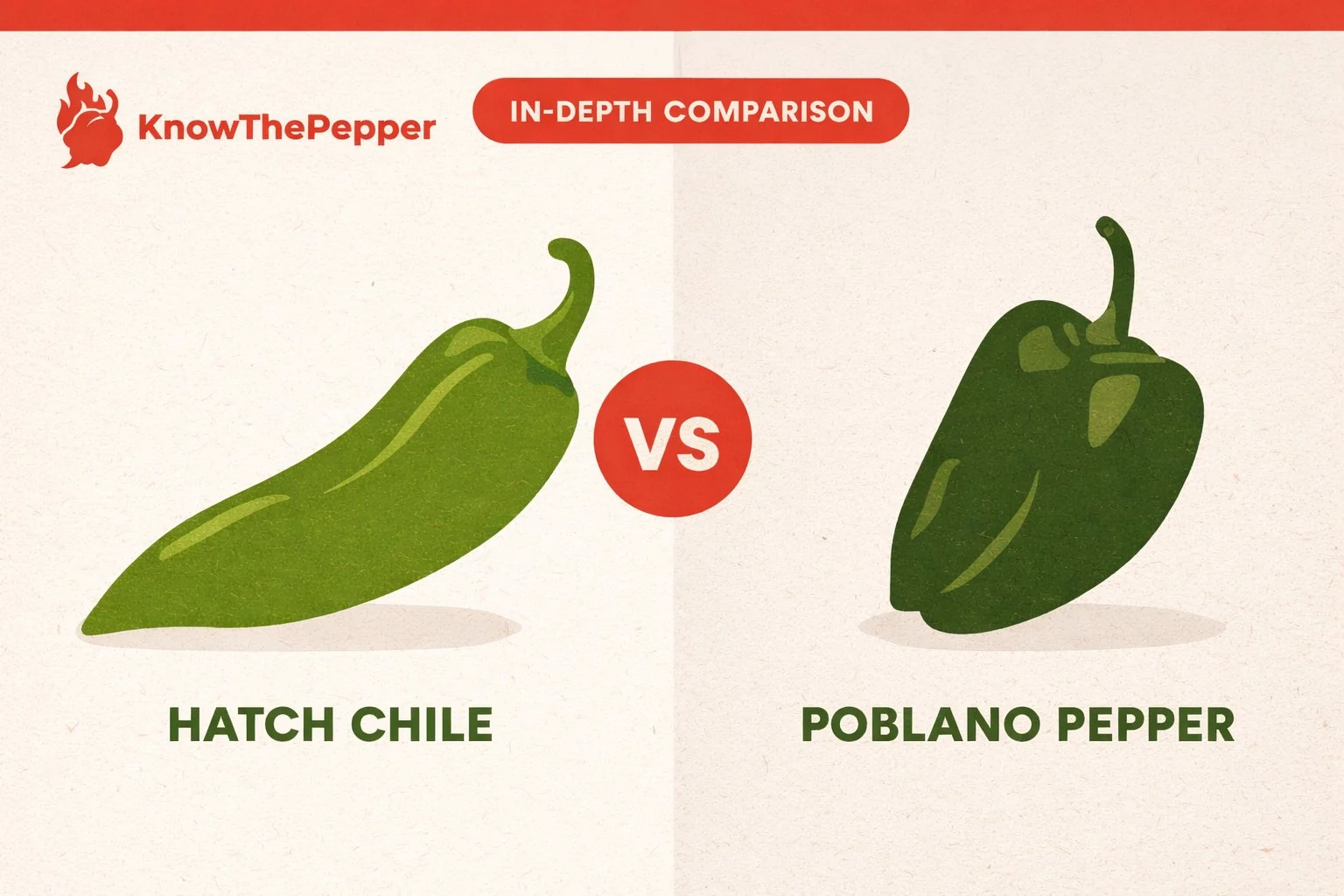
Hatch Chile measures 1K–8K SHU while Poblano Pepper registers 1K–2K SHU — making Hatch Chile 4× hotter. Hatch Chile is known for its earthy and sweet flavor (C. annuum), while Poblano Pepper offers earthy and rich notes (C. annuum).
- Heat difference: Hatch Chile is 4× hotter
- Species: Both are C. annuum
- Best for: Hatch Chile excels in everyday cooking and salsas, Poblano Pepper in fresh salsas and mild recipes
Hatch Chile
MediumPoblano Pepper
MediumHatch Chile vs Poblano Pepper Comparison
Hatch Chile vs Poblano Pepper Heat Levels
Both peppers sit in the mild-to-medium heat band on the Scoville scale, but the overlap is smaller than it looks. Poblano ranges from 1,000 to 2,000 SHU — a tight, predictable window that makes it one of the most consistent chiles in Mexican cooking. Hatch Chile spans 1,000 to 8,000 SHU, meaning the hottest Hatch can be four times more intense than the hottest Poblano.
For a useful comparison point: a smoked chipotle typically registers around 2,500-8,000 SHU. A mild Hatch sits below chipotle territory, while a hot Hatch matches it. Poblano rarely reaches chipotle heat levels at all.
That Hatch variability isn't random — it reflects the actual growing conditions in New Mexico's Hatch Valley. Soil mineral content, irrigation timing, and harvest date all shift the heat. Peppers picked earlier tend milder; late-season fruit from drier conditions runs hotter. Poblano heat, by contrast, stays narrow regardless of where it's grown.
Neither pepper approaches the burn of a jalapeño (which starts where Hatch tops out, at roughly 8,000 SHU). Both are firmly in accessible territory for people who want flavor without significant pain. The practical difference is that Poblano gives you confidence — you know what you're getting. Hatch gives you range, and sometimes a pleasant surprise.
Flavor Profile Comparison
Few peppers carry the geographic identity that the Hatch Chile does.
Pick up a fresh poblano and the first thing you notice is the weight.
Flavor is where these two peppers genuinely diverge, despite both being described as "earthy."
Poblano has a deep, almost chocolatey earthiness — rich and slightly vegetal, with a thick flesh that chars beautifully. The flavor intensifies when roasted, developing a smoky complexity that makes it the backbone of dishes like chile rellenos and mole negro. Fresh, it tastes almost green-bell-adjacent, but with more body and a mineral undertone. Dried, it becomes the ancho chile, with dark fruit and coffee notes that bear little resemblance to the fresh pod.
Hatch Chile — typically a variety of New Mexican long green chile — leans earthier in a more rustic, outdoorsy direction. Roasted Hatch smells like late summer: grassy, slightly smoky, with a brightness that Poblano doesn't quite reach. The sweetness is more upfront, especially in mild varieties, with a thinner flesh that absorbs into sauces and stews rather than holding its shape.
The aroma difference is notable at the roasting stage. Hatch fills a kitchen with a sharp, almost sulfurous green pepper scent that's intensely appealing to anyone who grew up with New Mexican food. Poblano roasts quieter, more subtle.
In terms of culinary application, Poblano is the better stuffing pepper — its thick walls and consistent size make it ideal for chiles rellenos. Hatch is the better sauce pepper, breaking down into a smooth, flavorful base. Both belong in a serious pepper kitchen, but they're not doing the same job.
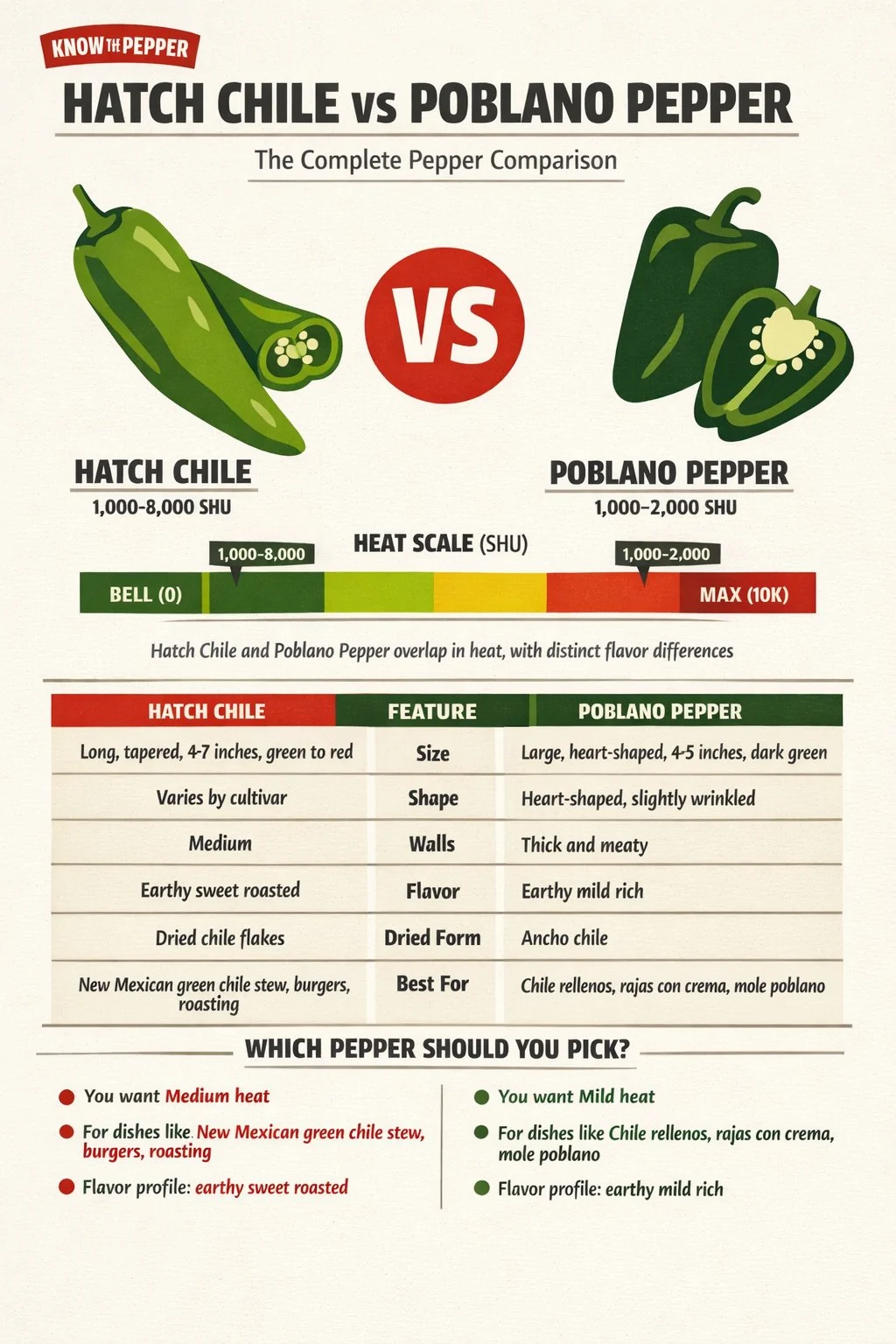
Culinary Uses for Hatch Chile and Poblano Pepper
The cultural weight these peppers carry is inseparable from how you should cook with them. Poblano is the foundation of central Mexican cuisine — it appears in classic Mexican pepper preparations from Puebla to Mexico City, where it has been cultivated for centuries. Hatch Chile is the pride of southern New Mexico, so regionally specific that the name is essentially an appellation — part of the broader tradition of American-grown chile varieties that define Southwestern cooking.
Best uses for Poblano: - Chiles rellenos (stuffed with cheese or picadillo, battered and fried) - Rajas con crema (roasted strips with cream and onion) - Mole negro and mole poblano - Soups and pozole as a background flavor layer - Ancho chile when dried — an entirely different ingredient
Best uses for Hatch Chile: - Green chile sauce (the definitive New Mexican condiment) - Hatch chile cheeseburgers and breakfast burritos - Roasted and frozen for year-round use - Green chile stew with pork - Blended into enchilada sauce
For substitution: if a recipe calls for Poblano and you only have Hatch, use a 1:1 ratio but expect a slightly brighter, less rich result. Going the other direction — subbing Poblano for Hatch — works in stuffed applications but will fall flat in a green chile sauce, where Hatch's specific flavor profile is the point. The Anaheim's thinner flesh and milder heat contrast with both, making it a distant third for most applications.
For those exploring Poblano's close relationship with the Anaheim in terms of heat and cooking overlap, the comparison reveals how much origin shapes perception — two peppers at similar SHU levels can taste completely different based on terroir and variety. You can also check Poblano against bell pepper for stuffing decisions if heat is a concern for your guests.
Both peppers benefit from roasting before use. Char them directly over a gas flame or under a broiler until blackened, then steam in a covered bowl for 10 minutes before peeling. This step is non-negotiable for Hatch; it's strongly recommended for Poblano.
Which Should You Choose?
Pick Poblano when you need structural integrity — stuffed preparations, dishes where the pepper holds its shape, or any recipe calling for ancho chile in its dried form. Its rich, earthy flavor and consistent 1,000-2,000 SHU range make it the more predictable tool. It belongs to the botanical family of C. annuum alongside hundreds of varieties, but few match its versatility in Mexican cooking.
Choose Hatch Chile when the pepper IS the dish — green chile sauce, stews, or anything where that specific roasted New Mexican flavor is the whole point. Its heat variability (1,000-8,000 SHU) can work in your favor if you buy from a source that labels mild, medium, and hot separately.
If you're stocking one pepper, Poblano is the more versatile choice across cuisines. If you're cooking New Mexican food specifically, no substitute will do what Hatch does. For anyone curious about Hatch substitution options, the Hatch chile replacement picks cover the best alternatives when the real thing isn't available.
Can You Substitute One for the Other?
Yes — direct substitution works. Hatch Chile and Poblano Pepper are close enough in heat to swap at roughly 1:1. The main difference will be flavor. For more swap options, explore ranked alternatives with conversion ratios.
Growing Hatch Chile vs Poblano Pepper
If you’re deciding which pepper to grow at home, consider your climate and patience level. Hatch Chile and Poblano Pepper have different maturation times and temperature preferences. Hotter varieties generally need a longer, warmer growing season to develop their full capsaicin content. Our zone-based planting date tool can pinpoint the best sowing window for your area.
Growing Hatch chiles outside New Mexico is possible, but manage expectations - the valley's specific terroir is genuinely difficult to replicate. That said, the cultivars themselves grow well across USDA zones 5-10 with proper care.
Start seeds indoors 8-10 weeks before last frost. Hatch varieties need soil temperatures above 65°F to germinate reliably - bottom heat helps significantly.
These plants prefer well-drained, slightly alkaline soil with pH around **6.5-7.
Poblanos are rewarding garden plants, but they need a long season. Start seeds indoors 10-12 weeks before your last frost date — this is one case where rushing transplant time costs you yield.
For a full breakdown of seed-starting methods and timing, the complete pepper growing guide covers everything from soil mix to hardening off. Poblanos specifically want consistent moisture — irregular watering leads to blossom end rot and cracked fruit.
Transplant into full sun once nighttime temps stay above 55°F. Space plants 18-24 inches apart; they can reach 3 feet tall with good conditions.
History & Origin of Hatch Chile and Poblano Pepper
Both peppers carry centuries of culinary heritage. Hatch Chile traces its roots to USA, while Poblano Pepper originates from Mexico. Understanding their backstory helps explain why each pepper developed its distinctive traits.
Buying & Storage
Whether you’re shopping for Hatch Chile or Poblano Pepper, the same quality indicators apply. Fresh peppers should feel firm and heavy for their size, with taut, glossy skin and no soft or wet spots. Minor stem cracks known as “corking” are perfectly normal and often indicate a mature, flavorful pod.
- Firm pods with taut skin and consistent color
- Should feel heavy relative to size
- Minor stem cracks (“corking”) are normal
- Avoid anything soft, shriveled, or with dark wet spots
- Fresh: Paper bag, crisper drawer — 1–2 weeks
- Frozen: Wash, dry, freeze on sheet pan — 6+ months
- Dried: Airtight, away from light — up to 1 year
The Verdict: Hatch Chile vs Poblano Pepper
Hatch Chile and Poblano Pepper sit in the same heat tier but serve different roles. Hatch Chile delivers 4× more heat with its distinctive earthy and sweet character. Poblano Pepper, with its earthy and rich profile, excels in everyday cooking.
Frequently Asked Questions
Related Comparisons
Sources pending verification.
