Ghost Pepper vs Naga Viper: Side-by-Side Pepper Comparison
The Ghost Pepper (Bhut Jolokia) and Naga Viper both occupy the upper atmosphere of pepper heat, but they are not equals. The Naga Viper pushes into 1,300,000-1,400,000 SHU territory, while the Ghost Pepper sits meaningfully lower on the scale. What separates them goes beyond raw numbers — origin, stability, and flavor character all tell different stories.

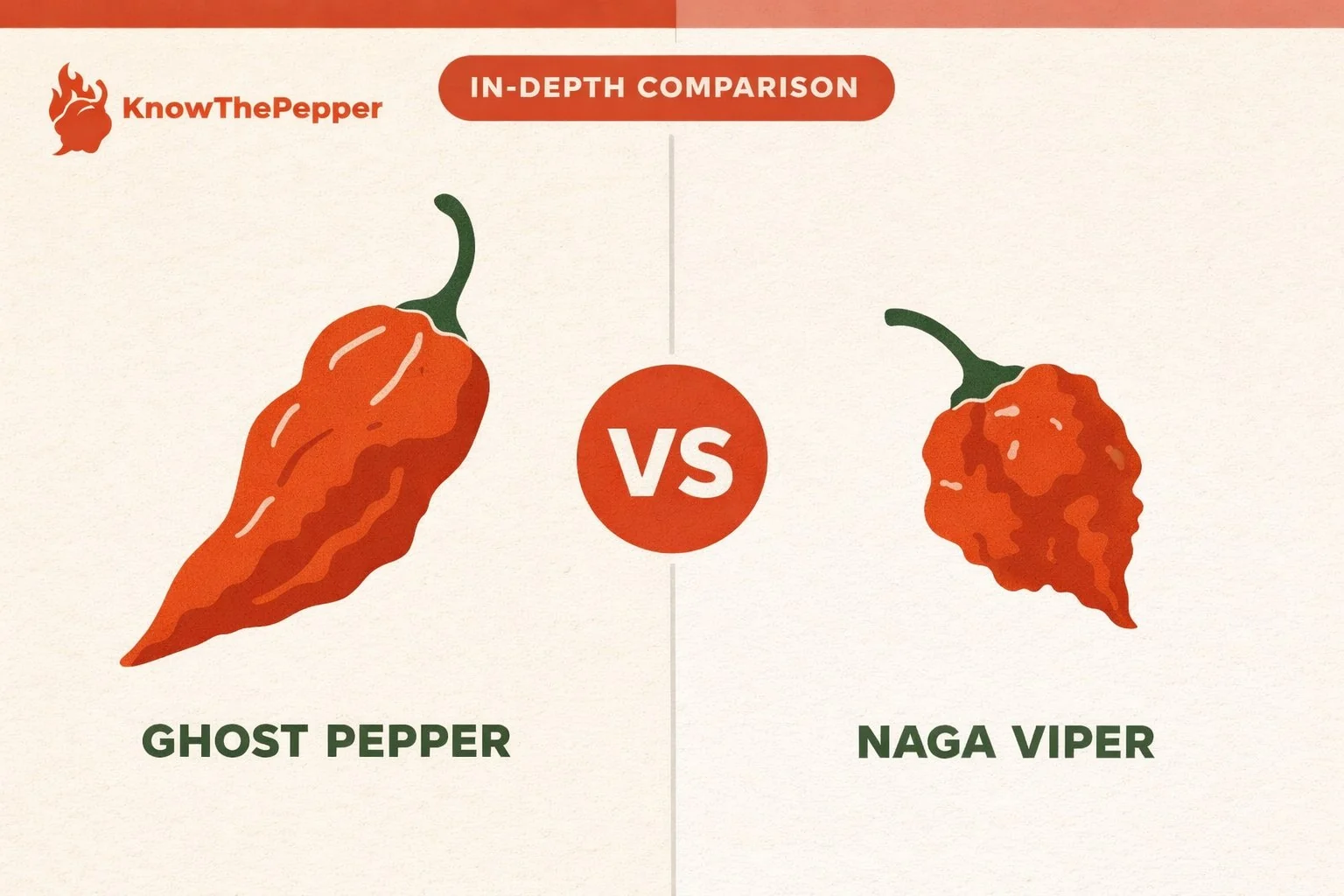
Ghost Pepper measures 855K–1M SHU while Naga Viper registers 1.3M–1.4M SHU — roughly equal in heat. Ghost Pepper is known for its smoky and sweet flavor (C. chinense), while Naga Viper offers fruity and fierce notes (C. chinense).
- Species: Both are C. chinense
- Best for: Ghost Pepper excels in hot sauces and extreme dishes, Naga Viper in hot sauces and spicy dishes
Ghost Pepper
Super-HotNaga Viper
Super-HotGhost Pepper vs Naga Viper Comparison
Ghost Pepper vs Naga Viper Heat Levels
Start with sensation: the Ghost Pepper hits like a slow freight train — the burn builds over 30-45 seconds, settles deep in the throat, and lingers for a long time. The Naga Viper arrives faster and harder, a more aggressive initial strike that compounds rather than fades.
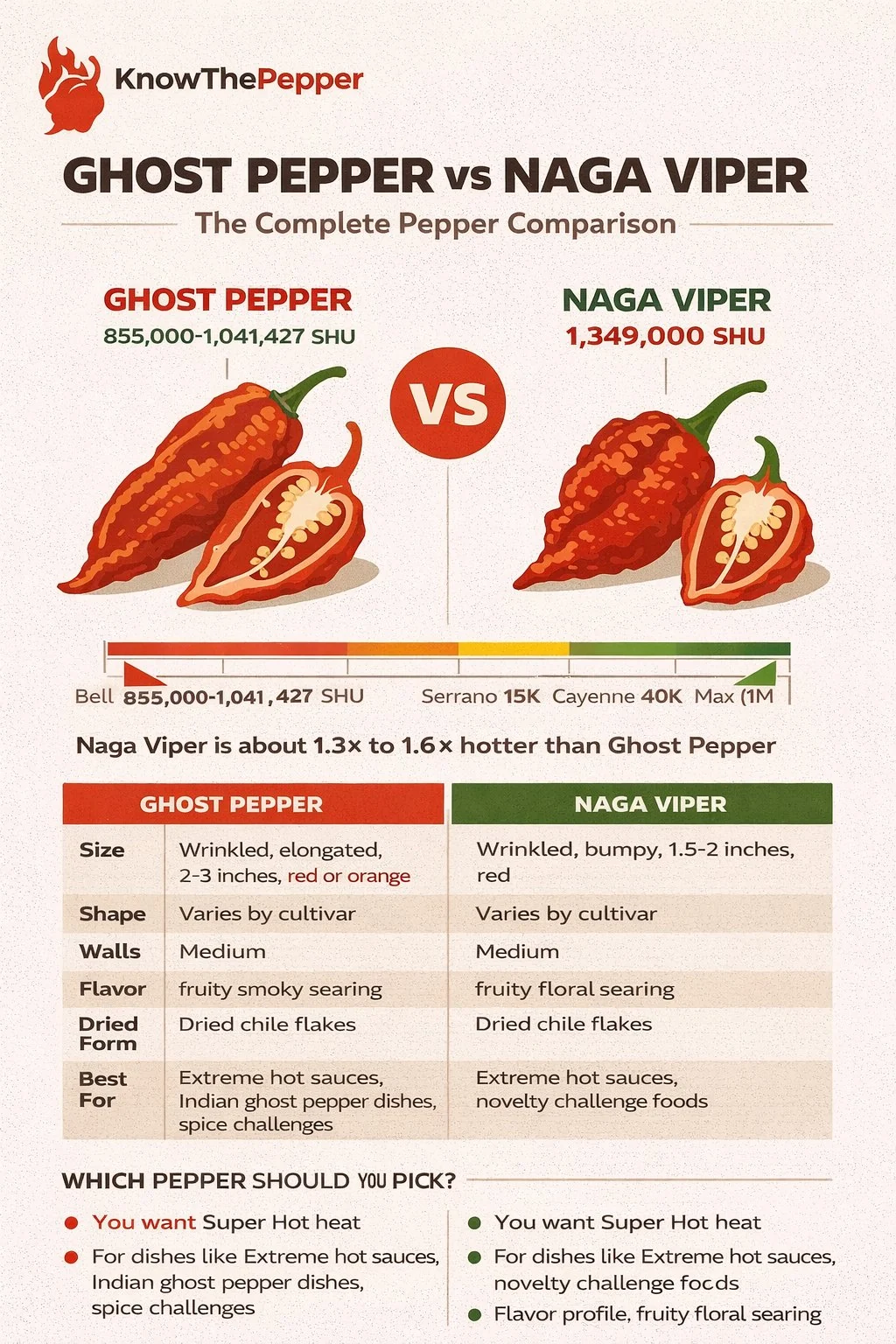
On the Scoville scale's measurement methodology, the Naga Viper registers 1,300,000-1,400,000 SHU. The Ghost Pepper historically tested around 855,000-1,041,427 SHU at its peak, though most commercial samples run lower. That puts the Naga Viper roughly 30-50% hotter depending on which Ghost Pepper sample you use as the baseline.
Compared to a Fresno pepper (~10,000 SHU), the Ghost Pepper is approximately 85-100 times hotter, while the Naga Viper reaches 130-140 times a Fresno's heat. Both belong firmly in the super-hot intensity bracket — a category where most people experience involuntary physical reactions regardless of tolerance.
The Naga Viper's heat comes with an important asterisk: it is a C. chinense hybrid of uncertain genetic stability, meaning individual fruits can vary considerably in SHU even within the same plant. The Ghost Pepper, a naturally occurring landrace, tends to be more consistent. Neither pepper is appropriate for casual cooking without significant dilution.
Flavor Profile Comparison
Long before it became a dare on YouTube, the ghost pepper was a staple of Naga cuisine in Assam, Nagaland, and Manipur — used in traditional pickles, meat preparations, and even as a topical remedy against arthritis.
Most superhots are conversation pieces.
The Naga Viper carries a fruity, fierce flavor profile — there is genuine tropical fruitiness in the first half-second before the capsaicin takes over completely. Some tasters note citrus and a faint floral quality, though the heat overwhelms most of those notes quickly. Its fruity British-bred heat makes it a curiosity: an English pepper with flavor genetics rooted in Caribbean and South Asian varieties.
The Ghost Pepper's flavor is smokier and more complex — earthy, slightly sweet, with a dried-fruit quality that survives even heavy cooking. When used in small quantities in sauces or ferments, its flavor actually contributes meaningfully to a dish in a way the Naga Viper rarely can.
Aroma-wise, the Ghost Pepper has a distinctive pungency that experienced cooks recognize immediately — almost vegetal and deeply savory. The Naga Viper smells sharper, more chemical-bright, which reflects its hybrid origin.
For anyone interested in the receptor science of why these peppers burn so differently, the capsaicin compound concentration and the presence of dihydrocapsaicin both shape the burn character — not just the total SHU number. The Ghost Pepper's slower build is partly a function of its capsaicinoid ratios, not just its total heat load.
In practical cooking terms, the Ghost Pepper is the more versatile of the two. Its flavor survives heat and acid. The Naga Viper, by contrast, is primarily a heat delivery mechanism — useful when you need extreme BTUs in a sauce, less useful when flavor complexity matters.
Culinary Uses for Ghost Pepper and Naga Viper
Ghost Pepper has earned its place in professional hot sauce production, dry rubs, and fermented pepper mashes. A single pod — deseeded and deveined — is enough to heat a 2-quart batch of salsa to the edge of tolerability for most people. Ghost Pepper powder is widely available and easier to dose precisely than fresh pods.
For a side-by-side look at how Ghost Pepper compares to another super-hot competitor, the flavor differences become even more apparent in sauce applications — Ghost Pepper holds its character through cooking in a way many superhots do not.
Naga Viper is rarely found fresh outside specialty growers. Its primary culinary application is in extreme hot sauces and challenge foods where maximum Scoville output is the point. If you are building a sauce that needs to hit a specific heat threshold, Naga Viper powder or mash can get you there, but expect the flavor contribution to be minimal beyond raw heat.
Substitution works in both directions with care. Replacing Ghost Pepper with Naga Viper requires roughly 60-70% of the volume to match heat, and you will lose some of the earthy complexity. Going the other direction — using Ghost Pepper where Naga Viper is called for — means increasing volume by about 40% and accepting a slightly different burn character.
Both peppers work well in oil infusions, where their fat-soluble capsaicin extracts efficiently into the carrier. A single Naga Viper pod in 250ml of neutral oil, strained after 24 hours, produces a fiercely hot finishing oil. Ghost Pepper does the same with more flavor nuance.
For the Dorset Naga vs Naga Viper flavor and heat distinction, understanding the parent genetics helps explain why Naga Viper behaves differently in fermentation — its hybrid instability means fermented mashes can vary batch to batch.
Which Should You Choose?
If you are cooking and want a super-hot pepper that actually tastes like something, the Ghost Pepper is the practical choice. Its flavor survives the cooking process, it is more consistent pod to pod, and it integrates into sauces, rubs, and ferments with genuine character.
The Naga Viper is the right tool when maximum heat output is the primary goal — challenge sauces, extreme condiments, or situations where you need to reach a very high SHU threshold with minimal volume. Its fruity notes are real but fleeting, and its genetic variability means you cannot always predict exact heat levels.
For growers interested in seed-starting techniques for super-hot varieties, the Ghost Pepper is considerably more beginner-friendly — stable genetics, predictable germination, and consistent fruit. The Naga Viper demands more controlled conditions and patience.
For the 7 Pot Douglah versus Ghost Pepper heat and flavor comparison, that matchup further illustrates where Ghost Pepper sits in the super-hot hierarchy — formidable, but not at the absolute ceiling. The Naga Viper is closer to that ceiling.
Can You Substitute One for the Other?
Proceed with caution. Naga Viper is 1× hotter than Ghost Pepper.
Need a different option altogether? Search for peppers that match your target heat and flavor with precise swap ratios.
Growing Ghost Pepper vs Naga Viper
If you’re deciding which pepper to grow at home, consider your climate and patience level. Ghost Pepper and Naga Viper have different maturation times and temperature preferences. Hotter varieties generally need a longer, warmer growing season to develop their full capsaicin content. Our zone-based planting date tool can pinpoint the best sowing window for your area.
The hardest part of growing ghost peppers isn't germination — it's maintaining the long, hot season they need to fully ripen. In most of North America, that means starting seeds indoors 10–12 weeks before last frost and providing supplemental heat throughout the season.
Soil quality matters enormously. Ghost peppers want well-draining, slightly acidic soil (pH **6.
Fertilize with a lower-nitrogen mix once flowering begins — too much nitrogen pushes leafy growth at the expense of pods. Consistent calcium (through gypite or foliar spray) helps prevent blossom end rot, which ghost peppers are prone to during dry spells.
Growing the Naga Viper requires patience - this is not a pepper for first-season growers looking for quick results.
Seeds need 80-90 days from transplant to first ripe fruit, and that's assuming ideal conditions. Start seeds indoors 10-12 weeks before your last frost date.
The plants grow bushy and moderately tall, reaching 24-36 inches in a good season. They prefer full sun and well-draining soil with a pH around **6.
History & Origin of Ghost Pepper and Naga Viper
Both peppers carry centuries of culinary heritage. Ghost Pepper traces its roots to India, while Naga Viper originates from England. Understanding their backstory helps explain why each pepper developed its distinctive traits.
Buying & Storage
Whether you’re shopping for Ghost Pepper or Naga Viper, the same quality indicators apply. Fresh peppers should feel firm and heavy for their size, with taut, glossy skin and no soft or wet spots. Minor stem cracks known as “corking” are perfectly normal and often indicate a mature, flavorful pod.
- Firm pods with taut skin and consistent color
- Should feel heavy relative to size
- Minor stem cracks (“corking”) are normal
- Avoid anything soft, shriveled, or with dark wet spots
- Fresh: Paper bag, crisper drawer — 1–2 weeks
- Frozen: Wash, dry, freeze on sheet pan — 6+ months
- Dried: Airtight, away from light — up to 1 year
The Verdict: Ghost Pepper vs Naga Viper
Ghost Pepper and Naga Viper sit in the same heat tier but serve different roles. Naga Viper delivers its distinctive fruity and fierce character. Ghost Pepper, with its smoky and sweet profile, excels in everyday cooking.
Frequently Asked Questions
Related Comparisons
Sources pending verification.