Fresno Pepper vs Habanero: Heat, Flavor & Key Differences
The Fresno pepper sits in a mild-to-moderate heat range, while the habanero clocks in at 100,000-350,000 SHU — making this one of the more dramatic heat gaps you'll encounter in everyday cooking. Beyond raw firepower, these two peppers differ fundamentally in flavor character, culinary application, and the kind of cook who reaches for them.

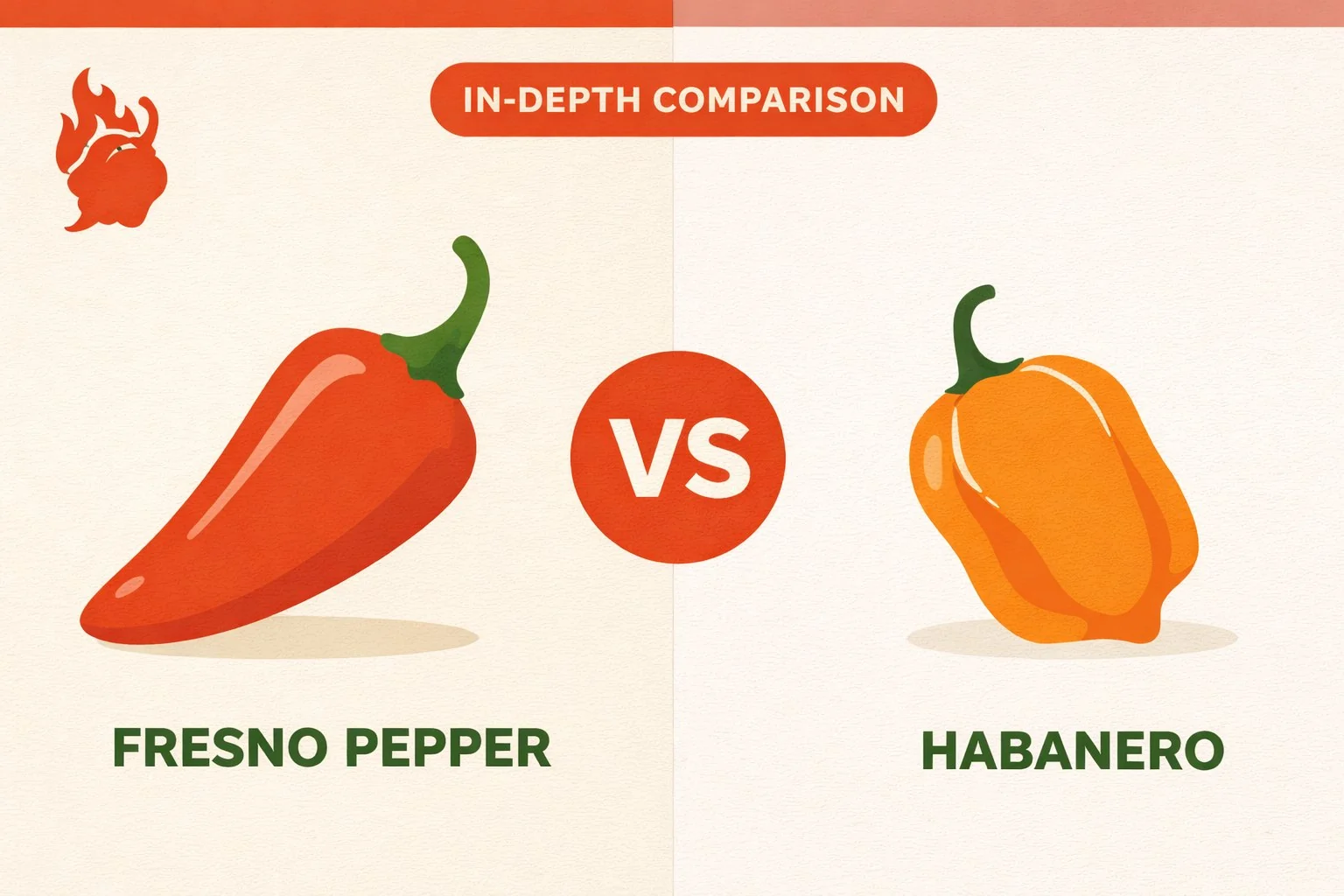
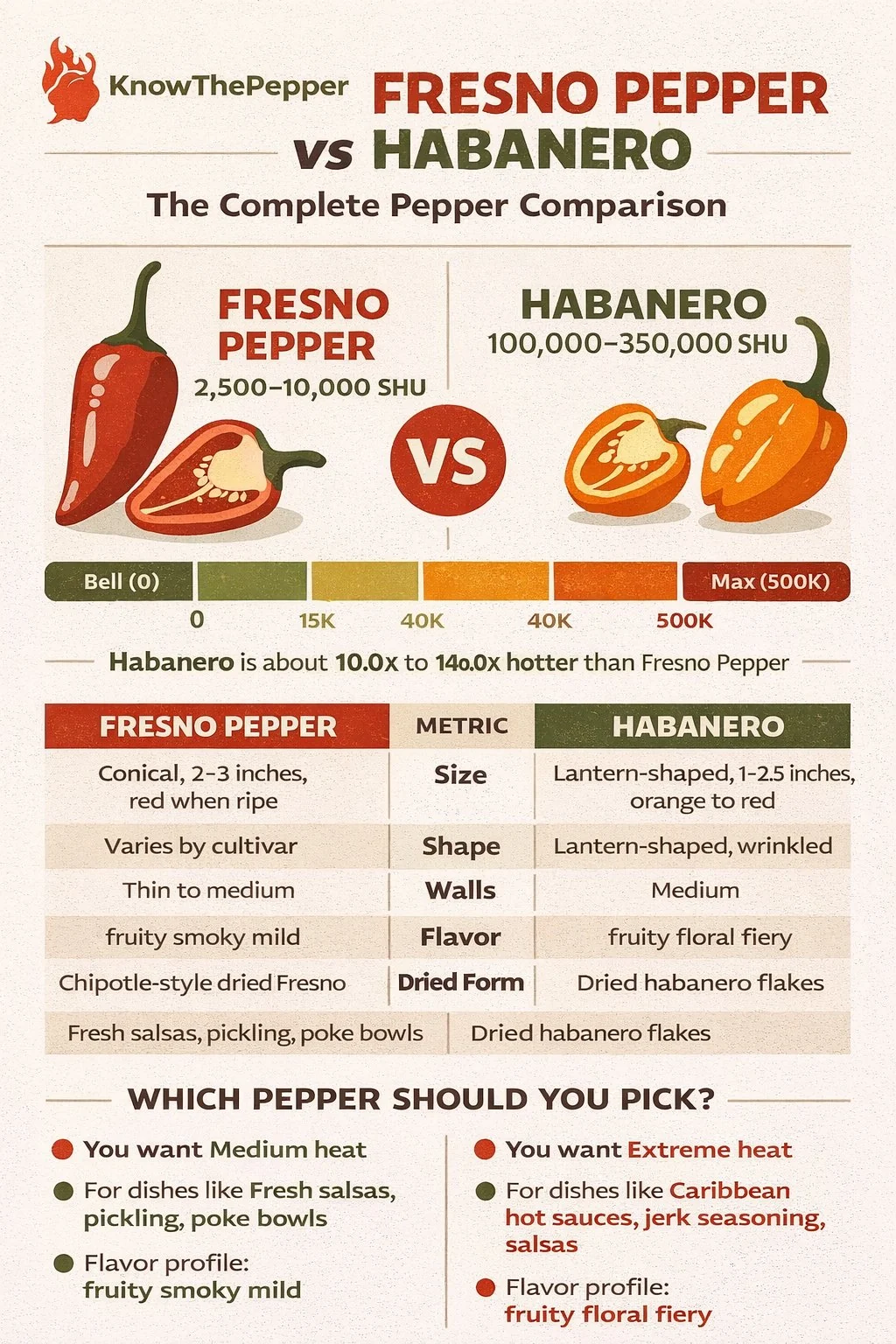
Fresno Pepper measures 3K–10K SHU while Habanero registers 100K–350K SHU — making Habanero 35× hotter. Fresno Pepper is known for its fruity and smoky flavor (C. annuum), while Habanero offers fruity and citrusy notes (C. chinense).
- Heat difference: Habanero is 35× hotter
- Species: C. annuum vs C. chinense
- Best for: Fresno Pepper excels in everyday cooking and salsas, Habanero in hot sauces and spicy dishes
Fresno Pepper
HotHabanero
Extra-HotFresno Pepper vs Habanero Comparison
Fresno Pepper vs Habanero Heat Levels
The habanero occupies the extra-hot SHU bracket — a tier that puts it firmly in specialist territory. At 100,000-350,000 SHU, it sits roughly 10-20 times hotter than a serrano, which itself already clears most people's comfort threshold. That's not a small gap; it's the difference between a pepper that adds background warmth and one that demands respect before you pick it up.
Fresno peppers land considerably lower on the scale. Their heat is accessible — the kind of burn that builds gradually and fades cleanly, suitable for people who want flavor alongside spice rather than spice that obliterates everything else.
What makes the habanero's heat distinctive isn't just intensity — it's the receptor science behind capsaicin's delayed onset. The burn arrives a few seconds after contact, spreads across the palate, and lingers. Fresnos deliver a more immediate, localized heat that dissipates faster.
For practical cooking, this means a single habanero can season a pot of soup for eight people. A Fresno might season a single serving with similar effect. Anyone rating heat tolerance for recipes should treat these two as belonging to completely different categories — not just different degrees of the same experience.
Flavor Profile Comparison
The Fresno pepper gets mistaken for a red jalapeño constantly — same conical shape, similar color, sold side by side at the grocery store.
Few peppers balance heat and flavor as well as the habanero.
This is where the comparison gets genuinely interesting. The habanero's fruity and citrusy flavor profile is one of the most distinctive in the C. chinense species — bright, almost tropical, with floral undertones that emerge clearly when the pepper is used raw or minimally processed. It's the flavor that makes Caribbean hot sauces taste like nothing else: heat and fruit fused together rather than stacked on top of each other.
Fresno peppers read differently. They share some visual DNA with red jalapeños but develop a slightly smokier, earthier character as they ripen to red. The flavor is clean and vegetal when fresh, with a mild sweetness that makes them easy to incorporate without disrupting a dish's balance.
In practical terms, a habanero brings both heat and a flavor identity that will define whatever you're making. You taste habanero — it announces itself. A Fresno plays more of a supporting role, adding heat and mild pepper flavor without redirecting the dish.
For salsas, ceviche, and dishes where you want pepper flavor front and center, the habanero's fruity citrus-forward profile is a feature, not just a side effect. Fresnos suit dishes where the pepper should enhance rather than lead — roasted vegetables, grain bowls, mild hot sauces meant for daily use.
Aroma also differs significantly. Habaneros have a pronounced floral scent that's detectable before you even cut into them. Fresnos smell like peppers — pleasant, fresh, uncomplicated.
Culinary Uses for Fresno Pepper and Habanero
These two peppers rarely compete for the same recipe slot, which makes substitution tricky without adjusting quantities significantly.
Habanero applications tend toward sauces, marinades, and dishes where its fruity heat can bloom — jerk seasoning, mango habanero glazes, Caribbean-style hot sauces, and fermented pepper mashes. It also works raw in small quantities in fruit salsas where the citrus notes complement pineapple or mango. A look at Mexican pepper traditions shows how deeply habaneros are embedded in Yucatecan cooking specifically, appearing in salsas like xni-pec alongside bitter orange.
Fresno peppers are more versatile in a casual kitchen sense. They roast well, pickle cleanly, and slice into salads or grain bowls without overpowering. They work in any context where you'd use a red jalapeño — tacos, nachos, quick-pickled condiments, and egg dishes.
If you need to substitute one for the other, the math is significant. Replacing a habanero with Fresnos requires roughly 8-12 Fresnos to approximate the same heat, and even then you'll miss the fruity complexity entirely. Going the other direction — swapping a Fresno for habanero — use about one-eighth of a habanero and expect a flavor shift toward tropical and citrus notes.
For habanero swap options that preserve the fruity character, Scotch bonnets are the closest match. For Fresno alternatives, red jalapeños or serranos cover most use cases.
The side-by-side contrast between cayenne and habanero heat is another useful reference point — cayenne sits between Fresnos and habaneros in intensity, which helps calibrate expectations when scaling heat in recipes.
Both peppers dry well, though habanero powder is used in smaller pinches given its concentration. Fresno powder functions more like a mild chili powder blend.
Which Should You Choose?
Reach for the habanero when the pepper is meant to be the centerpiece — when you want heat that carries a distinct fruity, citrusy flavor signature, and when you're cooking for people who actively seek that experience. It's the right tool for Caribbean-inspired sauces, complex marinades, and any dish where pepper identity matters as much as heat level.
The Fresno belongs in everyday cooking — accessible heat, clean flavor, and enough versatility to fit into dishes where a habanero would dominate or overwhelm. It's a pepper you can cook with without building the dish around it.
For anyone exploring the broader botanical family that habaneros belong to, comparing the Bulgarian carrot pepper's distinct fruity heat profile alongside the habanero adds useful context for understanding how much flavor variation exists within that species. And if you want to see just how far up the scale habaneros can be outpaced, the Carolina Reaper's extreme heat versus habanero comparison puts things in sharp perspective.
Neither pepper is better in absolute terms — they serve different kitchens and different intentions.
Can You Substitute One for the Other?
Proceed with caution. Habanero is 35× hotter than Fresno Pepper.
Need a different option altogether? Search for peppers that match your target heat and flavor with precise swap ratios.
Growing Fresno Pepper vs Habanero
If you’re deciding which pepper to grow at home, consider your climate and patience level. Fresno Pepper and Habanero have different maturation times and temperature preferences. Hotter varieties generally need a longer, warmer growing season to develop their full capsaicin content. Our zone-based planting date tool can pinpoint the best sowing window for your area.
Fresnos are straightforward to grow but reward growers who manage water stress deliberately. Start seeds indoors 8–10 weeks before last frost — they germinate well at 80–85°F soil temperature and typically sprout within 10–14 days.
Transplant after all frost risk has passed, spacing plants 18 inches apart in full sun. They need at least 6–8 hours of direct light daily.
For more heat in your harvest, reduce watering by about 30% during the final 2–3 weeks of ripening. This mild drought stress increases capsaicin concentration noticeably — the same technique used commercially to push Fresnos toward the upper end of their 10,000 SHU ceiling.
Starting habaneros from seed requires patience. Germination takes 10–21 days at soil temperatures of 80–85°F — a heat mat is not optional, it's essential.
Transplant seedlings outdoors only after nighttime temperatures stay consistently above 55°F. Habaneros are frost-intolerant and will stall in cold soil.
Full sun — at least 6–8 hours daily — is non-negotiable. In containers, use a 5-gallon minimum; habaneros develop substantial root systems.
History & Origin of Fresno Pepper and Habanero
Both peppers carry centuries of culinary heritage. Fresno Pepper traces its roots to USA, while Habanero originates from Mexico. Understanding their backstory helps explain why each pepper developed its distinctive traits.
Buying & Storage
Whether you’re shopping for Fresno Pepper or Habanero, the same quality indicators apply. Fresh peppers should feel firm and heavy for their size, with taut, glossy skin and no soft or wet spots. Minor stem cracks known as “corking” are perfectly normal and often indicate a mature, flavorful pod.
- Firm pods with taut skin and consistent color
- Should feel heavy relative to size
- Minor stem cracks (“corking”) are normal
- Avoid anything soft, shriveled, or with dark wet spots
- Fresh: Paper bag, crisper drawer — 1–2 weeks
- Frozen: Wash, dry, freeze on sheet pan — 6+ months
- Dried: Airtight, away from light — up to 1 year
The Verdict: Fresno Pepper vs Habanero
Fresno Pepper and Habanero occupy very different positions on the heat spectrum. Habanero delivers 35× more heat with its distinctive fruity and citrusy character. Fresno Pepper, with its fruity and smoky profile, excels in everyday cooking.
Frequently Asked Questions
Related Comparisons
Sources pending verification.