Espelette vs Paprika: Key Differences Compared
Espelette and paprika are both ground red pepper powders from the C. annuum species, but they sit in very different places on the heat scale and bring distinct personalities to food. Espelette, a PDO-protected spice from the Basque region of France, carries a gentle warmth with smoky depth. Paprika, Hungary's national spice, leans sweet and mild with almost no heat at all.

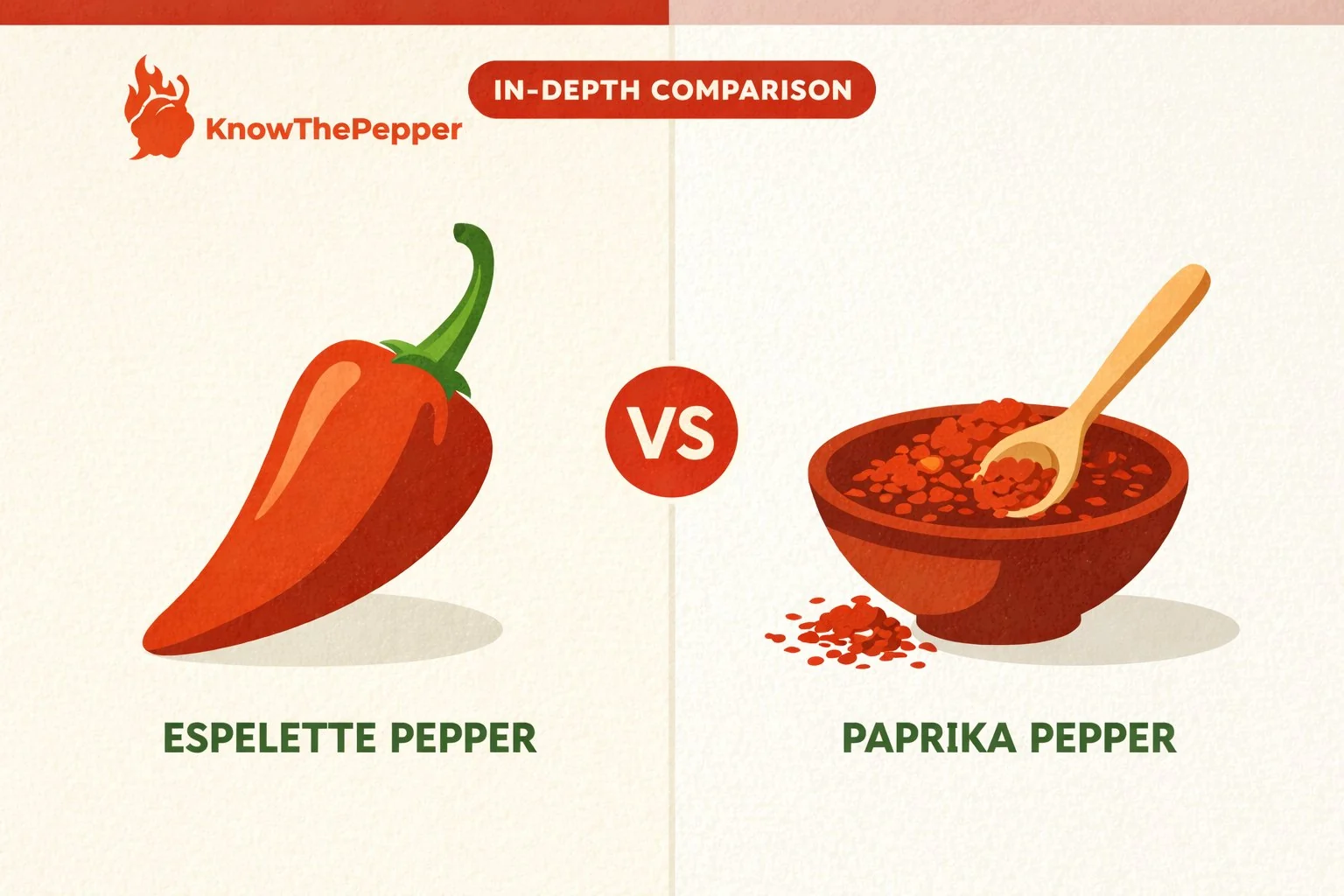
Espelette Pepper measures 2K–4K SHU while Paprika Pepper registers 0–1K SHU — making Espelette Pepper 4× hotter. Espelette Pepper is known for its sweet and smoky flavor (C. annuum), while Paprika Pepper offers sweet and mild notes (C. annuum).
- Heat difference: Espelette Pepper is 4× hotter
- Species: Both are C. annuum
- Best for: Espelette Pepper excels in everyday cooking and salsas, Paprika Pepper in fresh salsas and mild recipes
Espelette Pepper
MediumPaprika Pepper
MediumEspelette Pepper vs Paprika Pepper Comparison
Espelette Pepper vs Paprika Pepper Heat Levels
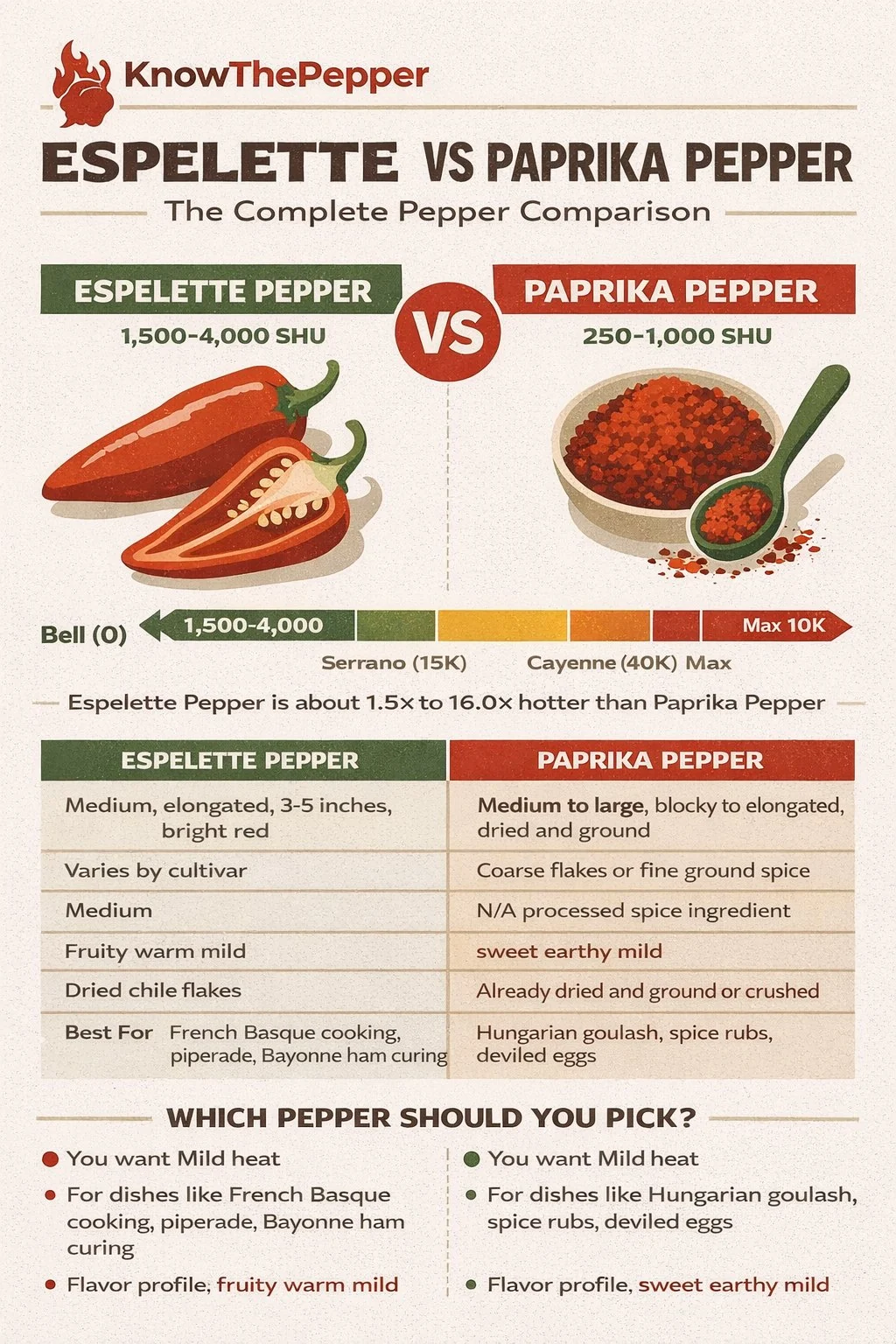
Paprika's heat is barely a whisper — a soft, almost imperceptible tingle that most people wouldn't even register as spice. That's the reality of its 0-1,000 SHU range, which places it firmly in the mild pepper intensity zone alongside bell peppers and pimentos.
Espelette runs noticeably warmer. At 1,500-4,000 SHU, it sits in the low end of the hot pepper classification — enough to produce a slow, building warmth that lingers without overwhelming. A Fresno chili typically measures around 2,500-10,000 SHU, so Espelette at its hottest barely reaches the bottom of that range. At its mildest, Espelette is roughly 4-8 times hotter than paprika at its hottest.
Both peppers share the same botanical roots — C. annuum, the species that gave us everything from bells to cayennes — but their capsaicin development took very different paths under different growing conditions. The Basque climate and specific cultivar selection pushed Espelette toward that gentle but present heat. Hungarian paprika breeding went the opposite direction, selecting almost entirely for color and sweetness over generations.
For practical cooking, this means paprika adds zero heat to a dish. Espelette adds a measured warmth that accumulates with quantity. Neither will challenge heat-seekers, but Espelette at least registers on the palate as a spice rather than just a colorant.
Flavor Profile Comparison
Few peppers have a legal identity quite like the Espelette.
Paprika peppers sit at the mildest end of the pepper spectrum, delivering sweetness with almost no perceptible heat - a stark contrast to even the gentlest Fresno, which runs roughly 2,500 to 10,000 SHU by comparison.
These two powders taste fundamentally different despite their visual similarity. Paprika — particularly the Hungarian varieties prized in Hungary's rich pepper-growing tradition — delivers a clean, sweet red pepper flavor with a slight earthiness. Smoked paprika (pimentón) adds a wood-smoke layer, but standard sweet paprika is gentle and almost candy-like in its straightforward fruitiness.
Espelette carries something more complex. The pepper is sun-dried and lightly smoked after harvest in the Basque village of Espelette, which builds a layered flavor profile — sweet at first, then smoky, then that slow warmth. There's also a slight fruitiness that paprika doesn't quite replicate, along with a faint earthiness from the drying process.
Aromatically, Espelette is more assertive. Opening a jar of quality Espelette powder produces a noticeably richer smell than standard paprika — more dimensional, with that smoke note present but not dominant. Paprika's aroma is pleasant but flatter.
In cooking, paprika functions largely as a background flavor builder and a source of deep red color. It blends into sauces and stews without announcing itself. Espelette stays present — you taste it distinctly. This makes them complementary rather than interchangeable: paprika for color and subtle sweetness, Espelette when you want the pepper itself to be a flavor note.
For a different kind of comparison, the side-by-side flavor differences between paprika and gochugaru show how much fermented Korean chili powder diverges from both of these European-style spices.
Culinary Uses for Espelette Pepper and Paprika Pepper
Paprika is one of the most versatile spices in any kitchen precisely because it stays in the background. It colors and subtly flavors Hungarian goulash, Spanish chorizo, deviled eggs, and roasted chicken without competing with other ingredients. Use it generously — 1-2 tablespoons in a stew is normal. It also blooms beautifully in hot oil or butter, releasing color and aroma quickly.
Espelette operates differently. It's a finishing spice as much as a cooking spice. The Basque use it on everything from scrambled eggs to grilled fish to chocolate, often added at the end rather than cooked through. A pinch over a fried egg or scattered across a plate of charcuterie is a classic application. Its PDO status means authentic Espelette from the French Basque country can be expensive, so treating it as a finishing spice makes practical sense.
Substitution requires some thought. Paprika cannot substitute for Espelette if heat is part of the goal — you'd need to blend paprika with a small amount of cayenne (roughly 4:1 ratio) to approximate Espelette's warmth. Going the other direction, Espelette can replace paprika in many dishes but will add noticeable heat that paprika wouldn't, so reduce quantities by about half.
For a comparison that clarifies how paprika stacks up against a spicier red powder, the heat and flavor differences between cayenne and paprika are worth understanding before making substitutions.
Espelette also works well in marinades for lamb, pork, and seafood. Paprika is the better choice for spice rubs where you want color penetration without heat. Both powders work in compound butters, aioli, and vinaigrettes — though Espelette brings more personality to those applications.
The Kashmiri chili versus paprika comparison is useful context if you're sourcing a paprika-style powder for Indian cooking, where the color-to-heat ratio matters enormously.
Which Should You Choose?
Choose paprika when color and sweet pepper flavor are the point and you want zero heat — goulash, deviled eggs, spice rubs for visual impact, or any dish where pepper flavor should be background texture rather than a distinct note.
Choose Espelette when you want a pepper that contributes its own character — a gentle warmth, a hint of smoke, and a fruity depth that paprika simply doesn't carry. It earns its place as a finishing spice on eggs, fish, and grilled meats, and it's exceptional anywhere the Basque use it: with piperade, on sheep's milk cheese, or stirred into vinaigrette.
They're not really competing for the same role. A well-stocked kitchen has both. If you can only have one and heat isn't a concern, paprika's versatility wins. If you're building a spice collection and want something that tastes distinctly of a place and a tradition, Espelette is the more interesting purchase — just budget accordingly for the real thing.
Can You Substitute One for the Other?
Yes — direct substitution works. Espelette Pepper and Paprika Pepper are close enough in heat to swap at roughly 1:1. The main difference will be flavor. For more swap options, explore ranked alternatives with conversion ratios.
Growing Espelette Pepper vs Paprika Pepper
If you’re deciding which pepper to grow at home, consider your climate and patience level. Espelette Pepper and Paprika Pepper have different maturation times and temperature preferences. Hotter varieties generally need a longer, warmer growing season to develop their full capsaicin content. Our zone-based planting date tool can pinpoint the best sowing window for your area.
Outside the Basque AOC zone, Espelette grows well in any warm temperate climate — USDA zones 7–11 are comfortable. The plants prefer full sun, well-drained soil with moderate fertility, and consistent moisture without waterlogging.
Start seeds indoors 8–10 weeks before last frost. Germination happens at soil temperatures of 75–85°F; a heat mat accelerates the process noticeably.
Mature plants reach 60–90 cm tall. Pods develop green and ripen to deep red over the season — full color typically arrives 80–90 days after transplant.
Paprika peppers are among the more rewarding varieties to grow - productive, relatively disease-resistant, and visually striking when the plants load up with red fruit in late summer.
Start seeds indoors 8-10 weeks before your last frost date. Germination is reliable at 75-85°F soil temperature; a heat mat helps considerably.
Plants reach 24-36 inches tall and benefit from caging or staking once fruit sets - the heavy load of thick-walled peppers can tip unsupported plants. Space them 18-24 inches apart for good airflow, which reduces fungal pressure.
History & Origin of Espelette Pepper and Paprika Pepper
Both peppers carry centuries of culinary heritage. Espelette Pepper traces its roots to France, while Paprika Pepper originates from Hungary. Understanding their backstory helps explain why each pepper developed its distinctive traits.
Buying & Storage
Whether you’re shopping for Espelette Pepper or Paprika Pepper, the same quality indicators apply. Fresh peppers should feel firm and heavy for their size, with taut, glossy skin and no soft or wet spots. Minor stem cracks known as “corking” are perfectly normal and often indicate a mature, flavorful pod.
- Firm pods with taut skin and consistent color
- Should feel heavy relative to size
- Minor stem cracks (“corking”) are normal
- Avoid anything soft, shriveled, or with dark wet spots
- Fresh: Paper bag, crisper drawer — 1–2 weeks
- Frozen: Wash, dry, freeze on sheet pan — 6+ months
- Dried: Airtight, away from light — up to 1 year
The Verdict: Espelette Pepper vs Paprika Pepper
Espelette Pepper and Paprika Pepper sit in the same heat tier but serve different roles. Espelette Pepper delivers 4× more heat with its distinctive sweet and smoky character. Paprika Pepper, with its sweet and mild profile, excels in everyday cooking.
Frequently Asked Questions
Related Comparisons
Sources pending verification.