De Arbol vs Guajillo Pepper: Taste, Heat & When to Use Each
De arbol and guajillo are two of Mexico's most essential dried chiles, but they serve very different purposes in the kitchen. De arbol brings sharp, grassy heat in the 15,000-30,000 SHU range, while guajillo offers a mild, complex sweetness at 1,000-2,500 SHU. Understanding when to reach for each one makes the difference between a sauce with presence and one with personality.

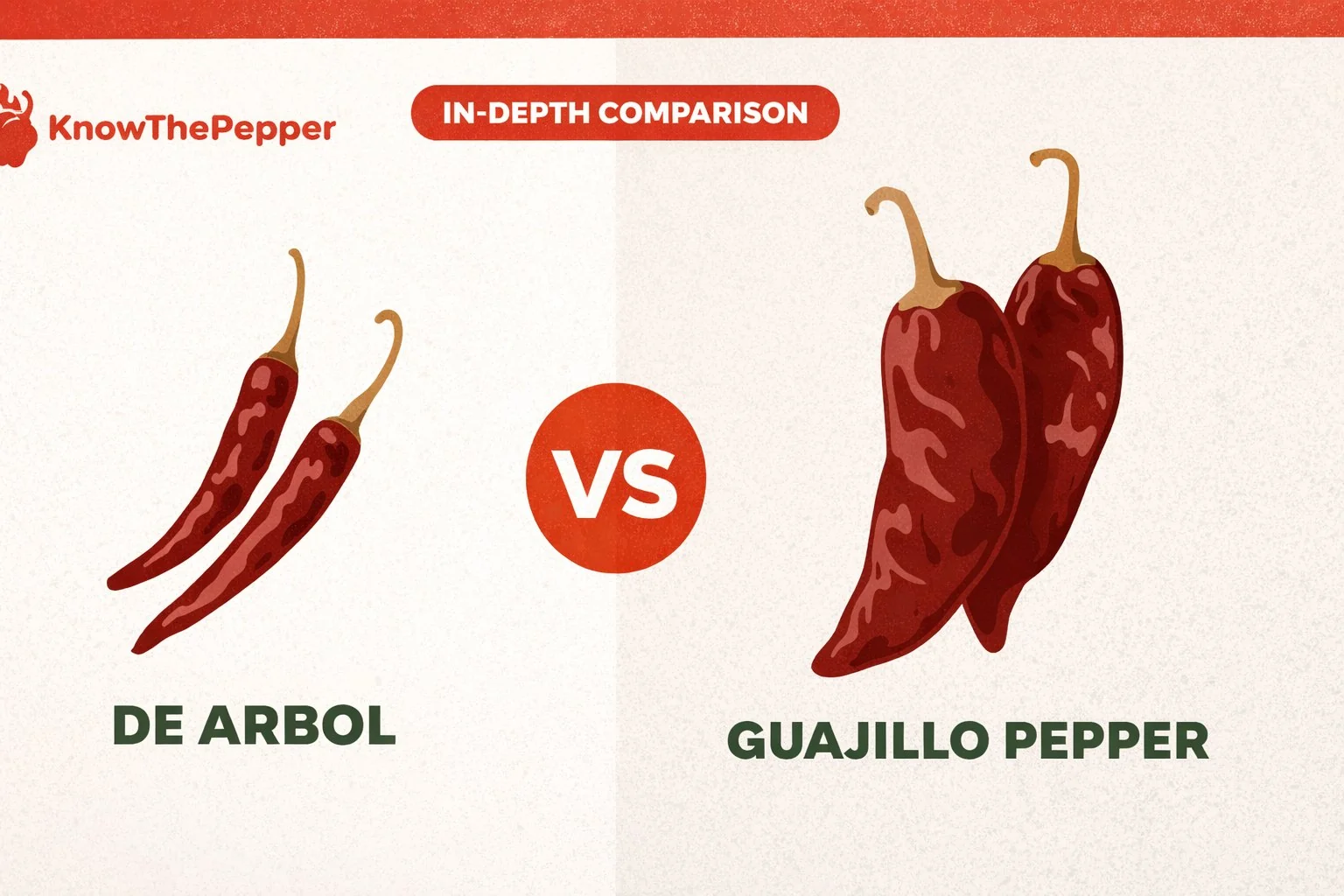
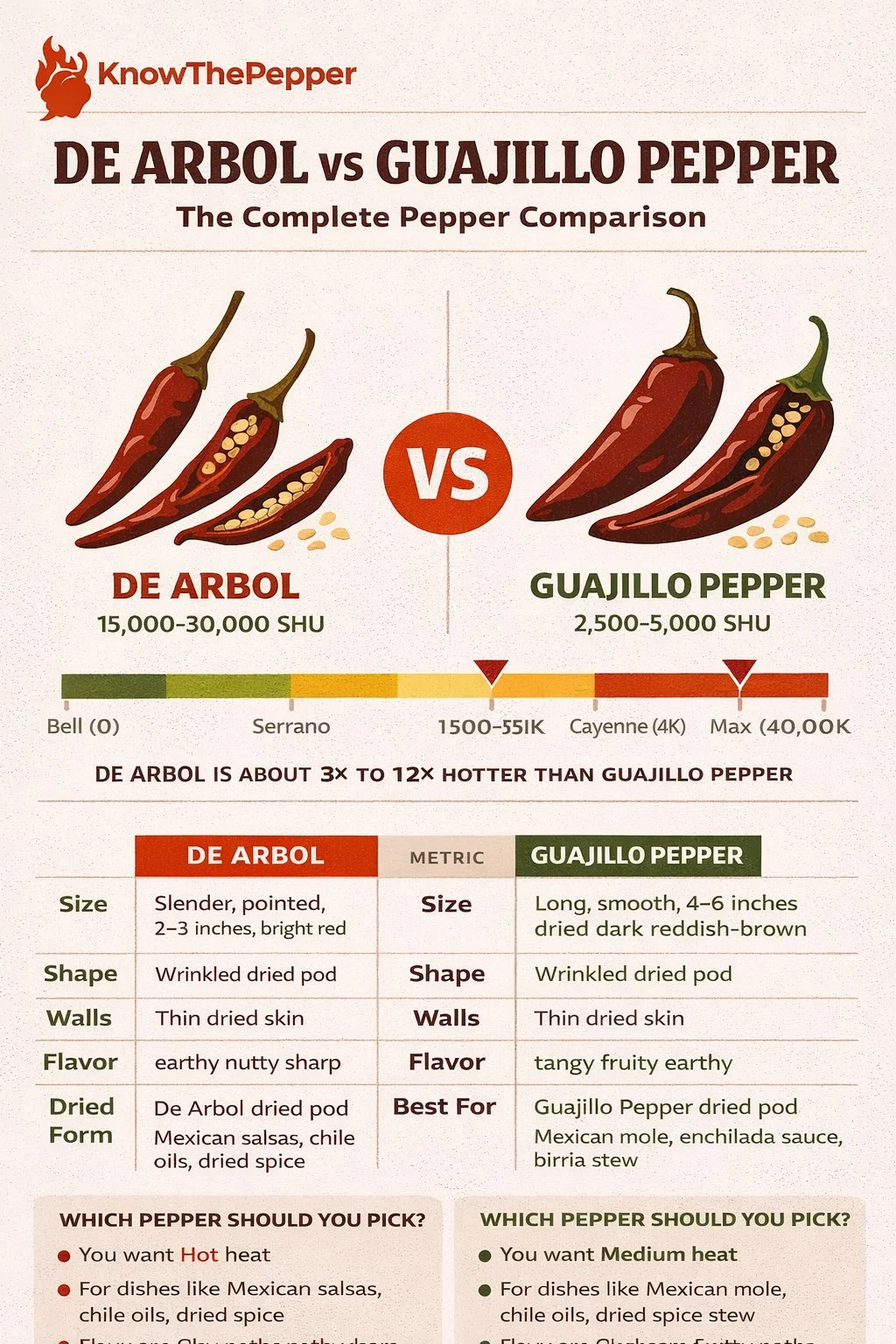
De Arbol measures 15K–30K SHU while Guajillo Pepper registers 3K–5K SHU — making De Arbol 6× hotter. De Arbol is known for its smoky and nutty flavor (C. annuum), while Guajillo Pepper offers tangy and sweet notes (C. annuum).
- Heat difference: De Arbol is 6× hotter
- Species: Both are C. annuum
- Best for: De Arbol excels in everyday cooking and salsas, Guajillo Pepper in fresh salsas and mild recipes
De Arbol
HotGuajillo Pepper
MediumDe Arbol vs Guajillo Pepper Comparison
De Arbol vs Guajillo Pepper Heat Levels
The heat gap between these two chiles is substantial. De arbol registers at 15,000-30,000 SHU, placing it firmly in the medium-hot tier - roughly 3 to 6 times hotter than a serrano pepper, which typically tops out around 5,000 SHU. That is not background warmth; it is assertive, front-of-palate fire that builds with each bite.
Guajillo, by contrast, sits at 1,000-2,500 SHU - a mild chile that most heat-tolerant eaters barely register as spicy. Compared to a serrano, guajillo delivers less than one-fifth the heat. The Scoville measurement scale captures this gap cleanly: de arbol is roughly 10 times hotter than guajillo at their respective midpoints.
The character of the heat differs too. De arbol produces a sharp, almost metallic burn that arrives quickly and lingers in the throat and sinuses - a quality tied to its relatively high capsaicin concentration and the chemistry behind how capsaicin binds to heat receptors. Guajillo's mild warmth is gentler, sitting more on the lips and front of the tongue without the prolonged finish.
For cooks building a dish where heat is the point - a thin red salsa, a spicy chile oil, a fiery birria broth - de arbol is the workhorse. When heat should be a whisper rather than a shout, guajillo handles that register with ease. The medium-hot SHU bracket that de arbol occupies is a different cooking context entirely from guajillo's mild position.
Flavor Profile Comparison
The first time a de arbol found its way into my kitchen, I mistook it for a decorative dried chili.
Long before supermarkets stocked dried chiles by the bag, guajillo peppers were already a cornerstone of Mexican cooking.
Heat aside, these two chiles have genuinely distinct flavor identities that make them non-interchangeable in most applications.
De arbol has a grassy, slightly smoky flavor with a sharp, almost tannic quality. Some describe it as having a faint nuttiness when toasted, but the dominant impression is brightness and heat rather than deep complexity. The dried pods carry a thin flesh that toasts quickly, releasing volatile aromatics that are pungent and direct. It is not a subtle chile.
Guajillo is one of the more complex dried chiles in Mexican cooking. Its flavor profile layers dried cherry and cranberry tartness with a mild earthiness and a hint of green tea - a combination that is genuinely hard to replicate with other ingredients. The flesh is thicker and more leathery, which means longer rehydration but also more body in sauces. When blended, guajillo produces a smooth, brick-red paste with a slight natural sweetness that anchors mole rojo, enchilada sauce, and adobo marinades.
Aroma tells the story before the first taste. De arbol pods smell sharp and spicy straight from the bag. Guajillo has a more inviting dried-fruit scent that opens up dramatically when the pods hit a dry comal.
For dishes where color matters - and in Mexican cooking, it often does - guajillo wins outright. Its deep red pigment creates the vibrant sauce color associated with classic guajillo-versus-pasilla comparisons and other foundational chile blends. De arbol adds heat and a grassy note, but it does not carry the same visual impact.
Culinary Uses for De Arbol and Guajillo Pepper
These two chiles rarely compete for the same role in a recipe - they are more often partners than substitutes.
Guajillo is the backbone chile in dozens of Mexican classics. It is essential in guajillo versus New Mexico chile preparations where mild, fruity depth is the goal. Rehydrate the pods in hot water for 20-30 minutes, then blend with garlic, cumin, and a splash of the soaking liquid for a foundational red sauce that works over enchiladas, as a braising liquid for pork shoulder, or stirred into pozole rojo. The thick flesh means guajillo sauces have natural body without needing thickeners.
De arbol works best where heat delivery is the primary mission. Whole dried pods are dropped into hot oil to bloom their capsaicin into chile oil, a technique common in Mexican and some Chinese cooking. Toasted and ground, de arbol becomes a coarse powder used to dust grilled corn, rim glasses for micheladas, or spike a salsa that needs more aggression than dried ancho or mulato can provide. The side-by-side heat difference between de arbol and tien tsin shows how de arbol fits into that broader category of thin-fleshed, high-heat dried chiles used across multiple cuisines.
When substituting one for the other, the math gets tricky. Replacing guajillo with de arbol requires drastically reducing quantity - use one de arbol for every four to five guajillos, and expect to lose the fruity complexity. Going the other direction, replacing de arbol with guajillo, means accepting a much milder dish unless you compensate with cayenne or another heat source.
Blending both is often the smartest move. A salsa roja with three guajillos and two de arbols gets the color and depth from guajillo and the heat from de arbol - a combination that shows up in countless regional Mexican preparations. Rehydrate separately since de arbol needs less time, then blend together with tomato, onion, and garlic.
Which Should You Choose?
Reach for guajillo when the dish needs color, body, and layered flavor without serious heat - enchilada sauce, braised meats, mole bases, and pozole all benefit from its dried-fruit complexity. It is the more versatile of the two for everyday cooking and the safer choice when feeding guests with mixed heat tolerance.
Reach for de arbol when the dish needs fire. Salsas meant to challenge, chile oils, spice rubs, and any preparation where heat is the feature rather than the background - this is de arbol's domain. Its sharp, grassy character also adds a brightness that guajillo cannot replicate.
For cooks building a dried chile pantry from scratch, guajillo is the higher priority purchase. It appears in more foundational recipes and its mild heat makes it easier to work with in quantity. De arbol is the essential second addition - the heat dial that guajillo lacks. Stock both, and most Mexican dried chile recipes become accessible.
Can You Substitute One for the Other?
Yes — direct substitution works. De Arbol and Guajillo Pepper are close enough in heat to swap at roughly 1:1. The main difference will be flavor. For more swap options, explore ranked alternatives with conversion ratios.
Growing De Arbol vs Guajillo Pepper
If you’re deciding which pepper to grow at home, consider your climate and patience level. De Arbol and Guajillo Pepper have different maturation times and temperature preferences. Hotter varieties generally need a longer, warmer growing season to develop their full capsaicin content. Our zone-based planting date tool can pinpoint the best sowing window for your area.
De arbol is a reliable producer once established, though it demands heat to perform. Start seeds indoors 8-10 weeks before last frost — germination runs 10-14 days at soil temperatures around 80-85°F.
Transplant outdoors only after nighttime temps stay consistently above 55°F. De arbol needs full sun and well-drained soil; waterlogged roots stall growth quickly.
Pods mature from green to bright red in 80-90 days from transplant. The plants set fruit prolifically — a single established plant can carry dozens of pods simultaneously.
Growing guajillo means starting with the mirasol variety — the fresh pepper that becomes guajillo after drying. If you're new to starting chiles from seed indoors, mirasol is a forgiving choice: germination is reliable, and the plants are vigorous once established.
Start seeds 8–10 weeks before your last frost date. Mirasol plants prefer full sun and well-drained soil, thriving in USDA zones 9–11 or as annuals in cooler climates.
The upward-pointing fruit habit (the 'looking at the sun' trait) means pods dry naturally on the plant in hot, dry climates. In humid regions, harvest before the first frost and finish drying indoors using a dehydrator set to 135°F for 8–12 hours.
History & Origin of De Arbol and Guajillo Pepper
Both peppers carry centuries of culinary heritage. De Arbol traces its roots to Mexico, while Guajillo Pepper originates from Mexico. Understanding their backstory helps explain why each pepper developed its distinctive traits.
Buying & Storage
Whether you’re shopping for De Arbol or Guajillo Pepper, the same quality indicators apply. Fresh peppers should feel firm and heavy for their size, with taut, glossy skin and no soft or wet spots. Minor stem cracks known as “corking” are perfectly normal and often indicate a mature, flavorful pod.
- Firm pods with taut skin and consistent color
- Should feel heavy relative to size
- Minor stem cracks (“corking”) are normal
- Avoid anything soft, shriveled, or with dark wet spots
- Fresh: Paper bag, crisper drawer — 1–2 weeks
- Frozen: Wash, dry, freeze on sheet pan — 6+ months
- Dried: Airtight, away from light — up to 1 year
The Verdict: De Arbol vs Guajillo Pepper
De Arbol and Guajillo Pepper occupy very different positions on the heat spectrum. De Arbol delivers 6× more heat with its distinctive smoky and nutty character. Guajillo Pepper, with its tangy and sweet profile, excels in everyday cooking.
Frequently Asked Questions
Related Comparisons
Sources pending verification.