Chipotle vs Ancho: Heat, Flavor & Uses
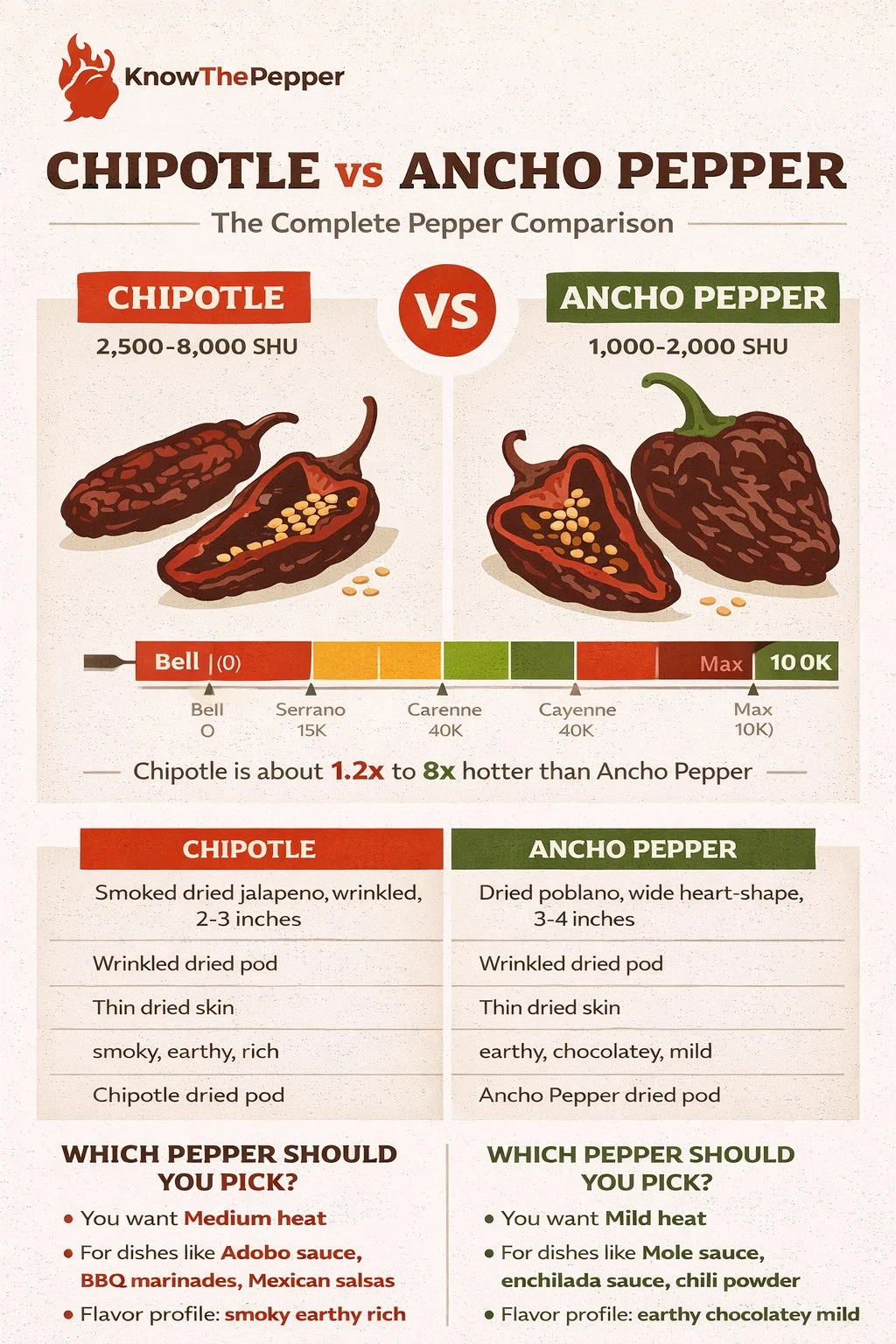
Both chipotle and ancho are dried Mexican chilies from the same species, but they arrive at your kitchen through completely different paths — one smoked, one sun-dried — and that divergence defines everything about how they taste and where they belong. Chipotle ranges from 2,500–8,000 SHU, while ancho sits at a gentler 1,000–2,000 SHU. Same botanical roots, radically different personalities.

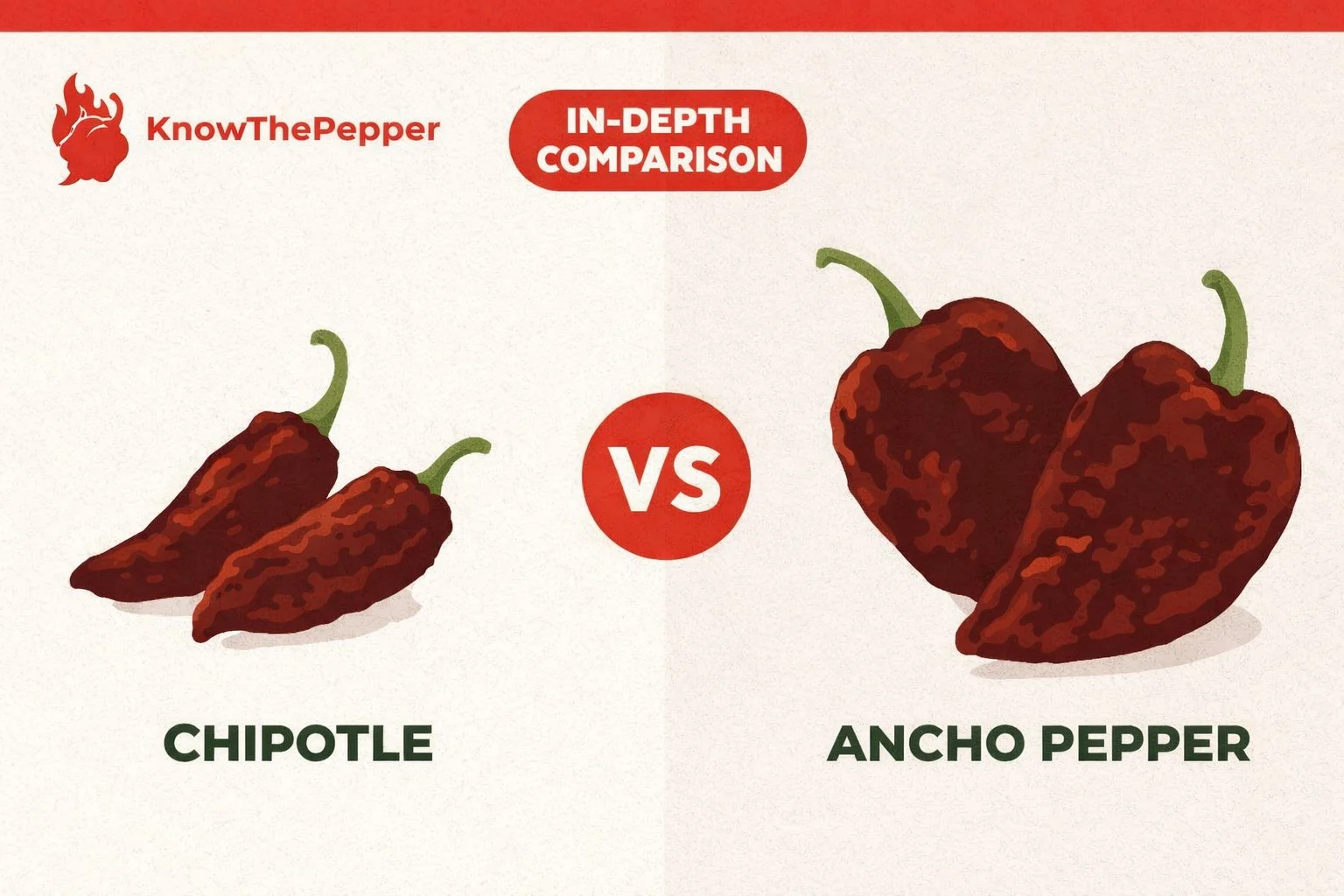
Chipotle measures 3K–8K SHU while Ancho Pepper registers 1K–2K SHU — making Chipotle 4× hotter. Chipotle is known for its smoky and sweet flavor (C. annuum), while Ancho Pepper offers sweet and raisin-like notes (C. annuum).
- Heat difference: Chipotle is 4× hotter
- Species: Both are C. annuum
- Best for: Chipotle excels in everyday cooking and salsas, Ancho Pepper in fresh salsas and mild recipes
Chipotle vs Ancho Pepper Comparison
Chipotle vs Ancho Pepper Heat Levels
Here is the thing that surprises most people: these two peppers are made from different fresh chilies entirely. Ancho is a dried poblano with its characteristic dark, wrinkled skin — mild-mannered and sweet. Chipotle is a smoke-dried jalapeño, which already tells you it is going to run hotter.
The numbers back that up. Ancho tops out at 2,000 SHU, putting it firmly in the mild-to-medium heat band — roughly 0.4 times the heat of a typical jalapeño (using 5,000 SHU as the jalapeño baseline). You can eat ancho in quantity without much consequence.
Chipotle spans 2,500–8,000 SHU, meaning at its upper end it hits about 1.6 times jalapeño heat. The wide range reflects variation between chipotle morita (smaller, smokier, hotter) and chipotle meco (larger, tan-colored, earthier). On average, chipotle runs roughly 3–4 times hotter than ancho.
Both sit in the same general Scoville heat index tier for accessible everyday cooking — neither will overwhelm a dish the way a habanero would. But the gap between them is meaningful in practice. Ancho is background warmth; chipotle is a noticeable, building heat that lingers. The smoke in chipotle also amplifies the perceived intensity, even when the capsaicin count is moderate. Understanding how capsaicin's molecular structure creates that burn sensation helps explain why smoked peppers can feel hotter than their SHU suggests — the fat-soluble compounds concentrate during drying.
Flavor Profile Comparison
The first time I tasted a chipotle straight from an adobo can, the smokiness hit before the heat — a slow, woody burn that felt nothing like the fresh medium-heat jalapeño it came from.
Long before dried chiles appeared on supermarket shelves, the ancho was already central to Mexican cuisine — a staple ground into sauces, rehydrated for stews, and layered into moles that could take days to prepare.
Flavor is where this comparison gets genuinely interesting, because smoke changes everything.
Ancho tastes like dried fruit wearing a mild chili costume. The dominant notes are raisin, dried cherry, and dark chocolate, with a subtle earthiness underneath. There is almost no sharpness — the heat is so gentle that the sweetness comes through cleanly. Toasted briefly in a dry pan, ancho develops a deeper, nuttier quality that anchors complex sauces.
Chipotle is defined by smoke first, heat second, and sweetness third. The jalapeño base contributes a grassy, slightly tangy foundation, but the mesquite or pecan smoke (traditional Mexican methods vary) transforms it into something closer to barbecue than fresh pepper. Chipotle in adobo sauce — the canned version most home cooks use — adds vinegar, tomato, and spice to that base, making it even more complex and assertive.
These two peppers rarely compete for the same role. Ancho works where you want depth without interruption — its sweetness supports other flavors rather than dominating them. Chipotle announces itself. You know when it is in a dish.
Aroma is another point of divergence. Dried ancho smells faintly of dried fruit and cocoa. Open a can of chipotles and the smoke hits you immediately — it is a fundamentally different sensory experience. Comparing these two in a blind tasting, most people would not identify them as closely related. That is how dramatically process shapes flavor in dried chilies.
Culinary Uses for Chipotle and Ancho Pepper
Ancho is the backbone of traditional Mexican mole. It appears in classic dark mole preparations alongside guajillo and mulato — the trio creates the layered complexity that makes mole negro so distinctive. Rehydrated ancho blends into smooth, sweet-earthy sauces for enchiladas, tamales, and braised meats. Because the heat is low, you can use it generously — 2–3 dried anchos per sauce recipe is standard.
Ancho also works well as a dry rub component. Ground ancho powder adds color and mild fruit-forward heat to chicken, pork, or vegetables without the smoke that chipotle brings. It is a natural fit for dishes where you want chili presence without competition.
Chipotle dominates in smoked and grilled contexts. It is the defining flavor in chipotle mayo, smoky black bean soups, and adobo-marinated meats. In American cooking, it appears constantly in barbecue sauces, burger seasonings, and grain bowls. One chipotle pepper in adobo, minced, can season an entire pot of chili for four people — start there and add more if needed.
For substitution: ancho cannot replace chipotle in dishes where smoke is the point. If a recipe calls for chipotle and you use ancho, you will get heat and sweetness but lose the defining smoky character entirely. A small amount of smoked paprika added to ancho can approximate the effect.
Going the other direction — chipotle in place of ancho — works better in robust applications like chili or braises, but the smoke will shift the dish's profile noticeably. Reduce the quantity by about half and taste as you go.
Both peppers are essential to the diverse dried chili pantry that defines Mexican regional cooking. Keeping both on hand gives you access to two completely different flavor registers without significant overlap. The C. annuum species produces an astonishing range of dried forms — these two represent opposite ends of the processing spectrum within that family.
For a closer comparison of how ancho stacks up against another common dried chili, the heat gap between pasilla and ancho is worth understanding before building a mole.
Which Should You Choose?
Choose ancho when the goal is sweet, fruity depth — mole, enchilada sauce, tamale filling, or any preparation where you want chili flavor without smoke or significant heat. It is the more versatile of the two for traditional Mexican cooking and blends into complex sauces without dominating.
Choose chipotle when smoke is the point. Barbecue applications, smoked salsas, adobo marinades, and anything that benefits from a grilled or fire-roasted character belongs to chipotle territory. Its heat is real but manageable, and the smoky backbone is irreplaceable.
If you are building a dried chili pantry from scratch, buy ancho first — it appears in more foundational recipes. Add chipotle (in adobo is the most practical format) once you are ready to branch into smoked preparations.
For cooks who want to understand where chipotle sits relative to other smoky dried options, the flavor contrast between chipotle and guajillo rounds out the picture. These are not competing peppers — they are complementary tools that solve different flavor problems.
Can You Substitute One for the Other?
Yes — direct substitution works. Chipotle and Ancho Pepper are close enough in heat to swap at roughly 1:1. The main difference will be flavor. For more swap options, explore ranked alternatives with conversion ratios.
Growing Chipotle vs Ancho Pepper
If you’re deciding which pepper to grow at home, consider your climate and patience level. Chipotle and Ancho Pepper have different maturation times and temperature preferences. Hotter varieties generally need a longer, warmer growing season to develop their full capsaicin content. Our zone-based planting date tool can pinpoint the best sowing window for your area.
Growing chipotle starts with growing jalapeños — because that is exactly what they are before smoking. The distinction is purely in post-harvest processing.
Capsicum annuum jalapeños thrive in well-drained soil with full sun and consistent moisture. Start seeds indoors 8–10 weeks before your last frost date.
For chipotles specifically, you want the peppers to ripen fully to red before harvest. Most growers pick jalapeños green, but chipotle production requires patience — leave them on the plant until they turn deep red and the skin begins to show slight wrinkling.
Growing anchos means growing poblanos and drying them yourself — the transformation happens post-harvest. Plants thrive in USDA zones 9–11 as perennials and are treated as annuals elsewhere.
Transplant outdoors after all frost risk passes, spacing plants 18–24 inches apart in full sun. Poblanos are heavy feeders — a balanced fertilizer at transplant followed by a phosphorus-forward feed once flowering begins keeps production strong.
Fruits are ready to dry when they turn fully red — this is when sugar content peaks and the dried ancho will have its characteristic sweetness. Hang or dehydrate at 125–135°F until completely leathery with no soft spots.
History & Origin of Chipotle and Ancho Pepper
Both peppers carry centuries of culinary heritage. Chipotle traces its roots to Mexico, while Ancho Pepper originates from Mexico. Understanding their backstory helps explain why each pepper developed its distinctive traits.
Buying & Storage
Whether you’re shopping for Chipotle or Ancho Pepper, the same quality indicators apply. Fresh peppers should feel firm and heavy for their size, with taut, glossy skin and no soft or wet spots. Minor stem cracks known as “corking” are perfectly normal and often indicate a mature, flavorful pod.
- Firm pods with taut skin and consistent color
- Should feel heavy relative to size
- Minor stem cracks (“corking”) are normal
- Avoid anything soft, shriveled, or with dark wet spots
- Fresh: Paper bag, crisper drawer — 1–2 weeks
- Frozen: Wash, dry, freeze on sheet pan — 6+ months
- Dried: Airtight, away from light — up to 1 year
The Verdict: Chipotle vs Ancho Pepper
Chipotle and Ancho Pepper sit in the same heat tier but serve different roles. Chipotle delivers 4× more heat with its distinctive smoky and sweet character. Ancho Pepper, with its sweet and raisin-like profile, excels in everyday cooking.
Frequently Asked Questions
Related Comparisons
Sources pending verification.