Cayenne Pepper vs Paprika Pepper: Key Differences Explained
Cayenne pepper and paprika pepper share a common ancestor but diverge sharply in heat and purpose. Cayenne brings serious fire — typically 30,000–50,000 SHU — while paprika sits at a gentle 0–500 SHU, making them nearly opposite ends of the Capsicum annuum spectrum. Understanding which to reach for can make or break a dish.

Cayenne Pepper measures 30K–50K SHU while Paprika Pepper registers 0–1K SHU — making Cayenne Pepper 50× hotter. Cayenne Pepper is known for its neutral and peppery flavor (C. annuum), while Paprika Pepper offers sweet and mild notes (C. annuum).
- Heat difference: Cayenne Pepper is 50× hotter
- Species: Both are C. annuum
- Best for: Cayenne Pepper excels in everyday cooking and salsas, Paprika Pepper in fresh salsas and mild recipes
Cayenne Pepper
HotPaprika Pepper
MediumCayenne Pepper vs Paprika Pepper Comparison
Cayenne Pepper vs Paprika Pepper Heat Levels
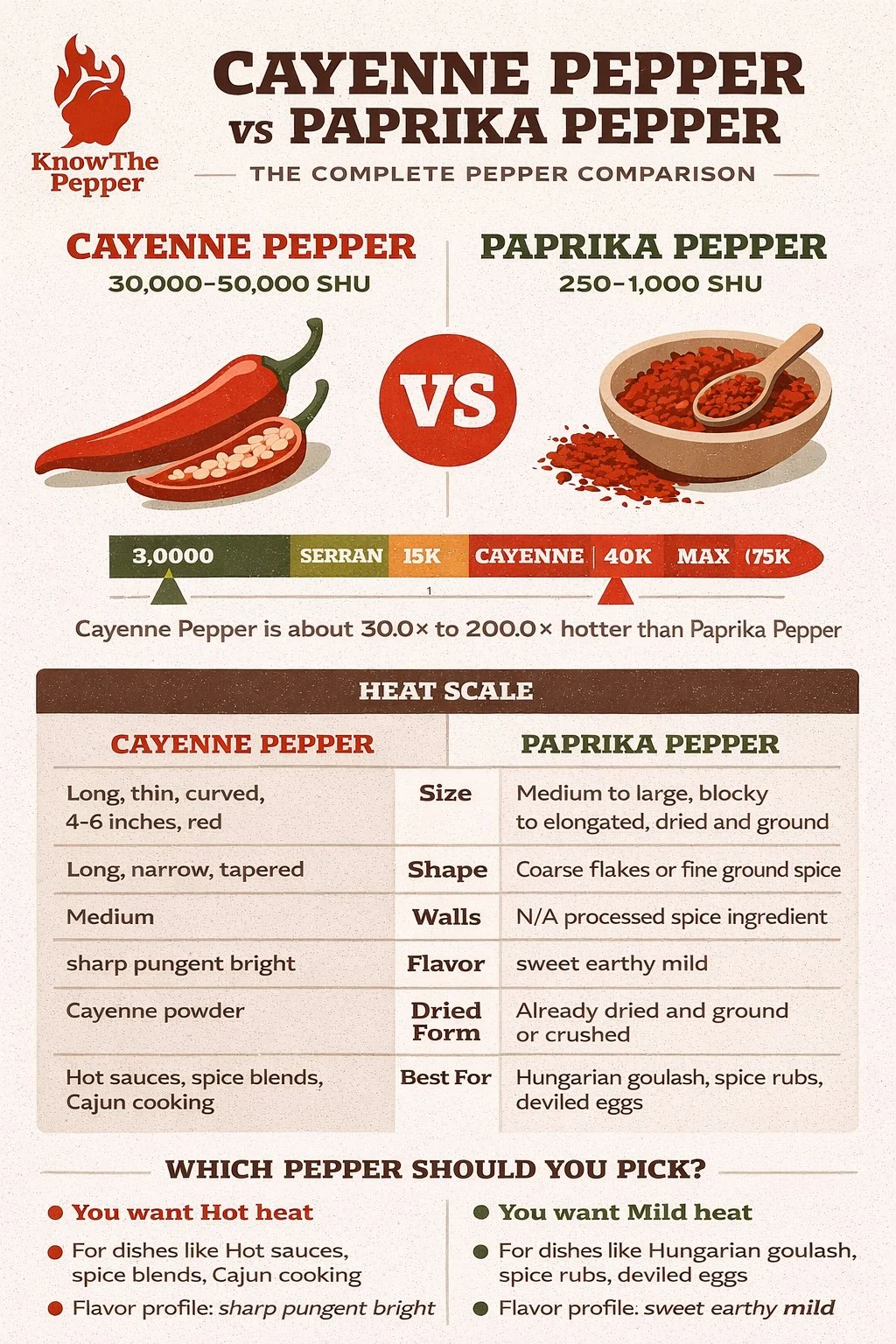
The heat gap between these two peppers is not subtle. Cayenne registers between 30,000 and 50,000 Scoville Heat Units, which puts it roughly 4 to 6 times hotter than a serrano pepper (which typically lands around 10,000–23,000 SHU). That's a pepper that demands respect in the kitchen.
Paprika, by contrast, measures between 0 and 500 SHU in its sweet form, with hot paprika varieties occasionally reaching 1,000 SHU. Even the spiciest paprika doesn't come close to a serrano — it sits closer to a banana pepper on the Scoville heat index than anything you'd call fiery.
The chemistry behind this difference comes down to capsaicin concentration. Cayenne pods carry dense capsaicin glands throughout their flesh, producing that sharp, linear burn that hits fast and fades relatively quickly. Paprika peppers — bred specifically for color and mild flavor — have had most of that capsaicin bred out over generations. Understanding how capsaicin triggers heat receptors helps explain why a pinch of cayenne can overwhelm a dish while a tablespoon of paprika barely registers.
For cooks coming from the mild-heat SHU bracket, paprika feels like home territory. Cayenne, meanwhile, sits firmly in the medium-to-hot range — enough heat to genuinely affect a recipe's character, not just add background warmth.
Flavor Profile Comparison
Few peppers have traveled as far or worked as hard as cayenne.
Paprika peppers sit at the mildest end of the pepper spectrum, delivering sweetness with almost no perceptible heat - a stark contrast to even the gentlest Fresno, which runs roughly 2,500 to 10,000 SHU by comparison.
Heat aside, these two peppers taste fundamentally different — and that's the more important distinction for most cooking decisions.
Cayenne delivers a clean, sharp heat with relatively neutral underlying flavor. There's a slight earthiness and a faint fruitiness in fresh cayenne, but the dried and ground form is mostly about the burn. It doesn't add much sweetness, smokiness, or complexity — it adds fire. That purity of purpose is exactly what makes it useful.
Paprika is almost the opposite. Its flavor profile is rich, sweet, and vegetal, with a characteristic red-pepper depth that ranges from mild and candy-like in sweet paprika to earthy and slightly bitter in Spanish varieties. Smoked paprika (pimentón) adds a whole other dimension — a deep, wood-smoke character that can anchor an entire dish on its own.
Aroma matters here too. Ground cayenne has a sharp, almost pungent nose that signals heat before you taste it. Paprika smells warm and slightly sweet, closer to roasted red peppers than to a hot spice.
The comparison gets interesting when you look at regional cousins. The Espelette pepper's nuanced heat versus paprika's sweetness shows how much terroir and breeding can shift a pepper's character even within the same species. Both cayenne and paprika are Capsicum annuum, yet they've been selected for completely different traits over centuries of cultivation.
For color, paprika wins decisively — its deep red pigments (primarily capsanthin and capsorubin) are stable enough to dye food visibly. Cayenne adds color too, but primarily as a side effect of its heat compounds, not as a bred-in trait.
Culinary Uses for Cayenne Pepper and Paprika Pepper
These peppers rarely compete for the same job in a recipe, which is actually useful — it means you can often use both in the same dish without redundancy.
Cayenne is a background heat builder. A quarter teaspoon goes into spice blends, dry rubs, hot sauces, and soups to lift the overall heat level without adding a distinct flavor. It's the workhorse behind most commercial hot seasonings, Cajun blends, and chili powders. For reference, the sharper heat of Thai chili versus cayenne's clean burn illustrates how cayenne's heat profile differs even from other fiery options — it's more linear, less complex.
Paprika earns its place through color and flavor. Hungarian goulash, Spanish chorizo, deviled eggs, and chicken paprikash all depend on paprika for their characteristic red color and sweet depth. It's added in tablespoon quantities, not pinches — often 2 to 4 tablespoons per dish where cayenne would be measured in fractions of a teaspoon.
For substitution, the math is tricky. You cannot swap cayenne for paprika at equal volumes — the heat difference is too extreme. If a recipe calls for 1 tablespoon of paprika and you want to substitute cayenne, start with 1/8 teaspoon and adjust from there, accepting that you'll lose the color and sweetness paprika provides. Going the other direction (replacing cayenne with paprika) requires such large quantities to approximate the heat that the dish's flavor profile shifts entirely.
Smoked paprika makes a particularly interesting substitute in dishes where you want both color and some complexity — BBQ rubs, roasted vegetables, and braised meats all benefit from it in ways cayenne simply cannot replicate. Meanwhile, the heat difference between cowhorn and cayenne peppers is worth exploring if you want fresh pepper alternatives to dried cayenne in cooking.
Both peppers bloom in fat — heating either in oil before adding other ingredients intensifies their flavor and color. This technique is especially important with paprika, which can turn bitter if added to a dry pan over high heat.
Which Should You Choose?
Reach for cayenne when heat is the goal. It's a precision tool — small amounts, big impact, minimal flavor interference. It belongs in spice blends, hot sauces, and any dish where you want to dial up the fire without changing the taste profile.
Paprika is a flavor and color ingredient first. It builds the backbone of dishes rather than spiking them. If your recipe calls for visual appeal, sweet red-pepper depth, or that characteristic Hungarian or Spanish warmth, paprika is doing work that cayenne cannot replicate.
For cooks who want to stock one pepper that does both jobs partially, hot paprika bridges the gap — it brings more heat than sweet paprika while still delivering color and flavor. But it tops out well below cayenne's range, so it's a compromise, not a replacement.
The clearest rule: if the recipe measures in tablespoons, it probably wants paprika. If it measures in pinches or quarter-teaspoons, it probably wants cayenne. Respect that difference and both peppers will serve you well.
Can You Substitute One for the Other?
Yes — direct substitution works. Cayenne Pepper and Paprika Pepper are close enough in heat to swap at roughly 1:1. The main difference will be flavor. For more swap options, explore ranked alternatives with conversion ratios.
Growing Cayenne Pepper vs Paprika Pepper
If you’re deciding which pepper to grow at home, consider your climate and patience level. Cayenne Pepper and Paprika Pepper have different maturation times and temperature preferences. Hotter varieties generally need a longer, warmer growing season to develop their full capsaicin content. Our zone-based planting date tool can pinpoint the best sowing window for your area.
Cayenne is one of the more forgiving hot peppers to grow, which explains its global reach. Start seeds indoors 8-10 weeks before last frost.
For practical guidance on growing cayenne from transplant to harvest, the key variables are consistent heat and full sun. Cayenne wants at least 6-8 hours of direct light daily and struggles in cool, wet summers.
Transplant outdoors once nighttime temps stay above 55°F. Space plants 18-24 inches apart.
Paprika peppers are among the more rewarding varieties to grow - productive, relatively disease-resistant, and visually striking when the plants load up with red fruit in late summer.
Start seeds indoors 8-10 weeks before your last frost date. Germination is reliable at 75-85°F soil temperature; a heat mat helps considerably.
Plants reach 24-36 inches tall and benefit from caging or staking once fruit sets - the heavy load of thick-walled peppers can tip unsupported plants. Space them 18-24 inches apart for good airflow, which reduces fungal pressure.
History & Origin of Cayenne Pepper and Paprika Pepper
Both peppers carry centuries of culinary heritage. Cayenne Pepper traces its roots to French Guiana, while Paprika Pepper originates from Hungary. Understanding their backstory helps explain why each pepper developed its distinctive traits.
Buying & Storage
Whether you’re shopping for Cayenne Pepper or Paprika Pepper, the same quality indicators apply. Fresh peppers should feel firm and heavy for their size, with taut, glossy skin and no soft or wet spots. Minor stem cracks known as “corking” are perfectly normal and often indicate a mature, flavorful pod.
- Firm pods with taut skin and consistent color
- Should feel heavy relative to size
- Minor stem cracks (“corking”) are normal
- Avoid anything soft, shriveled, or with dark wet spots
- Fresh: Paper bag, crisper drawer — 1–2 weeks
- Frozen: Wash, dry, freeze on sheet pan — 6+ months
- Dried: Airtight, away from light — up to 1 year
The Verdict: Cayenne Pepper vs Paprika Pepper
Cayenne Pepper and Paprika Pepper occupy very different positions on the heat spectrum. Cayenne Pepper delivers 50× more heat with its distinctive neutral and peppery character. Paprika Pepper, with its sweet and mild profile, excels in everyday cooking.
Frequently Asked Questions
Related Comparisons
Sources pending verification.