Cayenne Pepper vs Habanero: Taste, Heat & When to Use Each
Cayenne and habanero are both staples in hot kitchens, but they occupy very different territory. Cayenne delivers a clean, linear heat ideal for seasoning, while habanero brings fruity citrus complexity alongside a burn that hits 5-14 times harder. Knowing which to reach for can make or break a dish.

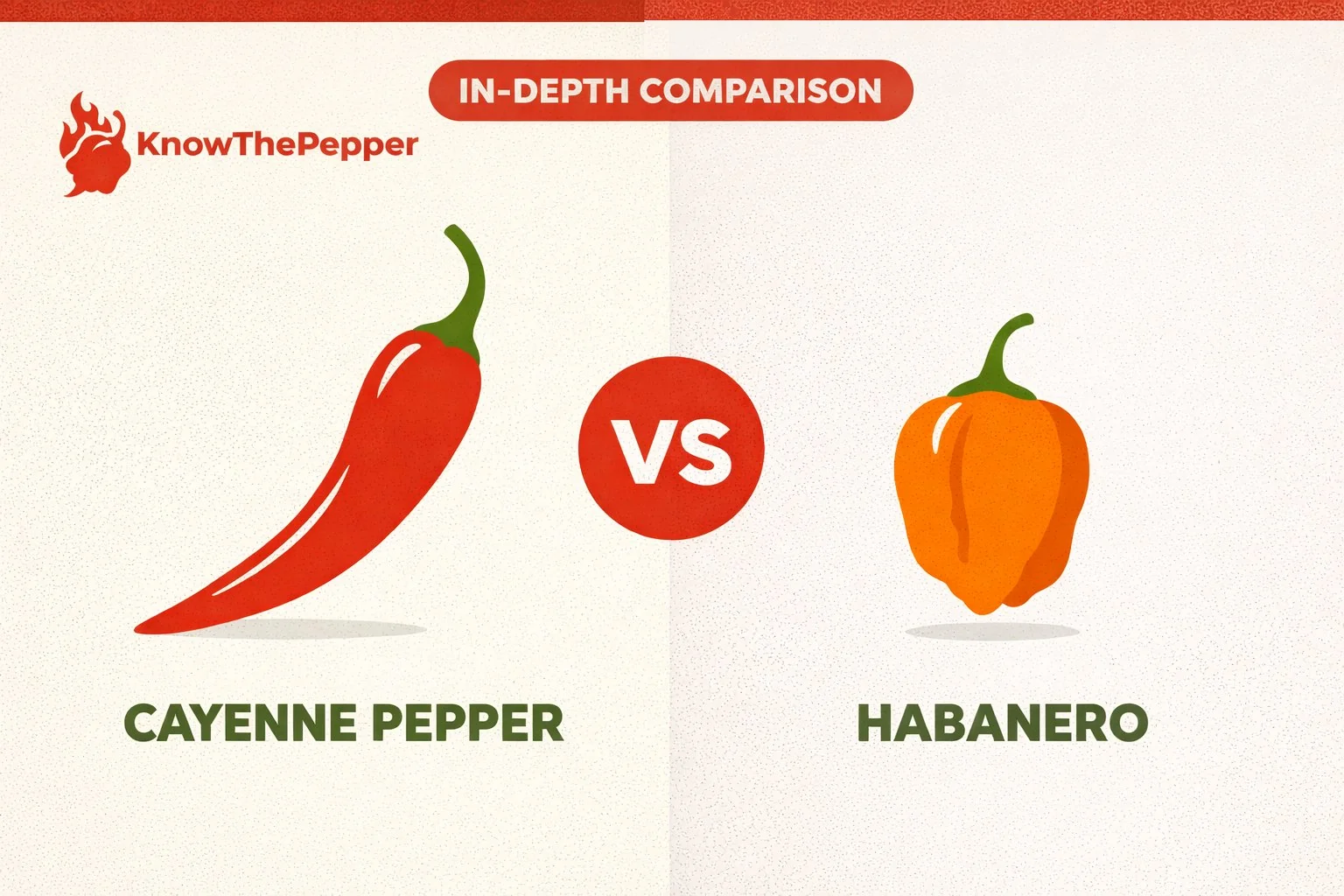
Cayenne Pepper measures 30K–50K SHU while Habanero registers 100K–350K SHU — making Habanero 7× hotter. Cayenne Pepper is known for its neutral and peppery flavor (C. annuum), while Habanero offers fruity and citrusy notes (C. chinense).
- Heat difference: Habanero is 7× hotter
- Species: C. annuum vs C. chinense
- Best for: Cayenne Pepper excels in everyday cooking and salsas, Habanero in hot sauces and spicy dishes
Cayenne Pepper
HotHabanero
Extra-HotCayenne Pepper vs Habanero Comparison
Cayenne Pepper vs Habanero Heat Levels
Before getting into numbers, the flavor difference is what you notice first. Cayenne's heat is sharp and direct — it lands fast, fades relatively quickly, and doesn't bring much else along for the ride. Habanero's heat arrives wrapped in tropical fruit and citrus, which is part of why it hits differently even before you consider the SHU gap.
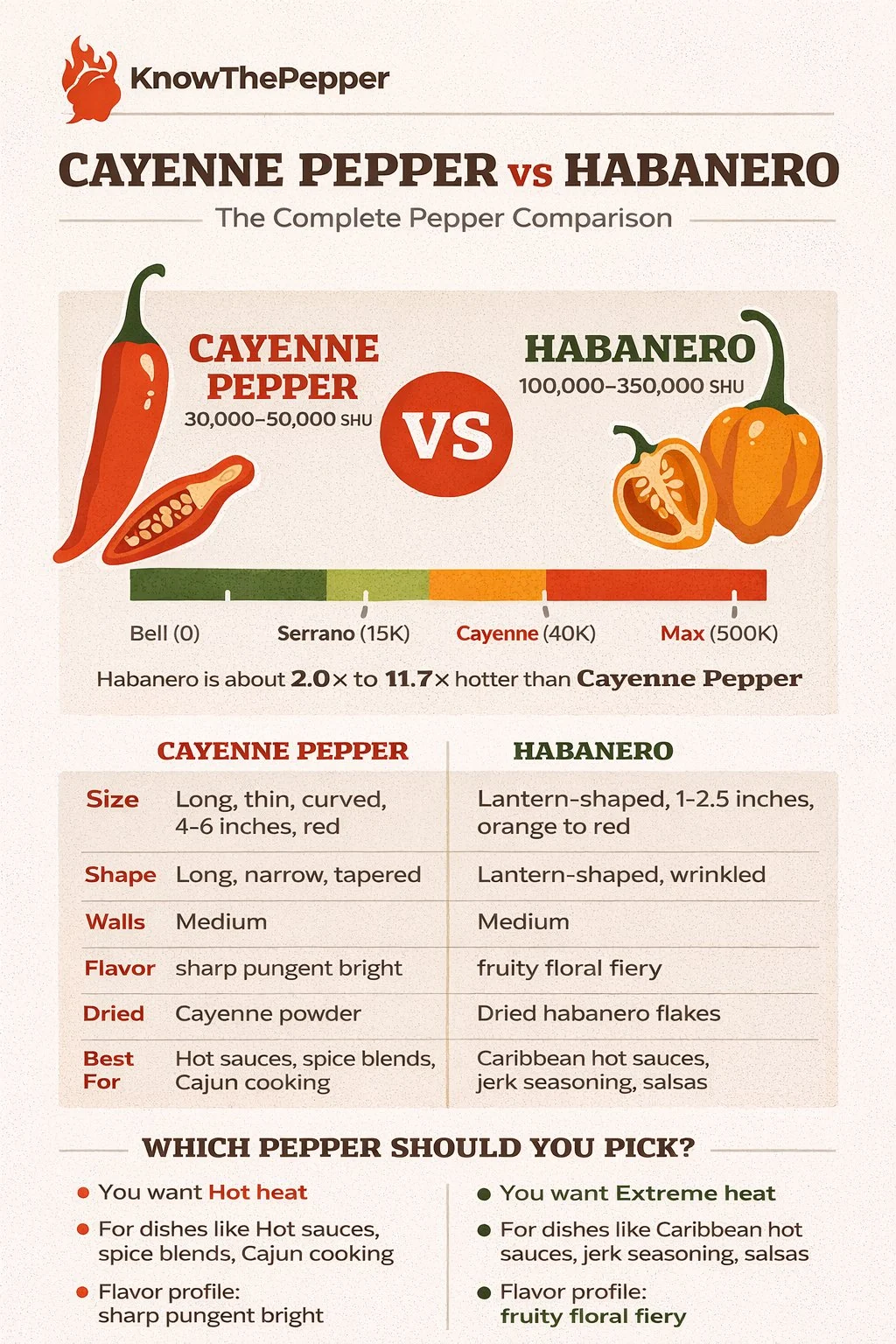
Now the numbers: cayenne sits at 30,000-50,000 SHU (though data on this specific listing was incomplete, the widely accepted range from the Chile Pepper Institute places it there). Habanero registers 100,000-350,000 SHU, making it a member of the extra-hot pepper category by any standard measure.
Against a jalapeño baseline of roughly 2,500-8,000 SHU, cayenne lands about 6-20x hotter than a jalapeño. Habanero? Somewhere between 12-140x hotter, depending on which end of each range you're comparing. That's not a typo — habanero's upper range is genuinely extreme.
The Scoville scale's quantitative testing method reveals another layer: habanero's heat lingers. Capsaicin concentration in C. chinense varieties tends to bind more persistently to TRPV1 receptors — the chemistry behind why that burn won't quit is worth understanding if you cook with these regularly. Cayenne's burn is more water-soluble and dissipates faster, which is why it works so well as a background heat in long-cooked dishes.
Flavor Profile Comparison
Few peppers have traveled as far or worked as hard as cayenne.
Few peppers balance heat and flavor as well as the habanero.
Cayenne's flavor profile is almost deliberately neutral. There's a faint grassiness when fresh, a mild earthiness when dried and ground, but its primary job is heat delivery without flavor interference. That's not a criticism — it's why cayenne powder is in virtually every spice cabinet worldwide. It seasons without competing.
Habanero is the opposite philosophy entirely. The fruity, citrusy character of C. chinense varieties is front and center — you get tropical fruit notes, a hint of apricot or mango, and a floral quality that's unmistakably its own. This flavor complexity is what makes habanero irreplaceable in certain applications; no amount of cayenne mimics it.
Fresh cayenne has a thin flesh and bright red color at maturity, with minimal sweetness. Fresh habanero — typically orange, red, or chocolate — has a waxy skin and noticeably more aromatic depth. Cut one open and the difference is immediate: cayenne smells sharp and vegetal, habanero smells almost perfumed.
Dried and ground, cayenne loses even more of its already-subtle character, becoming primarily a heat vehicle. Habanero powder retains more of its fruity identity, though some aromatics do fade. For dishes where the pepper's flavor should be invisible — chili powders, dry rubs, soups — cayenne is the workhorse. For dishes where the pepper IS the flavor — Caribbean jerk, mango habanero sauces, fruity salsas — habanero is non-negotiable.
The side-by-side heat gap between bird's eye chili and cayenne is a useful reference point if you want to understand where cayenne sits relative to other thin-fleshed hot peppers.
Culinary Uses for Cayenne Pepper and Habanero
Cayenne dominates in applications where heat needs to be precise and controllable. Ground cayenne is a calibration tool — a pinch here, a quarter teaspoon there, added at any stage of cooking without dramatically altering the dish's flavor direction. It's standard in Cajun seasoning blends, Indian spice mixes, dry rubs for barbecue, and anywhere you want background heat that doesn't announce itself.
Habanero demands a different approach. Its intensity means you're typically working with smaller quantities, and its flavor means it's contributing to the dish, not just heating it. Classic applications include Caribbean jerk marinades, mango habanero hot sauce, Yucatecan salsas, and pepper jellies where the fruity notes complement sweetness. Habanero's role in Mexican pepper traditions runs deep — it's a cornerstone of regional cooking in the Yucatan Peninsula.
For substitution, the math matters. If a recipe calls for 1 teaspoon of cayenne and you want to use habanero instead, start with 1/4 teaspoon and expect a flavor shift, not just a heat increase. Going the other direction — replacing habanero with cayenne — requires roughly 3-4x the volume to approximate the heat, but you'll lose all the fruity complexity. That's sometimes acceptable (a beef chili) and sometimes a disaster (a Caribbean hot sauce).
Cayenne integrates seamlessly into dry applications: spice blends, breading mixtures, compound butters. Habanero shines in wet applications where its aromatics can bloom — oils, vinegar-based sauces, fruit salsas. The aji amarillo versus habanero flavor comparison is worth reading if you cook Latin American food and want to understand how fruity heat peppers relate to each other.
Both peppers work well in hot sauces, but with different results. A cayenne hot sauce is clean and sharp — think classic Louisiana-style. A habanero hot sauce is complex and aromatic — think Caribbean or artisan craft bottles. Neither is better; they're different tools.
For growing your own, habanero is a longer-season plant requiring more warmth. Cayenne is more forgiving and productive in shorter summers. A seed-starting full guide for both pepper types will save you a full season of trial and error.
Which Should You Choose?
Cayenne is the utility player — reliable, predictable, and universally applicable. If a recipe needs heat without flavor complexity, cayenne delivers cleanly every time. It's the right call for spice blends, soups, dry rubs, and any application where the pepper should be felt but not tasted.
Habanero is a specialist. Its position in the extra-hot SHU bracket combined with genuine fruity flavor makes it irreplaceable in Caribbean cooking, fruit-forward hot sauces, and dishes where the pepper's character defines the dish. It belongs to the C. chinense botanical family — a species known for producing some of the most aromatic and intensely hot peppers in the world.
The Bulgarian carrot pepper versus habanero comparison illustrates how much variety exists even within the fruity-hot pepper category.
Bottom line: keep both. Cayenne for everyday seasoning, habanero for when you want the pepper to be a flavor statement.
Can You Substitute One for the Other?
Proceed with caution. Habanero is 7× hotter than Cayenne Pepper.
Need a different option altogether? Search for peppers that match your target heat and flavor with precise swap ratios.
Growing Cayenne Pepper vs Habanero
If you’re deciding which pepper to grow at home, consider your climate and patience level. Cayenne Pepper and Habanero have different maturation times and temperature preferences. Hotter varieties generally need a longer, warmer growing season to develop their full capsaicin content. Our zone-based planting date tool can pinpoint the best sowing window for your area.
Cayenne is one of the more forgiving hot peppers to grow, which explains its global reach. Start seeds indoors 8-10 weeks before last frost.
For practical guidance on growing cayenne from transplant to harvest, the key variables are consistent heat and full sun. Cayenne wants at least 6-8 hours of direct light daily and struggles in cool, wet summers.
Transplant outdoors once nighttime temps stay above 55°F. Space plants 18-24 inches apart.
Starting habaneros from seed requires patience. Germination takes 10–21 days at soil temperatures of 80–85°F — a heat mat is not optional, it's essential.
Transplant seedlings outdoors only after nighttime temperatures stay consistently above 55°F. Habaneros are frost-intolerant and will stall in cold soil.
Full sun — at least 6–8 hours daily — is non-negotiable. In containers, use a 5-gallon minimum; habaneros develop substantial root systems.
History & Origin of Cayenne Pepper and Habanero
Both peppers carry centuries of culinary heritage. Cayenne Pepper traces its roots to French Guiana, while Habanero originates from Mexico. Understanding their backstory helps explain why each pepper developed its distinctive traits.
Buying & Storage
Whether you’re shopping for Cayenne Pepper or Habanero, the same quality indicators apply. Fresh peppers should feel firm and heavy for their size, with taut, glossy skin and no soft or wet spots. Minor stem cracks known as “corking” are perfectly normal and often indicate a mature, flavorful pod.
- Firm pods with taut skin and consistent color
- Should feel heavy relative to size
- Minor stem cracks (“corking”) are normal
- Avoid anything soft, shriveled, or with dark wet spots
- Fresh: Paper bag, crisper drawer — 1–2 weeks
- Frozen: Wash, dry, freeze on sheet pan — 6+ months
- Dried: Airtight, away from light — up to 1 year
The Verdict: Cayenne Pepper vs Habanero
Cayenne Pepper and Habanero occupy very different positions on the heat spectrum. Habanero delivers 7× more heat with its distinctive fruity and citrusy character. Cayenne Pepper, with its neutral and peppery profile, excels in everyday cooking.
Frequently Asked Questions
Related Comparisons
Sources pending verification.