
Carolina Reaper vs Pepper X Showdown: Heat, Flavor & Uses
The Carolina Reaper held the Guinness World Record title from 2013 to 2023, clocking in at 1,400,000-2,200,000 SHU. Then Ed Curlin released Pepper X, which shattered that ceiling at 2,693,000-3,180,000 SHU — a jump significant enough to reclaim the record. Both are C. chinense varieties bred in the USA, but they differ meaningfully in flavor character and how that heat actually lands on your palate.

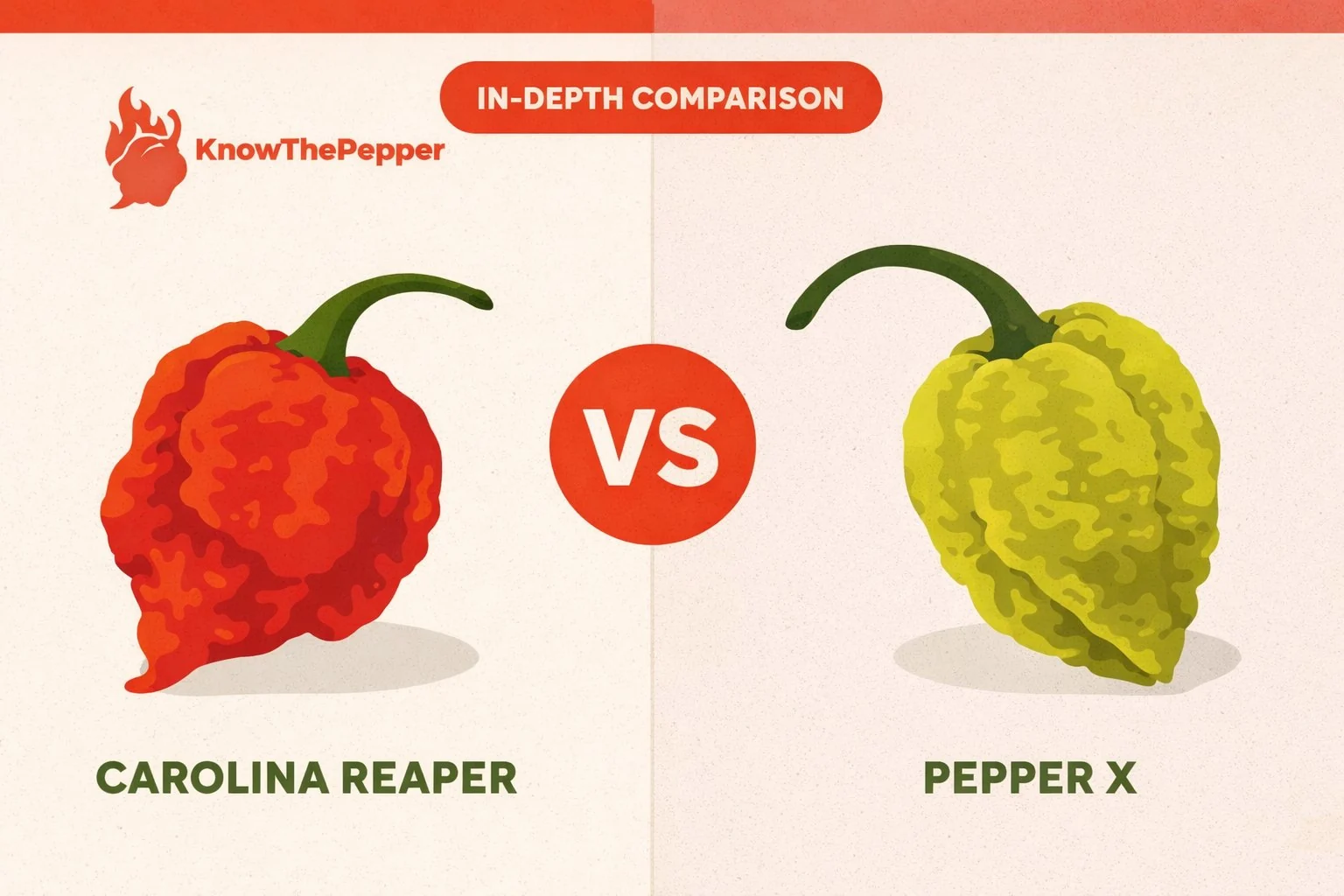
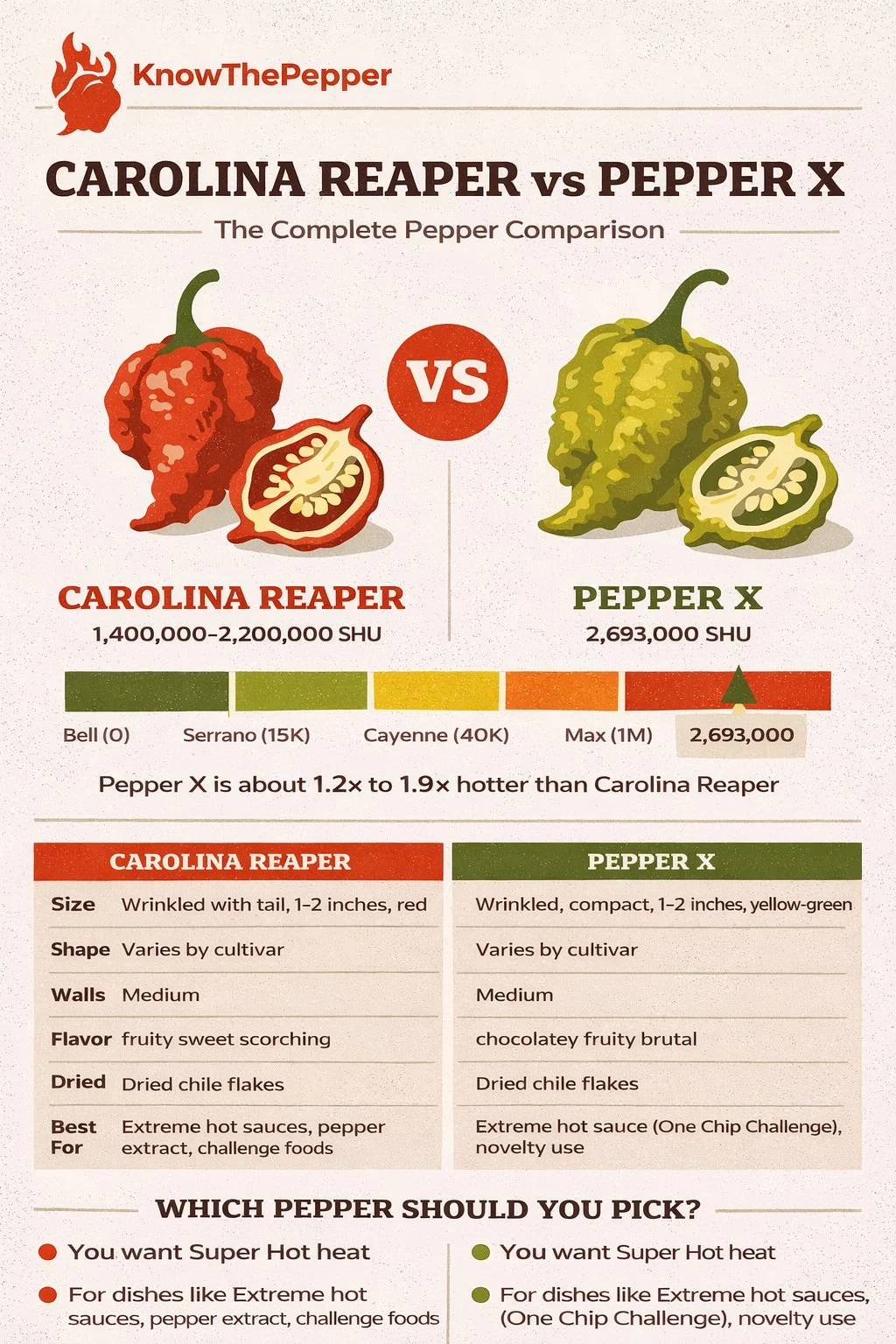
Carolina Reaper measures 1.4M–2.2M SHU while Pepper X registers 2.7M–3.2M SHU — roughly equal in heat. Carolina Reaper is known for its fruity and sweet flavor (C. chinense), while Pepper X offers fruity and earthy notes (C. chinense).
- Species: Both are C. chinense
- Best for: Carolina Reaper excels in hot sauces and extreme dishes, Pepper X in hot sauces and spicy dishes
Carolina Reaper
Super-HotPepper X
Super-HotCarolina Reaper vs Pepper X Comparison
Carolina Reaper vs Pepper X Heat Levels
The gap between these two peppers is not trivial. The Carolina Reaper ranges from 1,400,000 to 2,200,000 SHU — already a figure that puts it at the extreme end of the super-hot pepper category. Pepper X pushes that to 2,693,000-3,180,000 SHU, a peak that is roughly 44% hotter at the upper end.
To put those numbers against a real-world reference: a typical Anaheim pepper sits around 1,000-2,500 SHU. That means the Carolina Reaper is approximately 560 to 880 times hotter than an Anaheim. Pepper X? Somewhere between 1,077 and 1,272 times hotter than that same mild green chile.
Both peppers activate the TRPV1 heat receptor response with capsaicin concentrations that overwhelm the receptor repeatedly — the burn does not come and go quickly. With the Reaper, expect a delayed onset of about 30-45 seconds, then a sustained wave that can last 20-30 minutes. Pepper X reportedly hits faster and lingers longer, with users describing full-body heat radiating outward from the chest.
The Scoville scale's measurement methodology for both peppers used High-Performance Liquid Chromatography (HPLC), not the older organoleptic taste test, so these SHU figures are chemically verified. Both fall squarely within the American-bred super-hot lineage that Ed Curlin has spent decades cultivating at PuckerButt Pepper Company in South Carolina.
Flavor Profile Comparison
Behind the Carolina Reaper's scorpion-tailed, wrinkled exterior is a flavor profile that catches first-timers completely off guard.
At 3,180,000 SHU at its peak, Pepper X doesn't just push the boundary of what a pepper can be - it redefines it.
Heat aside, these two peppers taste noticeably different — and that matters if you actually plan to cook with them rather than just survive them.
The Carolina Reaper leads with a pronounced fruity sweetness on first contact. Many people describe it as tropical — hints of cherry and citrus before the capsaicin cascade takes over. That sweetness is real, not imagined, and it makes the Reaper somewhat more approachable in small quantities as a flavoring agent. The fruity top note pairs logically with mango, pineapple, and vinegar-based hot sauces.
Pepper X runs earthier. The fruity element is still present — both share the C. chinense aromatic profile — but the earthy undertone gives it a deeper, more complex character that some describe as almost chocolatey or umami-adjacent. This makes Pepper X slightly better suited to savory applications where you want heat plus body rather than heat plus brightness.
Aroma-wise, the Reaper smells intensely floral when fresh-cut, almost aggressively so. Pepper X is more muted on the nose but opens up during cooking. Neither pepper should be handled without gloves — the oils absorb through skin quickly and the experience is unpleasant long before you eat anything.
For cooking where flavor matters as much as fire, the Reaper's fruit-forward profile gives you more to work with at the micro-dosing level. Pepper X rewards slow extraction — long infusions, fermented mashes, or oil-based preparations where the earthy complexity develops over time.
Culinary Uses for Carolina Reaper and Pepper X
Neither pepper belongs in everyday cooking without serious dilution, but both have legitimate culinary applications when used with precision.
Carolina Reaper works best in hot sauces, where a few grams per batch deliver enough heat for an entire bottle. Its fruity sweetness makes it a natural fit alongside Trinidad Moruga Scorpion-level fruity heat profiles in blended sauces — the flavor compatibility is high. Standard ratio for homemade hot sauce: 1-3 grams of dried Reaper powder per 12-ounce batch, adjusting down if your audience is heat-sensitive.
For chili oil or infused vinegar, a single fresh Reaper split lengthwise in 16 ounces of neutral oil, steeped for 48-72 hours at room temperature, produces a usable product. Strain thoroughly.
Pepper X shines in fermented applications. Its earthy depth develops well during lacto-fermentation — combine it with roasted garlic and a small amount of ghost pepper to balance the heat load and create a paste that works in ramen, barbecue glazes, or dry rubs. Because Pepper X hits harder and faster, use roughly 30% less by weight compared to Reaper in any recipe you're adapting.
Both peppers dry and powder exceptionally well. Dried powder stores for 12-18 months in an airtight container away from light. A pinch — literally 0.1 to 0.3 grams — is enough to transform a pot of soup or a marinade.
For anyone interested in step-by-step cultivation at home, both varieties require a long growing season (150+ days from transplant) and perform best in zones 9-11 or in containers brought indoors. Neither is a beginner grow.
Avoid using either pepper raw in fresh salsas or guacamole unless your guests have explicitly signed a waiver. The Dragons Breath versus Pepper X heat contrast is worth reading if you want context on where Pepper X sits against other record-contenders in sauce applications.
Which Should You Choose?
If you want the more versatile of the two, the Carolina Reaper wins on flavor utility. Its fruity sweetness integrates into more sauce and food applications without dominating everything around it. The heat is still ferocious — see how it stacks up against the 7 Pot Douglah's dense, chocolate-tinged burn for a useful calibration — but it's the more workable ingredient.
Pepper X is for people who specifically want the upper limit. It holds the current record, delivers more complex earthy flavor, and rewards patient extraction techniques. It is not more useful in the kitchen — it's just more extreme.
For hot sauce makers: start with the Reaper. For fermentation projects or pushing your personal heat ceiling: Pepper X. Both belong to the broader C. chinense botanical group that includes the world's most extreme peppers, and both were bred by the same person — so the quality floor is the same. The choice comes down to whether you want fruit-forward fire or earthy, record-setting heat.
Can You Substitute One for the Other?
Proceed with caution. Pepper X is 1× hotter than Carolina Reaper.
Need a different option altogether? Search for peppers that match your target heat and flavor with precise swap ratios.
Growing Carolina Reaper vs Pepper X
If you’re deciding which pepper to grow at home, consider your climate and patience level. Carolina Reaper and Pepper X have different maturation times and temperature preferences. Hotter varieties generally need a longer, warmer growing season to develop their full capsaicin content. Our zone-based planting date tool can pinpoint the best sowing window for your area.
Starting Carolina Reapers from seed requires patience - germination takes 14 to 21 days at soil temperatures between 80-85°F. Bottom heat from a seedling mat is essentially non-negotiable for reliable germination rates.
Transplant outdoors only after nighttime temperatures stay consistently above 60°F. The plants need a long season - 150 to 180 days from transplant to mature red pods - so starting seeds indoors 10 to 12 weeks before last frost is standard.
Full sun and well-draining soil with a pH around **6.0 to 6.
Pepper X seeds are still limited in commercial availability - source from Puckerbutt Pepper Company directly or from reputable specialty vendors who can verify authenticity. Counterfeit seeds labeled as Pepper X are common.
Start seeds indoors 10-12 weeks before last frost. Germination requires 85-90°F soil temperature - a heat mat is non-negotiable.
Transplant into containers or raised beds with **well-draining, slightly acidic soil (pH 6.0-6.
History & Origin of Carolina Reaper and Pepper X
Both peppers carry centuries of culinary heritage. Carolina Reaper traces its roots to USA, while Pepper X originates from USA. Understanding their backstory helps explain why each pepper developed its distinctive traits.
Buying & Storage
Whether you’re shopping for Carolina Reaper or Pepper X, the same quality indicators apply. Fresh peppers should feel firm and heavy for their size, with taut, glossy skin and no soft or wet spots. Minor stem cracks known as “corking” are perfectly normal and often indicate a mature, flavorful pod.
- Firm pods with taut skin and consistent color
- Should feel heavy relative to size
- Minor stem cracks (“corking”) are normal
- Avoid anything soft, shriveled, or with dark wet spots
- Fresh: Paper bag, crisper drawer — 1–2 weeks
- Frozen: Wash, dry, freeze on sheet pan — 6+ months
- Dried: Airtight, away from light — up to 1 year
The Verdict: Carolina Reaper vs Pepper X
Carolina Reaper and Pepper X sit in the same heat tier but serve different roles. Pepper X delivers its distinctive fruity and earthy character. Carolina Reaper, with its fruity and sweet profile, excels in everyday cooking.
Frequently Asked Questions
Related Comparisons
Sources pending verification.
