Bird's Eye Chili vs Peri Peri – Heat & Flavor Compared
Bird's eye chili and peri-peri are two of the world's most recognizable hot peppers, both punching well above their small size. Bird's eye clocks in at 50,000-100,000 SHU with a sharp, peppery bite rooted in Southeast Asian cooking, while peri-peri carries a more complex, citrusy heat that defines South African and Portuguese cuisine. Understanding their differences helps you pick the right one — or use them interchangeably with confidence.

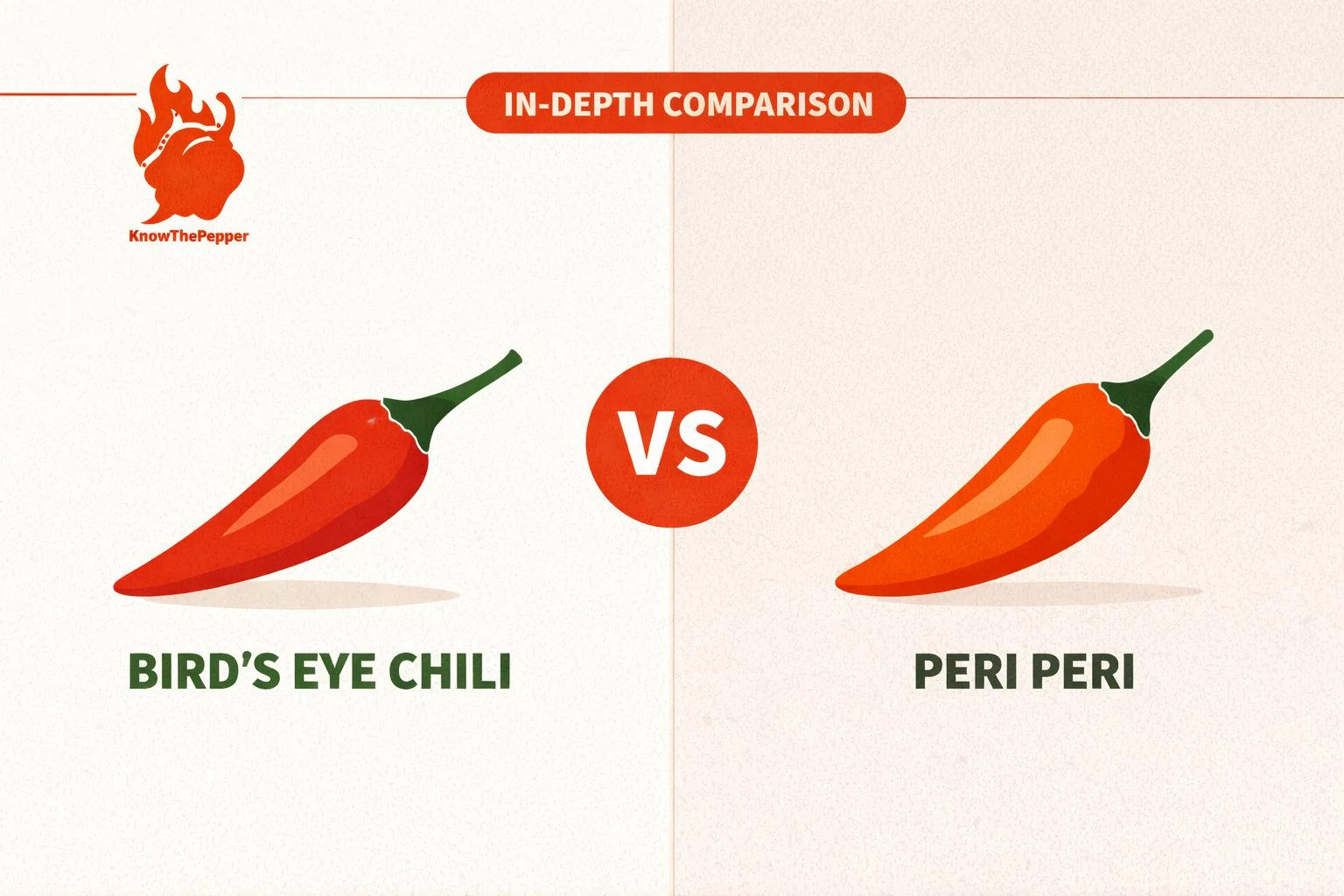
Bird's Eye Chili measures 50K–100K SHU while Peri Peri registers 50K–175K SHU — making Peri Peri 2× hotter. Bird's Eye Chili is known for its peppery and bright flavor (C. annuum), while Peri Peri offers citrusy and hot notes (C. frutescens).
- Heat difference: Peri Peri is 2× hotter
- Species: C. annuum vs C. frutescens
- Best for: Bird's Eye Chili excels in hot sauces and extreme dishes, Peri Peri in hot sauces and spicy dishes
Bird's Eye Chili
Extra-HotPeri Peri
Extra-HotBird's Eye Chili vs Peri Peri Comparison
Bird's Eye Chili vs Peri Peri Heat Levels
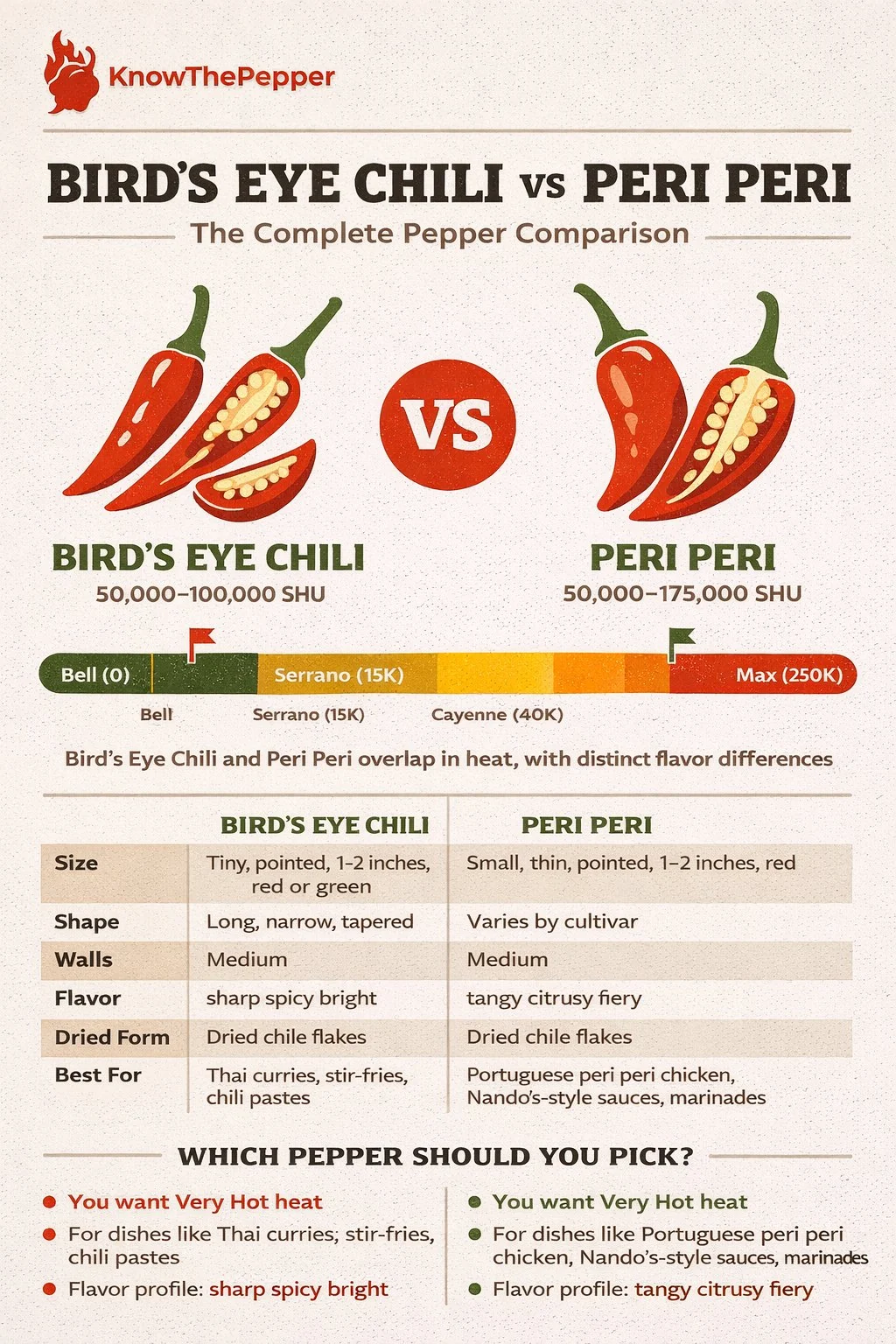
Bird's eye chili sits firmly in the hot pepper SHU bracket at 50,000-100,000 Scoville Heat Units. That puts it roughly 5-10 times hotter than a serrano (which averages around 10,000-15,000 SHU), and it hits fast — the capsaicin lands on the front of your tongue almost immediately.
Peri-peri pepper (also called African bird's eye or piri piri) overlaps significantly with bird's eye chili in heat range, typically measured between 50,000-175,000 SHU depending on growing conditions and variety. At its upper range, peri-peri can push nearly 12 times hotter than a serrano, making it meaningfully fiercer than a standard bird's eye at peak ripeness.
The character of the burn differs too. Bird's eye delivers a clean, sharp heat that builds quickly and dissipates at a moderate pace — you feel it, you respect it, and it fades within a few minutes. Peri-peri's heat tends to linger longer, with a slightly oilier capsaicin profile that coats the palate. Both peppers contain primarily capsaicin and dihydrocapsaicin, the compounds that bind to TRPV1 receptors — if you want the full chemistry behind how capsaicin triggers pain receptors, that's worth a read on its own.
For the Scoville rating methodology and how these numbers get assigned through organoleptic testing and HPLC rating standards, the process matters — peri-peri's wide SHU variance reflects genuine inconsistency across growing regions, not measurement error.
Flavor Profile Comparison
Size is genuinely deceptive here.
The first time I encountered peri peri in its raw form - not the bottled sauce, but the actual fresh pepper - I was struck by how the citrus hit before the heat.
Bird's eye chili has a flavor that cuts right to the point: peppery, bright, and slightly vegetal. There's a crisp quality to fresh bird's eye that dried versions only partially preserve. The heat is almost inseparable from the flavor — it's not a pepper you use for complexity, it's one you use for intensity and that distinctive Thai-style sharpness.
Peri-peri brings more to the table in terms of flavor layering. Ripe peri-peri has citrus-forward notes — sometimes described as lemon-like or faintly fruity — with an underlying earthiness that bird's eye lacks. This is part of why peri-peri marinades became a cornerstone of Portuguese-African cooking: the pepper contributes flavor depth alongside heat, not just heat alone.
Aroma is another point of separation. Bird's eye smells sharp and green when fresh, almost grassy. Peri-peri has a warmer, slightly smoky aroma even raw, which intensifies dramatically when dried or roasted.
In terms of regional cooking traditions from Thailand and Southeast Asia, bird's eye is used whole, sliced, or pounded — always contributing that aggressive brightness. Peri-peri is more commonly processed into sauces, oils, and marinades where its flavor complexity gets a chance to develop. Both peppers are used dried and powdered, but peri-peri powder has a noticeably more complex aroma profile than dried bird's eye, which tends to taste mostly of heat.
Culinary Uses for Bird's Eye Chili and Peri Peri
Bird's eye chili is the backbone of Thai cooking — pad krapow, green papaya salad, and countless curry pastes rely on it. It's also essential in Vietnamese and Filipino kitchens, where it goes by different names but serves the same function: direct, unambiguous heat. The sharp citrusy brightness of bird's eye vs. jalapeño heat shows just how different this pepper is from milder Western staples.
Use bird's eye whole in stir-fries and soups (fish it out before serving if you want heat without crunch), or slice it thin and add raw to dipping sauces. Dried and crushed, it works as a finishing spice on noodles, rice, and grilled meats.
Peri-peri's greatest culinary contribution is the sauce that bears its name. Peri-peri sauce — built from the pepper, citrus, garlic, and oil — is the defining marinade for Portuguese-style grilled chicken. The pepper's flavor complexity makes it ideal for long-marination applications where bird's eye would just add undifferentiated heat.
For substitution: if a recipe calls for peri-peri and you only have bird's eye, use a 1:1 ratio but add a small squeeze of lemon juice and a pinch of smoked paprika to approximate the flavor depth. Going the other direction — bird's eye in place of peri-peri — works cleanly at 1:1, though you lose some of the citrus character.
The side-by-side heat profile vs. siling labuyo is worth checking if you cook Filipino food, since those two are often confused in markets. Similarly, the key differences between bird's eye and Thai chili clarify what's often a naming inconsistency rather than a botanical one.
Both peppers dry exceptionally well. Dehydrate at 135°F (57°C) for 8-10 hours, or air-dry in a warm spot for 2-3 weeks. Store dried peppers in an airtight jar away from light — they hold flavor for up to 12 months.
Which Should You Choose?
If you're cooking Thai, Vietnamese, or Filipino food, bird's eye chili is the correct tool. Its sharp, peppery heat is calibrated to those flavor systems, and substituting peri-peri would introduce citrus notes that don't belong.
For grilled meats, marinades, and anything Portuguese or South African in character, peri-peri wins on flavor complexity. The citrus and earthy undertones it contributes to a sauce or marinade are genuinely difficult to replicate with bird's eye alone.
Pure heat seekers will find peri-peri capable of going higher — its upper range of 175,000 SHU outpaces bird's eye's ceiling of 100,000 SHU. But day-to-day, both peppers occupy similar heat territory and can sub for each other in a pinch.
The botanical classification within C. annuum applies to bird's eye chili, making it a close relative of many common peppers despite its outsized heat. Both are worth keeping on hand — they're small, store well dried, and cover different flavor territories that rarely overlap completely.
Can You Substitute One for the Other?
Proceed with caution. Peri Peri is 2× hotter than Bird's Eye Chili.
Need a different option altogether? Search for peppers that match your target heat and flavor with precise swap ratios.
Growing Bird's Eye Chili vs Peri Peri
If you’re deciding which pepper to grow at home, consider your climate and patience level. Bird's Eye Chili and Peri Peri have different maturation times and temperature preferences. Hotter varieties generally need a longer, warmer growing season to develop their full capsaicin content. Our zone-based planting date tool can pinpoint the best sowing window for your area.
Bird's eye chili is among the more forgiving hot peppers to grow, provided you give it heat and full sun. Start seeds indoors 8-10 weeks before last frost - these need soil temperatures above 75°F to germinate reliably.
The plant stays compact, typically 18-24 inches tall, which makes it suitable for containers. A 3-gallon pot works fine for a single plant.
For pest and disease management, see the practical guidance on common pepper pests and diseases - aphids and spider mites are the main threats, particularly in dry conditions. Good airflow around plants prevents fungal issues.
Peri peri grows best in full sun with well-draining soil and consistent warmth - it's a tropical species that does not tolerate frost. Start seeds indoors 10-12 weeks before last frost, keeping soil temperature at 80-85°F for germination.
The plants stay compact, typically reaching 18-24 inches, which makes them workable in containers. A 5-gallon pot with quality potting mix and a slow-release fertilizer will carry a plant through a full season.
For comparison, the cultivation approach for its close botanical relative is nearly identical - both prefer the same temperature ranges and soil conditions.
History & Origin of Bird's Eye Chili and Peri Peri
Both peppers carry centuries of culinary heritage. Bird's Eye Chili traces its roots to Thailand, while Peri Peri originates from Africa. Understanding their backstory helps explain why each pepper developed its distinctive traits.
Buying & Storage
Whether you’re shopping for Bird's Eye Chili or Peri Peri, the same quality indicators apply. Fresh peppers should feel firm and heavy for their size, with taut, glossy skin and no soft or wet spots. Minor stem cracks known as “corking” are perfectly normal and often indicate a mature, flavorful pod.
- Firm pods with taut skin and consistent color
- Should feel heavy relative to size
- Minor stem cracks (“corking”) are normal
- Avoid anything soft, shriveled, or with dark wet spots
- Fresh: Paper bag, crisper drawer — 1–2 weeks
- Frozen: Wash, dry, freeze on sheet pan — 6+ months
- Dried: Airtight, away from light — up to 1 year
The Verdict: Bird's Eye Chili vs Peri Peri
Bird's Eye Chili and Peri Peri sit in the same heat tier but serve different roles. Peri Peri delivers 2× more heat with its distinctive citrusy and hot character. Bird's Eye Chili, with its peppery and bright profile, excels in everyday cooking.
Frequently Asked Questions
Related Comparisons
Sources pending verification.