Bell Pepper vs Poblano Pepper – Heat & Flavor Compared
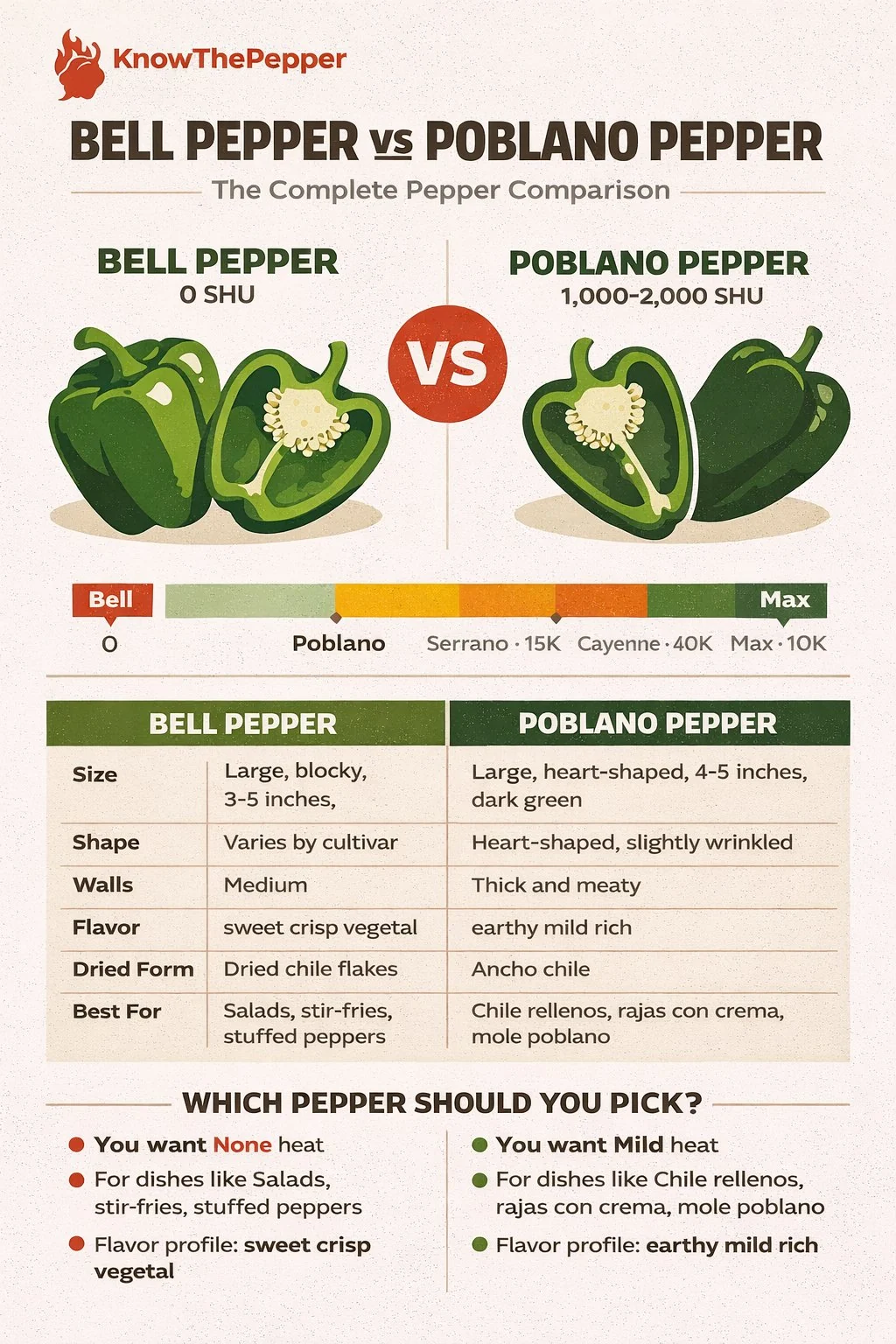
Bell peppers register 0 SHU - no heat whatsoever - while poblanos land between 1,000 and 2,000 SHU, making them mild by most standards but a genuine step up from zero. The flavor gap is just as interesting: bell peppers bring sweetness and crunch, poblanos bring earthiness and a subtle complexity that transforms when roasted. If you're deciding which to reach for, the answer usually comes down to whether you want heat in the picture at all.

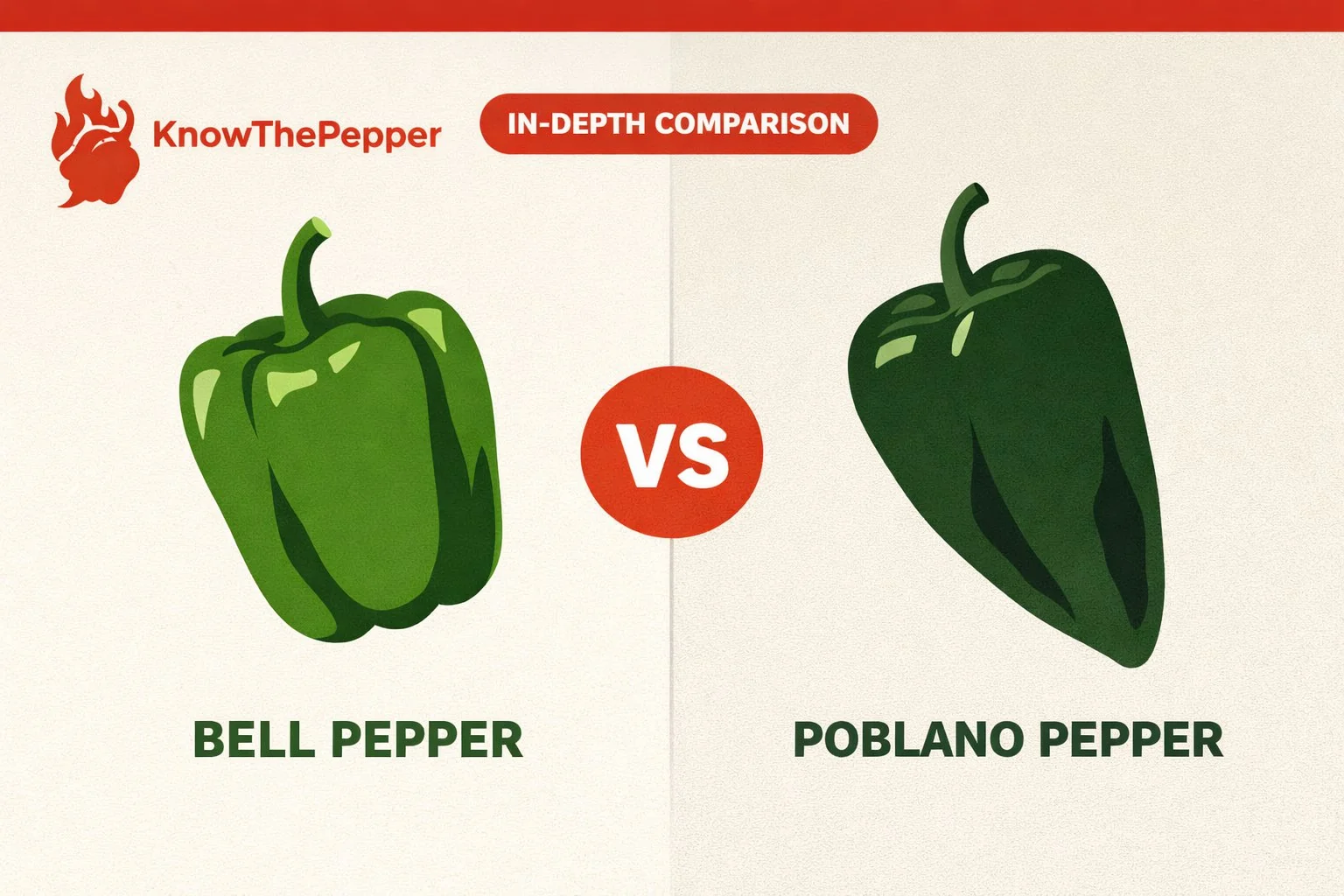
Bell Pepper measures 0–0 SHU while Poblano Pepper registers 1K–2K SHU — roughly equal in heat. Bell Pepper is known for its sweet and crisp flavor (C. annuum), while Poblano Pepper offers earthy and rich notes (C. annuum).
- Species: Both are C. annuum
- Best for: Bell Pepper excels in everyday cooking and salsas, Poblano Pepper in fresh salsas and mild recipes
Bell Pepper vs Poblano Pepper Comparison
Bell Pepper vs Poblano Pepper Heat Levels
The first time I grabbed a poblano thinking it would behave like a bell pepper in a stuffed pepper recipe, dinner got more interesting than planned. That experience clarified something worth stating plainly: 0 SHU and 1,000-2,000 SHU are not the same thing, even if both sit near the bottom of the Scoville unit definition.
Bell peppers are the only common culinary pepper with a confirmed zero capsaicin content. A recessive gene blocks capsaicin production entirely, which is why even the reddest, ripest bell pepper delivers no burn. They occupy the zero-heat sweet pepper category without exception.
Poblanos sit at 1,000-2,000 SHU. For reference, a dried guajillo's moderate dried-chile warmth runs roughly 2,500-5,000 SHU, meaning poblanos are about half as hot as a guajillo and roughly one-eighth the heat of an average jalapeño. That's mild - but not zero. On a plate, the difference registers as a low, slow warmth rather than any kind of sharp bite.
Heat variability matters with poblanos in a way it doesn't with bells. Individual poblano pods can swing from nearly imperceptible to a noticeable tingle depending on growing conditions - water stress and high temperatures during development tend to push capsaicin production upward. Bell peppers simply don't have this variation; every pod is zero.
The burn character of poblano heat, explained by how capsaicin triggers heat receptors, is diffuse and short-lived. It fades quickly and never builds the cumulative fire you get from hotter chiles. For heat-sensitive cooks, that distinction matters.
Flavor Profile Comparison
Bell peppers are the only members of [C.
Pick up a fresh poblano and the first thing you notice is the weight.
Bell peppers have a flavor that shifts dramatically with ripeness. Green bells are grassy, slightly bitter, and vegetal - polarizing enough that plenty of people dislike them. Red, orange, and yellow bells are sweeter versions of the same pepper, with the bitterness replaced by fruity, almost candy-like notes. The crunch is consistent across all colors, and the flavor is bright rather than deep.
Poblanos operate in a different register entirely. Raw poblanos taste earthy, mildly vegetal, and faintly herbal - not as sharp as a green bell but with more complexity underneath. Roast them, and something genuinely interesting happens: the skin chars, the flesh softens, and a smoky, almost chocolatey depth emerges that no amount of cooking coaxes out of a bell pepper.
This roasting transformation is the defining culinary characteristic of the poblano. It's why the pepper anchors dishes like chiles rellenos and chile verde rather than appearing raw in salads. The earthy dried-chile character of chilacas follows a similar flavor arc - both peppers develop richness through heat application that raw preparation can't replicate.
Aroma is another point of separation. Bell peppers smell fresh and green when cut; poblanos have a more complex, slightly resinous scent that intensifies dramatically when exposed to flame or dry heat. If you're building a dish where roasted pepper flavor is the backbone, poblanos deliver in a way bells simply cannot.
For raw applications - salads, crudités, fresh salsas - bell peppers win on sweetness and texture. The mild cubanelle pepper vs. poblano breakdown shows a similar pattern: thinner-walled mild peppers tend to favor raw preparations while poblanos lean toward cooked ones.
Culinary Uses for Bell Pepper and Poblano Pepper
Bell peppers show up everywhere precisely because they offend nobody. Raw in salads, stir-fried with onions, stuffed and baked, blended into sauces - the zero heat and reliable sweetness make them a default ingredient across dozens of cuisines. Red bells roast beautifully for spreads and dips. Green bells hold their shape under high heat better than their sweeter counterparts, which is why they're the standard in fajitas and Philly-style dishes.
Poblanos are more specialized but arguably more rewarding. Chiles rellenos - roasted poblanos stuffed with cheese or meat, battered and fried - is the signature application, and nothing substitutes cleanly for the pepper's specific combination of size, wall thickness, and roasted flavor. Rajas con crema (roasted poblano strips in cream sauce) is another classic where the pepper's earthiness is the entire point of the dish.
For substitution: if a recipe calls for bell peppers and you only have poblanos, reduce the quantity by about 20% and expect mild heat to enter the dish. Going the other direction - replacing poblanos with bells - works structurally (similar size and wall thickness) but strips out all the heat and most of the complexity. Adding a small amount of ancho or pasilla powder can partially compensate for the lost depth.
Poblanos dried become ancho chiles, a transformation that concentrates flavor and shifts the heat profile slightly. Bell peppers don't have an equivalent dried form with culinary significance.
For stuffed pepper recipes where heat needs to stay low, bells are the safer choice. For anything involving roasting, mole bases, or Mexican-origin preparations, poblanos aren't really interchangeable - they're the ingredient, not a variable. The bell pepper substitutes guide covers ratio-specific swaps if you need to navigate between the two in a pinch.
Which Should You Choose?
Bell peppers are the right call when heat is off the table entirely - cooking for kids, heat-sensitive guests, or dishes where sweetness and crunch are the point. Their flavor is reliable and their size makes them ideal for stuffing, roasting whole, or slicing raw.
Poblanos are the better choice when you want mild complexity rather than zero heat. The roasted flavor they develop is genuinely irreplaceable, and their size makes them equally good candidates for stuffed preparations. Anyone building toward Mexican or Southwestern cooking will find poblanos more versatile within that context than bells.
The bell pepper vs. poblano heat and flavor matchup ultimately isn't a competition - they're tools for different jobs. Keep both around and the question of which to use answers itself based on whether the dish wants sweetness or earthiness, raw crunch or roasted depth. For those exploring similar mild-pepper decisions, the poblano substitutes page offers practical alternatives worth knowing.
Can You Substitute One for the Other?
Yes — direct substitution works. Bell Pepper and Poblano Pepper are close enough in heat to swap at roughly 1:1. The main difference will be flavor. For more swap options, explore ranked alternatives with conversion ratios.
Growing Bell Pepper vs Poblano Pepper
If you’re deciding which pepper to grow at home, consider your climate and patience level. Bell Pepper and Poblano Pepper have different maturation times and temperature preferences. Hotter varieties generally need a longer, warmer growing season to develop their full capsaicin content. Our zone-based planting date tool can pinpoint the best sowing window for your area.
Bell peppers are the most rewarding slow-burn crop in a kitchen garden, but they demand patience. Start seeds indoors 8-10 weeks before your last frost date - a full step-by-step walkthrough for timing transplants correctly makes a real difference in first-year results.
Germination needs warmth: soil temperature of 80-85°F is ideal, and a heat mat is worth the investment. Seedlings emerge in 10-14 days and grow slowly at first.
In the garden, bells need full sun (6-8 hours minimum), consistent moisture, and well-draining soil amended with compost. Space plants 18-24 inches apart.
Poblanos are rewarding garden plants, but they need a long season. Start seeds indoors 10-12 weeks before your last frost date — this is one case where rushing transplant time costs you yield.
For a full breakdown of seed-starting methods and timing, the complete pepper growing guide covers everything from soil mix to hardening off. Poblanos specifically want consistent moisture — irregular watering leads to blossom end rot and cracked fruit.
Transplant into full sun once nighttime temps stay above 55°F. Space plants 18-24 inches apart; they can reach 3 feet tall with good conditions.
History & Origin of Bell Pepper and Poblano Pepper
Both peppers carry centuries of culinary heritage. Bell Pepper traces its roots to Mexico, while Poblano Pepper originates from Mexico. Understanding their backstory helps explain why each pepper developed its distinctive traits.
Buying & Storage
Whether you’re shopping for Bell Pepper or Poblano Pepper, the same quality indicators apply. Fresh peppers should feel firm and heavy for their size, with taut, glossy skin and no soft or wet spots. Minor stem cracks known as “corking” are perfectly normal and often indicate a mature, flavorful pod.
- Firm pods with taut skin and consistent color
- Should feel heavy relative to size
- Minor stem cracks (“corking”) are normal
- Avoid anything soft, shriveled, or with dark wet spots
- Fresh: Paper bag, crisper drawer — 1–2 weeks
- Frozen: Wash, dry, freeze on sheet pan — 6+ months
- Dried: Airtight, away from light — up to 1 year
The Verdict: Bell Pepper vs Poblano Pepper
Bell Pepper and Poblano Pepper occupy very different positions on the heat spectrum. Poblano Pepper delivers its distinctive earthy and rich character. Bell Pepper, with its sweet and crisp profile, excels in everyday cooking.
Frequently Asked Questions
Related Comparisons
Sources pending verification.