
Ancho Pepper vs Guajillo Pepper: Key Differences Explained
Ancho and guajillo are two of Mexico's most essential dried chiles, each with distinct heat levels, flavor profiles, and culinary roles. The ancho brings deep, chocolatey sweetness with minimal heat, while the guajillo offers a brighter, tangier punch with noticeably more fire. Understanding which to reach for can make or break a mole, a birria, or a simple red sauce.

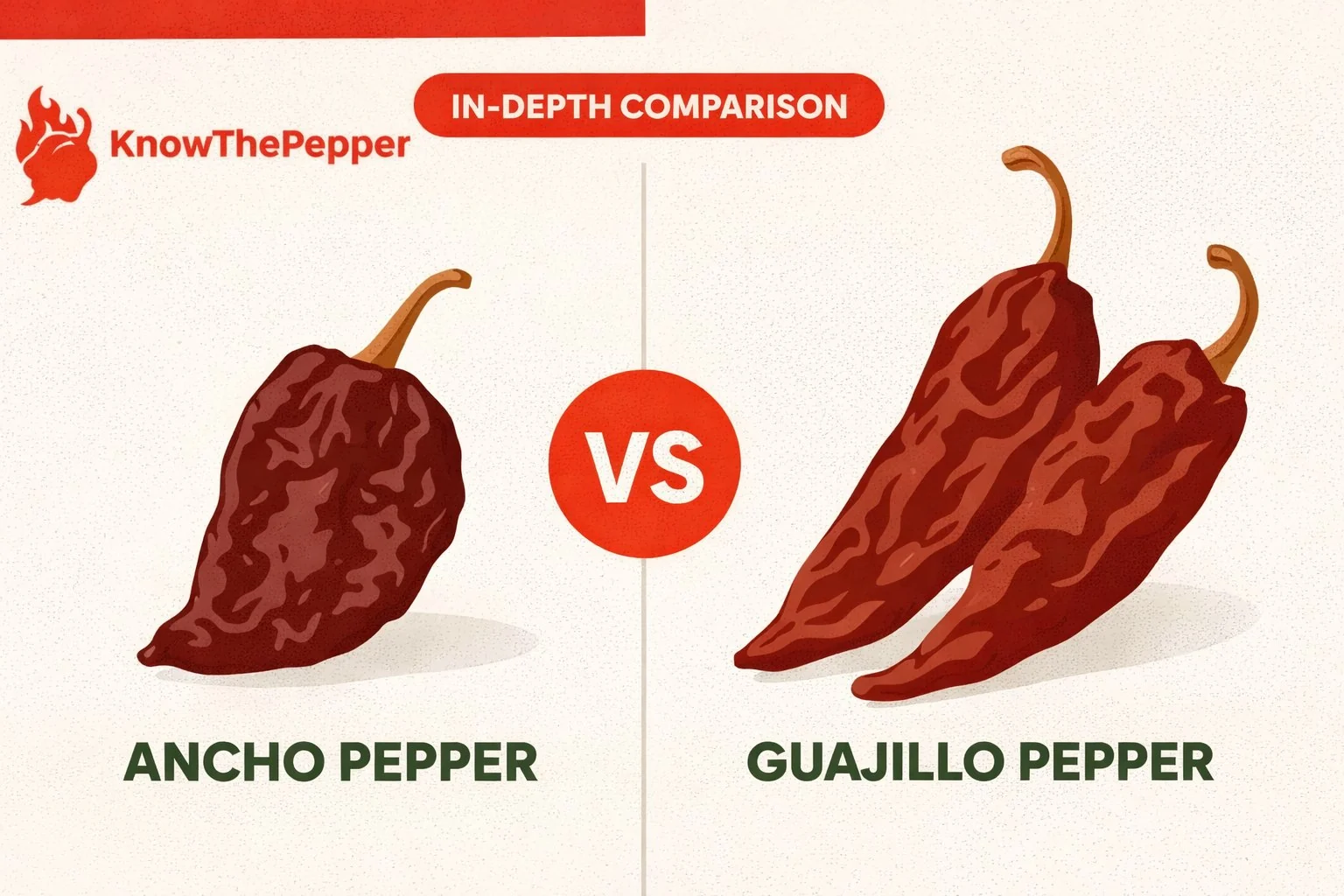
Ancho Pepper measures 1K–2K SHU while Guajillo Pepper registers 3K–5K SHU — making Guajillo Pepper 3× hotter. Ancho Pepper is known for its sweet and raisin-like flavor (C. annuum), while Guajillo Pepper offers tangy and sweet notes (C. annuum).
- Heat difference: Guajillo Pepper is 3× hotter
- Species: Both are C. annuum
- Best for: Ancho Pepper excels in everyday cooking and salsas, Guajillo Pepper in fresh salsas and mild recipes
Ancho Pepper
MediumGuajillo Pepper
MediumAncho Pepper vs Guajillo Pepper Comparison
Ancho Pepper vs Guajillo Pepper Heat Levels
Both peppers fall on the milder end of the Scoville scale's rating spectrum, but they are not equals in heat.
Ancho peppers register between 1,000 and 2,000 SHU. That puts them well below a Fresno chile, which typically runs 2,500 to 10,000 SHU — meaning a Fresno can be anywhere from slightly hotter to five times hotter than an ancho at peak heat. In practical terms, ancho heat is barely perceptible to most palates. It's a background warmth, not a burn.
Guajillo peppers come in at 2,500 to 5,000 SHU — overlapping with the low end of Fresno territory and running roughly two to three times hotter than an ancho. That difference matters in dishes where the chile is the primary flavor driver. Guajillo heat has a slow, dry quality that builds in the back of the throat rather than hitting the tip of the tongue.
Neither pepper will challenge heat-tolerant cooks, but the gap between them is meaningful in blended sauces. Swap ancho for guajillo in equal amounts and the dish gets noticeably spicier. The mild-to-medium intensity feel of both peppers makes them approachable for everyday cooking, but guajillo sits firmly toward the upper edge of that range while ancho hugs the floor.
For the why-peppers-burn receptor science that explains why guajillo's heat lingers longer than ancho's, it comes down to capsaicin concentration and how it binds to TRPV1 receptors — guajillo simply delivers more of it.
Flavor Profile Comparison
Long before dried chiles appeared on supermarket shelves, the ancho was already central to Mexican cuisine — a staple ground into sauces, rehydrated for stews, and layered into moles that could take days to prepare.
Long before supermarkets stocked dried chiles by the bag, guajillo peppers were already a cornerstone of Mexican cooking.
Heat is almost secondary here. These two peppers taste genuinely different, and that distinction drives most of the decisions a cook makes when choosing between them.
Ancho is the dried form of the poblano, and it carries that pepper's characteristic depth into a concentrated, leathery package. The flavor is dark and sweet — dried fruit, dark chocolate, a faint raisin note, and mild earthiness. When rehydrated, the flesh has a soft, almost velvety texture with a slight bitterness at the skin. Toasted briefly in a dry pan, ancho releases a cocoa-like aroma that few other chiles can match.
Guajillo is sharper and brighter by comparison. The dominant notes are tangy and berry-like — cranberry, dried cherry, a hint of green tea, and a mild acidic bite that cuts through fat. The skin is thinner and tougher than ancho, which affects both texture in sauces and the intensity of flavor extraction during soaking. Guajillo's aroma when toasted is more savory and slightly smoky, without the sweetness ancho brings.
In blended sauces, ancho adds body and color depth — a dark reddish-brown that turns sauces almost maroon. Guajillo contributes a vivid brick-red color and keeps the flavor profile lively rather than heavy. Many traditional Mexican recipes use both together precisely because ancho provides the backbone while guajillo sharpens the edges.
For cooks comparing these to other dried Mexican chiles, the ancho versus pasilla flavor contrast is also worth understanding — pasilla skews even darker and more raisin-forward than ancho, which helps clarify where guajillo's brightness sits in that spectrum.
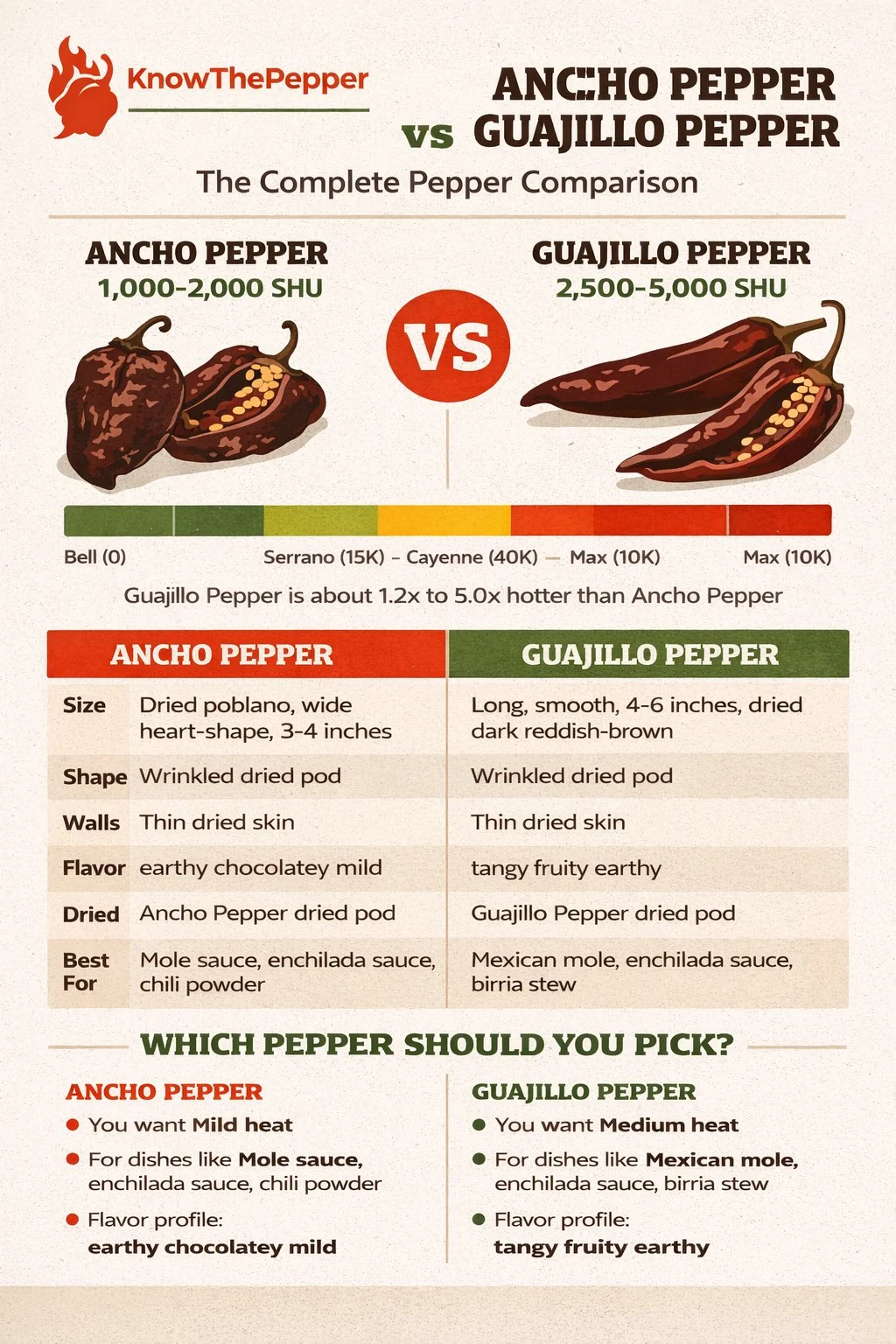
Culinary Uses for Ancho Pepper and Guajillo Pepper
Birria de res is the dish that shows off both peppers at their best — and it also illustrates exactly why they are often used together rather than interchangeably. Ancho provides the sauce's dark, rich base; guajillo lifts it with acidity and color. Pull one out and the dish loses dimension.
Ancho is the workhorse of mole negro and mole poblano. Its sweetness and body make it ideal for long-cooked sauces where fat, chocolate, and dozens of other ingredients need a unifying thread. It rehydrates well in hot water for about 20 minutes, and the soaking liquid — slightly bitter, deeply colored — can be added back to the sauce in small amounts. Ancho also works stuffed (when using the fresh poblano form), ground into a dry rub for beef or pork, or blended into enchilada sauce.
Guajillo excels in marinades, pozole rojo, and adobo-style sauces where its acidity helps tenderize meat and its color saturates the dish. It is the primary chile in many commercial chile powders and dried chile blends. Thin the rehydrated flesh with a bit of the soaking water and some vinegar for a quick table sauce that holds for a week in the fridge.
Substitution guidance: Replace ancho with guajillo at a 1:1 ratio by weight, but expect more heat and less sweetness — compensate with a small amount of dried mulato or a pinch of cocoa powder. Going the other direction, swap guajillo for ancho at 1:1 and add a splash of apple cider vinegar to recover some brightness.
For cooks exploring ancho's role versus poblano in fresh preparations, that comparison clarifies when to use the dried versus fresh form in context. Similarly, the cascabel versus guajillo matchup is useful when building a red sauce and deciding which secondary dried chile to reach for alongside guajillo.
Which Should You Choose?
Choose ancho when the dish needs sweetness, body, and depth without heat — mole, dark braises, chocolate-forward sauces, or any recipe where you want a pepper that disappears into the background and enriches everything around it.
Choose guajillo when brightness, color, and a mild-but-present heat are the goal. Marinades, pozole, and red sauces that need to stay vivid rather than heavy are guajillo territory.
For most traditional Mexican red sauces, the real answer is both — two anchos and three guajillos is a starting ratio that balances sweetness with acidity and produces a sauce with both depth and life. Neither pepper is strictly better; they occupy different flavor roles and happen to be complementary enough that Mexican cooking rarely asks you to pick just one.
If pantry space forces a single choice, guajillo is more versatile across a wider range of dishes and easier to find in dried form at most grocery stores.
Can You Substitute One for the Other?
Yes — direct substitution works. Ancho Pepper and Guajillo Pepper are close enough in heat to swap at roughly 1:1. The main difference will be flavor. For more swap options, explore ranked alternatives with conversion ratios.
Growing Ancho Pepper vs Guajillo Pepper
If you’re deciding which pepper to grow at home, consider your climate and patience level. Ancho Pepper and Guajillo Pepper have different maturation times and temperature preferences. Hotter varieties generally need a longer, warmer growing season to develop their full capsaicin content. Our zone-based planting date tool can pinpoint the best sowing window for your area.
Growing anchos means growing poblanos and drying them yourself — the transformation happens post-harvest. Plants thrive in USDA zones 9–11 as perennials and are treated as annuals elsewhere.
Transplant outdoors after all frost risk passes, spacing plants 18–24 inches apart in full sun. Poblanos are heavy feeders — a balanced fertilizer at transplant followed by a phosphorus-forward feed once flowering begins keeps production strong.
Fruits are ready to dry when they turn fully red — this is when sugar content peaks and the dried ancho will have its characteristic sweetness. Hang or dehydrate at 125–135°F until completely leathery with no soft spots.
Growing guajillo means starting with the mirasol variety — the fresh pepper that becomes guajillo after drying. If you're new to starting chiles from seed indoors, mirasol is a forgiving choice: germination is reliable, and the plants are vigorous once established.
Start seeds 8–10 weeks before your last frost date. Mirasol plants prefer full sun and well-drained soil, thriving in USDA zones 9–11 or as annuals in cooler climates.
The upward-pointing fruit habit (the 'looking at the sun' trait) means pods dry naturally on the plant in hot, dry climates. In humid regions, harvest before the first frost and finish drying indoors using a dehydrator set to 135°F for 8–12 hours.
History & Origin of Ancho Pepper and Guajillo Pepper
Both peppers carry centuries of culinary heritage. Ancho Pepper traces its roots to Mexico, while Guajillo Pepper originates from Mexico. Understanding their backstory helps explain why each pepper developed its distinctive traits.
Buying & Storage
Whether you’re shopping for Ancho Pepper or Guajillo Pepper, the same quality indicators apply. Fresh peppers should feel firm and heavy for their size, with taut, glossy skin and no soft or wet spots. Minor stem cracks known as “corking” are perfectly normal and often indicate a mature, flavorful pod.
- Firm pods with taut skin and consistent color
- Should feel heavy relative to size
- Minor stem cracks (“corking”) are normal
- Avoid anything soft, shriveled, or with dark wet spots
- Fresh: Paper bag, crisper drawer — 1–2 weeks
- Frozen: Wash, dry, freeze on sheet pan — 6+ months
- Dried: Airtight, away from light — up to 1 year
The Verdict: Ancho Pepper vs Guajillo Pepper
Ancho Pepper and Guajillo Pepper sit in the same heat tier but serve different roles. Guajillo Pepper delivers 3× more heat with its distinctive tangy and sweet character. Ancho Pepper, with its sweet and raisin-like profile, excels in everyday cooking.
Frequently Asked Questions
Related Comparisons
Sources pending verification.
