Aleppo Pepper vs Espelette Pepper: Key Differences Explained
Aleppo pepper and Espelette pepper are two of the most prized mild-heat spices in global cooking — one from the sun-baked fields of northern Syria, the other from a single Basque village in the French Pyrenees. Both land in a similar low-heat zone, but their flavor identities are strikingly different. Understanding where they diverge helps you choose the right one for a specific dish rather than treating them as interchangeable.

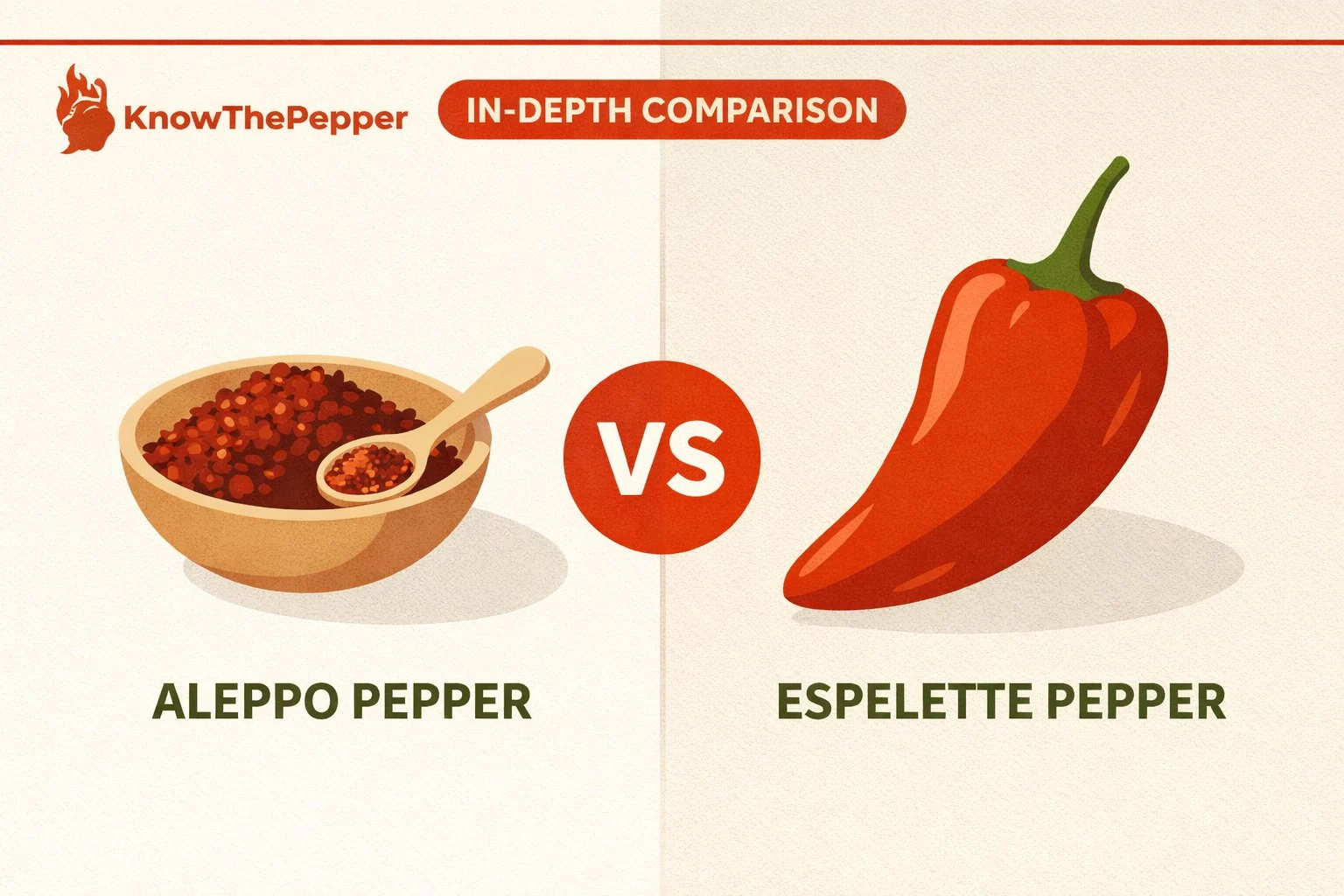
Aleppo Pepper measures 10K–30K SHU while Espelette Pepper registers 2K–4K SHU — making Aleppo Pepper 8× hotter. Aleppo Pepper is known for its fruity and earthy flavor (C. annuum), while Espelette Pepper offers sweet and smoky notes (C. annuum).
- Heat difference: Aleppo Pepper is 8× hotter
- Species: Both are C. annuum
- Best for: Aleppo Pepper excels in everyday cooking and salsas, Espelette Pepper in fresh salsas and mild recipes
Aleppo Pepper
HotEspelette Pepper
MediumAleppo Pepper vs Espelette Pepper Comparison
Aleppo Pepper vs Espelette Pepper Heat Levels
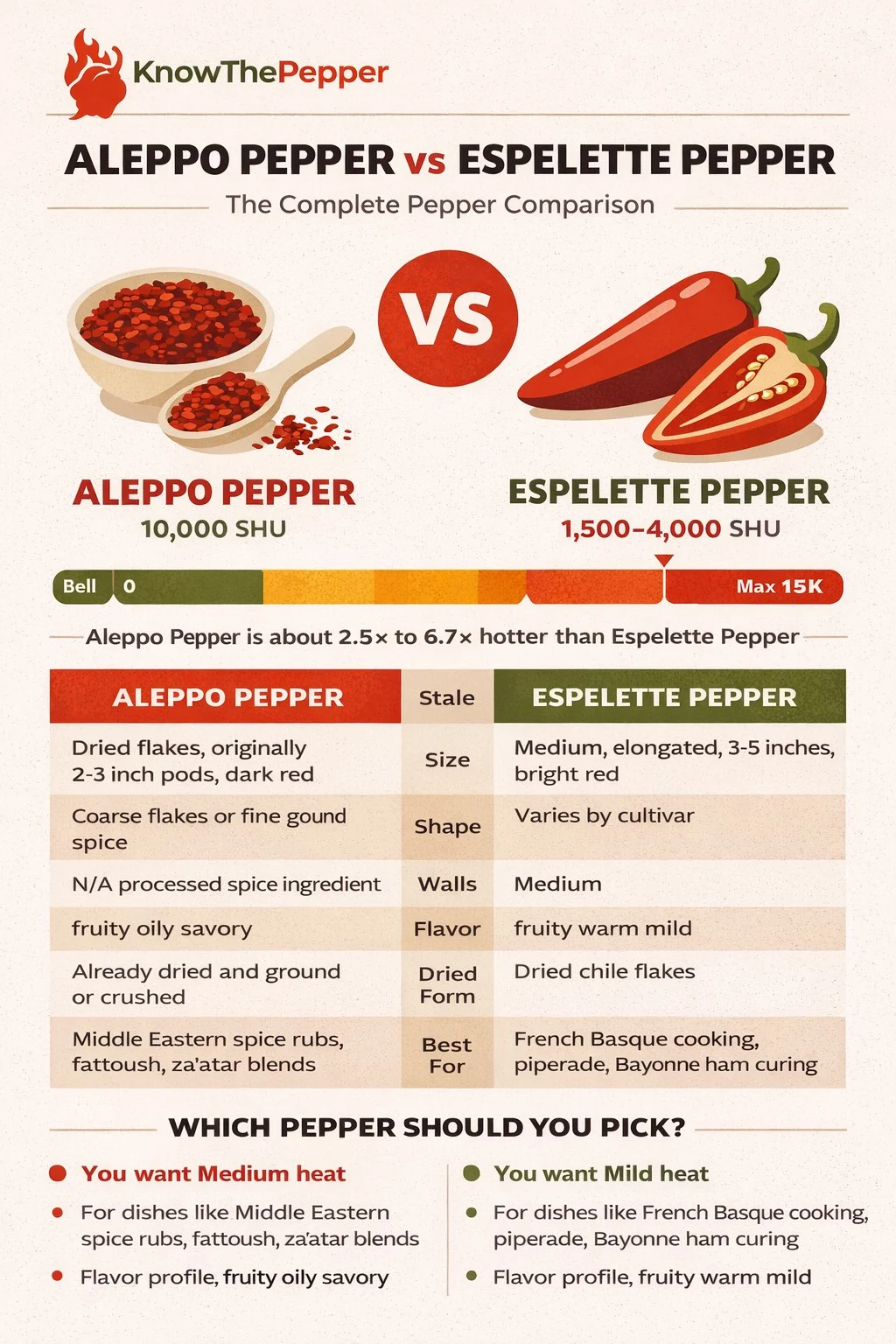
Both peppers occupy what most scales would call the mild position on the heat spectrum — but the exact SHU figures are worth examining. Aleppo pepper typically measures around 10,000 SHU, though some sources place it slightly lower depending on drying conditions and harvest timing. Espelette pepper (Piment d'Espelette) generally falls between 1,500 and 4,000 SHU, making it noticeably milder in direct comparison.
For context, a standard Anaheim pepper sits around 2,500 SHU — so Aleppo can run roughly 3-4 times hotter than an Anaheim, while Espelette sits right in that same Anaheim neighborhood or just barely above it. Neither pepper will challenge heat-tolerant palates, but the difference between them is real and noticeable when you use them side by side.
The burn character also differs. Aleppo delivers its heat with a slow, oily warmth that builds gradually and fades without aggression — part of that comes from its moderate oil content and the semi-drying process it undergoes. Espelette's heat is clean and bright, almost immediate but brief, without the lingering quality Aleppo has. If you want to understand how capsaicin triggers that warming sensation through the TRPV1 heat response pathway, both peppers are actually great low-stakes examples — enough heat to feel the mechanism, not enough to overwhelm it.
Neither pepper should intimidate anyone with a passing tolerance for spice. The real story between these two is flavor, not fire.
Flavor Profile Comparison
Most peppers ask you to choose between heat and flavor.
Few peppers have a legal identity quite like the Espelette.
This is where the comparison gets genuinely interesting. Aleppo pepper — named for the Syrian city of Aleppo — carries a complex, almost Mediterranean flavor: fruity, slightly raisiny, with a mild earthiness and a hint of cumin-adjacent warmth. It has a natural oiliness from its processing method (the dried flesh is coated in a small amount of oil before packaging) that gives it a rich, almost jammy mouthfeel when it hits a hot pan. There's a subtle tartness underneath, occasionally described as sun-dried tomato-adjacent.
The Syrian origin and sensory profile of Aleppo is tied directly to how it's grown and processed — partially dried, seeds removed, then salted and oiled. That process is part of what makes it taste like nothing else in a spice rack.
Espelette pepper tastes cleaner and more direct. The Basque-origin flavor of Espelette is bright, slightly sweet, and lightly smoky without being aggressively so. It has a fresh, almost vegetal quality that you don't find in Aleppo. Where Aleppo suggests depth and complexity, Espelette suggests freshness and clarity.
Aroma-wise, Aleppo is warmer and more resinous — it perfumes olive oil beautifully. Espelette is lighter, almost floral in comparison. In cooking, Aleppo tends to meld into a dish, contributing background warmth and depth. Espelette stays more defined, often used as a finishing spice where its brightness remains perceptible. The Espelette versus paprika contrast captures this brightness well — Espelette sits somewhere between paprika's sweetness and cayenne's directness, but with its own distinct Basque identity.
Culinary Uses for Aleppo Pepper and Espelette Pepper
Aleppo pepper is a workhorse spice across Middle Eastern and eastern Mediterranean cooking. It goes into muhammara (the walnut-red pepper dip), rubs for lamb and chicken, shakshuka bases, and is scattered over hummus with olive oil. Because of its oiliness, it blooms particularly well in fat — heat a tablespoon in olive oil for 30 seconds and you have an instant finishing sauce for grilled vegetables or flatbread.
It also works brilliantly in pasta applications, anywhere you'd use a pinch of red pepper flakes but want more complexity. Try it in a simple aglio e olio, in a tomato-based braise, or stirred into labneh. The Aleppo versus Calabrian chili breakdown is worth reading if you use both in Italian-adjacent cooking — they're not interchangeable despite a similar heat level.
Espelette pepper is the finishing spice of Basque cuisine. It appears on eggs, fish, piperade, and the famous Basque chicken (poulet basquaise). Unlike Aleppo, Espelette is often added at the end of cooking to preserve its brightness — or used as a table condiment the way black pepper functions in other traditions. It's the official spice of the Piment d'Espelette AOC, meaning authentic product comes only from the Espelette commune and surrounding area.
For substitution: replacing Aleppo with Espelette in a recipe requires using slightly more Espelette (about 1.5x the volume) and accepting that you'll lose some of the oily richness. Going the other direction — Aleppo for Espelette — use about two-thirds the amount and expect more body and warmth than the original. The Aleppo versus gochugaru flavor contrast is a useful read if you're exploring other mild-heat alternatives for Korean-influenced cooking.
Both peppers make excellent finishing spices on avocado toast, fried eggs, grilled fish, and roasted vegetables — but they'll produce noticeably different results. Use Aleppo when you want warmth and depth; reach for Espelette when you want brightness and a clean finish.
Which Should You Choose?
For depth and complexity in slow-cooked dishes, Aleppo is the stronger choice. Its oily richness, fruity undertone, and slow-building warmth make it ideal for braises, dips, and anything that benefits from layered flavor. It's also more forgiving in larger quantities — you can be generous with it without fear of overwhelming a dish.
For finishing and fresh applications, Espelette wins. Its clean, bright heat and slightly floral quality make it the better choice when you want the pepper to stay visible in the flavor profile rather than meld into the background. It's also the more delicate of the two — treat it the way you'd treat a good fleur de sel, adding it at the end.
If you cook across Middle Eastern, North African, or eastern Mediterranean traditions, Aleppo is the essential buy. If your cooking leans Basque, French, or Spanish, Espelette earns a permanent spot on the counter. Serious cooks with a spice habit will want both — they're not redundant, and the difference between them shows up clearly in finished dishes.
Can You Substitute One for the Other?
Yes — direct substitution works. Aleppo Pepper and Espelette Pepper are close enough in heat to swap at roughly 1:1. The main difference will be flavor. For more swap options, explore ranked alternatives with conversion ratios.
Growing Aleppo Pepper vs Espelette Pepper
If you’re deciding which pepper to grow at home, consider your climate and patience level. Aleppo Pepper and Espelette Pepper have different maturation times and temperature preferences. Hotter varieties generally need a longer, warmer growing season to develop their full capsaicin content. Our zone-based planting date tool can pinpoint the best sowing window for your area.
Growing Aleppo pepper in North America is straightforward for anyone familiar with C. annuum cultivation basics — the plant doesn't demand special treatment, just warmth and patience.
Start seeds indoors 8–10 weeks before last frost. Germination is reliable at 75–85°F soil temperature, typically within 10–14 days.
The plants reach 24–36 inches tall and prefer full sun with well-draining soil. Once established, they're relatively drought-tolerant — overwatering is a more common mistake than underwatering.
Outside the Basque AOC zone, Espelette grows well in any warm temperate climate — USDA zones 7–11 are comfortable. The plants prefer full sun, well-drained soil with moderate fertility, and consistent moisture without waterlogging.
Start seeds indoors 8–10 weeks before last frost. Germination happens at soil temperatures of 75–85°F; a heat mat accelerates the process noticeably.
Mature plants reach 60–90 cm tall. Pods develop green and ripen to deep red over the season — full color typically arrives 80–90 days after transplant.
History & Origin of Aleppo Pepper and Espelette Pepper
Both peppers carry centuries of culinary heritage. Aleppo Pepper traces its roots to Syria, while Espelette Pepper originates from France. Understanding their backstory helps explain why each pepper developed its distinctive traits.
Buying & Storage
Whether you’re shopping for Aleppo Pepper or Espelette Pepper, the same quality indicators apply. Fresh peppers should feel firm and heavy for their size, with taut, glossy skin and no soft or wet spots. Minor stem cracks known as “corking” are perfectly normal and often indicate a mature, flavorful pod.
- Firm pods with taut skin and consistent color
- Should feel heavy relative to size
- Minor stem cracks (“corking”) are normal
- Avoid anything soft, shriveled, or with dark wet spots
- Fresh: Paper bag, crisper drawer — 1–2 weeks
- Frozen: Wash, dry, freeze on sheet pan — 6+ months
- Dried: Airtight, away from light — up to 1 year
The Verdict: Aleppo Pepper vs Espelette Pepper
Aleppo Pepper and Espelette Pepper occupy very different positions on the heat spectrum. Aleppo Pepper delivers 8× more heat with its distinctive fruity and earthy character. Espelette Pepper, with its sweet and smoky profile, excels in everyday cooking.
Frequently Asked Questions
Related Comparisons
Sources pending verification.