Aji Dulce vs Scotch Bonnet: What's the Difference?
Aji Dulce and Scotch Bonnet are botanical cousins - both C. chinense, both born in the Caribbean basin - yet they sit at opposite ends of the heat spectrum. Aji Dulce tops out near zero heat while delivering rich, aromatic sweetness; Scotch Bonnet fires at 100,000-350,000 SHU with tropical fruit underneath the burn. Choosing between them is less about preference and more about what your dish actually needs.

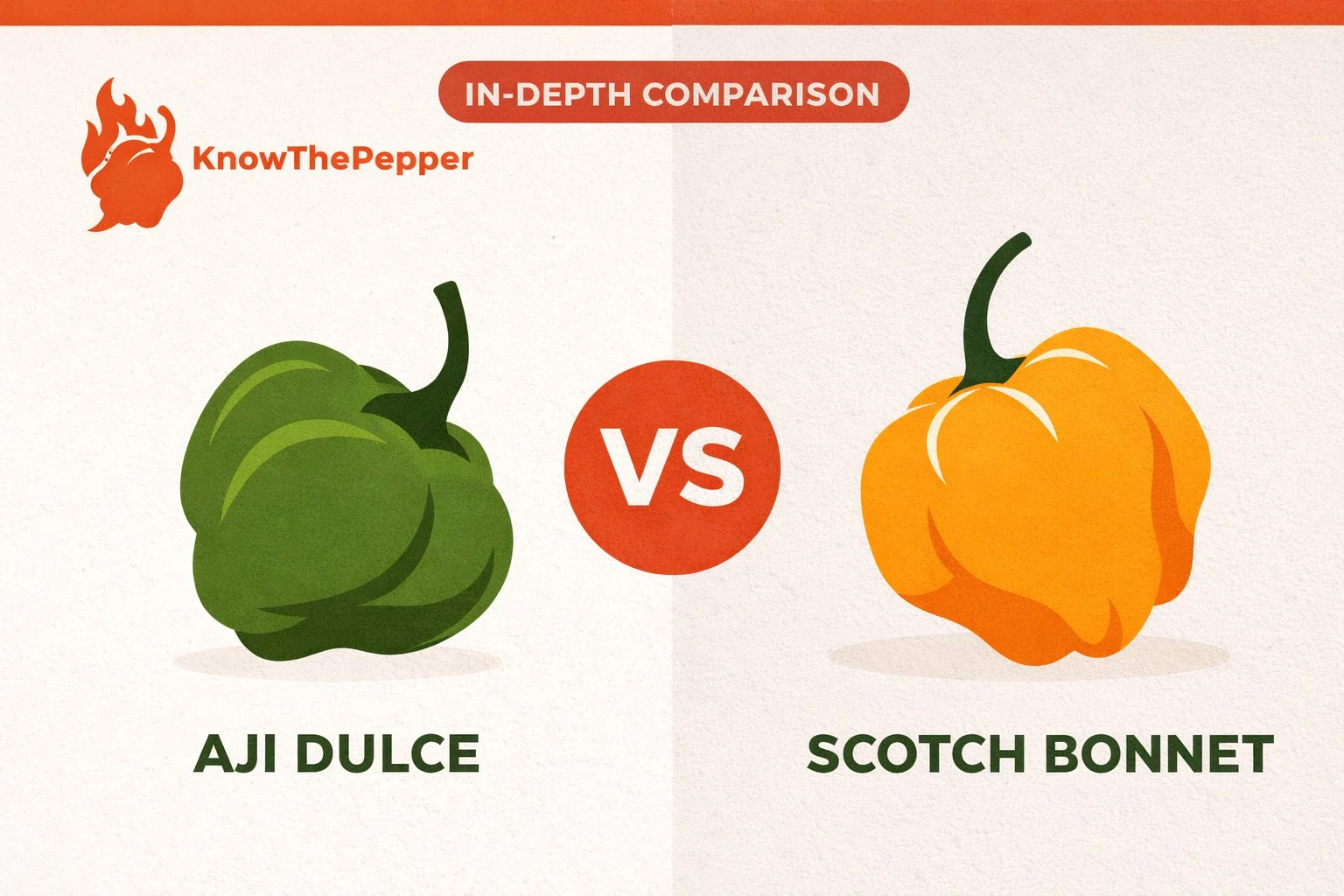
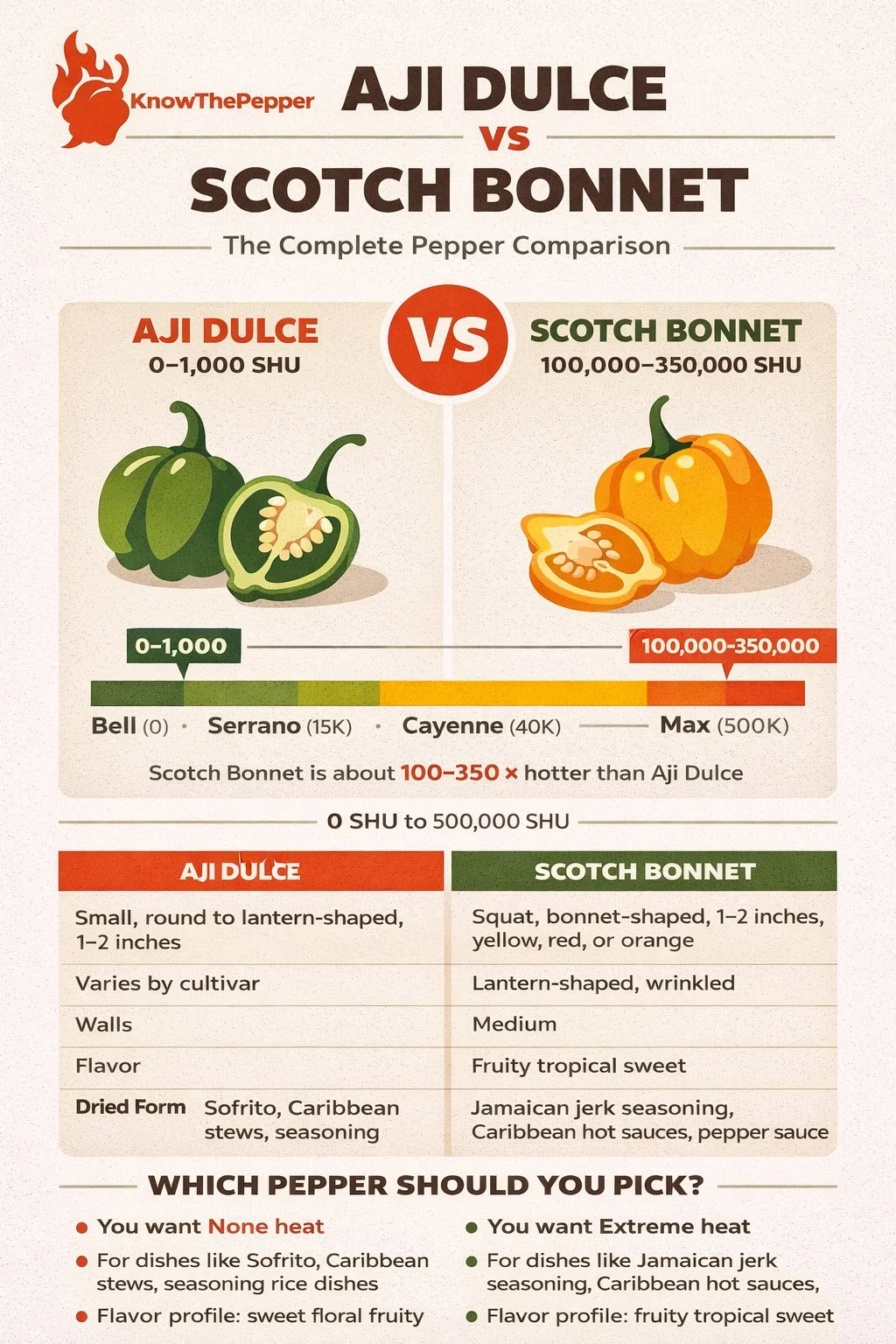
Aji Dulce measures 0–500 SHU while Scotch Bonnet registers 100K–350K SHU — making Scotch Bonnet 700× hotter. Aji Dulce is known for its sweet and aromatic flavor (C. chinense), while Scotch Bonnet offers fruity and tropical notes (C. chinense).
- Heat difference: Scotch Bonnet is 700× hotter
- Species: Both are C. chinense
- Best for: Aji Dulce excels in everyday cooking and salsas, Scotch Bonnet in hot sauces and spicy dishes
Aji Dulce
MildScotch Bonnet
Extra-HotAji Dulce vs Scotch Bonnet Comparison
Aji Dulce vs Scotch Bonnet Heat Levels
Bite into an Aji Dulce and you get warmth the way a ripe mango has warmth - fragrant, almost floral, with zero sting. That is not an accident. Aji Dulce registers 0-500 SHU, placing it firmly in the nearly heatless mild pepper range alongside banana peppers and sweet paprika.
The Scotch Bonnet is a different story entirely. At 100,000-350,000 SHU, it sits in the extra-hot SHU intensity bracket - the same neighborhood as habaneros and Thai bird chilies. Compared to a Fresno pepper (2,500-10,000 SHU), a Scotch Bonnet can be 35 to 140 times hotter, depending on growing conditions and individual fruit.
Both peppers belong to C. chinense - the species behind most extreme heat, which makes Aji Dulce genuinely unusual. Most C. chinense varieties are scorchers; Aji Dulce carries the aromatic signature of the species without the capsaicin payload. Geneticists believe a recessive trait suppresses capsaicin production in the fruit, which is why even seeds saved from the same plant can occasionally produce a mildly warm pod.
The heat character differs too. Scotch Bonnet burns fast and spreads across the palate, with a delayed wave that builds at the back of the throat. The chemistry behind capsaicin's receptor activation explains why that sensation lingers - TRPV1 receptors don't reset quickly. Aji Dulce triggers none of that.
Flavor Profile Comparison
The flavor hits you before the heat does — because there is no heat.
The first time I tasted a Scotch Bonnet raw — sliced thin, no gloves, rookie mistake — the sweetness hit before anything else.
Strip away the heat differential and these two peppers share more DNA than most cooks realize. Both carry the distinctive C. chinense aroma - a fruity, almost perfumed quality that sets the species apart from the grassier C. annuum types like bells and jalapeños.
Aji Dulce leads with sweetness. The flavor is layered: fresh bell pepper up front, then a wave of something closer to roasted tomato or dried fruit, finishing with an herbal note that some describe as faintly smoky. That aromatic complexity is why Venezuelan and Dominican cooks use it as a base flavor rather than a seasoning - it goes in early, in quantity.
Scotch Bonnet carries tropical fruit notes that are genuinely distinctive - mango, papaya, a hint of citrus peel. The flavor is bright and punchy, but the heat arrives fast enough that casual tasters often miss the fruit underneath. Slow-cooked into a jerk marinade or simmered in a curry, the fruity character opens up as capsaicin disperses.
Aroma matters here. Fresh Aji Dulce smells almost floral when cut; Scotch Bonnet smells fruity with a sharp, almost solvent edge from its capsaicin content. In dishes where the pepper's aroma carries through cooking - sofrito, recao-based sauces, braised meats - Aji Dulce is irreplaceable. Scotch Bonnet's aroma also survives heat but competes with its own spiciness.
For a comparison between two low-heat C. chinense options with overlapping flavor profiles, the aromatic differences between Aji Dulce and Trinidad Perfume pepper is worth reading alongside this one.
Culinary Uses for Aji Dulce and Scotch Bonnet
Aji Dulce is the backbone of sofrito across Venezuela, Puerto Rico, and the Dominican Republic. It is used in volume - often 6 to 10 peppers at a time - chopped fine and cooked down with onion, garlic, and cilantro into the flavor base for rice, beans, stews, and braised meats. No heat management required; you can add as much as the dish needs without worrying about burning anyone.
It also works raw. Sliced thin over ceviche, scattered into a fresh salsa, or blended into a green sauce, Aji Dulce contributes complexity without heat - useful when you are cooking for mixed heat tolerances. The sweet aromatic peppers from Venezuela's growing tradition have been used this way for centuries, and the flavor holds up whether the pepper is raw, roasted, or slow-cooked.
Scotch Bonnet demands more precision. A single pepper, deseeded, can season a pot of jerk chicken for four people. Left whole during cooking and removed before serving, it flavors a dish without detonating it. Minced with seeds intact, it is one of the hottest additions you can make to any home recipe.
Classic applications include Jamaican jerk marinades, Trinidadian pepper sauce, and West African stews. The fruity Caribbean heat of the Scotch Bonnet pairs especially well with allspice, thyme, and citrus - flavors that echo and amplify its tropical character.
Substitution is tricky in both directions. Replacing Aji Dulce with Scotch Bonnet in sofrito would make the dish inedible for most people. The reverse - using Aji Dulce where Scotch Bonnet belongs - produces something flat and mild. If you need Scotch Bonnet heat without quite that intensity, the side-by-side heat and flavor differences between Scotch Bonnet and Wiri Wiri pepper offers a useful comparison for substitution planning.
For Aji Dulce alternatives, the sweet low-heat options compared in the Biquinho vs Aji Dulce breakdown covers the closest flavor substitutes available in North American markets.
Which Should You Choose?
Pick Aji Dulce when flavor is the goal and heat is not on the table. Sofrito, family-style stews, dishes where the pepper is a primary ingredient rather than a seasoning - this is where it belongs. It is also the right call when cooking for people who cannot handle spice but deserve food with depth.
Pick Scotch Bonnet when the dish specifically needs that Caribbean heat signature. Jerk, hot sauces, curry - the pepper is doing two jobs simultaneously: adding fruit and adding fire. Nothing else replicates that combination at that intensity.
They are not substitutes for each other. A cook who has both in the kitchen is not choosing between them - they are using Aji Dulce for the base and Scotch Bonnet for the heat layer on top. That combination, common in Caribbean-influenced cooking, is actually the most honest answer to the question of which pepper wins: both, used correctly, in the same pot.
Can You Substitute One for the Other?
Proceed with caution. Scotch Bonnet is 700× hotter than Aji Dulce.
Need a different option altogether? Search for peppers that match your target heat and flavor with precise swap ratios.
Growing Aji Dulce vs Scotch Bonnet
If you’re deciding which pepper to grow at home, consider your climate and patience level. Aji Dulce and Scotch Bonnet have different maturation times and temperature preferences. Hotter varieties generally need a longer, warmer growing season to develop their full capsaicin content. Our zone-based planting date tool can pinpoint the best sowing window for your area.
Start seeds indoors 8–10 weeks before last frost. Germination is reliable at soil temperatures above 80°F, so bottom heat helps considerably.
Plant spacing of 18–24 inches gives the bushy plants room to branch. They're productive in containers too — a five-gallon pot works well on a patio or balcony.
For anyone starting from seed for the first time, the practical guide to growing from seed covers the fundamentals that apply directly here. If you're growing multiple varieties close together, knowing how to hand-pollinate for variety isolation keeps strains true — important if you're saving seeds.
Scotch Bonnets need warmth from the start. Germination requires 80–85°F soil temperature; anything cooler and seeds stall for weeks.
These plants run long — expect 90–120 days from transplant to ripe fruit. They're not beginner peppers in terms of patience, but they're forgiving once established.
Soil should drain well. *C.
History & Origin of Aji Dulce and Scotch Bonnet
Both peppers carry centuries of culinary heritage. Aji Dulce traces its roots to Venezuela, while Scotch Bonnet originates from Caribbean. Understanding their backstory helps explain why each pepper developed its distinctive traits.
Buying & Storage
Whether you’re shopping for Aji Dulce or Scotch Bonnet, the same quality indicators apply. Fresh peppers should feel firm and heavy for their size, with taut, glossy skin and no soft or wet spots. Minor stem cracks known as “corking” are perfectly normal and often indicate a mature, flavorful pod.
- Firm pods with taut skin and consistent color
- Should feel heavy relative to size
- Minor stem cracks (“corking”) are normal
- Avoid anything soft, shriveled, or with dark wet spots
- Fresh: Paper bag, crisper drawer — 1–2 weeks
- Frozen: Wash, dry, freeze on sheet pan — 6+ months
- Dried: Airtight, away from light — up to 1 year
The Verdict: Aji Dulce vs Scotch Bonnet
Aji Dulce and Scotch Bonnet occupy very different positions on the heat spectrum. Scotch Bonnet delivers 700× more heat with its distinctive fruity and tropical character. Aji Dulce, with its sweet and aromatic profile, excels in everyday cooking.
Frequently Asked Questions
Related Comparisons
Sources pending verification.