
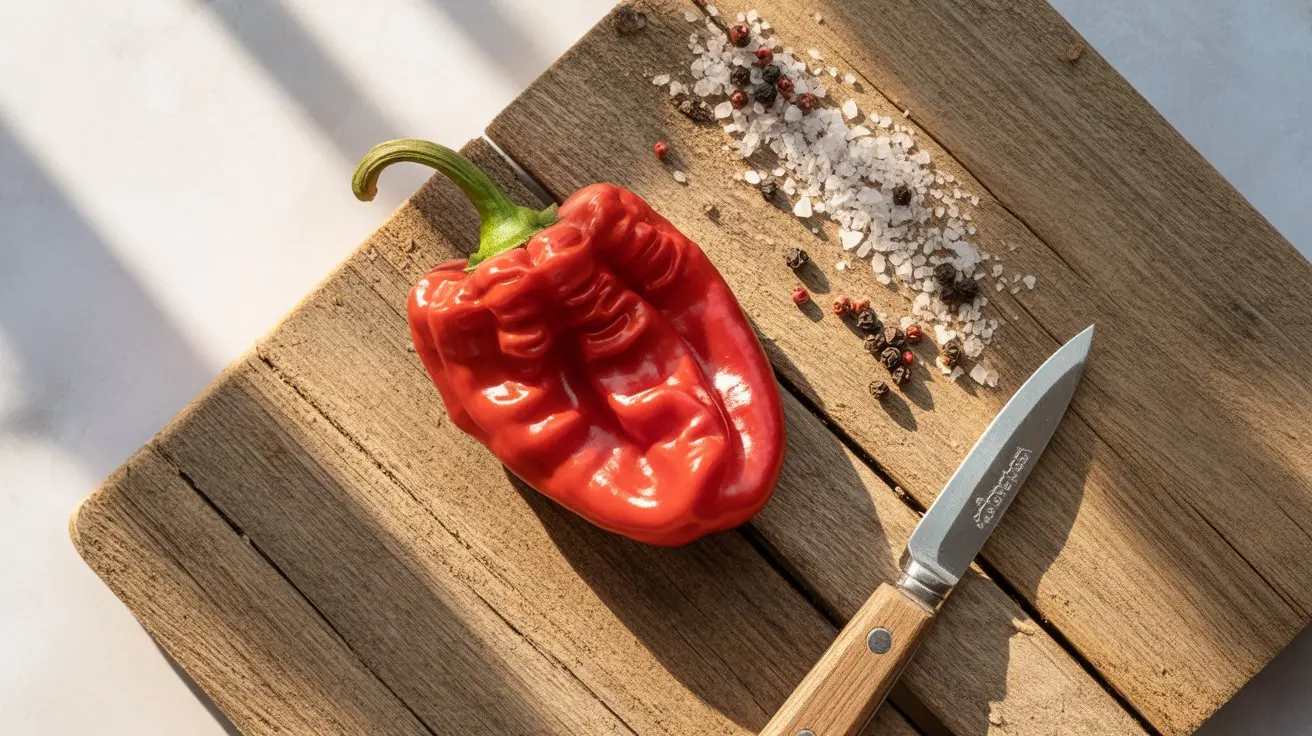
Best Naga Morich substitutes and alternatives for cooking
Substitute Guide Super-Hot

No Naga Morich? Try These 7 Alternatives

Source Pepper
Naga Morich
1M–1.5M SHU · fruity and intense · India
Full Profile →
Quick Summary

The Naga Morich sits at 1,000,000-1,500,000 SHU — a fruity, ferociously hot C. chinense from India that belongs firmly in the super-hot tier of the Scoville index. Finding a true match means sourcing something that replicates both its scorching intensity and the tropical fruit character underneath the burn. The seven substitutes below cover that range, ranked from closest match to most accessible alternative.

Heat Level
1M–1.5M
SHU
Flavor
fruity and intense
Substitutes
7
ranked options
Advertisement

Best Naga Morich Substitutes

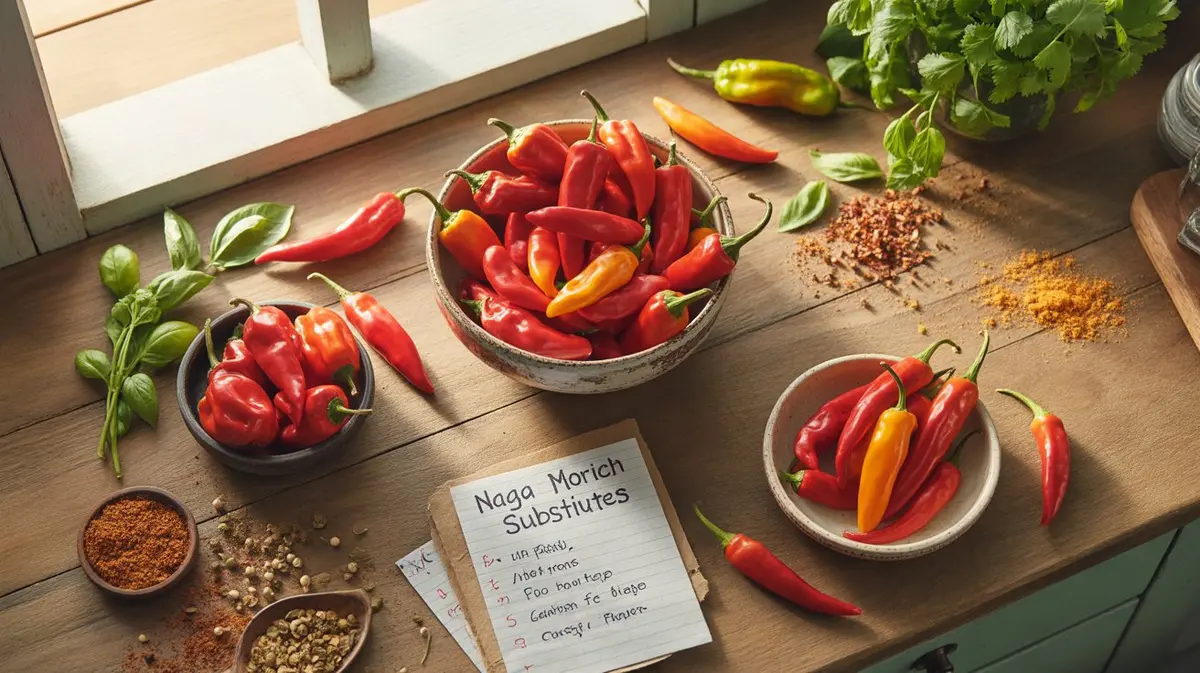
These alternatives are ranked by how closely they match Naga Morich’s heat level and flavor profile. Use the conversion ratios to adjust quantities in your recipe.
#1
Trinidad Scorpion Butch T Closest Match

At 1,463,700-1,500,000 SHU, the Trinidad Scorpion Butch T sits at the absolute ceiling of what the Naga Morich reaches — making it the most heat-accurate swap available. The scorching fruity intensity of the Trinidad Scorpion Butch T mirrors the Naga's flavor profile closely: bright, tropical fruit up front, then a long, punishing burn.

Conversion ratio: 1:1. Use it directly in hot sauces, curries, or chili mashes wherever the original is called for. The tail end of the burn runs slightly longer, so taste as you go if cooking for others.

#2
Dorset Naga Runner-Up

The fiercely fruity Dorset Naga was actually bred from Naga Morich stock, which makes it the most botanically faithful substitute on this list. Heat range is 900,000-1,500,000 SHU — slightly wider than the original, but the flavor overlap is remarkable. Both are C. chinense specimens with that characteristic fruity-floral heat.

Conversion ratio: 1:1. For a deeper look at how these two compare side by side, the head-to-head heat gap between Dorset Naga and Naga Morich is worth reading before you cook.

#3
7 Pot Primo Also Great

Ranging 1,000,000-1,469,000 SHU, the floral fruity heat of the 7 Pot Primo adds a slightly more complex aromatic layer than the Naga Morich. Where the Naga is intensely fruity, the Primo leans floral — noticeable in raw preparations, less so once cooked into a sauce.

Conversion ratio: 1:1. Its distinctive elongated tail makes it visually different, but heat output and fruity character make it a dependable stand-in. Best used in applications where you want the burn to announce itself immediately.

Comparison of Naga Morich with similar peppers for substitution
#4
Naga Viper

The fierce fruity punch of the Naga Viper comes from its hybrid lineage — it carries Naga Morich genetics alongside Ghost Pepper and Trinidad Scorpion. Heat lands at 1,300,000-1,400,000 SHU, firmly in the same bracket. The flavor is recognizably Naga-adjacent: fruit-forward with a dry, papery heat that builds fast.

Conversion ratio: 1:1. Because it is a hybrid, seed availability can be inconsistent — dried pods or powder are often easier to source. Powders work well in spice rubs where the Naga Morich would typically appear.

#5
Bedfordshire Super Naga

Another cultivar with direct Naga lineage, the intensely fruity Bedfordshire Super Naga clocks in at 1,000,000-1,400,000 SHU. It shares the Naga family's characteristic fruity heat but tends to produce larger pods, which means more flesh per pepper and a slightly less concentrated flavor per gram.

Conversion ratio: 1:1 by pod count, but consider using slightly more by weight if substituting with fresh pods. Part of the regional pepper tradition rooted in South Asian cultivation that produced the original Naga Morich.

#6
7 Pot Brain Strain

At 1,000,000-1,350,000 SHU, the deeply intense fruity heat of the 7 Pot Brain Strain hits at the lower end of the Naga Morich's range but compensates with an exceptionally thick-walled pod that carries a dense, oily heat. The flavor is fruity and punishing — less floral than the Primo, closer to the Naga's directness.

Conversion ratio: 1:1. The Brain Strain's thick walls mean it dries and powders particularly well, making it a strong substitute in applications where you would use Naga Morich powder rather than fresh pods.

#7
7 Pot Barrackpore

The most accessible of the group, the fruity floral character of the 7 Pot Barrackpore ranges 800,000-1,300,000 SHU — slightly below the Naga Morich's floor at its mildest. The flavor profile is genuinely good: floral and fruity with a clean, building heat that lacks some of the Naga's raw ferocity.

Conversion ratio: use 1.25x by volume to compensate for the heat gap at the lower end. In cooked sauces and ferments, the difference is barely detectable. For raw preparations where heat precision matters, nudge the quantity up and taste carefully.

Related 7 Pot Brain Strain: 1M–1.35M SHU, Taste & Tips
Peppers to Avoid as Naga Morich Substitutes

Ghost Pepper (Bhut Jolokia) seems like an obvious swap — it shares C. chinense genetics and once held the world record. But at 855,000-1,041,427 SHU, it falls meaningfully short of the Naga Morich's upper range. The heat contrast between Ghost Pepper and Naga Morich is larger than most people expect, and the smokier, earthier flavor of the Ghost doesn't replicate the Naga's clean fruit character.

Carolina Reaper goes the wrong direction entirely — at 1,400,000-2,200,000 SHU, it overshoots the Naga Morich significantly and introduces a sweet, almost candy-like flavor that clashes with recipes built around the Naga's more austere fruitiness. Using it as a 1:1 substitute risks overwhelming a dish entirely.

Habanero is far too mild at 100,000-350,000 SHU. Despite sharing the same species and a recognizable fruity flavor, the heat gap is enormous — you would need to use four to five times as much, which floods the dish with flavor long before the heat approaches Naga Morich levels.

Substitution Tip

When substituting Naga Morich (1M–1.5M SHU), always start with less of a hotter substitute and add more to taste. For milder substitutes, you can increase the quantity. Our swap ratio calculator gives precise conversion amounts, and the heat unit converter translates between Scoville and other scales.

Fact-Checked & Expert Reviewed
Editorial Standards: All facts verified against authoritative sources. Content reviewed by subject matter experts before publication.
Review Process: Written by Sofia Torres (Lead Culinary Reviewer) , reviewed by Karen Liu (Lead Fact-Checker & Science Editor) . Last updated February 18, 2026.
Related 7 Pot Douglah: 923K–1.85M SHU, Flavor & Uses

Naga Morich Substitute FAQ

The Dorset Naga is the closest match because it was bred directly from Naga Morich stock and shares nearly identical fruity flavor and heat range (900,000-1,500,000 SHU). Use it at a 1:1 ratio — the finished sauce will be nearly indistinguishable to most palates.

Ghost Pepper works in a pinch but tops out around 1,041,427 SHU — well below the Naga Morich's upper range of 1,500,000 SHU. The flavor is also smokier and earthier, which changes the character of dishes that rely on the Naga's clean, tropical fruit notes.

A standard jalapeño measures 2,500-8,000 SHU, which puts the Naga Morich roughly 125 to 600 times hotter depending on where each falls in their respective ranges. That gap is large enough that no culinary substitution between the two makes practical sense.

The 7 Pot Primo is a solid substitute at 1,000,000-1,469,000 SHU, though its floral aromatic note is more pronounced than the Naga Morich's straightforward fruitiness. In cooked dishes like curries or pickles, that difference largely cooks out and the heat profile holds up well.

Yes — dried powder is more forgiving because you can adjust by the quarter teaspoon rather than by whole pods, which vary in heat significantly even within the same plant. The 7 Pot Brain Strain and Naga Viper both powder exceptionally well and make reliable 1:1 powder substitutes.

Sources & References
Karen Liu
Fact-checked by Karen Liu
Contributing Editor & Food Scientist
All Substitutes Browse Peppers Substitute Finder Tool