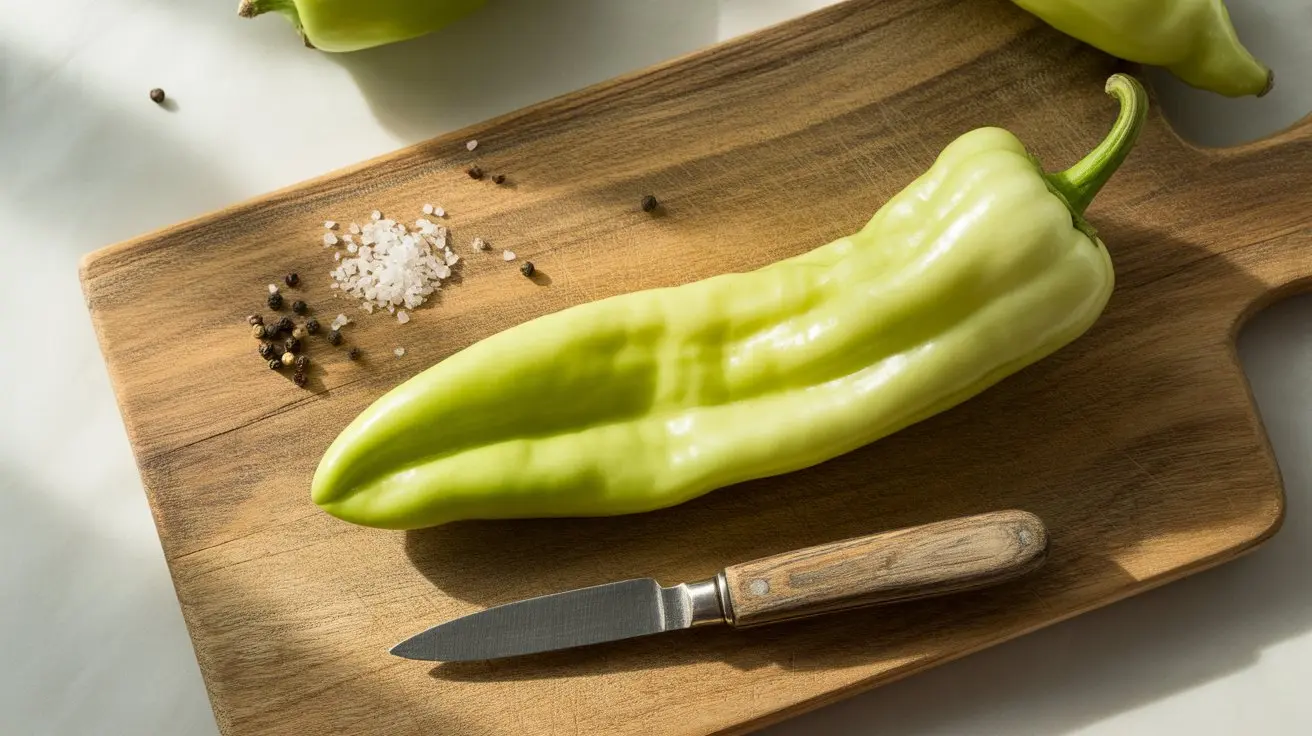
The cubanelle is a sweet, thin-walled frying pepper with 100-1,000 SHU and a grassy, mild flavor that softens beautifully when cooked. Substitutes need to match that low heat, pliable texture, and gentle sweetness — not just approximate the color. The seven options below cover fresh, dried, and roasted alternatives ranked by how closely they replicate the cubanelle's role in the pan.
These alternatives are ranked by how closely they match Cubanelle Pepper’s heat level and flavor profile. Use the conversion ratios to adjust quantities in your recipe.
#1
Long Hot Italian Closest Match
The first time I grabbed a Long Hot Italian off the market table thinking it was a cubanelle, I didn't realize my mistake until I got home — and honestly, the dish turned out identical. At 100-1,000 SHU, this pepper sits in exactly the same mild pepper heat band as the cubanelle, with matching thin walls and a sweet, grassy bite. Use a 1:1 ratio in any recipe. The Italian-origin sweet frying pepper is the closest structural twin available, making it ideal for stuffed peppers, sautés, and any application where the cubanelle's texture matters most.
#2
Alma Paprika Runner-Up
The round, pimento-type pepper from Hungarian growing traditions lands at 500-1,000 SHU and delivers the same sweet, mild flavor profile. Its walls are thicker than a cubanelle, so it holds up better when stuffed but softens more slowly in a quick sauté. Use a 1:1 ratio by weight and expect a slightly denser bite. The sweetness is nearly identical — this is a strong option when Long Hots aren't available.
#3
Paprika Pepper (Fresh) Also Great
Fresh paprika peppers clock in at 0-1,000 SHU, making them one of the mildest swaps on this list. The fresh red pepper behind Hungary's famous spice has thicker flesh than a cubanelle but comparable sweetness. Substitute at 1:1, though you may want to slice thinner for sautéed dishes to match cooking time. Worth noting: paprika peppers are far easier to find at Eastern European grocers than at standard supermarkets.
#4
Piquillo Pepper
The roasted Spanish pepper with smoky-sweet depth comes jarred rather than fresh, which changes the application. At 500-1,000 SHU, piquillos are heat-compatible with the cubanelle, but the roasted, slightly smoky character adds a flavor dimension the cubanelle doesn't have. Use 3 jarred piquillos per 4 fresh cubanelles and account for the extra moisture. Best in cooked sauces, pasta, and dishes where a subtle smokiness enhances rather than distracts.
#5
Smoked Paprika (Pimentón)
This is a dried-spice substitute, not a fresh pepper swap — which means it works in sauces and braises but not in stuffed pepper recipes. Pimentón's slow oak-smoke drying process produces a powder that sits at 250-1,000 SHU, well within the cubanelle's range. Use 1 teaspoon per medium cubanelle called for in a recipe. The smokiness is pronounced, so start conservatively. This option shines in rice dishes, stews, and marinades where the cubanelle's role was primarily flavor contribution rather than texture.
#6
Choricero Pepper
The dried Spanish pepper central to Basque cooking is another dried format, typically rehydrated or sold as paste. At 500-1,000 SHU, it matches the cubanelle's heat ceiling. Choricero has a concentrated, earthy-sweet flavor that's more intense than fresh cubanelle — use 1 tablespoon of choricero paste per medium cubanelle, or rehydrate one dried pepper and scrape the flesh. Excellent in bean dishes, piperade, and braised meats where the cubanelle would have been cooked down anyway.
#7
Ñora Pepper
The small round dried pepper from Spain's Mediterranean coast rounds out this list at 500-1,000 SHU. Like choricero, ñora is used dried or as paste — its flavor is nutty, sweet, and slightly fruity, which diverges a bit from the cubanelle's clean grassy sweetness. Substitute 1 dried ñora (rehydrated) per 2 fresh cubanelles or use 2 teaspoons of ñora paste per pepper. It works best in slow-cooked applications: romesco sauce, rice dishes, and braises. For a direct comparison of how these two dried Spanish peppers differ, the choricero vs. ñora flavor matchup breaks down the distinctions in detail.
All seven substitutes fall within the same gentle, low-heat pepper range as the cubanelle itself — none will spike the heat of your dish. The fresh options (Long Hot Italian, Alma Paprika, Paprika Pepper) are best for structural replacements; the dried and jarred options (Piquillo, Pimentón, Choricero, Ñora) work best when the cubanelle's role is flavor contribution in a cooked sauce or braise.
Bell peppers seem like the obvious swap — same mild heat, similar size — but the thick walls and watery flesh change the texture of sautéed dishes significantly. A cubanelle collapses into silky, slightly charred strips; a bell pepper stays firm and releases more liquid, which can waterlog a quick pan sauce.
Banana peppers (pepperoncini) look nearly identical to cubanelles in the jar, but the pickled versions carry vinegar acidity that clashes in recipes expecting a fresh, sweet pepper. Fresh banana peppers are closer, but they tend to run hotter — up to 500 SHU on average — and have a tangier flavor that shifts the profile of delicate dishes.
Anaheim peppers are a tempting choice given their mild heat and similar elongated shape, but they sit at 500-2,500 SHU, meaning the upper end can run noticeably hotter than any cubanelle. The flavor also skews more vegetal and less sweet, which is noticeable in recipes where the cubanelle's sweetness does the heavy lifting.
Substitution Tip
When substituting Cubanelle Pepper (100–1K SHU), always start with less of a hotter substitute and add more to taste. For milder substitutes, you can increase the quantity. Our swap ratio calculator gives precise conversion amounts, and the heat unit converter translates between Scoville and other scales.
Fact-Checked & Expert Reviewed
Editorial Standards: All facts verified against authoritative sources. Content reviewed by subject matter experts before publication.
Review Process:
Written by
Sofia Torres
(Lead Culinary Reviewer)
, reviewed by
Karen Liu
(Lead Fact-Checker & Science Editor)
. Last updated February 19, 2026.
Fresh banana peppers work in a pinch but carry a tangier, slightly sharper flavor than the cubanelle's clean sweetness. Pickled banana peppers are a poor substitute because the vinegar brine dominates any dish that calls for fresh or sautéed cubanelle.
The Long Hot Italian is the top choice for stuffed pepper recipes because it matches the cubanelle's thin walls, mild heat, and pliable texture almost exactly. Alma Paprika works too, though its thicker flesh requires a slightly longer roasting time to achieve the same tender result.
The cubanelle tops out at 1,000 SHU, while guajillo peppers typically range from 2,500-5,000 SHU — making guajillos roughly 3-5 times hotter at their respective peaks. For dishes requiring the cubanelle's near-zero heat, none of the dried chili alternatives will replicate that level of mildness.
Dried peppers work as flavor substitutes in cooked sauces, stews, and braises, but they cannot replace the fresh cubanelle's texture in stuffed or sautéed applications. Rehydrate one dried choricero or ñora and scrape the flesh for use in rice dishes or slow-cooked recipes where the cubanelle was adding sweet pepper flavor rather than structure.
Piquillo works well in cooked applications — its 500-1,000 SHU range matches the cubanelle, and the sweet-smoky flavor adds complexity to sauces and pasta dishes. The main limitation is format: piquillos are almost always sold roasted and jarred, so they cannot replicate the fresh cubanelle's texture in raw preparations or quick sautés.