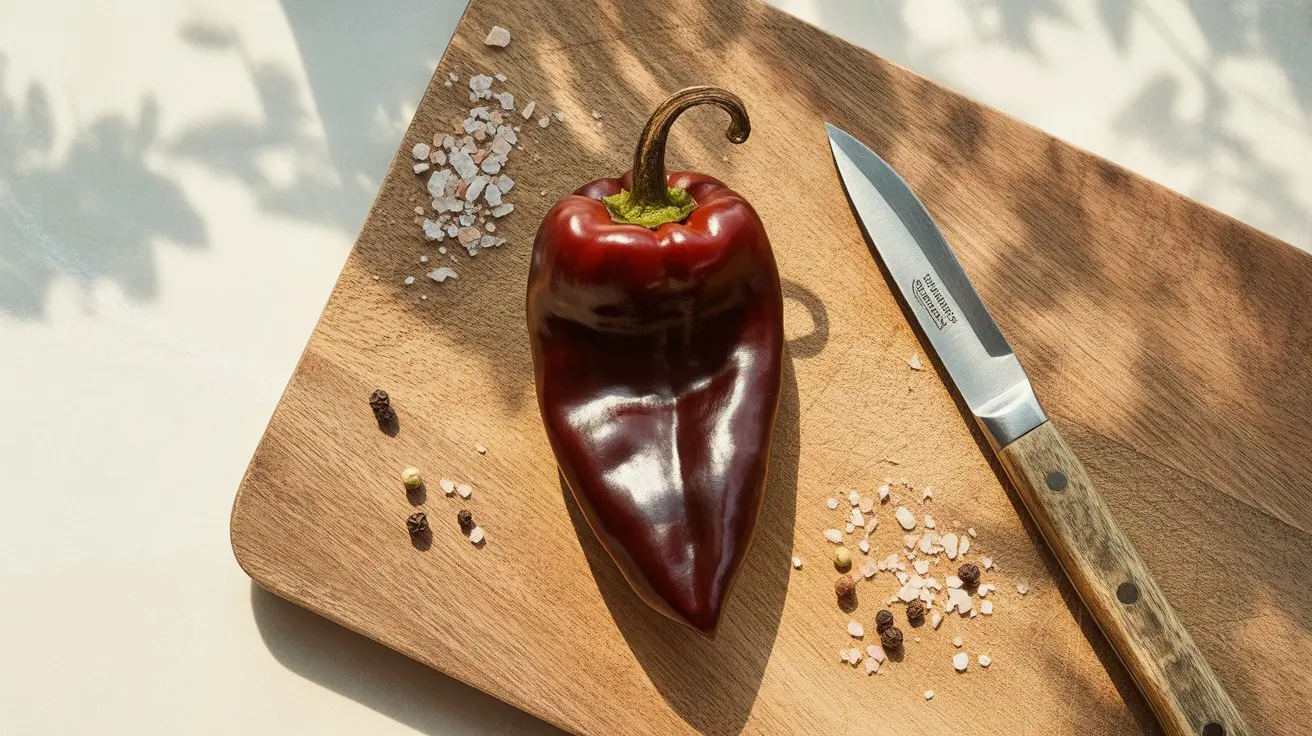
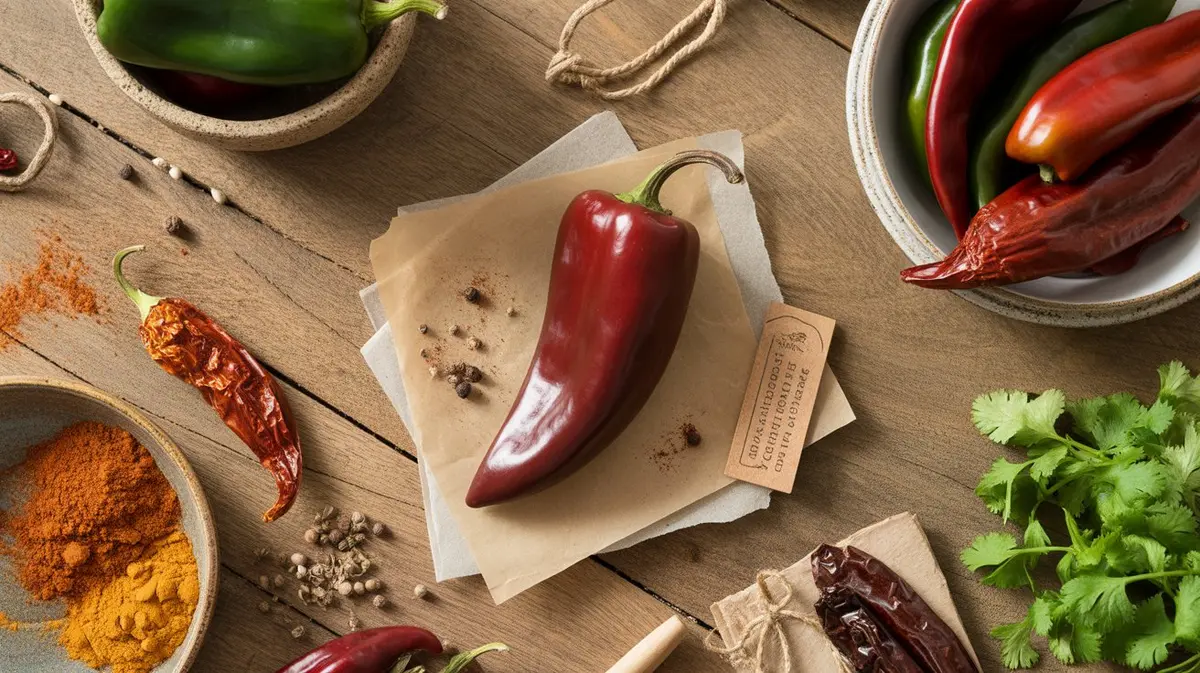
Ancho peppers — dried poblanos with their characteristic 1,000-2,000 SHU range and deep raisin-like sweetness — are the backbone of countless Mexican mole sauces, enchilada bases, and chile Colorado. When your pantry runs dry, you need a replacement that can carry that same dark, sweet complexity without throwing off the balance of an entire dish.
These alternatives are ranked by how closely they match Ancho Pepper’s heat level and flavor profile. Use the conversion ratios to adjust quantities in your recipe.
#1
Pasilla Pepper Closest Match
Pasilla's dried earthiness and rich depth makes it the closest structural match to ancho in Mexican cooking. At 1,000-2,500 SHU, it sits in nearly the same heat band and brings a similar dark, almost chocolatey undertone — though it skews more earthy than sweet.
Conversion: 1:1 by weight or volume. In mole negro or braised meats, pasilla steps in without any noticeable gap. The mild-to-medium Scoville band these two share means heat balance stays intact.
#2
Mulato Pepper Runner-Up
Technically another dried poblano variant, mulato runs 500-2,500 SHU with a smokier, more chocolatey character than ancho. It lacks the raisin note but compensates with richness.
Conversion: 1:1. Best used in mole or slow-cooked sauces where the smoke can integrate.
#3
Guajillo Pepper Also Great
Guajillo brings 2,500-5,000 SHU — a step up — but its tangy, berry-like sweetness genuinely echoes ancho's fruit-forward profile. It's a staple in the same regional cooking traditions.
Conversion: use 75% of the called-for amount to keep heat in check. For enchilada sauce, guajillo's bright acidity actually adds a pleasant lift.
#4
Kashmiri Chili
Kashmiri's vivid color and gentle warmth — sitting at 1,000-2,000 SHU — makes it a reliable swap when you need the mild heat profile but can live without Mexican-specific flavor. It's sweeter and more floral, without the raisin depth.
Conversion: 1:1. Works best in dishes where ancho is mainly contributing color and mild heat rather than complex dried-fruit flavor. The low-heat intensity feel is a near-perfect match.
#5
Urfa Biber
Urfa Biber's oily, fermented smokiness reads differently than ancho but shares the same sultry, slow-building warmth at 500-1,500 SHU. Turkish in origin, it brings a raisin-and-dark-chocolate character that's surprisingly aligned with ancho's profile.
Conversion: 1:1 by weight, but taste as you go — its fermented depth can intensify in long-cooked applications. Outstanding in braised lamb or bean stews where ancho would normally shine.
#6
Aji Panca
Aji Panca's smoky, berry-fruit flavor comes from Peru, not Mexico, but at 1,000-1,500 SHU it delivers a comparable dried-fruit sweetness with added smoke. It's less earthy than ancho and more fruit-forward.
Conversion: 1:1. The fruity dried pepper matchup between these two shows more similarities than differences in slow-cooked applications. Use it in chile-based braises or adobo marinades.
#7
Chilhuacle Pepper
Chilhuacle's smoky complexity and layered flavor puts it firmly in the same culinary family as ancho — both are dried Mexican chiles used for sauces and stews. At 1,500-2,500 SHU, it runs slightly hotter.
Conversion: use 80% of the amount called for. Chilhuacle negro is the closest variant; it brings a dark, almost chocolatey depth that mirrors ancho without the pronounced sweetness. Excellent in enchilada sauce or pozole rojo.
---
For reference, the ancho pepper's own flavor and heat profile shows why it's so hard to replace exactly — that sweet-raisin-earthy trifecta is genuinely rare among dried chiles. The substitutes above each capture one or two of those dimensions, so matching your specific dish matters more than finding a universal swap.
Fresh poblanos seem like the obvious ancho substitute since ancho is a dried poblano — but the drying process transforms the flavor entirely. Fresh poblanos at 1,000-2,000 SHU are grassy and vegetal, lacking the concentrated sweetness and raisin depth that makes ancho irreplaceable in mole. Adding one to a sauce that calls for ancho will make it taste undercooked.
Chipotle peppers (dried smoked jalapeños) clock in at 2,500-8,000 SHU — already hotter than a Fresno — and their aggressive smokiness dominates any dish. Ancho's smoke is subtle; chipotle's is not. Using chipotle 1:1 in a mole will overpower every other ingredient.
Padrón peppers occasionally appear on substitute lists, but their grassy, fresh flavor profile has almost nothing in common with dried ancho. They are best used as a fresh ingredient, not a dried-chile replacement.
Substitution Tip
When substituting Ancho Pepper (1K–2K SHU), always start with less of a hotter substitute and add more to taste. For milder substitutes, you can increase the quantity. Our swap ratio calculator gives precise conversion amounts, and the heat unit converter translates between Scoville and other scales.
Fact-Checked & Expert Reviewed
Editorial Standards: All facts verified against authoritative sources. Content reviewed by subject matter experts before publication.
Review Process:
Written by
Sofia Torres
(Lead Culinary Reviewer)
, reviewed by
Karen Liu
(Lead Fact-Checker & Science Editor)
. Last updated February 19, 2026.
Technically possible but not recommended — fresh poblanos lack the concentrated sweetness and raisin-like depth that drying creates. If you go this route, use about 3 fresh poblanos per 1 dried ancho and expect a greener, less complex flavor in the finished dish.
Pasilla is the top choice for mole because its earthy, dark chocolate undertones mirror ancho's complexity at the same 1:1 ratio. Urfa biber is a surprisingly strong second option if pasilla is unavailable, bringing a similar raisin-and-dark-fruit quality.
Ancho sits at 1,000-2,000 SHU while a Fresno typically reaches 2,500-10,000 SHU, making Fresno anywhere from slightly to significantly hotter. For dishes where ancho provides mild background warmth, that gap matters — most substitutes on this list stay closer to ancho's lower ceiling.
Yes — 1 tablespoon of ancho powder replaces roughly one whole dried ancho pepper in most recipes. The same swap works for substitutes like pasilla or Kashmiri chili if you have them in powdered form.
It works better than you might expect — Aji Panca's smoky, berry-forward character shares enough common ground with ancho to hold up in braised meats and chile sauces. The flavor origin is Peruvian rather than Mexican, so the profile shifts slightly, but heat levels and dried-fruit sweetness align well at a 1:1 ratio.