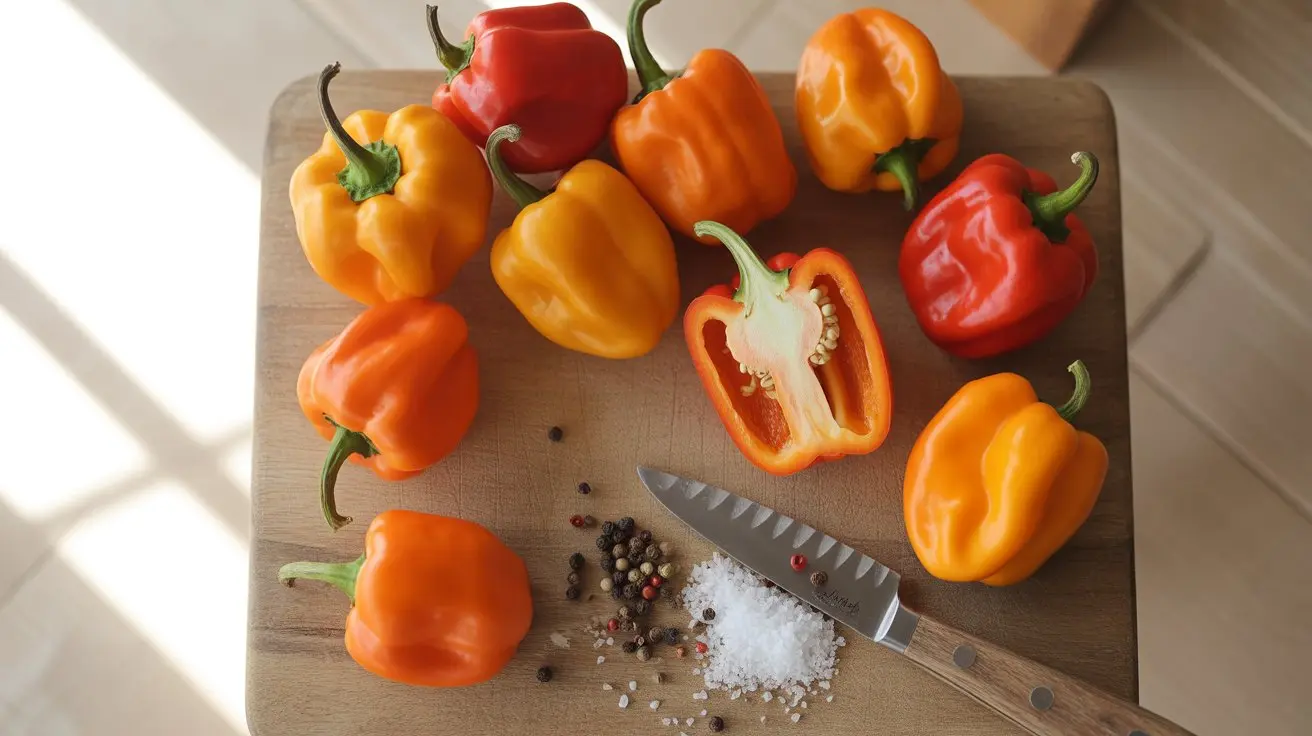
Scotch Bonnet

Bite into a Scotch Bonnet and the first thing you notice isn't the heat — it's a burst of tropical fruit that catches you off guard. At 100,000–350,000 SHU, this extra-hot Caribbean pepper sits roughly 70x hotter than a jalapeño, but its floral, fruity depth is what makes it irreplaceable in jerk marinades, pepper sauces, and West African stews.
- Species: C. chinense
- Heat tier: Extra-Hot (100K–1M SHU)
- Comparison: 70x hotter than a jalapeño
What is Scotch Bonnet?
The first time I tasted a Scotch Bonnet raw — sliced thin, no gloves, rookie mistake — the sweetness hit before anything else. Mango, apricot, a faint cherry note. Then, about ten seconds later, the 100,000–350,000 SHU arrived like a freight train.
That two-stage experience is the defining characteristic of this pepper. It belongs to C. chinense botanical species, the same family responsible for habaneros and Carolina Reapers, and it carries that lineage's signature: intense heat wrapped in complex fruit.
The shape is unmistakable — squat, flattened, with a bonnet-like crown that gives the pepper its name. Colors run from green through yellow, orange, and red depending on ripeness, with each stage offering slightly different flavor intensity.
Compared to the fruity South American heat of Madame Jeanette, which shares similar SHU territory but carries distinct Surinamese roots, the Scotch Bonnet reads sweeter and more citrus-forward. That flavor complexity is exactly why Caribbean cooks reach for it specifically — substitutes simply don't replicate the profile.
The heat itself is persistent rather than sharp. It builds gradually, peaks high, and lingers. Capsaicin binds to TRPV1 receptors in your mouth, which is why peppers produce that burning sensation regardless of actual temperature. With Scotch Bonnets, that binding lasts.
History & Origin of Scotch Bonnet
Scotch Bonnets trace back to the Caribbean, where C. chinense peppers have been cultivated for thousands of years. The pepper's exact naming origin is debated — most accounts tie it to the resemblance to a Scottish tam o'shanter hat, though the pepper has no Scottish connection beyond that visual similarity.
Jamaica became its most prominent home, where it anchors the island's culinary identity. Jerk seasoning, escovitch fish, pepper sauces — the Scotch Bonnet is foundational to all of them. It spread through West African cooking during the Atlantic trade era, which explains why it appears in Nigerian and Ghanaian soups today.
Across the Caribbean, regional variants developed distinct identities. The deep-colored, scorching-hot chocolate variety from Jamaica represents one branch of that diversification, prized for its intensified heat alongside the familiar fruity base.
How Hot is Scotch Bonnet? Heat Level & Flavor
The Scotch Bonnet delivers 100K–350K Scoville Heat Units, placing it in the Extra-Hot tier (100K–1M SHU). That makes it roughly 70x hotter than a jalapeño.
Flavor notes: fruity and tropical.
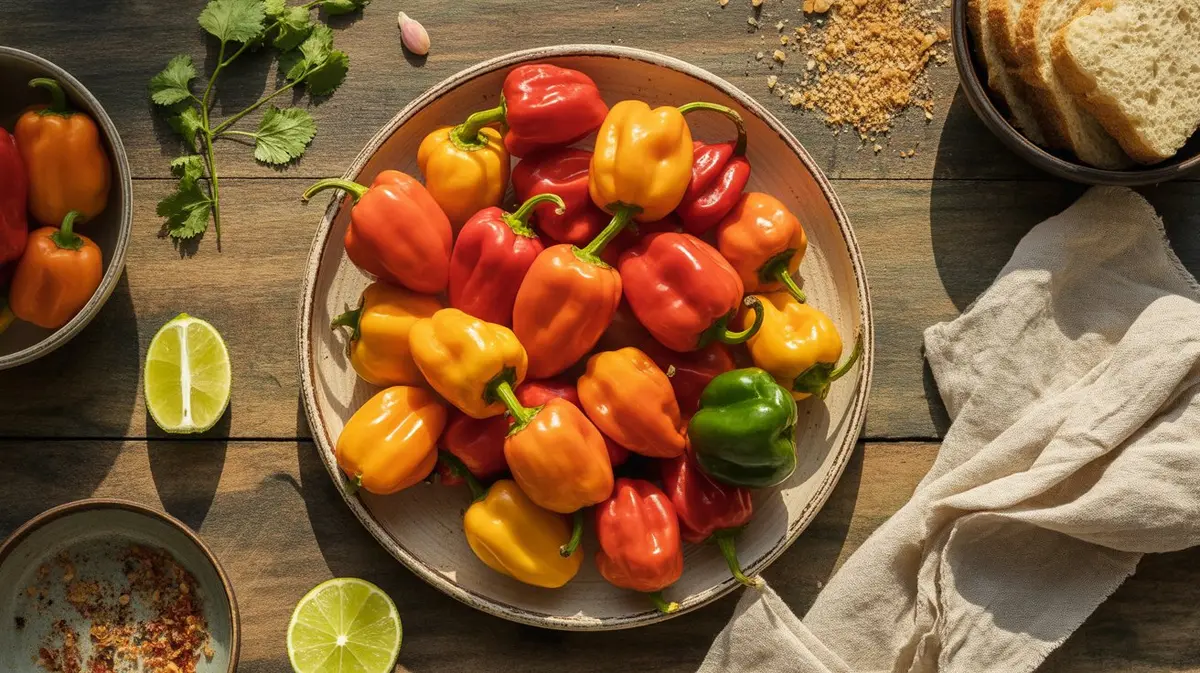
Scotch Bonnet Nutrition Facts & Health Benefits
A 100g serving of Scotch Bonnet peppers delivers approximately 40 calories, with the nutritional profile heavily weighted toward vitamins rather than macronutrients.
Vitamin C content is exceptional — ripe red Scotch Bonnets can exceed 200mg per 100g, well above the daily recommended intake. Vitamin A from beta-carotene is also significant, particularly in orange and red-ripe fruit.
Capsaicin itself has documented metabolic effects: research from the Scoville scale measurement tradition aside, peer-reviewed studies link capsaicin consumption to temporary increases in metabolic rate.
Fiber content runs about 1.5g per 100g, and the peppers are low in sodium and fat.
Best Ways to Cook with Scotch Bonnet Peppers
Scotch Bonnets belong in dishes where the heat and flavor both matter — not just as a heat source you can swap out, but as a flavor contributor you actually taste.
Jerk marinade is the obvious starting point: Scotch Bonnets blended with allspice, thyme, garlic, and green onion. The pepper's fruitiness amplifies the other aromatics rather than competing with them. Use 1-2 peppers for a family-sized batch if you want noticeable heat without overwhelming the other flavors.
For hot sauce, fermentation works beautifully with this pepper. A simple brine ferment — 2-3% salt by weight — over two to three weeks mellows the raw sharpness while preserving the tropical notes. The resulting sauce has a complexity that fresh-blended versions can't match.
When cooking whole in stews or rice dishes, add the pepper without piercing the skin. It infuses flavor without releasing full heat. Pierce or slice it and the dish turns incendiary.
Knowing how to deseed peppers cleanly matters here — the seeds and inner membrane carry concentrated heat. Removing them lets the fruit flavor lead. Always use gloves; Scotch Bonnet oil on your fingers is unforgiving.
For a milder alternative that keeps Caribbean character, the mild-heat Aji Dulce matchup is worth understanding — same flavor family, fraction of the heat.
Where to Buy Scotch Bonnet & How to Store
Fresh Scotch Bonnets appear in Caribbean grocery stores year-round, and increasingly in mainstream supermarkets. Look for firm skin with no soft spots or wrinkling — both indicate age. Color should be uniform for the variety, whether yellow, orange, or red.
At room temperature, fresh peppers last 4–5 days. Refrigerated in a paper bag (not plastic, which traps moisture), they hold for 2 weeks.
For longer storage, freeze whole — no blanching needed. Frozen Scotch Bonnets lose some texture but retain heat and flavor fully. Dried and powdered, they keep for 12 months in an airtight container away from light.
Whole peppers in brine or vinegar extend shelf life to 6+ months and develop interesting fermented complexity.
Best Scotch Bonnet Substitutes & Alternatives
Whether you ran out of scotch bonnet or just want to try something different, these peppers make solid stand-ins. We picked them based on heat range, flavor overlap, and how well they actually work in the same dishes.
Our top pick: Habanero (100K–350K SHU). Same species (C. chinense) and nearly the same heat, so it swaps in at a 1:1 ratio without changing the character of the dish. The flavor leans fruity and citrusy, which is close enough that most people won’t notice the difference in a cooked recipe.
How to Grow Scotch Bonnet Peppers
Scotch Bonnets need warmth from the start. Germination requires 80–85°F soil temperature; anything cooler and seeds stall for weeks. Start indoors 10–12 weeks before your last frost date.
These plants run long — expect 90–120 days from transplant to ripe fruit. They're not beginner peppers in terms of patience, but they're forgiving once established. The plants grow bushy and productive, reaching 2–3 feet with support.
Soil should drain well. C. chinense varieties are sensitive to root rot, so avoid heavy clay or overwatering. A slightly acidic pH of 6.0–6.5 keeps nutrient uptake efficient.
If you want a detailed step-by-step walkthrough for starting peppers from scratch, that guide covers hardening off and transplanting in depth — both are critical with heat-sensitive varieties like this one.
Compared to the similar growing requirements of orange habanero plants, Scotch Bonnets are slightly more compact but equally demanding about sun. Full sun — 6–8 hours minimum — is non-negotiable for fruit development and heat concentration.
For container growers, a 5-gallon pot works. Harvest fruit as it ripens to encourage continued production through the season.
Frequently Asked Questions
-
Both peppers share overlapping SHU ranges — Scotch Bonnets run 100,000–350,000 SHU while datils sit at the lower end of that same tier, typically 100,000–300,000 SHU. The fruity datil heat profile is similar in intensity but carries a slightly sweeter, less citrus-forward flavor than the Scotch Bonnet.
-
Habaneros are the closest widely available substitute — they share the same SHU range and C. chinense fruitiness, though the flavor profile differs slightly. See the Fatalii vs Scotch Bonnet heat and flavor breakdown for a sense of how different chinense peppers compare in practical cooking contexts.
-
The capsaicin concentration is dramatically higher — up to 70x more than a jalapeño — but the delivery mechanism also differs. C. chinense peppers tend to produce a slower-building, longer-lasting burn compared to the sharper, faster heat of C. annuum varieties like jalapeños.
-
Removing seeds and inner membrane cuts heat significantly while preserving flavor — check the guide on how to cut peppers without spreading capsaicin oil for safe technique. Adding the pepper whole to stews without piercing the skin infuses flavor with minimal heat release.
-
They're closely related — both are C. chinense with overlapping SHU ranges — but they're distinct varieties with different flavor profiles and regional identities. The Caribbean red habanero's brighter, sharper heat illustrates how even within the habanero family, Scotch Bonnets occupy their own flavor territory.
- Chile Pepper Institute - Capsicum Species Overview
- USDA FoodData Central - Hot Peppers Nutritional Data
- University of the West Indies - Caribbean Pepper Research
- Journal of Food Science - Capsaicin and Metabolic Effects
Species classification: C. chinense — based on published botanical taxonomy.