Best Peppers for Dehydrating
The best peppers for dehydrating include cayenne, Thai, de Arbol, and habanero. Dehydrator temps, times, and grinding tips. Find your perfect heat level.

Why Dehydrating Is the Best Thing You Can Do With Surplus Peppers
A bumper crop of cayenne or Thai chilis sitting on the counter has a short window before it starts to turn. Dehydrating locks in heat, flavor, and color for months - sometimes years - and concentrates everything that makes a pepper worth growing in the first place.
The process strips moisture to below 10%, which halts microbial growth and intensifies capsaicin concentration. What you get in the end is a shelf-stable ingredient that punches harder than the fresh pepper it came from.
Understanding Which Peppers Actually Dehydrate Well
Not every pepper is equally suited to the dehydrator. Thin-walled varieties dry faster, more evenly, and with less risk of mold developing mid-process. Thick-fleshed peppers like bell or pimento can work, but they require longer times and lower temperatures to avoid case-hardening - where the outside dries before moisture escapes from the center.
Flesh-to-seed ratio matters too. Peppers with lots of interior moisture (think fresh poblanos) take significantly longer than dry, papery-skinned varieties like de Arbol or cascabel.
The best candidates share a few traits: relatively thin walls, moderate to low moisture content, and concentrated flavor that gets more interesting - not just hotter - when dried.
Cayenne: The All-Purpose Dehydrating Pepper
Cayenne sits at 30,000-50,000 SHU and remains the most popular dehydrating pepper for good reason. Its thin skin dries quickly and evenly, and the dried powder has that familiar sharp, clean heat that works in everything from dry rubs to soups.
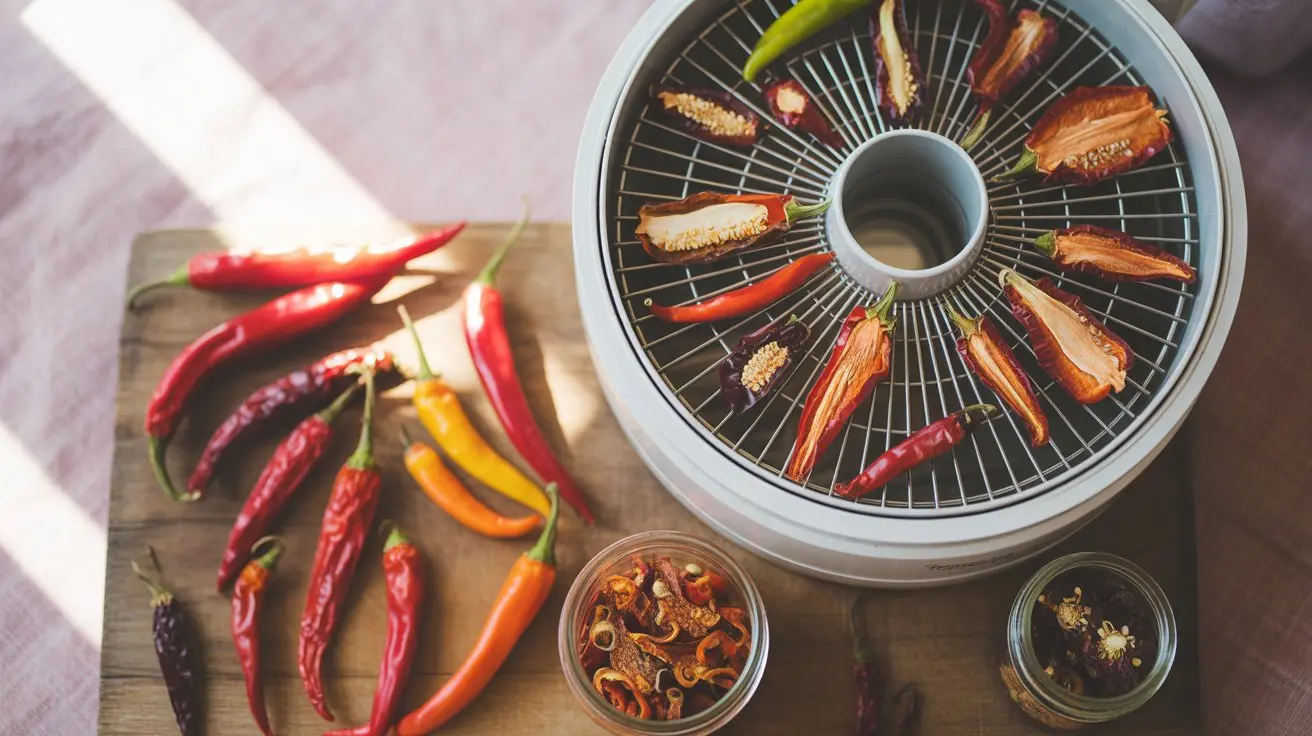
At 125-135°F (52-57°C) in a dehydrator, cayenne halves typically finish in 8-12 hours. Whole peppers take longer - slice them lengthwise to cut drying time in half and improve airflow around the flesh.
Cayenne falls firmly in the hot pepper intensity bracket, making it the workhorse of homemade chili powder blends. Grind dried cayenne in a spice grinder and you have a product that rivals anything on a grocery shelf.
Thai Chilis and Bird's Eye: Small Peppers, Concentrated Results
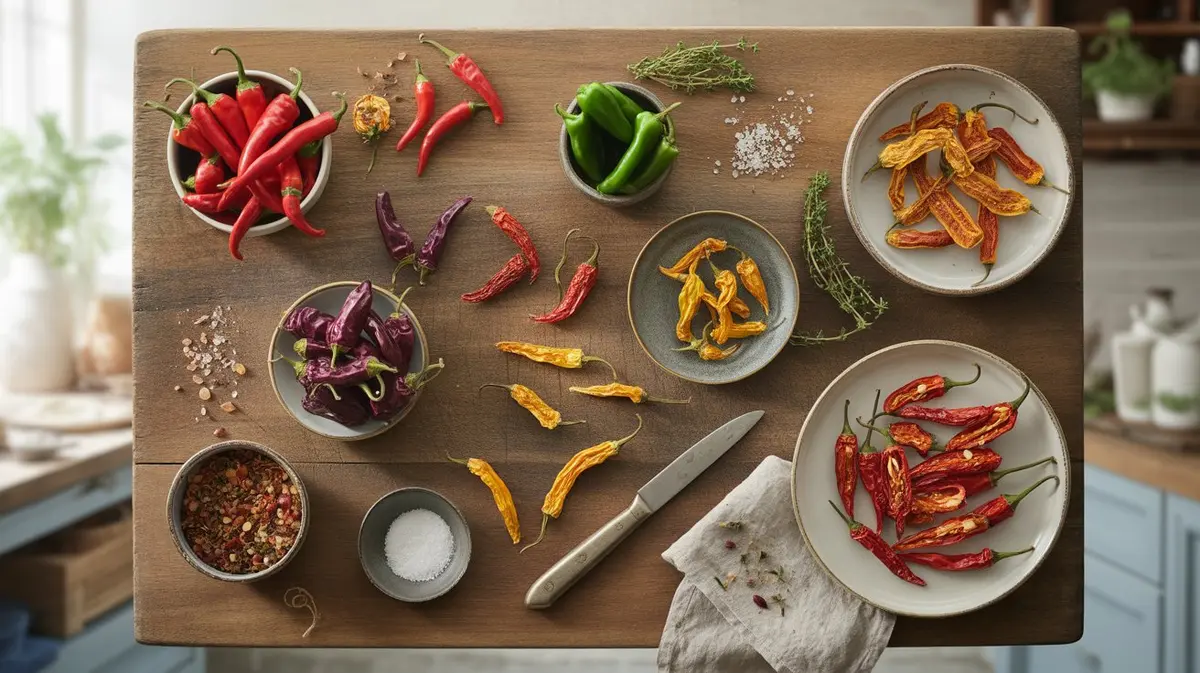
Thai chilis and bird's eye varieties are near-perfect dehydrating candidates. Their tiny size and thin walls mean they dry in as little as 6-8 hours whole, with no slicing required.
Heat runs 50,000-100,000 SHU, and the dried version delivers a sharp, almost metallic heat that's distinctly different from cayenne. These are the peppers behind most commercial crushed red pepper blends sold in Asian markets.
The Thai pepper tradition relies heavily on sun-drying, but a dehydrator gives you far more control over the final moisture content. String them together on a rack if you want to keep them whole for display; otherwise, spread flat and let the machine do the work.
De Arbol: Smoky, Nutty, and Built for Drying
De Arbol peppers are a staple of Mexican pepper culture and one of the best varieties to run through a dehydrator. At 15,000-30,000 SHU, they're hotter than a guajillo by a factor of roughly 3-6x but deliver a distinctly different flavor profile - nutty, slightly smoky, with a dry papery aroma that intensifies beautifully when dehydrated.
Their naturally thin walls mean drying time at 130°F (54°C) runs only 6-10 hours. The dried peppers can be left whole for sauces (toast first, then rehydrate) or ground into a fine powder that adds complexity beyond pure heat.
Cascabel: The Rattler That Earns Its Name When Dried
The round, rattle-producing cascabel gets its name from the sound dried seeds make inside the pod. At 1,000-3,000 SHU, it sits in the mild end of the heat spectrum, but what it lacks in fire it compensates with flavor depth - earthy, slightly smoky, with a hint of chocolate that becomes more pronounced after drying.
Cascabel's thicker walls require a longer drying time than de Arbol - expect 12-16 hours at 125°F (52°C). Slice them in half to speed the process. Dried cascabel powder adds body and complexity to mole bases and braising liquids without overwhelming heat.
Mirasol: The Dried Guajillo's Fresh Identity
Here's something most guides skip: the mirasol pepper is what guajillo is before it dries. The fresh version is a bright, fruity pepper with 2,500-5,000 SHU and a clean, slightly tangy aroma. Dehydrating it at home produces something functionally identical to commercial guajillo - which is one of the most widely used dried peppers in Mexican cooking.
If you grow mirasol, you're essentially growing your own guajillo supply. Dry at 130°F (54°C) for 10-14 hours, then store whole or grind into the mild, fruity powder that anchors enchilada sauces and pozole.
Espelette: The French Pepper Worth the Effort
The Espelette pepper's distinctive mild warmth comes from the Basque region of France, where it carries AOP protected status. At 1,500-2,500 SHU, it won't set your mouth on fire - but the dried powder carries a complex, sweet-smoky aroma that makes it worth growing specifically for dehydrating.
Traditional Espelette processing involves air-drying on strings, but a home dehydrator at 125°F (52°C) for 10-12 hours produces excellent results. The powder is used in Basque cooking the way paprika is used in Hungarian cooking - as a foundational seasoning, not just a heat source. It belongs in the gentler heat range that makes it accessible to nearly any palate.
Habanero: High Heat, High Reward
Habanero sits at 100,000-350,000 SHU, and drying it concentrates that heat considerably. The aroma before grinding is intensely fruity - tropical, almost floral - which transitions into a delayed, deep burn on the palate. That fruit-forward character survives dehydration better than many peppers at this heat level.
Thin habanero walls mean drying time is manageable: 8-12 hours at 130°F (54°C). Always work with ventilation when grinding dried habanero - the powder becomes airborne easily and the why peppers burn at the receptor level is very real when you inhale concentrated capsaicin dust.
Dried habanero powder fits into the upper end of the extra-hot range and should be measured in pinches, not teaspoons, for most applications.
Super-Hot Options: 7 Pot Yellow and 7 Pot White
For those chasing maximum capsaicin concentration, the 7 Pot family delivers. The 7 Pot Yellow's extreme fruity heat runs over 1,000,000 SHU, with a tropical, almost mango-like aroma that makes it deceptively approachable before the heat lands.
The 7 Pot White's pale-fleshed super-hot intensity is rarer but similarly powerful, with a slightly different flavor character - less fruity, more earthy and complex. Both sit firmly in the super-hot tier and require serious caution during processing.
Drying time for both runs 10-14 hours at 135°F (57°C). Wear nitrile gloves when handling, work outdoors or with strong ventilation, and use a dedicated spice grinder you don't mind reserving exclusively for hot peppers.
The Nagabon: A Hybrid Worth Knowing
The Nagabon's cross-species heat and complexity makes it an interesting dehydrating choice for growers who want something between a habanero and a full super-hot. It carries the fruity, aromatic character typical of Capsicum chinense varieties with heat that typically exceeds habanero but falls short of the 7 Pot family.
Dry at 130-135°F (54-57°C) for 10-12 hours. The dried powder works well blended with milder peppers to create custom heat blends with genuine complexity.
Dehydrator Temperature and Time Reference
The 125-135°F (52-57°C) range is the standard for most peppers. Going higher risks destroying volatile aromatic compounds and can cause case-hardening in thicker-walled varieties. Going lower extends drying time to the point where mold risk increases, especially in humid environments.
A basic drying reference by pepper type:
- Thin-walled small peppers (Thai, bird's eye, de Arbol): 6-10 hours at 130°F
- Medium-walled peppers (cayenne, habanero, mirasol): 8-12 hours at 130°F
- Thicker-walled peppers (cascabel, Espelette): 12-16 hours at 125°F
- Super-hots (7 Pot varieties, Nagabon): 10-14 hours at 135°F
Test for doneness by bending a pepper - fully dried peppers snap cleanly rather than bend. Any flexibility means moisture remains.
Grinding, Storing, and Getting the Most From Dried Peppers
A blade-style spice grinder handles most dried peppers well. For super-hots, a second pass through a fine-mesh sieve removes larger fragments and creates a more consistent powder. Let the grinder sit for 30-60 seconds before opening - capsaicin dust settles slowly and inhaling it is genuinely unpleasant.
Storage matters as much as drying technique. Moisture is the enemy of dried pepper quality. Use airtight glass jars, keep them away from light and heat, and dried powders will hold potency for 12-18 months. Whole dried peppers stored the same way can last 2-3 years.
Vacuum sealing extends shelf life further - particularly useful for super-hot powders that represent significant growing and processing effort.
For those who want to understand the full growing process before the harvest, the germination and full cultivation guide covers everything from seed to mature plant. And if you want context for how heat levels are officially measured before you start blending powders, the Scoville rating methodology explains the testing process behind the numbers.
Blending dried powders is where dehydrating becomes genuinely creative. Mixing mild cascabel or mirasol with de Arbol creates a balanced powder with complexity and heat. Adding a small percentage of habanero or 7 Pot Yellow to that blend pushes it into a different category entirely.
Frequently Asked Questions
-
The standard range is 125-135°F (52-57°C). Higher temperatures risk destroying aromatic compounds and can case-harden thicker-walled peppers before interior moisture escapes. Lower temperatures extend drying time and increase mold risk in humid conditions.
-
Fully dried peppers snap cleanly when bent - any flexibility means residual moisture remains. Thin-walled varieties like Thai chilis become brittle and papery, while thicker peppers like cascabel should feel completely rigid with no give.
-
Yes, but temperature control is harder. Set your oven to its lowest setting (usually 170°F) and prop the door open slightly to allow moisture to escape. Drying time will be shorter but flavor quality is generally lower than a dedicated dehydrator.
-
It is safe with proper precautions. Wear nitrile gloves, work in a ventilated area or outdoors, and wait 30-60 seconds after grinding before opening the spice grinder to let capsaicin dust settle. Eye protection is also recommended.
-
Stored in airtight glass jars away from light and heat, dried pepper powder holds potency for 12-18 months. Whole dried peppers last 2-3 years under the same conditions. Vacuum sealing extends shelf life further for both formats.