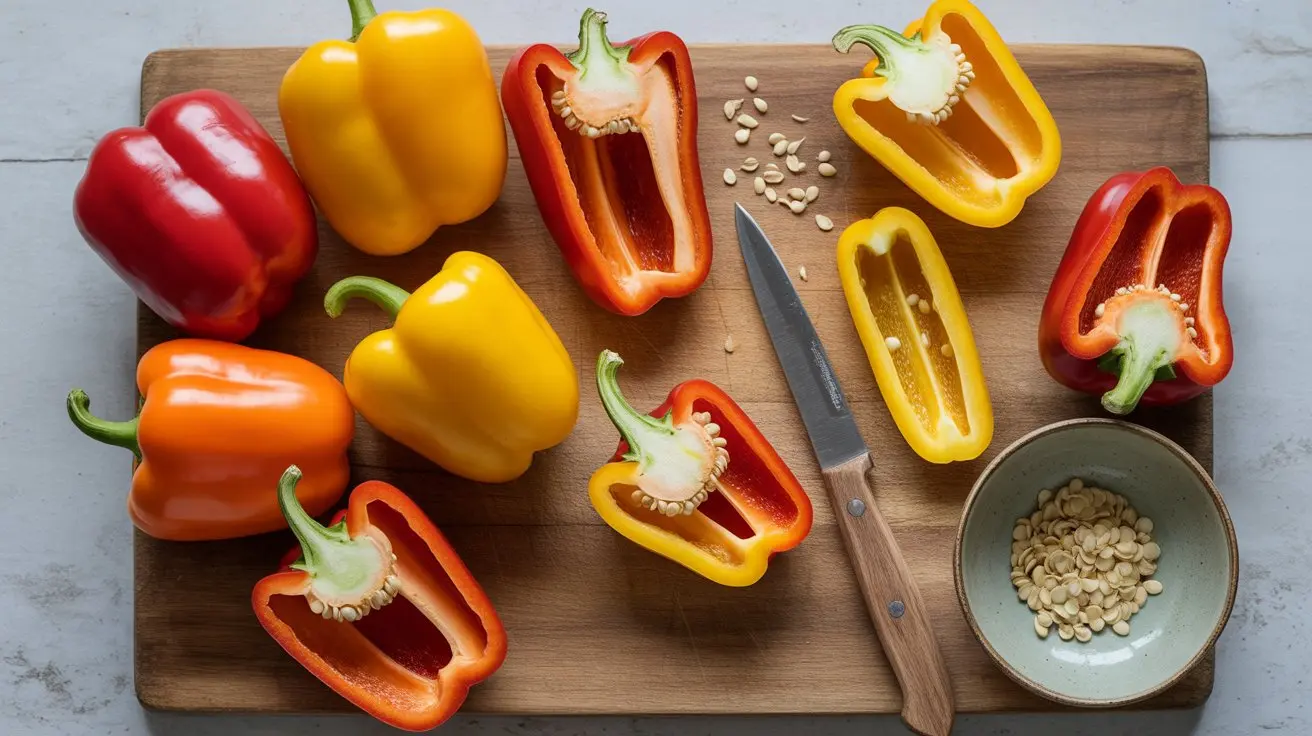
How to Store Pepper Seeds Dry, Sealed, and Cool So They Sprout Later
Store pepper seeds only after they are fully dry, then keep them sealed, cool, dark, and labeled. Moisture and heat shorten viability first. A refrigerator can help if the seeds are sealed and warmed before opening, but a cool cabinet works for short-term packets.
Best answer. Store pepper seeds only after they are fully dry, then keep them sealed, cool, dark, and clearly labeled.
Moisture and heat shorten seed life faster than almost anything else in a home seed box.
This is not the same job as storing edible peppers. A pod can taste fine while its seeds are not dry enough for storage, and a seed packet can look clean while the germination rate is already falling.
We keep a small seed jar in the same cabinet as our planting notes. The best packet in that jar is not the prettiest one.
It is the one with variety, year, plant note, and a dry seed that still sprouts evenly.
Dry seeds before storage
Dryness is the key step. Do not seal fresh pepper seeds straight from a pod, even if they look papery after a few minutes on a towel.
Spread seeds in one layer on a coffee filter, paper plate, or fine screen. Keep them out of direct sun and away from hot appliances.
New Mexico State University warns that seed drying temperatures above 95°F can damage or kill seed.
For home batches, we let seeds dry for at least one week in a low-humidity room, then bend and rub a few between fingers. Fully dry seeds feel hard and separate cleanly instead of clumping.
If you are still choosing pods, start with our saving pepper seeds guide. This guide begins after the seeds are out of the fruit and ready to become a labeled lot.
- Do not seal wet seeds because trapped moisture can lead to mold.
- Dry one variety at a time so labels do not drift.
- Skip paper towels if seeds stick hard to the fibers.
- Keep pets and fans away from tiny seed piles.
Packets, labels, and jars
A seed storage system should answer one question two years later. What exactly is this seed, and why did we keep it?
Use paper envelopes for the first dry packet, then put those packets inside a sealed jar or lidded box if your room gets humid. Label the outside and place a second small label inside the envelope for important seed lots.
A useful label includes variety, year, pod color, plant source, and any isolation note. That matters for peppers because many garden varieties share the Capsicum species family and can cross when insects move pollen.
Do not rely on memory. A mystery packet becomes wasted tray space when seed-starting season gets busy.
Where should you store pepper seeds?
Cool, dry, and dark is the repeatable rule. South Dakota State University Extension names low humidity as a key factor and warns that temperatures above 90°F can reduce seed viability.
The right place depends on how long you plan to keep the seed and how humid your house gets.
| Storage place | Best for | Watch point | Our use |
|---|---|---|---|
| Cool cabinet | Seeds used next season | Summer heat swings | Everyday packets |
| Sealed jar | Humid homes | Seeds must be fully dry first | Best small-batch setup |
| Refrigerator | Longer storage | Condensation when opened cold | Backup seed lots |
| Garage or shed | Almost never | Heat and humidity spikes | We avoid it |
Seed life is not a promise. Our separate guide to pepper seed viability covers how long old packets can still be worth testing.
Can you store pepper seeds in the fridge?
The refrigerator can be a good seed vault if the container stays sealed. It can also ruin dry seed if you open a cold jar in warm, damp air.
Put packets in a tight jar, add a food-safe desiccant packet if you use one, and label the lid. When you need seed, remove the whole jar and let it sit closed until it reaches room temperature.
Open warm, not cold. That one habit prevents the condensation that collects on seeds and packet paper.
For peppers you plan to sow soon, a cool cabinet is simpler. Save refrigerator space for valuable varieties, older seed, or lines you cannot replace.
How do you test old pepper seeds?
A germination test protects your planting calendar. Old pepper seed may sprout, but weak or uneven sprouting can still cost you the best transplant window.
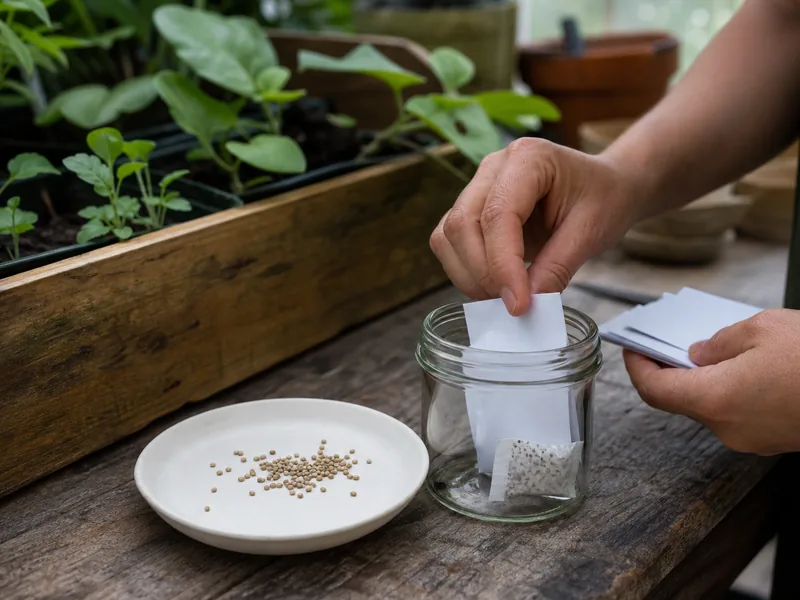
Count 10 to 20 seeds, place them on a damp paper towel, seal them in a bag or covered container, and keep them warm. Check for sprouting over one to two weeks, then calculate the rough percentage.
If only half sprout, sow heavier or buy fresh seed. If almost none sprout, do not give that packet a full tray.
The same timing logic connects to growing peppers from seed and the pepper growing calendar. Test before the season gets expensive.
Use the test result as a sowing plan, not as trivia. If 8 of 10 seeds sprout, plant normally.
If 4 of 10 sprout, sow two or three seeds per cell and thin later.
Weak sprouts count differently from strong sprouts. A seed that barely cracks after two weeks may not become a transplant worth keeping when better seed is available.
Moisture control tools
A desiccant packet can help, but it does not fix wet seed. Think of it as backup protection for already dry packets.
Use a small food-safe silica packet, powdered milk wrapped in tissue, or another dry-room method only when you can keep it away from loose seed. Replace any moisture absorber that changes color or clumps.
Rice in a jar is not our favorite seed method because it can shed dust and does not give a clear moisture reading. A clean envelope inside a clean sealed jar is easier to inspect.
If you live in a humid area, store fewer seeds per jar. Opening one big jar every week gives all packets repeated humidity exposure.
Keep varieties useful
Good seed storage preserves decisions, not just seeds. A packet labeled red jalapeno from the east bed is more useful than a packet labeled hot pepper.
If the plant mattered because it ripened early, resisted disease, or made thick-walled pods, write that down. Those notes help when you choose between saved Jalapeño, Poblano Pepper, and a store packet next spring.
Keep cooking seed and planting seed mentally separate. The seeds inside a pepper are explained in our pepper anatomy guide, but storage for planting has stricter moisture and label rules than food prep.
Packet size matters too. We store small backup lots apart from the packet we open for spring sowing, so one damp seed-starting bench does not expose every seed we own.
For a valuable line, keep a second packet in a different box or with another grower. It is low drama insurance against one spilled jar or one mislabeled envelope.
Audit packets once a year
A seed box improves when you remove weak records. Once a year, pull every packet and check the label, age, and reason you kept it.
Packets with no year move to the test pile. Packets with no variety name move to the curiosity pile, not the main planting plan.
Use that audit to combine duplicate packets only when they came from the same variety, year, and source plant. Mixing lots hides which seed was strong and which seed was already fading.
The seed box should get easier to use each season. If it gets more confusing, the storage system is preserving clutter instead of planting value.
We keep a reject envelope too. It holds old seed for germination practice, not for the main crop, so experiments do not crowd out reliable packets.
Separate seed from food prep
Seed work needs cleaner habits than dinner prep. A cutting board covered in onion juice, salt, or sauce is not the place to dry planting seed.
Use a clean plate or screen for seed lots, then move edible pepper scraps away from the labeling area. This prevents seeds from sticking to wet scraps and keeps variety labels clear.
We also separate hot pepper seed work from mild pepper seed work. It is easy to rub your eye after cleaning a mild-looking pod that still carried capsaicin around the placenta.
For rare seed, write the label before cutting the pod. A blank envelope beside three open peppers is how mix-ups happen.
What not to save
Do not save seed from moldy pods, badly diseased plants, or hybrid plants when you need predictable results. Hybrid seed may sprout, but the next generation may not match the fruit you liked.
Also skip seed from a pepper that was picked green for dinner. Seed from fully ripe pods has a better chance of being mature.
If you were only wondering whether the seeds are edible, use our pepper seed safety page instead. If you want to keep a harvest in the kitchen, use jalapeno storage, poblano storage, or dried pepper storage.
Do not save seed from a packet you cannot identify. It is better to buy fresh seed than spend months growing a mystery plant that does not match your space, heat goal, or cooking plans.
When in doubt, store the seed for curiosity and buy a fresh packet for the main crop. That keeps the experiment from risking your whole season.
That split is useful for rare peppers too. Curiosity seed can teach you something, while reliable seed protects the bed space you count on for harvest.