How to Store Poblano Peppers for Stuffing or Roasting
Keep firm whole poblanos dry and vented in the refrigerator for stuffing or roasting soon. For longer storage, cool and freeze them in meal-ready shapes, or dry clean ripe-red pods into ancho chiles.
Keep firm poblano peppers dry and lightly vented in the refrigerator when you plan to stuff or roast them soon. For longer storage, blister and cool the peppers promptly, then freeze halves, strips, or measured sauce portions that already fit a future meal.
Freezing protects cooked usefulness, but a thawed poblano wall softens instead of retaining fresh crunch.
What is the best way to store poblano peppers?
The best method depends on the next dish. Refrigeration protects a firm whole shell, roasting removes the tough skin before freezing, raw freezing saves prep time for blended or long-cooked dishes, and drying turns a ripe red poblano into the ancho form.
Sort the batch while the pods still have structure because waiting until every pepper wrinkles removes the stuffing option.
| Future use | Best storage form | Prepare now | Expected texture |
|---|---|---|---|
| Stuffed poblano | Whole and refrigerated | Keep the straightest firm pods dry | Firm enough to blister, open, and fill |
| Rajas, tacos, or eggs | Roasted strips, frozen flat | Blister, cool, peel, and slice | Soft and ready for a hot pan |
| Soup or sauce | Raw dice or roasted portions | Measure by the cup or recipe | Softness disappears into the dish |
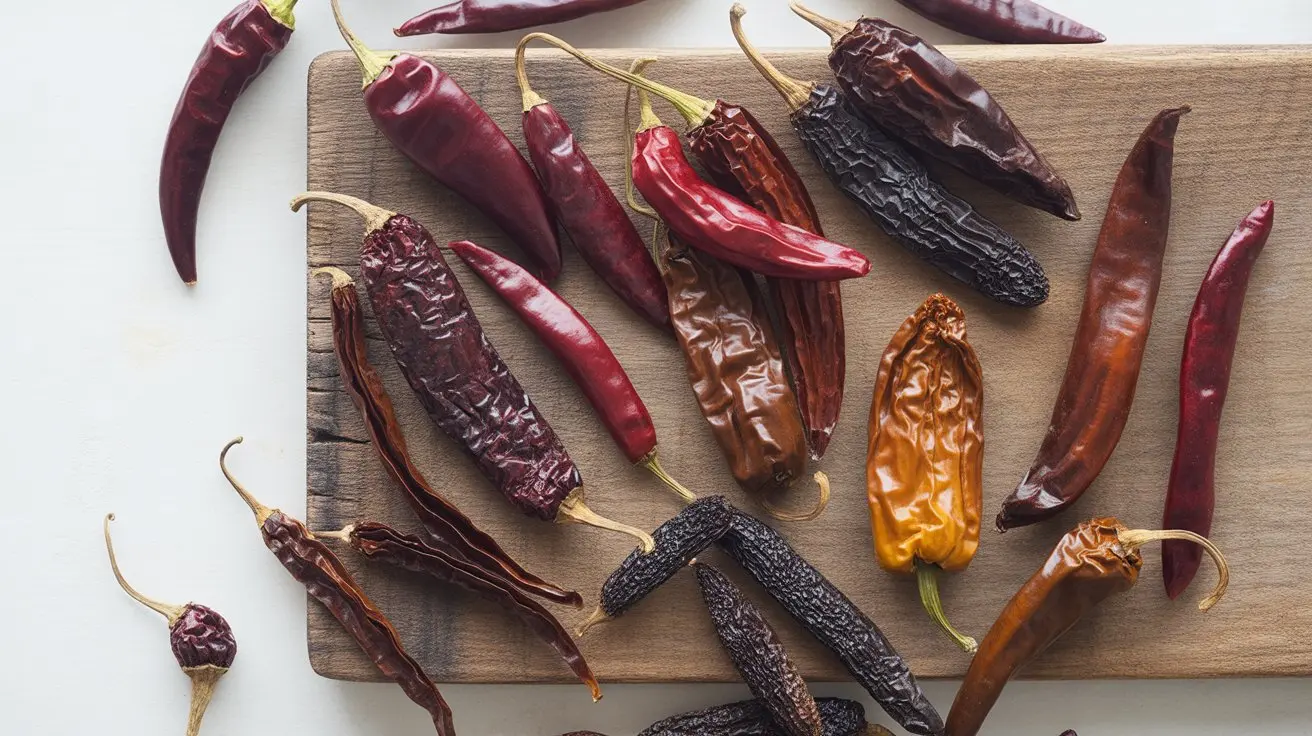
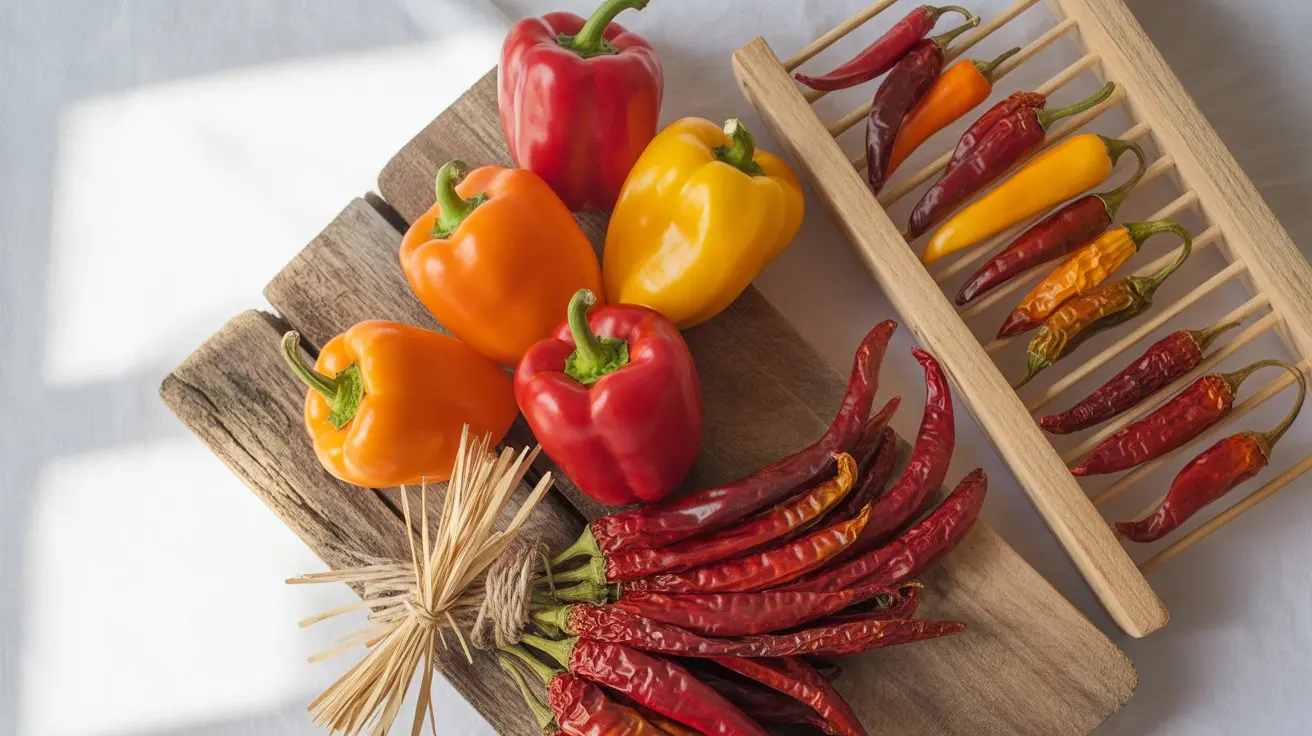
| Ancho seasoning | Clean ripe-red pods, dried | Dry until brittle before packing | Leathery whole chile or brittle pieces |
A mixed batch works best when you reserve the pods whose walls have a job and process the rest according to flavor and condition.
Which poblanos should stay whole for stuffing?
Apply New Mexico State University criteria for a heavy, smooth, symmetrical, fresh, and crisp chile before testing a pod shape.
For stuffing, choose a broad pod with an intact shoulder, a fairly straight body, and enough room around the stem to cut an opening. A curved but firm poblano is still sound food, but it usually fits strips or sauce better than a neat filled shell.
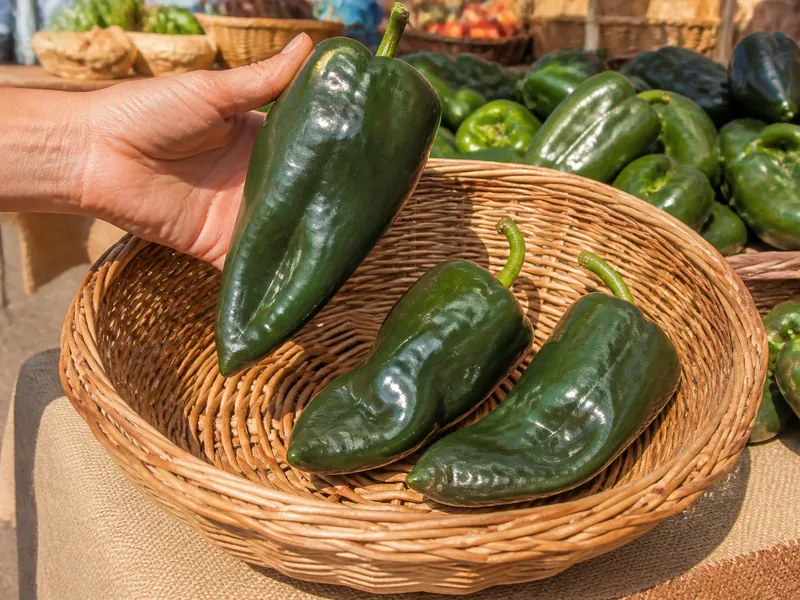
Move a pepper with a shallow dry scar or a small firm bruise into the roast-soon group. It should not spend another week pressed beneath heavier produce, but a limited defect does not automatically ruin the sound flesh around it.
Check the recessed stem end and the underside, not only the smooth front. Mold, leaking tissue, slime, sour odor, or a soft wet collapse means the pod belongs in the trash.
| Pod condition | Best assignment | Why |
|---|---|---|
| Firm, heavy, and straight | Refrigerate for stuffing | The wall still has useful structure |
| Firm but curved or uneven | Roast for strips or sauce | Shape stops mattering after cutting |
| Shallow dry scar or slight wrinkle | Inspect and cook promptly | Quality is declining, but the flesh may remain sound |
| Mold, leaks, slime, or sour odor | Discard | These signs indicate decay |
How do you refrigerate whole or cut poblanos?
Keep sound whole poblanos dry and unwashed in a perforated bag or vented container that limits moisture loss without trapping droplets against the skin.
Lay the best stuffing pods in one layer because heavy produce can crease a broad wall that later splits after blistering.
Purdue Extension says hot peppers can keep in a refrigerator crisper for more than a week, while Utah State University gives fresh chiles a broader two-to-three-week quality estimate. Treat those figures as planning ranges rather than a safety countdown because harvest age, wounds, refrigerator temperature, and condensation change the result.
- Whole and dry means no washing until preparation unless the pod arrived wet or dirty.
- Wet from a market mister means dry the surface before refrigeration and replace any damp liner.
- Already cut means refrigerate the pieces promptly in a small covered container or sealed bag.
- More cut pieces than the next meal needs means freeze the surplus before the edges soften and leak.
The FDA advises keeping refrigerated produce at 40°F or below and separating it from raw meat, poultry, seafood, and contaminated tools. Clean the knife and board before cutting a poblano for a ready-to-eat salsa or garnish.
Each time you open the package, inspect the stem recess, remove any leaking pod, replace wet paper, and avoid resealing condensation around the remaining peppers.
Should you roast poblanos before freezing?
Roast poblanos before freezing when the later dish needs peeled chile flesh, intact cooked halves, or clean strips. Raw freezing works for other jobs, but it leaves the tough outer skin in place and cannot preserve a firm stuffing wall.
New Mexico State University starts the blistering process by washing and drying the chile, then cutting a small slit in the side so steam can escape. Its oven or broiler guidance is 400 to 450°F for 6 to 8 minutes, with turning as needed to blister the surface without burning through the flesh.
A very hot grill or stovetop flame can blister the same skin, but stop before the wall cooks into a fragile blackened sheet.
Spread the hot peppers in one layer, then choose the NMSU-approved option of peeling before freezing for faster meal prep or after freezing for faster packing.
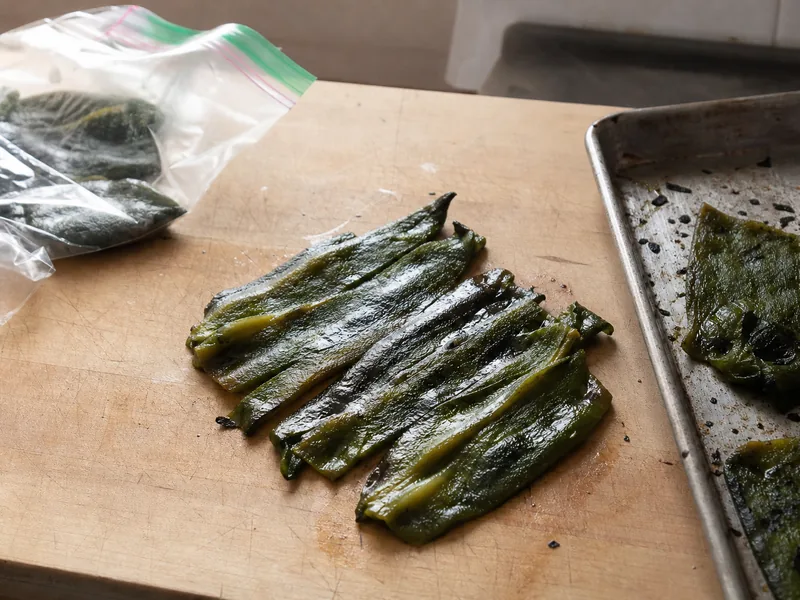
- Leave the stem attached when an intact roasted shell will become a relleno.
- Remove seeds and veins before packing strips or dice for ready-to-cook portions.
- Keep halves flat so they do not freeze in a fold that tears during filling.
- Send torn pieces to sauce instead of forcing them into the stuffing package.
Wear gloves and keep your hands away from your eyes because capsaicin-rich tissue near the inner ribs can irritate skin even when the cooked poblano tastes mild.
How do you cool roasted poblanos safely?
Cool roasted poblanos below 40°F within two hours on clean shallow trays before you seal or stack them.
A sealed freezer bag cannot cool a warm pile efficiently because steam and liquid remain trapped while the center stays warmer than the outside.
Divide a large market-roasted batch before chilling so cold air reaches more surface area, then move the shallow portions to ice or the refrigerator.
Use food-safe pans, containers, or bags because New Mexico State University warns that trash bags are not manufactured for hot food contact.
Commercially roasted peppers need cold transport as well as prompt home refrigeration. Carry the batch in a cooler with ice or cold packs, then transfer it into smaller shallow portions rather than leaving a dense warm sack on the counter.
Once the peppers are below the cooling threshold, choose whether to refrigerate them for a near-term meal or package them for the freezer. Do not let the three-day refrigerator window become an excuse to postpone packaging a batch you already know you will freeze.
How should you package poblanos for the freezer?
Package the shape the later dish needs so an intact half is not thawed merely to make dice and a measured sauce portion does not disappear into a family-size bag.
New Mexico State University allows whole unpeeled chiles in freezer bags, heavy foil, or freezer wrap with air pressed out. Peeled whole or diced chile can go in freezer bags or rigid containers, with one-half inch of headspace in a rigid package.
| Package label | What goes inside | How to use it |
|---|---|---|
| Relleno halves | Two or four intact blistered pods | Thaw gently, peel if needed, then fill |
| Roasted strips | Peeled strips frozen in a flat layer | Add to rajas, tacos, eggs, or crema |
| Sauce cup | Measured roasted dice or puree | Move directly into soup or sauce |
| Unpeeled whole | Cooled blistered pods with air removed | Thaw, rub away the skin, then choose the cut |
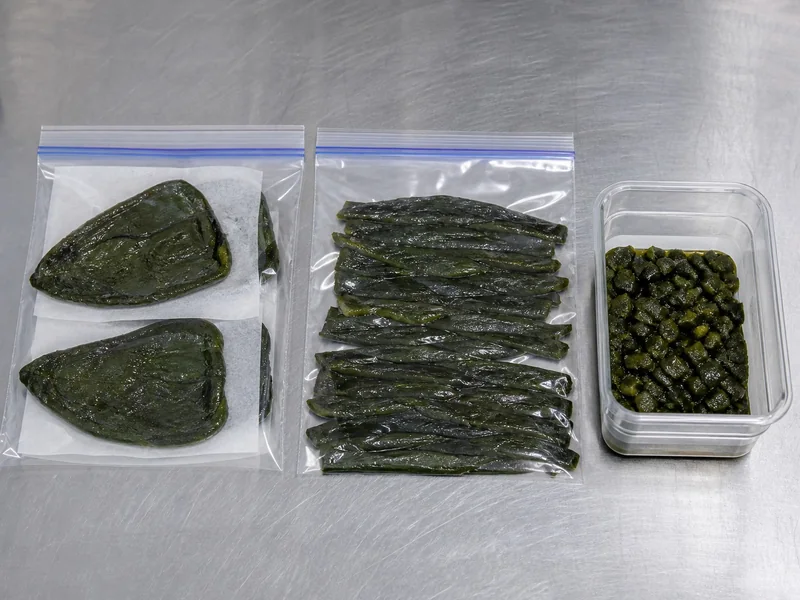
Label the date, peeled or unpeeled state, cut, and portion. A useful label says “four unpeeled relleno halves” or “one cup roasted dice,” which tells you far more than “green chile.”
Freeze the packages immediately at 0°F or below and use them within NMSU's 12-month best-quality window.
Leave space around new packages until they freeze solid, then stack them closely. NMSU estimates that a home freezer can freeze roughly two to three pounds of new food per cubic foot of capacity within 24 hours, so divide a very large harvest across batches instead of warming the entire freezer at once.
Can you freeze poblano peppers raw?
Raw poblanos can be frozen without blanching because New Mexico State University permits peppers to be frozen whole or cut after washing and removing stems and seeds.
Raw freezing saves time when the final dish will cook the pepper thoroughly. Dice works in soup, stew, chili, and blended sauce, while strips can go into a long-cooked filling where a loose skin will not dominate the bite.
Dry the prepared pieces before freezing. Spread them in one layer on a lined tray when you need loose portions, then move the firm pieces into a freezer bag and press out excess air.
Raw freezing softens plant tissue and leaves the poblano outer skin in place.
Do not plan to thaw a raw whole poblano and use it as a fresh stuffing shell. Roast-first halves make a more predictable package when a later recipe depends on a recognizable wall.
How do you thaw poblano halves, strips, and sauce portions?
Handle each package according to its shape because small cooking portions rarely need thawing while intact halves need refrigerator support.
Add them frozen to a hot skillet, soup, or taco filling. The pan captures the released liquid and finishes heating the softened chile.
Thaw the sealed package on a plate in the refrigerator. Open it after thawing, then peel gently if the blistered skin remained attached.
Move measured dice or puree directly into the pot. Reduce other liquid when the frozen portion releases more water than the recipe expects.
Drain thawed halves before adding cheese, eggs, or a thick crema. A little chile-scented liquid can enter soup or sauce when its flavor fits, but excess water weakens a filling and makes a fragile shell harder to handle.
NMSU says frozen food that still contains ice crystals and feels as cold as refrigerated food may be refrozen, although flavor and texture can decline. A thawed package with mold, a yeasty or sour smell, slime, or questionable temperature history should be discarded.
Refreezing cannot restore the original texture. Divide large bags into meal-size portions before the first freeze so you can remove what you need without cycling the rest through another thaw.
Can ripe red poblanos be stored as ancho chiles?
A ripe red poblano becomes ancho only after complete drying, while red color alone indicates maturity rather than decay.
Utah State University Extension directs readers to wash ripe chile pods, slice them, and dehydrate them until brittle. That dry endpoint matters because a red poblano left in the refrigerator remains a moist fresh pepper, not a shelf-stable ancho.
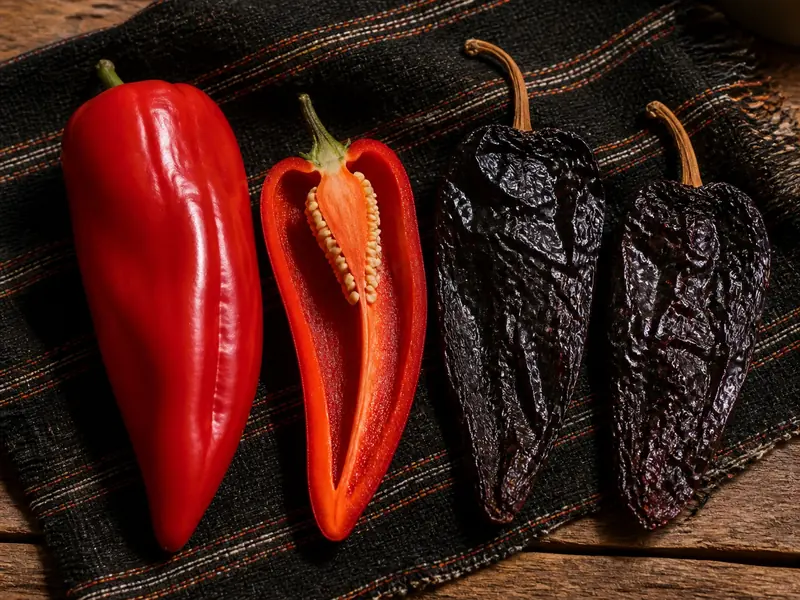
Store fully dried pieces in a sealed bag or jar only after they have cooled and proved dry throughout. A thick damp area near the shoulder needs more drying time rather than an airtight container.
Roast and freeze a firm red poblano when you want soft ripe-chile flesh instead of dried seasoning. The choice is between two useful ingredients, not between a correct and incorrect color.
How can you tell when a poblano has gone bad?
A light dry wrinkle usually shows water loss. The pod may no longer hold filling well, but clean flesh can still serve in a roasted sauce or strips when it smells fresh and the interior remains firm.
Cut through the suspicious area and inspect the flesh and seed cavity. Dryness stays localized and clean, while decay often brings wet collapse, spreading discoloration, leaking liquid, slime, fuzzy growth, or an unpleasant fermented odor.
| Condition | What remains possible | Decision |
|---|---|---|
| Firm and smooth | Stuffing, roasting, strips, or dice | Refrigerate or process by the meal plan |
| Light wrinkles with a clean interior | Roasted sauce or strips | Cook promptly |
| Small bruise with sound flesh around it | Trimmed pieces for immediate cooking | Do not return it to long fresh storage |
| Mold, leaks, slime, sour odor, or wet collapse | Nothing | Discard |
Roasting cannot turn decayed produce back into sound food because heat does not make an already spoiled pepper suitable for storage.
Finish the batch by keeping straight firm pods for stuffing, roasting curved or lightly scarred sound pods, and sending clean ripe-red fruit toward drying or roasted freezing.
That final sort keeps structure with the pods that can still hold it and moves roasted or dried flavor into labeled packages before the remaining fruit loses value.
How to Store Poblano Peppers for Stuffing or Roasting FAQ
- New Mexico State University, Freezing Green Chile
- New Mexico State University, Freezing Vegetables
- Colorado State University Extension, Roasting Chile Peppers
- Purdue Extension FoodLink, Hot Pepper
- Utah State University Extension, How to Preserve Chiles
- Colorado State University Extension, Colorado Peppers
- U.S. Food and Drug Administration, Selecting and Serving Produce Safely