How to Store Jalapenos for the Dish You Want Later
Keep whole jalapenos dry in the refrigerator when you need crisp pods. Freeze raw or roasted pieces for cooked dishes, dry slices for seasoning, and pickle them when acidity belongs in the meal.
Store whole jalapenos dry in the refrigerator when you want crisp pods for the next week or longer. Freeze them for cooked dishes, dry them for flakes or powder, or pickle them when acidity and crunch belong in the final meal.
The right method starts with the texture you need later. A freezer protects green jalapeno flavor, but thawed rings will not regain the snap of a fresh pepper.
| What you want later | Best storage path | What changes | Good uses |
|---|---|---|---|
| Fresh crunch | Whole in the refrigerator crisper | Gradual water loss | Salsa, garnish, stuffing |
| Green flavor in a hot dish | Raw or roasted in the freezer | Texture softens after thawing | Beans, soup, eggs, sauce |
| Concentrated seasoning | Sliced and fully dried | Fresh aroma becomes a dried flavor | Flakes, powder, rubs |
| Acidic crunch | Refrigerator pickle or tested canned pickle | Vinegar and salt reshape the flavor | Tacos, sandwiches, nachos |
How should you sort jalapenos before storage?
Colorado State University Extension recommends peppers that are firm, full sized, and free of major bruises, cuts, or wounds. That selection check matters at home because a damaged pod needs a shorter plan than an intact one.
Set aside firm, glossy jalapenos for fresh refrigerator use.
Move scarred but sound pods toward a cooked freezer batch, while clean ripe-red pods can be used promptly, smoked, or dried.
Discard moldy or leaking peppers instead of trimming them for storage. Purdue Extension also advises avoiding hot peppers that are bruised, wilted, torn, or moldy when selecting them.
| Condition | Best next move | Why |
|---|---|---|
| Firm with intact skin | Refrigerate whole | It still has the texture worth protecting |
| Minor scar, otherwise firm | Trim and freeze for cooking | The damaged area does not need a long fresh-storage window |
| Ripe red and firm | Use soon, smoke, dry, or freeze | Its sweeter ripe flavor suits preserved forms |
| Mold, slime, leaking tissue, or sour odor | Discard | These signs point to decay rather than simple water loss |
How do you refrigerate whole jalapenos without trapping moisture?
Purdue Extension says hot peppers can remain in the refrigerator crisper for more than a week. Colorado State recommends the crisper's cool, humid conditions for keeping peppers fresh, but humid air is different from liquid trapped against the skin.
Leave sound jalapenos whole and unwashed until you are ready to prepare them.
If the peppers are already damp from a market mister or garden rinse, dry the surface before they go into storage.
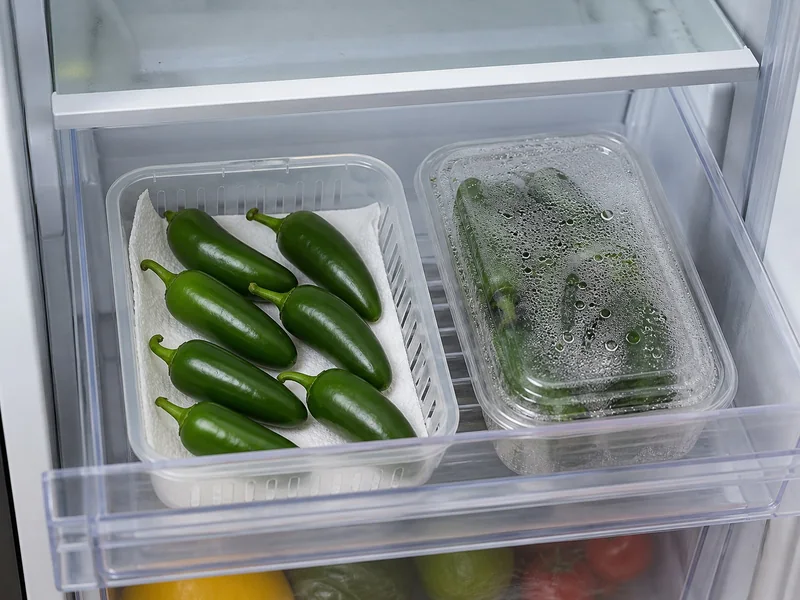
Use a perforated produce bag, a loosely closed bag, or a vented container lined with a dry paper towel. The package should slow water loss while allowing enough air movement to prevent visible condensation from sitting on the pods.
Check the bag when you reach for a pepper. Remove any pod that begins leaking, and replace a wet paper towel so one failing pepper does not leave the rest in a damp package.
A closed store clamshell deserves the same inspection. If droplets have formed under the lid, move the peppers to a dry vented package rather than closing the wet box again.
FoodSafety.gov uses 40??F or below as the refrigerator boundary for cold food storage.
A refrigerator thermometer answers this better than a dial marked only "cold" or "colder," especially when the crisper sits far from the temperature sensor.
How should you store cut jalapenos?
The U.S. Food and Drug Administration advises refrigerating pre-cut produce and keeping refrigerated food in covered containers or sealed bags. Once a jalapeno is cut, exposed flesh loses moisture and has more contact with hands, tools, and the refrigerator environment.
Put rings, halves, or diced pieces in the smallest clean container that fits the batch.
A dry paper towel can catch stray moisture, but it cannot rescue pieces packed while they are dripping wet.
Use cut jalapenos promptly, and freeze any surplus before the pieces become soft or begin to weep. If you only need a few rings each day, keeping the remaining pods whole preserves more useful texture than slicing the entire bag at once.
Pack only one meal's worth in a small container when possible. Less empty space reduces movement and bruising, while a shallow layer makes pooled moisture or a failing piece easy to see.
Keep the container away from raw meat and from any cutting board that has not been cleaned.
Cold storage slows change, but it does not undo cross-contact introduced during prep.
Can you freeze jalapenos raw or should you roast them first?
Colorado State University Extension lists hot condiment peppers as suitable for dry packing or tray packing without headspace. Wash the jalapenos, dry them well, remove the stems, and decide whether whole pods or measured pieces will be easier to use.
Whole frozen jalapenos suit roasting or sauce, while rings and diced pieces can go straight into a pan.
For loose pieces, spread one layer on a tray, freeze until firm, then transfer them to a freezer bag.
Colorado State's hot-pepper instructions call for washing, stemming, and dry or tray packing without a blanching step. That makes raw jalapeno freezing different from vegetables whose quality depends on a timed blanch before freezing.
Tray freezing is most useful when the later dish needs a handful rather than the entire batch. Once the pieces are firm, move them promptly into the final bag so the exposed tray does not become their long-term package.
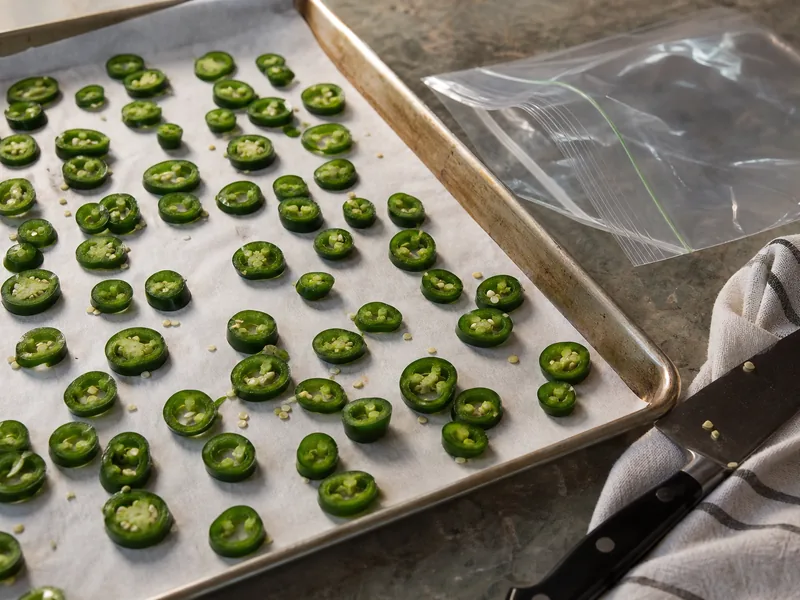
Press out excess air, seal the package, and label the cut, color, raw-or-roasted state, and date.
Freeze at 0??F or below, the temperature specified in Colorado State's chile-freezing guidance.
Roasted jalapenos need a more careful cooling step.
Colorado State says roasted chiles should cool below 40??F within two hours, then be used or frozen within three days.
Pack peeled or unpeeled roasted peppers in freezer-safe bags or wrap, remove air, and seal. The same guidance recommends using frozen chiles within one year for best quality, which is a quality window rather than a claim that food suddenly becomes unsafe on that date.
- Whole pods work when the later recipe starts with roasting or chopping.
- Rings portion easily into eggs, beans, pizza, and skillet fillings.
- Diced jalapenos distribute heat through cornbread, soup, and sauces.
- Roasted strips bring softened chile flavor to sauces and cooked fillings.
What are frozen jalapenos good for?
Water inside plant cells expands as it freezes, so thawed pepper tissue is softer than fresh tissue. That change makes frozen jalapenos a poor substitute for crisp raw rings, but it does not prevent them from flavoring a cooked dish.
Add frozen pieces directly to beans, soup, eggs, casseroles, or a hot skillet.
The cooking liquid captures the moisture that would otherwise drain away during a separate thaw.
Freeze portions that match the way you cook, such as a single layer of rings or small bags of diced pepper. A labeled half-cup portion gives repeatable heat without forcing you to loosen one large frozen block.
Choose fresh jalapenos when a dish depends on raw snap. Choose pickled rings when you want crunch plus acidity, and choose frozen pieces when the pan will soften the pepper anyway.
Should you dry or pickle jalapenos?
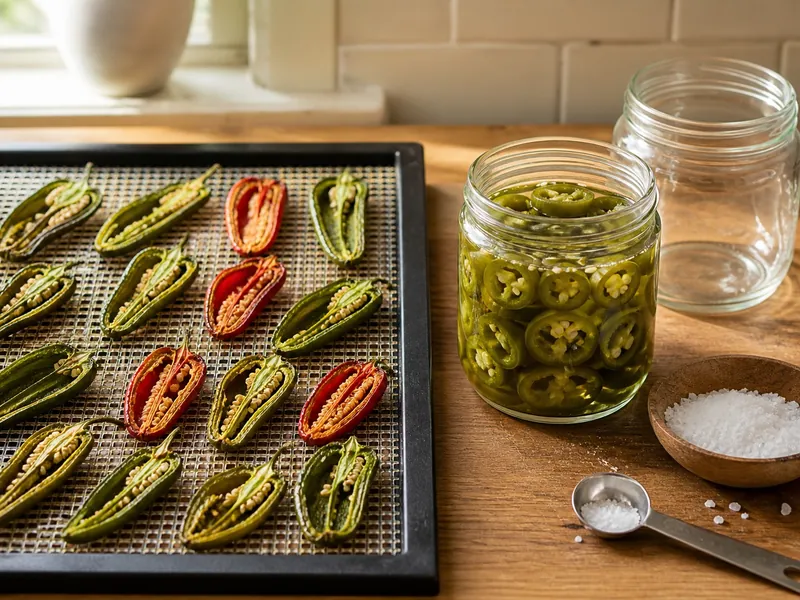
Utah State University Extension directs home preservers to wash chile pods, slice them to the desired size, and arrange the pieces on dehydrator shelves. Slicing is especially useful for thick-walled jalapenos because the open surfaces give moisture a shorter path out.
Dry the pieces until they are hard or brittle according to the tested process you follow. After they cool, store them airtight and grind only the amount you expect to use soon, because whole dried pieces protect aroma better than a large jar of powder.
Pickling solves a different storage problem.
University of Minnesota Extension explains that pickling and acidifying lower food pH to 4.60 or below, while the National Center for Home Food Preservation publishes a tested recipe specifically for pickled jalapeno rings.
A refrigerator pickle remains refrigerated because it has not received a shelf-stable canning process. For pantry jars, follow a research-tested recipe and its elevation-specific processing time rather than inventing a vinegar ratio.
The National Center for Home Food Preservation treats plain peppers and acidified pickled rings as different canning jobs.
Plain peppers are low-acid vegetables that require pressure-canning directions, while its tested pickled-jalapeno recipe uses a specified vinegar mixture and boiling-water process.
That distinction matters when a jar is meant for the pantry. Adding some vinegar to a favorite fresh salsa or jalapeno mix does not turn it into a tested shelf-stable formula.
| Preserved form | Choose it when | Do not expect |
|---|---|---|
| Dried slices or pods | You want flakes, powder, or compact storage | Fresh green texture |
| Refrigerator pickles | You want an acidic topping kept cold | Pantry stability |
| Tested canned pickles | You need shelf-stable sealed jars | Freedom to change acid ratios or processing |
| Frozen jalapenos | You want green flavor in cooked food | Raw crunch after thawing |
What should you do with red jalapenos?
A red jalapeno is a ripe jalapeno, so color alone is not a spoilage sign. Sort it by firmness, wounds, and odor using the same Colorado State selection criteria applied to green pods.
Firm red pods can go into the refrigerator for prompt use, but their ripe flavor also makes them strong candidates for drying or smoking.
If a red pod is already soft but clean, open it and use sound flesh in a cooked dish rather than assigning it a long fresh-storage window.
Keep ripe red pods visible instead of burying them under a large green batch. The practical goal is to use the more mature fruit while it still has good aroma and clean flesh.
Color can also guide the preserved form.
Green pods keep the grassy flavor many cooks want in beans and salsa verde, while ripe red pods can carry a sweeter chile note into smoked, dried, or cooked preparations.
Are wrinkled jalapenos still good?
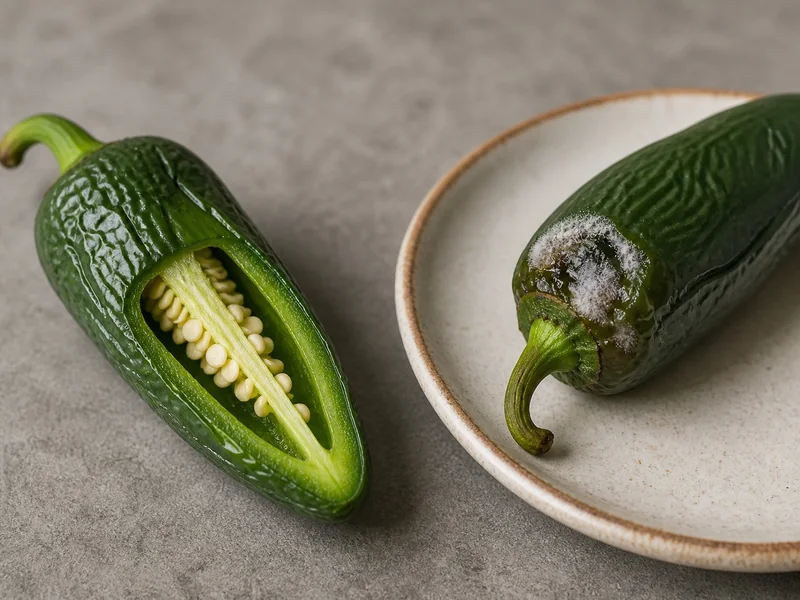
A wrinkled jalapeno has lost water, so its texture is no longer ideal for garnish or stuffing. If it still smells fresh and has no mold, slime, leaks, or discolored internal decay, it can still serve a cooked sauce, soup, or bean dish.
Mold, a sour or fermented odor, slippery skin, and leaking tissue are discard signs. Do not let a storage-time estimate overrule what the pepper shows when you inspect the stem and seed cavity.
| What you see | What it usually means | Decision |
|---|---|---|
| Light wrinkles, clean smell, dry skin | Water loss and declining quality | Inspect inside and use cooked |
| Soft spot around a cut or bruise | Localized damage may be advancing | Open and inspect, then use immediately only if sound |
| White, gray, or fuzzy growth | Mold | Discard the pod |
| Slime, leaks, or sour odor | Active decay | Discard the pod |
How do you handle a large jalapeno batch safely?
Colorado State and the National Center for Home Food Preservation both advise wearing disposable or rubber gloves while cutting hot peppers.
Keep gloved hands away from your face, and wash hands and tools thoroughly when the batch is finished.
Use a stable cutting board and clean it before it touches ready-to-eat food. Capsaicin can remain on fingers and tools even when no green pepper pieces are visible.
Label hotter seed-and-rib portions separately if you freeze them for sauce. That small step prevents a concentrated bag from being mistaken for ordinary mild rings later.
Which storage method fits the dishes you plan to cook?
A small bag intended for salsa belongs whole and dry in the crisper.
A large harvest earns several paths because crisp pods, cooking pieces, ripe red peppers, and damaged-but-sound pods do not have the same best use.
Keep the firmest green jalapenos fresh, tray-freeze measured pieces for cooked meals, dry slices for seasoning, and pickle only the amount your meals will use.
This division preserves a useful quality in each batch instead of forcing every pepper into one container.
Before packing a mixed harvest, name two or three meals that will use it. That step determines whether a useful unit is five whole peppers, a half cup of diced pepper, a tray of rings, or a small jar of pickles.
Leave room on each label for heat notes when fruit came from more than one plant. Jalapenos vary in heat, so separating an unusually hot batch prevents a handful from changing a whole pot unexpectedly.
The final check is simple. Match the storage method to the dish, label every processed batch, and discard decay rather than asking a calendar to make the safety decision.
How to Store Jalapenos for the Dish You Want Later FAQ
- Purdue Extension FoodLink, Hot Pepper Storage
- Colorado State University Extension, Colorado Peppers
- Colorado State University Extension, Freezing Vegetables
- Colorado State University Extension, Roasting Chile Peppers
- Utah State University Extension, How to Preserve Chiles
- National Center for Home Food Preservation, Pickled Jalapeno Rings
- U.S. Food and Drug Administration, Selecting and Serving Produce Safely
- U.S. Food and Drug Administration, Are You Storing Food Safely?
- University of Minnesota Extension, Pickling Produce