Pasilla Pepper vs Poblano Pepper: What's the Difference?
Pasilla and poblano are two of Mexico's most important dried and fresh chiles, respectively — and they're routinely confused with each other in American grocery stores. Both sit at the mild end of the Scoville scale, but they differ in form, flavor, and traditional use. Sorting them out matters if you want authentic results in the kitchen.

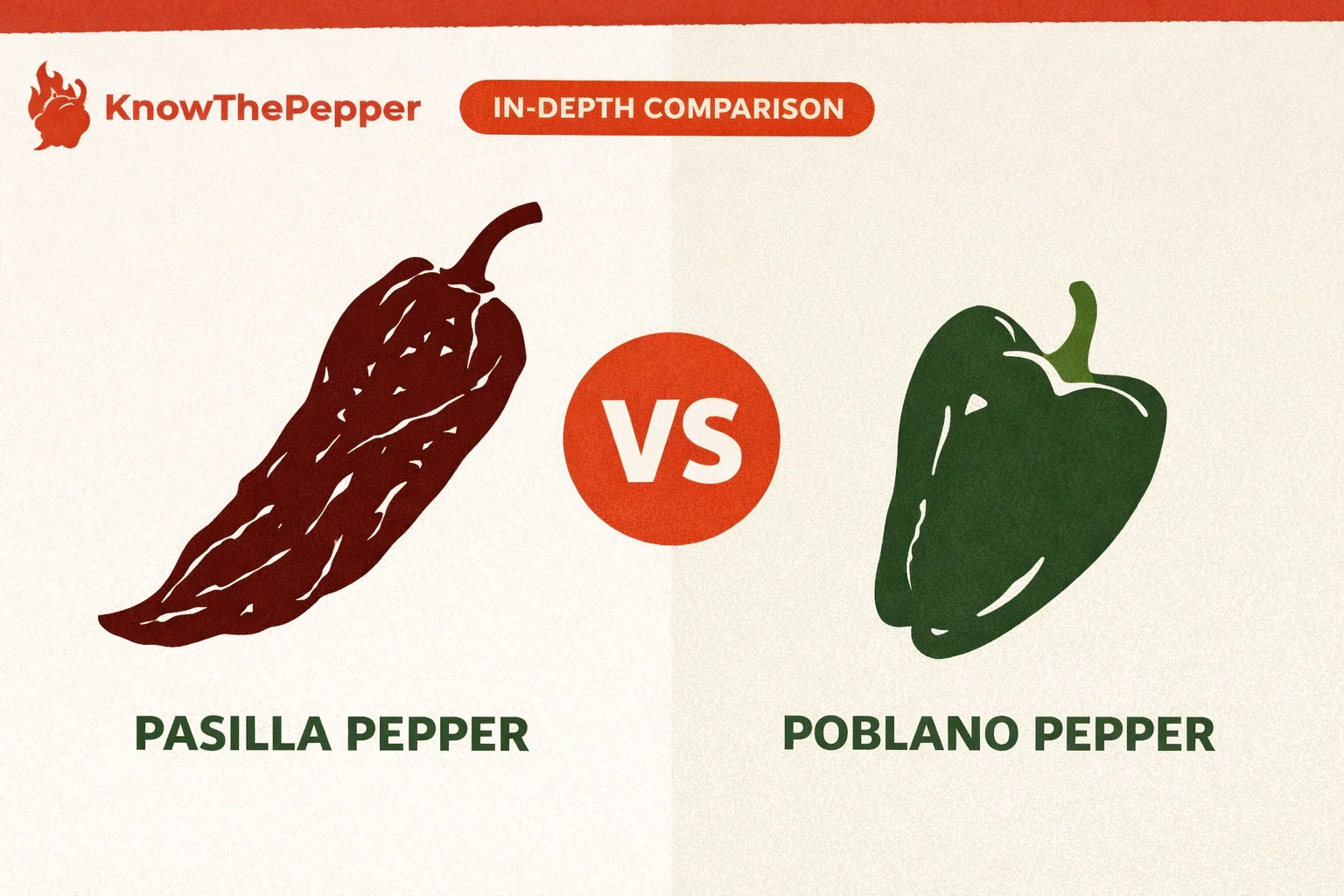
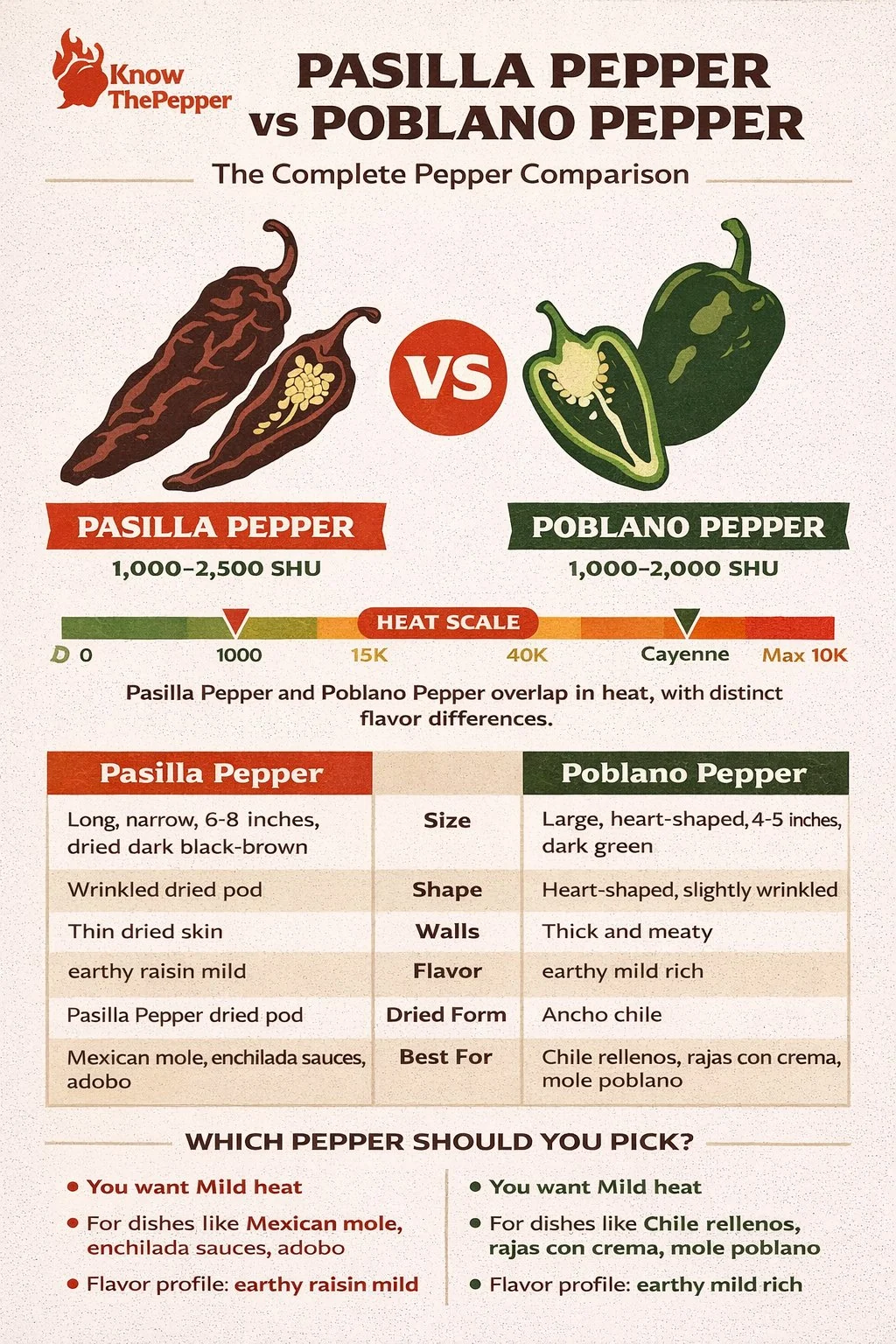
Pasilla Pepper measures 1K–3K SHU while Poblano Pepper registers 1K–2K SHU — roughly equal in heat. Pasilla Pepper is known for its earthy and rich flavor (C. annuum), while Poblano Pepper offers earthy and rich notes (C. annuum).
- Species: Both are C. annuum
- Best for: Pasilla Pepper excels in everyday cooking and salsas, Poblano Pepper in fresh salsas and mild recipes
Pasilla Pepper
MediumPoblano Pepper
MediumPasilla Pepper vs Poblano Pepper Comparison
Pasilla Pepper vs Poblano Pepper Heat Levels
Both peppers land in the 0-2,000 SHU range on the Scoville ranking system, which puts them firmly in mild territory — well below a chipotle's typical 2,500-8,000 SHU. If a chipotle is the benchmark, neither of these peppers comes close to matching it for heat; you'd need to eat several pasillas or poblanos to approximate the warmth of a single smoked jalapeño.
That said, there's a practical difference in how the heat presents. Poblanos occasionally surprise you — individual fruits can spike toward the upper end of their range, delivering a gentle but noticeable warmth at the back of the throat. Pasillas, which are the dried form of the chilaca pepper, tend to be more consistent and slightly earthier in their mild burn.
For the mild heat classification that defines both peppers, neither will challenge anyone with a normal spice tolerance. The heat is background noise — present enough to register, quiet enough to let flavor carry the dish. This is exactly why both are foundational to Mexican mole sauces, where balance matters more than fire.
Compared to the smoky dried heat of chipotle vs. pasilla contrasts, pasilla reads almost gentle. Poblano fresh off the plant sits in the same neighborhood — occasionally punchy, mostly mild, always manageable.
Flavor Profile Comparison
Pasilla sits in the medium heat intensity range — warm enough to notice, gentle enough to let flavor lead.
Pick up a fresh poblano and the first thing you notice is the weight.
The flavor gap between these two peppers is larger than the heat gap, and it's the real reason the confusion between them causes problems.
Poblanos are fresh peppers — thick-walled, dark green (turning red when fully ripe), with a flavor that reads as vegetal and slightly grassy, somewhere between a green bell pepper and something more complex. Roasting transforms them: the skin blisters, the sugars concentrate, and you get a smoky-sweet depth that makes them ideal for chiles rellenos. Raw, they have a clean crunch and mild bitterness.
Pasillas are dried chilacas — long, thin, wrinkled, nearly black when fully dried. The drying process concentrates everything: the flavor becomes richer, darker, more like dried fruit and chocolate with an undercurrent of coffee or tobacco. Some describe notes of raisin or berry. This is a fundamentally different flavor profile from a fresh poblano, and substituting one for the other in a recipe isn't a clean swap.
When poblanos are dried, they become anchos — not pasillas. This is the source of the labeling mess in American supermarkets, where dried anchos are frequently (and incorrectly) sold as pasillas. The chilaca vs. poblano flavor contrast makes the distinction clearest: chilaca fresh, pasilla dried.
For cooking, poblano's fresh vegetal brightness suits stuffed preparations and soups. Pasilla's dried complexity belongs in slow-cooked sauces, moles, and braises where that dark, layered flavor can bloom.
Culinary Uses for Pasilla Pepper and Poblano Pepper
These two peppers rarely compete for the same job in a kitchen — they're built for different applications.
Poblanos shine in preparations where you want a fresh or roasted pepper with substance. The thick walls hold up to stuffing (chiles rellenos is the classic), and they roast beautifully under a broiler or over an open flame. Slice them into rajas — strips cooked with onion and cream — and you have a taco filling or side dish that works on its own. They also work well in soups, corn-based dishes, and anywhere you'd use a large mild pepper. The cubanelle vs. poblano preparation comparison shows how poblano's thicker walls and deeper flavor distinguish it from other mild fresh options.
Pasillas belong in the sauce pot. Toast them briefly in a dry skillet, rehydrate in hot water for 20-30 minutes, then blend into mole negro, enchilada sauce, or braising liquid. They're one of the classic trio in mole negro alongside mulato and ancho. The soaking liquid carries flavor — use it in the sauce rather than discarding it.
For substitution: if a recipe calls for poblano and you only have a large green bell pepper, that works in a pinch with a small amount of mild chile powder added. For pasilla, ancho is the closest dried substitute — similar mild heat, though the flavor profile leans sweeter and less dark. Mulato is another reasonable stand-in for pasilla in mole applications.
Don't try to substitute one for the other across the fresh-to-dried divide. A fresh poblano cannot replicate what a dried pasilla brings to a mole, and rehydrated pasilla won't give you the texture needed for chiles rellenos. Use each where it belongs.
Which Should You Choose?
If you're building a Mexican pantry or cooking authentic regional dishes, you want both — they don't overlap enough to make one redundant.
Choose poblano when the recipe calls for a fresh pepper you can roast, stuff, or slice. It's the better everyday pepper: widely available, easy to work with, and versatile enough for weeknight cooking. Its mild heat and thick walls make it approachable for anyone.
Choose pasilla when you're building a complex sauce or mole and need that dried, dark-fruit depth. It's a background player that elevates everything around it. If you spot whole dried pasillas at a Latin market, buy them — they keep for months and transform slow-cooked dishes in ways that fresh peppers simply cannot.
The mislabeling issue is real. Before buying what's sold as 'pasilla' in a mainstream grocery store, check the shape: a true dried pasilla is long and narrow (from the chilaca), while an ancho (dried poblano) is wide and heart-shaped. Knowing the difference saves a trip back to the store.
Can You Substitute One for the Other?
Yes — direct substitution works. Pasilla Pepper and Poblano Pepper are close enough in heat to swap at roughly 1:1. The main difference will be flavor. For more swap options, explore ranked alternatives with conversion ratios.
Growing Pasilla Pepper vs Poblano Pepper
If you’re deciding which pepper to grow at home, consider your climate and patience level. Pasilla Pepper and Poblano Pepper have different maturation times and temperature preferences. Hotter varieties generally need a longer, warmer growing season to develop their full capsaicin content. Our zone-based planting date tool can pinpoint the best sowing window for your area.
Pasilla plants are tall growers, often reaching 24–36 inches with good support. Start seeds indoors 8–10 weeks before last frost — the long growing season (roughly 80–85 days to maturity) means early starts matter.
Transplant after soil temperatures stabilize above 60°F. Space plants 18–24 inches apart — they branch outward as they mature, and crowding invites fungal issues on the dense foliage.
Water consistently but avoid waterlogged soil. These plants are somewhat drought-tolerant once established, but irregular watering during pod development causes blossom drop and misshapen fruit.
Poblanos are rewarding garden plants, but they need a long season. Start seeds indoors 10-12 weeks before your last frost date — this is one case where rushing transplant time costs you yield.
For a full breakdown of seed-starting methods and timing, the complete pepper growing guide covers everything from soil mix to hardening off. Poblanos specifically want consistent moisture — irregular watering leads to blossom end rot and cracked fruit.
Transplant into full sun once nighttime temps stay above 55°F. Space plants 18-24 inches apart; they can reach 3 feet tall with good conditions.
History & Origin of Pasilla Pepper and Poblano Pepper
Both peppers carry centuries of culinary heritage. Pasilla Pepper traces its roots to Mexico, while Poblano Pepper originates from Mexico. Understanding their backstory helps explain why each pepper developed its distinctive traits.
Buying & Storage
Whether you’re shopping for Pasilla Pepper or Poblano Pepper, the same quality indicators apply. Fresh peppers should feel firm and heavy for their size, with taut, glossy skin and no soft or wet spots. Minor stem cracks known as “corking” are perfectly normal and often indicate a mature, flavorful pod.
- Firm pods with taut skin and consistent color
- Should feel heavy relative to size
- Minor stem cracks (“corking”) are normal
- Avoid anything soft, shriveled, or with dark wet spots
- Fresh: Paper bag, crisper drawer — 1–2 weeks
- Frozen: Wash, dry, freeze on sheet pan — 6+ months
- Dried: Airtight, away from light — up to 1 year
The Verdict: Pasilla Pepper vs Poblano Pepper
Pasilla Pepper and Poblano Pepper sit in the same heat tier but serve different roles. Pasilla Pepper delivers its distinctive earthy and rich character. Poblano Pepper, with its earthy and rich profile, excels in everyday cooking.
Frequently Asked Questions
Related Comparisons
Sources pending verification.