Madame Jeanette vs Scotch Bonnet – Heat & Flavor Compared
Madame Jeanette and Scotch Bonnet are two of the most celebrated C. chinense peppers in the world, sharing an identical 100,000-350,000 SHU heat range and a similarly fruity, tropical flavor profile. Despite those similarities, their origins — Suriname versus the Caribbean islands — shaped distinct culinary identities. Choosing between them is less about heat tolerance and more about which regional tradition you're cooking within.

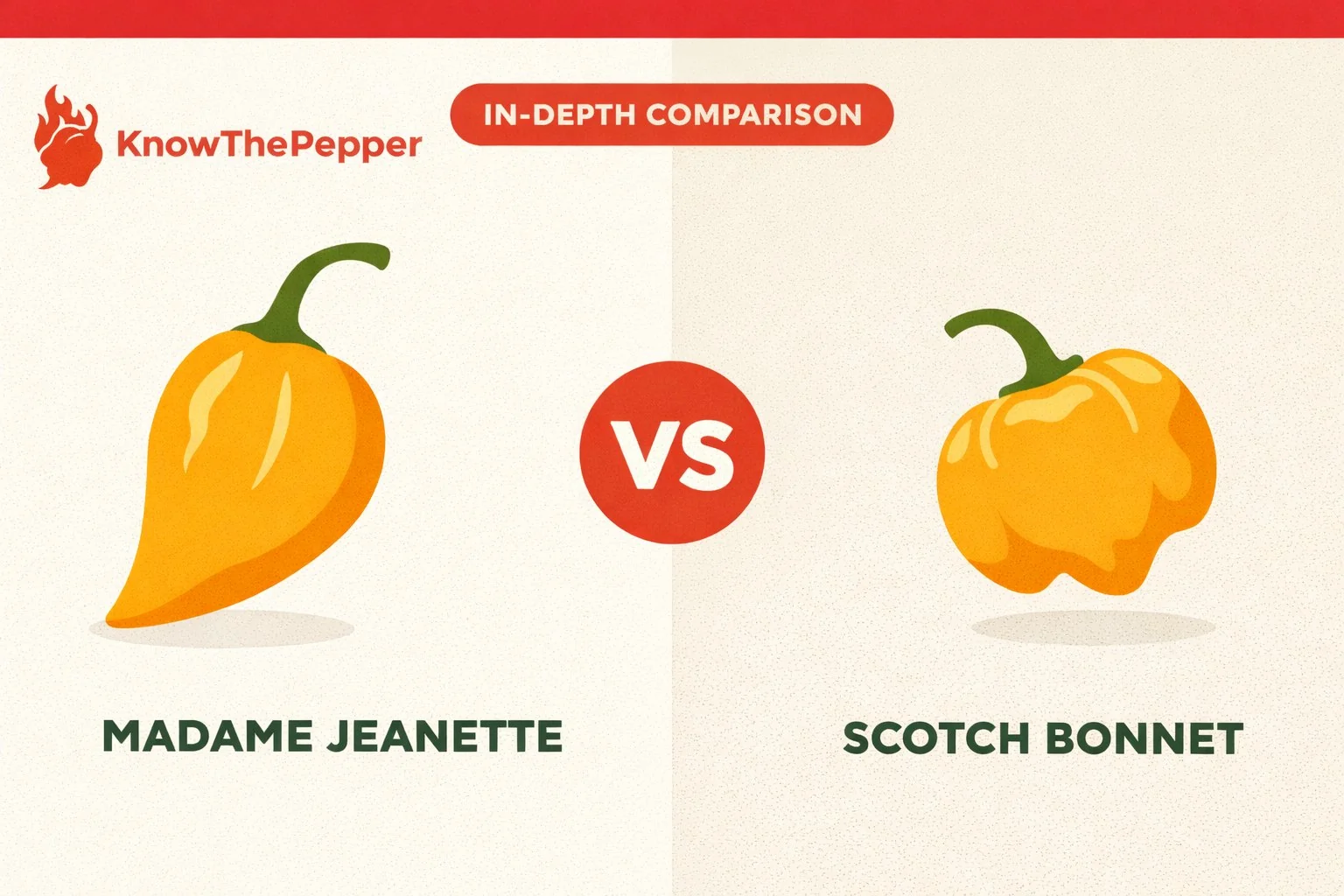
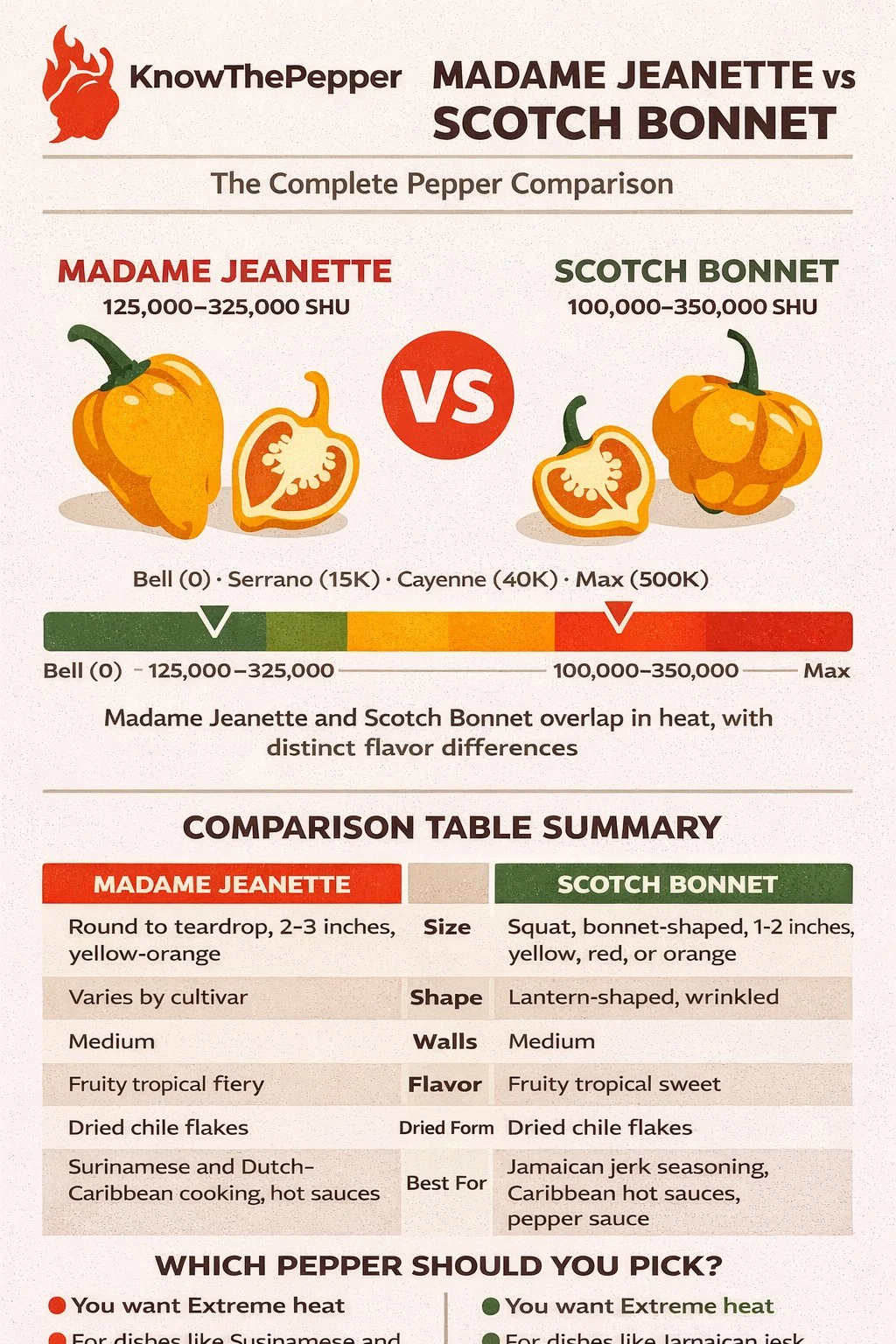
Madame Jeanette measures 100K–350K SHU while Scotch Bonnet registers 100K–350K SHU — roughly equal in heat. Madame Jeanette is known for its fruity and tropical flavor (C. chinense), while Scotch Bonnet offers fruity and tropical notes (C. chinense).
- Species: Both are C. chinense
- Best for: Madame Jeanette excels in hot sauces and extreme dishes, Scotch Bonnet in hot sauces and spicy dishes
Madame Jeanette
Extra-HotScotch Bonnet
Extra-HotMadame Jeanette vs Scotch Bonnet Comparison
Madame Jeanette vs Scotch Bonnet Heat Levels
Both peppers occupy the same extra-hot upper range on the Scoville scale, sitting at 100,000-350,000 SHU. To put that in perspective using a more meaningful comparison than jalapeño: a dried guajillo's gentle 2,500-5,000 SHU warmth makes the Madame Jeanette roughly 30 to 70 times hotter at its respective ends — and the Scotch Bonnet lands in exactly the same territory.
The Scoville unit definition and where these peppers land on the full spectrum helps clarify something important: within a range this wide, individual fruit variation matters enormously. A Madame Jeanette grown in dry conditions can hit the upper end of 350,000 SHU, while a well-watered Scotch Bonnet from the same garden might clock in closer to 100,000 SHU. Soil, climate, and ripeness all shift the needle.
Both belong to Capsicum chinense, which means the biological heat trigger behind the burn — capsaicin binding to TRPV1 receptors — works identically in both. What differs is the experience of heat. Madame Jeanette tends to deliver a slower, building burn that lingers in the back of the throat. Scotch Bonnet hits faster and spreads more evenly across the palate. Neither is hotter on paper, but they feel different in practice — and that distinction matters when you're building a dish around one of them.
Flavor Profile Comparison
The Madame Jeanette gets mistaken for a habanero constantly, and the confusion is understandable — same species, overlapping heat range, similar color in some phenotypes.
The first time I tasted a Scotch Bonnet raw — sliced thin, no gloves, rookie mistake — the sweetness hit before anything else.
Strip away the heat and both peppers reveal a lush, tropical sweetness that sets C. chinense apart from every other species. But the two diverge in meaningful ways once you pay attention.
Madame Jeanette carries a distinctly floral quality alongside its fruitiness — think ripe mango and passion fruit with a faint perfumed note that lingers even after cooking. It's a pepper that smells almost as interesting as it tastes. Surinamese cooks prize it specifically for that aroma, which survives in sauces and braises in a way that few other peppers can match.
Scotch Bonnet leans more toward citrus and stone fruit — apricot, peach, a hint of tomato sweetness — with less of the floral top note. It's rounder and perhaps more immediately approachable in flavor terms. Caribbean cuisine built jerk seasoning, pepper sauces, and escovitch around this profile because it integrates so naturally with allspice, thyme, and citrus marinades.
Aroma is worth calling out separately: raw Madame Jeanette has an almost perfumed intensity that some find startling the first time. Scotch Bonnet smells fruity and bright but more restrained. Both lose some volatile aromatics during prolonged cooking, which is why both are often added late in recipes or used fresh in sauces.
For the broader fruity Caribbean heat profile these two represent, neither is strictly superior — they're regional expressions of the same botanical template.
Culinary Uses for Madame Jeanette and Scotch Bonnet
These two peppers rarely appear in the same kitchen by accident. They each anchor specific regional cooking traditions, and understanding those traditions tells you exactly when to reach for one versus the other.
Scotch Bonnet is the backbone of Caribbean cooking. Jerk marinades, Trinidadian pepper sauce, Jamaican rice dishes, Bajan hot sauce — all of these rely on Scotch Bonnet's fruity heat and ability to meld with allspice, ginger, and citrus. The habanero vs. Scotch Bonnet flavor matchup shows how closely related these two are, which is why habanero is the standard substitute when Scotch Bonnet is unavailable. Use a 1:1 ratio if swapping between the two peppers in any recipe.
Madame Jeanette dominates Surinamese and Dutch-Caribbean cooking. It appears in pom (a cassava-based baked dish), moksi alesi (mixed rice), and Surinamese pepper sauces. It's also popular in the Netherlands, where Surinamese diaspora cooking has made it a supermarket staple. The floral notes make it particularly good in raw preparations — sliced thin over rice dishes or blended into fresh sambals where the aroma hasn't been cooked off.
For substitution: if a recipe calls for Madame Jeanette and you only have Scotch Bonnet, use the same quantity and expect a slightly less floral, more citrus-forward result. The heat will be identical. Going the other direction works just as well.
Both peppers shine in fermented hot sauces, where the fruity complexity deepens over time. A step-by-step approach to fermenting Caribbean peppers can help you get consistent results from your harvest. For fresh applications, remove seeds to dial back heat without sacrificing flavor — both peppers carry most of their capsaicin in the placental tissue, not the flesh itself.
The ghost pepper vs. Scotch Bonnet heat gap is worth knowing if you're scaling heat in a recipe that already uses Scotch Bonnet — ghost pepper sits significantly higher and isn't a safe swap.
Which Should You Choose?
If you're cooking Caribbean food — jerk, pepper sauce, escovitch — Scotch Bonnet is the right tool. Its citrusy, rounded heat integrates naturally with the spice blends those cuisines rely on, and it's easier to source in North American and European grocery stores.
If you're drawn to Surinamese cooking, or you simply want a pepper with more floral complexity in raw and lightly cooked applications, Madame Jeanette earns its place. The aroma alone sets it apart, and for fresh salsas or uncooked sambals, that perfumed quality is genuinely irreplaceable.
For pure heat-chasing, the Scotch Bonnet vs. habanero breakdown reveals that Scotch Bonnet edges habanero slightly in SHU ceiling — useful context if you're building a pepper lineup by intensity. Both Madame Jeanette and Scotch Bonnet belong to the C. chinense botanical family, which explains their shared fruity character and similar heat behavior.
The honest answer: grow or buy both. They fill the same heat slot but taste like different places.
Can You Substitute One for the Other?
Yes — direct substitution works. Madame Jeanette and Scotch Bonnet are close enough in heat to swap at roughly 1:1. The main difference will be flavor. For more swap options, explore ranked alternatives with conversion ratios.
Growing Madame Jeanette vs Scotch Bonnet
If you’re deciding which pepper to grow at home, consider your climate and patience level. Madame Jeanette and Scotch Bonnet have different maturation times and temperature preferences. Hotter varieties generally need a longer, warmer growing season to develop their full capsaicin content. Our zone-based planting date tool can pinpoint the best sowing window for your area.
Growing Madame Jeanette follows the same general approach as other C. chinense varieties, with a few things worth knowing upfront.
Start seeds indoors 10–12 weeks before your last frost. Germination is slow — expect 14–21 days at soil temperatures of 80–85°F.
For a detailed walkthrough on starting chinense peppers indoors step-by-step, the process is well-documented. The Madame Jeanette is not a beginner variety — it rewards patience and consistent warmth.
Scotch Bonnets need warmth from the start. Germination requires 80–85°F soil temperature; anything cooler and seeds stall for weeks.
These plants run long — expect 90–120 days from transplant to ripe fruit. They're not beginner peppers in terms of patience, but they're forgiving once established.
Soil should drain well. *C.
History & Origin of Madame Jeanette and Scotch Bonnet
Both peppers carry centuries of culinary heritage. Madame Jeanette traces its roots to Suriname, while Scotch Bonnet originates from Caribbean. Understanding their backstory helps explain why each pepper developed its distinctive traits.
Buying & Storage
Whether you’re shopping for Madame Jeanette or Scotch Bonnet, the same quality indicators apply. Fresh peppers should feel firm and heavy for their size, with taut, glossy skin and no soft or wet spots. Minor stem cracks known as “corking” are perfectly normal and often indicate a mature, flavorful pod.
- Firm pods with taut skin and consistent color
- Should feel heavy relative to size
- Minor stem cracks (“corking”) are normal
- Avoid anything soft, shriveled, or with dark wet spots
- Fresh: Paper bag, crisper drawer — 1–2 weeks
- Frozen: Wash, dry, freeze on sheet pan — 6+ months
- Dried: Airtight, away from light — up to 1 year
The Verdict: Madame Jeanette vs Scotch Bonnet
Madame Jeanette and Scotch Bonnet sit in the same heat tier but serve different roles. Madame Jeanette delivers its distinctive fruity and tropical character. Scotch Bonnet, with its fruity and tropical profile, excels in everyday cooking.
Frequently Asked Questions
Related Comparisons
Sources pending verification.