Kashmiri Chili vs Paprika Pepper: Key Differences Explained
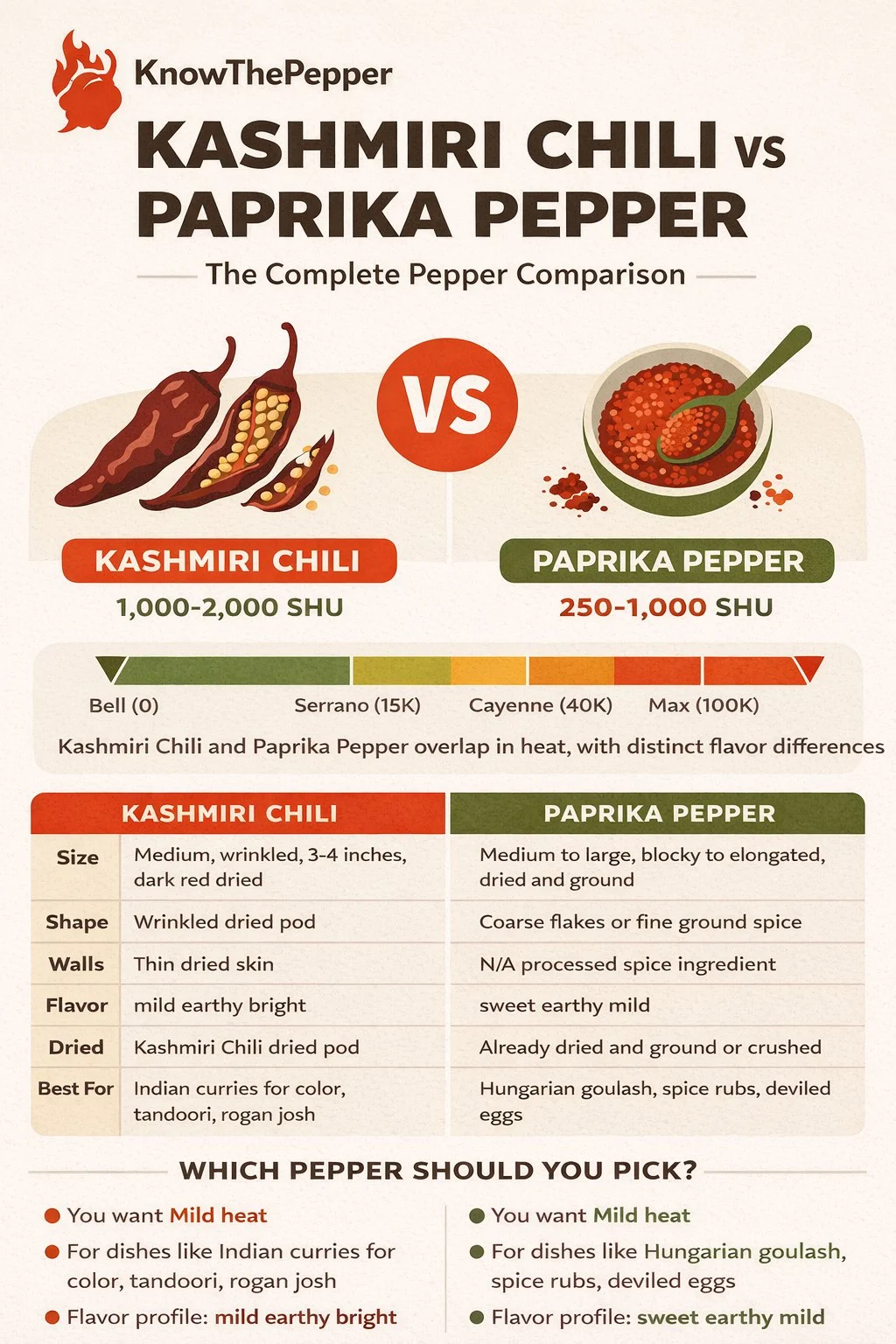
Kashmiri chili and paprika occupy a similar mild-heat territory, but they arrive there from very different directions. Kashmiri sits at 1,000-2,000 SHU with a distinctive deep-red pigmentation prized across Indian cooking, while paprika ranges from virtually zero heat to a gentle warmth depending on variety and processing. The two share enough overlap to substitute for one another in some contexts, but their flavor profiles and colorant intensity diverge significantly.

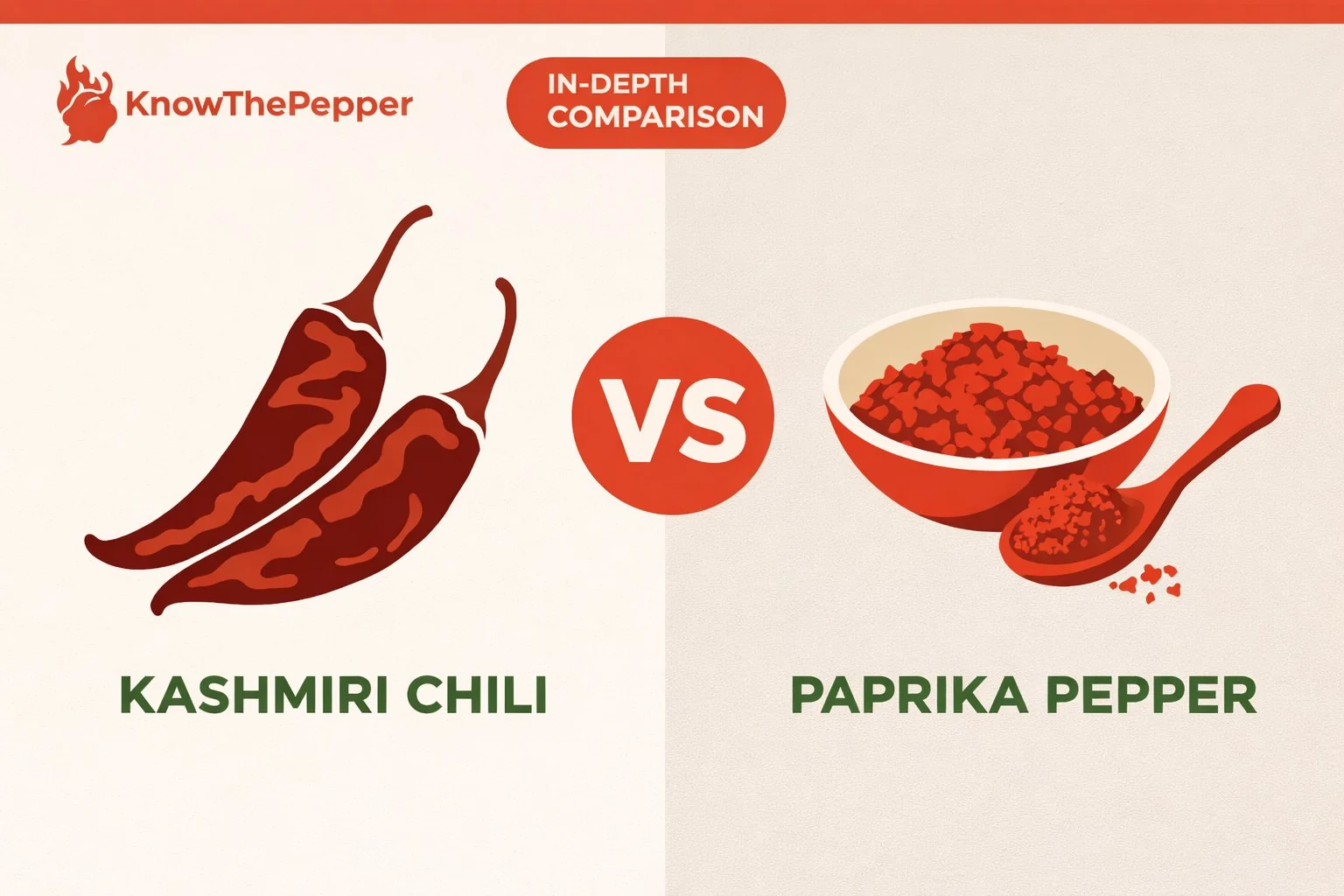
Kashmiri Chili measures 1K–2K SHU while Paprika Pepper registers 0–1K SHU — making Kashmiri Chili 2× hotter. Kashmiri Chili is known for its mild and sweet flavor (C. annuum), while Paprika Pepper offers sweet and mild notes (C. annuum).
- Heat difference: Kashmiri Chili is 2× hotter
- Species: Both are C. annuum
- Best for: Kashmiri Chili excels in everyday cooking and salsas, Paprika Pepper in fresh salsas and mild recipes
Kashmiri Chili
MediumPaprika Pepper
MediumKashmiri Chili vs Paprika Pepper Comparison
Kashmiri Chili vs Paprika Pepper Heat Levels
On the Scoville rating scale, Kashmiri chili registers 1,000-2,000 SHU — comfortably within the mild-pepper SHU bracket. Paprika, depending on type (sweet, smoked, hot), typically falls between 0-500 SHU for most commercial varieties, with Hungarian hot paprika occasionally reaching 1,000 SHU at its upper limit.
To put Kashmiri's heat in perspective: a serrano pepper averages around 10,000-23,000 SHU, making Kashmiri chili roughly 8 to 15 times milder than a serrano. Paprika sits even further back — a serrano can be 20 to 50 times hotter than a typical sweet paprika.
The burn character of Kashmiri is gentle and front-of-mouth, fading quickly without the lingering throat heat you get from hotter C. annuum varieties. Paprika's heat, when present at all, is barely perceptible — more of a background warmth than an actual bite. Neither pepper will challenge heat-tolerant cooks, but Kashmiri does deliver a noticeable tingle that paprika rarely matches.
For dishes where you want color without significant heat, paprika wins outright. When you want that same color plus a mild, clean chili warmth, Kashmiri is the better call. Both belong firmly in the mild end of the spectrum — they're built for flavor, not fire.
Flavor Profile Comparison
Color is the whole point with Kashmiri chili.
Paprika peppers sit at the mildest end of the pepper spectrum, delivering sweetness with almost no perceptible heat - a stark contrast to even the gentlest Fresno, which runs roughly 2,500 to 10,000 SHU by comparison.
Kashmiri chili's flavor is where it earns its reputation. The dried pods carry a mildly sweet, slightly tangy character with earthy undertones and almost no bitterness. The aroma when ground is distinctly fruity-smoky — closer to a dried berry than a raw pepper. This is why it anchors so many Indian spice blends: it adds complexity, not just heat.
Paprika's flavor varies dramatically by processing method. Sweet paprika (the Hungarian and Spanish standard) tastes mildly fruity and almost candy-like, with very little savory depth. Smoked paprika (pimentón) introduces a wood-smoke character that can dominate a dish. Hot paprika edges toward a sharper, more pungent note. None of these taste quite like Kashmiri — the Indian pepper has a richer, more complex dried-chili backbone.
Aroma is another point of divergence. Kashmiri ground chili smells like dried fruit and warm spice. Sweet paprika smells mild and slightly sweet; smoked paprika smells like a campfire. When you open a jar of each side by side, they're clearly different spices despite overlapping heat ranges.
In cooking, Kashmiri chili deepens a sauce's flavor while simultaneously painting it red. Paprika tends to sit more on the surface — contributing color and a mild sweetness without the same depth. For slow-cooked curries, stews, or marinades, that distinction matters considerably.
Culinary Uses for Kashmiri Chili and Paprika Pepper
Kashmiri chili is foundational to North Indian cooking. It's the spice responsible for the vivid red color in dishes like rogan josh, butter chicken, and tandoori preparations — and crucially, it achieves that color without making the dish aggressively spicy. Whole dried Kashmiri chilis go into tempering oil at the start of cooking; ground Kashmiri chili powder gets stirred into marinades, spice pastes, and curries.
Paprika dominates European and Middle Eastern kitchens. Hungarian goulash, Spanish chorizo, Turkish kebabs, and Moroccan tagines all rely on it. Smoked paprika has become a staple in American barbecue rubs and roasted vegetable seasoning. The sweet, color-forward paprika profile suits anything where you want warm red color and gentle sweetness without any chili bite.
Substitution guidance: Kashmiri chili and sweet paprika can sub for each other in a pinch, but expect flavor differences. Use 1 teaspoon Kashmiri in place of 1.5 teaspoons sweet paprika to approximate the color and add slightly more heat depth. Going the other direction, replace 1 teaspoon Kashmiri chili with 1 teaspoon sweet paprika plus a small pinch of cayenne to replicate the mild warmth.
For color-critical applications like tandoori chicken or rogan josh, paprika alone won't replicate Kashmiri's specific red-orange hue — the pigment compounds differ. Conversely, Kashmiri won't deliver smoked paprika's wood-smoke character, so they aren't interchangeable in Spanish or Portuguese dishes.
Both peppers work well in spice rubs, compound butters, and slow braises. The dried pepper characteristics found in Dundicut vs. Kashmiri comparisons highlight how regional Indian peppers each bring distinct color and flavor signatures — Kashmiri being the mildest and most color-saturated of the group.
For everyday home cooking, keeping both in the pantry makes more sense than trying to force one to do the other's job.
Which Should You Choose?
If your priority is authentic Indian color and mild chili flavor, Kashmiri is the clear choice. Nothing replicates its specific deep-red pigment and gentle fruity heat in the context of Indian cooking. It's also worth exploring the broader Indian pepper traditions to understand why Kashmiri became so central to subcontinental cuisine.
If you're cooking European or Mediterranean dishes — goulash, paprikash, chorizo, roasted peppers — paprika is the right tool. The cayenne-vs-paprika heat difference illustrates how paprika's near-zero heat was deliberately bred for color-forward cooking rather than spice.
For heat-sensitive cooks who want color without fire, paprika is the safer bet. For anyone wanting a step up — just a gentle tingle alongside that red color — Kashmiri delivers without overwhelming.
Both belong to the C. annuum botanical group and the mild end of the pepper heat spectrum, making them genuinely interchangeable in casual applications. But in their home cuisines, each is irreplaceable.
Can You Substitute One for the Other?
Yes — direct substitution works. Kashmiri Chili and Paprika Pepper are close enough in heat to swap at roughly 1:1. The main difference will be flavor. For more swap options, explore ranked alternatives with conversion ratios.
Growing Kashmiri Chili vs Paprika Pepper
If you’re deciding which pepper to grow at home, consider your climate and patience level. Kashmiri Chili and Paprika Pepper have different maturation times and temperature preferences. Hotter varieties generally need a longer, warmer growing season to develop their full capsaicin content. Our zone-based planting date tool can pinpoint the best sowing window for your area.
Kashmiri chili is a warm-season annual that performs best in USDA zones 9–11 outdoors, though it grows well as a container plant in cooler climates when brought inside before frost. Start seeds indoors 8–10 weeks before last frost, maintaining soil temperature around 75–85°F for germination.
The plants are relatively compact — typically 18–24 inches tall — and moderately productive. They prefer well-drained, slightly acidic soil with consistent moisture.
For those comparing cultivation approaches, the Aji Panca's similarly low-heat growing profile offers a useful parallel — both reward patience over intensity manipulation.
Paprika peppers are among the more rewarding varieties to grow - productive, relatively disease-resistant, and visually striking when the plants load up with red fruit in late summer.
Start seeds indoors 8-10 weeks before your last frost date. Germination is reliable at 75-85°F soil temperature; a heat mat helps considerably.
Plants reach 24-36 inches tall and benefit from caging or staking once fruit sets - the heavy load of thick-walled peppers can tip unsupported plants. Space them 18-24 inches apart for good airflow, which reduces fungal pressure.
History & Origin of Kashmiri Chili and Paprika Pepper
Both peppers carry centuries of culinary heritage. Kashmiri Chili traces its roots to India, while Paprika Pepper originates from Hungary. Understanding their backstory helps explain why each pepper developed its distinctive traits.
Buying & Storage
Whether you’re shopping for Kashmiri Chili or Paprika Pepper, the same quality indicators apply. Fresh peppers should feel firm and heavy for their size, with taut, glossy skin and no soft or wet spots. Minor stem cracks known as “corking” are perfectly normal and often indicate a mature, flavorful pod.
- Firm pods with taut skin and consistent color
- Should feel heavy relative to size
- Minor stem cracks (“corking”) are normal
- Avoid anything soft, shriveled, or with dark wet spots
- Fresh: Paper bag, crisper drawer — 1–2 weeks
- Frozen: Wash, dry, freeze on sheet pan — 6+ months
- Dried: Airtight, away from light — up to 1 year
The Verdict: Kashmiri Chili vs Paprika Pepper
Kashmiri Chili and Paprika Pepper sit in the same heat tier but serve different roles. Kashmiri Chili delivers 2× more heat with its distinctive mild and sweet character. Paprika Pepper, with its sweet and mild profile, excels in everyday cooking.
Frequently Asked Questions
Related Comparisons
Sources pending verification.