Hungarian Wax vs Jalapeño: Side-by-Side Pepper Comparison
The Hungarian Wax and the jalapeño sit on opposite ends of the mild-to-medium spectrum, but they overlap in size, shape, and kitchen versatility more than most people expect. Hungarian Wax peppers range from nearly sweet to moderately hot depending on the individual fruit, while jalapeños clock in at a consistent 2,500-8,000 SHU. Knowing which to reach for depends on what you want from heat, flavor, and color.

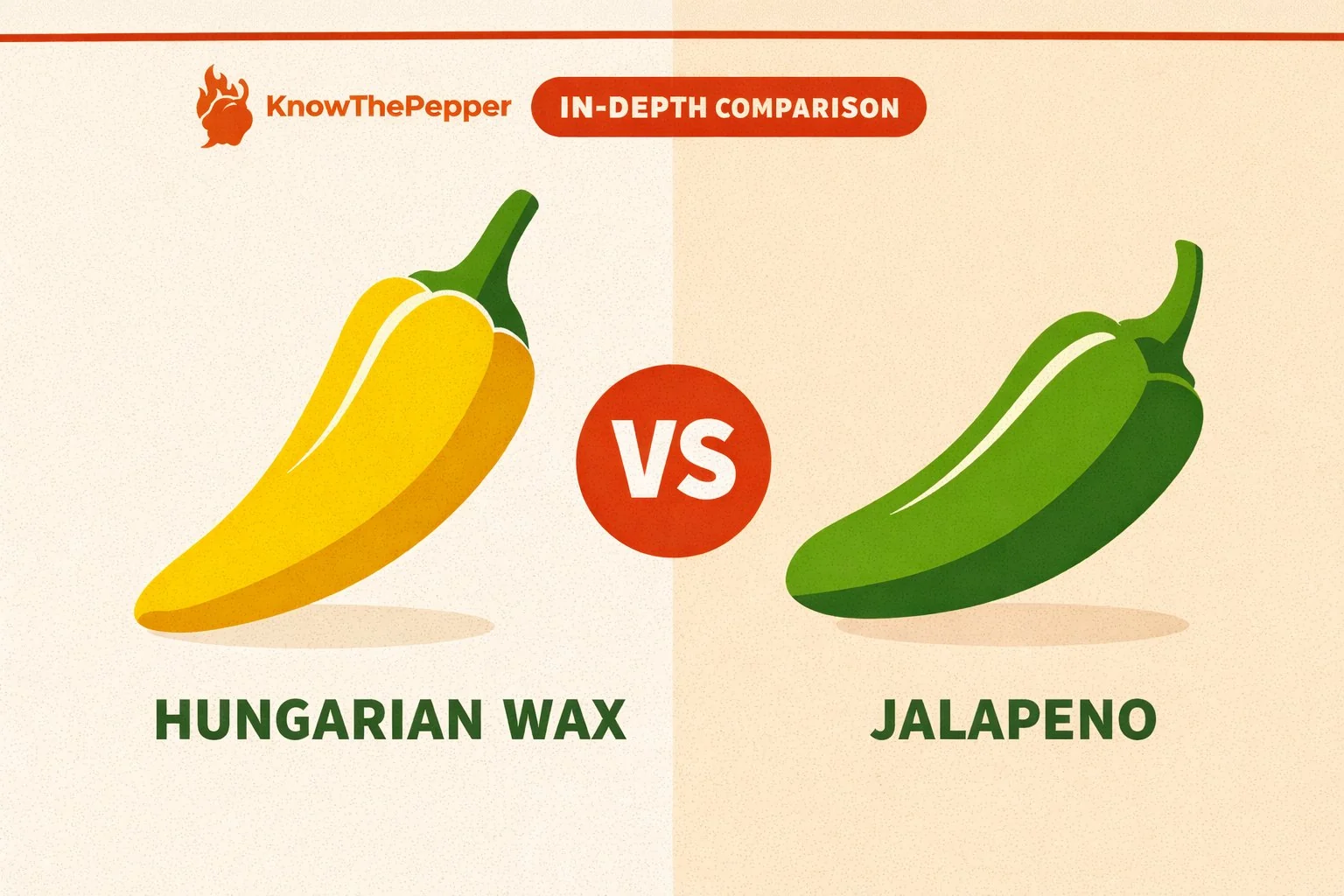
Hungarian Wax measures 5K–15K SHU while Jalapeño registers 3K–8K SHU — making Hungarian Wax 2× hotter. Hungarian Wax is known for its tangy and bright flavor (C. annuum), while Jalapeño offers bright and grassy notes (C. annuum).
- Heat difference: Hungarian Wax is 2× hotter
- Species: Both are C. annuum
- Best for: Hungarian Wax excels in everyday cooking and salsas, Jalapeño in fresh salsas and mild recipes
Hungarian Wax vs Jalapeño Comparison
Hungarian Wax vs Jalapeño Heat Levels
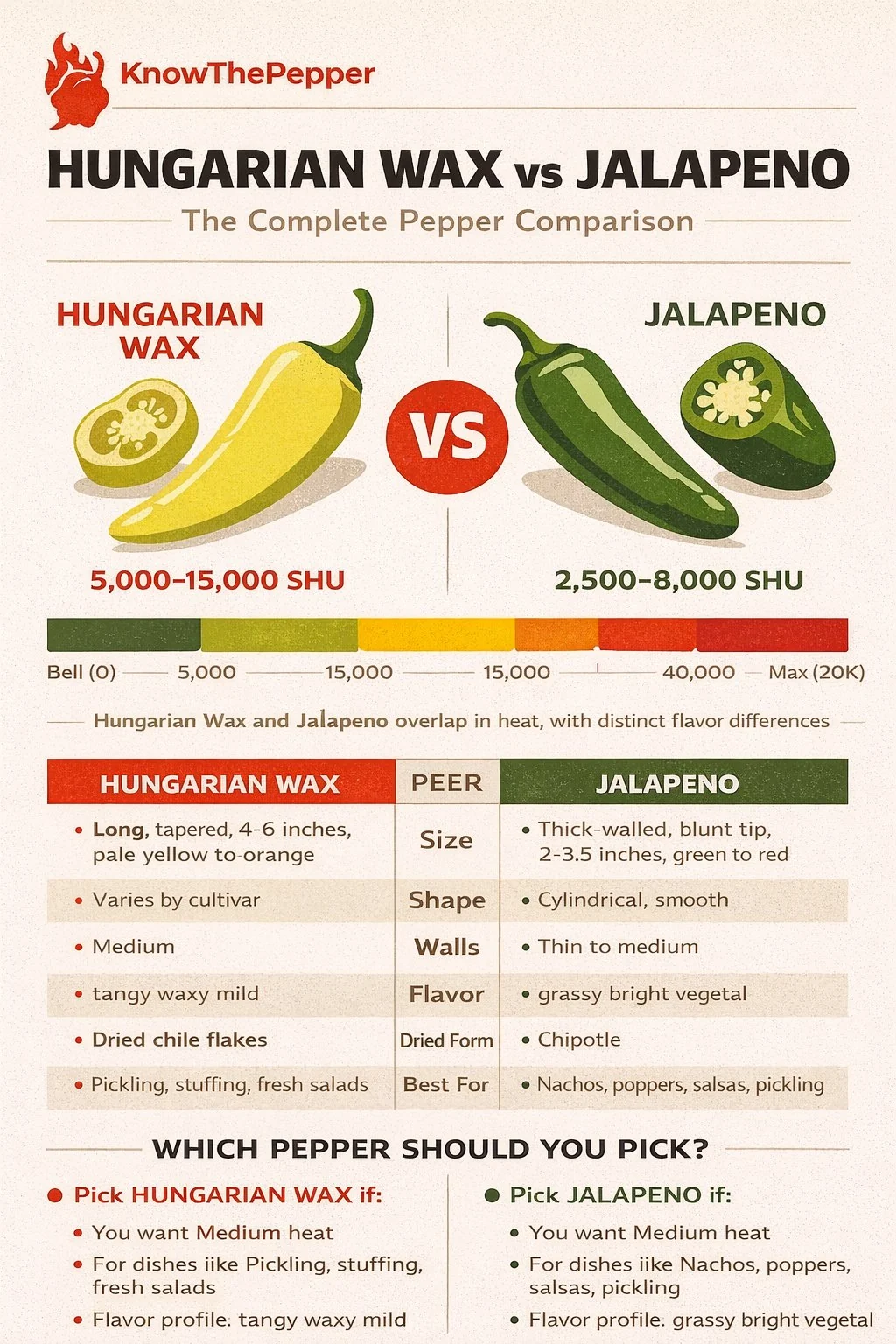
The jalapeño lands at 2,500-8,000 SHU on the Scoville heat index, putting it squarely in the medium heat bracket alongside serranos and Fresnos. Hungarian Wax peppers are harder to pin down — they range from nearly 0 SHU at the sweet end to around 15,000 SHU in hotter specimens, which means a single harvest can yield fruits that span the full range from bell-pepper mild to noticeably hotter than any jalapeño you'd find at the grocery store.
The practical implication: a jalapeño delivers a predictable burn. You know roughly what you're getting. Hungarian Wax is a gamble — bite into one and it might be sweet, or it might make your eyes water. That variability comes from growing conditions, fruit maturity, and natural genetic variation within the variety.
Compared to a serrano, which typically runs 10,000-23,000 SHU, even the hottest Hungarian Wax specimens stay well below serrano territory. A jalapeño is roughly 1.5-3x milder than a serrano; most Hungarian Wax fruits fall in that same general zone, though the sweet types don't register at all.
For cooks who need consistency, the jalapeño wins on predictability alone. For those who enjoy a bit of mystery — or need a pepper that can pull double duty as both a sweet and a hot variety depending on harvest timing — Hungarian Wax has a clear edge.
Flavor Profile Comparison
Pull a Hungarian Wax from the plant when it's still pale yellow and you get something tangy, crisp, and moderately hot.
Few peppers have earned their reputation as thoroughly as the jalapeño.
Jalapeños carry a distinctive bright, grassy flavor with a slight vegetal sharpness that cuts through rich dishes. That flavor is part of why they're so widely used — it's assertive enough to register but not so dominant that it overwhelms other ingredients. Raw jalapeños have a clean, almost herbal bite; roasted or smoked (as chipotle's deep smoky character vs. fresh jalapeño heat illustrates), they develop a completely different, earthier personality.
Hungarian Wax peppers taste more like a banana pepper or mild yellow wax pepper — waxy, slightly tangy, with a subtle sweetness that the jalapeño simply doesn't have. The flavor is less sharp and more rounded. When they do carry heat, it arrives more gradually than a jalapeño's quicker bite.
Color tells part of the story. Hungarian Wax peppers start pale yellow and ripen through orange to red, with flavor and heat both intensifying as they mature. Jalapeños go from green to red, with red fruits carrying more sweetness and slightly less of that grassy sharpness.
Aroma-wise, jalapeños have that recognizable fresh-pepper smell that's almost synonymous with salsa and nachos. Hungarian Wax has a more neutral, waxy scent — less immediately identifiable, which makes it more adaptable in dishes where you don't want a strong pepper aroma dominating.
For pickling, the tangy wax pepper flavor holds up exceptionally well, which is why Hungarian Wax shows up in so many deli-style pepper rings. Jalapeños pickled in brine are great, but the flavor profile is more polarizing.
Culinary Uses for Hungarian Wax and Jalapeño
Jalapeños are one of the most versatile peppers in the C. annuum botanical family, working equally well raw, roasted, pickled, smoked, or stuffed. Their consistent heat makes them reliable in salsas, guacamole, nachos, and poppers. The classic jalapeño popper format — halved, cream cheese-stuffed, wrapped in bacon — works because the pepper's structure holds up to heat and its flavor complements dairy.
Hungarian Wax peppers shine in applications where you want pepper flavor and color without committing to a specific heat level. They're excellent for pickling (the waxy skin holds its texture in brine), stuffing with cheese or meat, and adding to antipasto platters. In Hungarian and Eastern European cooking, they appear in stews, roasted alongside meats, and layered into pickled vegetable mixes.
For substitution: in recipes calling for jalapeños, Hungarian Wax can work at a 1:1 ratio if you want milder heat or are using fully ripened red fruits for more depth. Go 1:1.5 (more Hungarian Wax) if the recipe relies on jalapeño's heat contribution and you're using younger, milder wax peppers.
The fresh vs. smoky heat contrast of Fresno peppers compared to jalapeños highlights how much processing method matters — the same logic applies here. Hungarian Wax peppers roasted until charred develop a sweetness that raw jalapeños can't replicate.
For nachos and tacos, stick with jalapeños. For stuffed pepper dishes, pickled pepper rings, or any recipe from Mexican pepper traditions that calls for a mild-to-medium yellow pepper, Hungarian Wax is an underrated option. Both peppers freeze well — roast first, then freeze in portions for year-round use.
Which Should You Choose?
Choose jalapeños when you need reliable, consistent heat and that familiar grassy brightness — they're the default for a reason. Salsas, hot sauces, stuffed appetizers, and anything where you want a pepper flavor that reads as definitively 'hot' to most palates.
Choose Hungarian Wax when you want flexibility. The cherry bomb vs. jalapeño heat-and-sweetness gap is a useful reference point — Hungarian Wax sits in similar territory, offering sweet-to-moderate heat depending on ripeness. They're better for pickling, for dishes where color matters (that yellow-to-red spectrum is visually striking), and for cooks who want to dial heat up or down by choosing fruit maturity.
If you grow your own peppers, Hungarian Wax is worth planting alongside jalapeños rather than instead of them. The two cover different use cases well enough that having both on hand is more useful than picking one. If you can only buy one at the store, jalapeños win on versatility and predictability.
Can You Substitute One for the Other?
Yes — direct substitution works. Hungarian Wax and Jalapeño are close enough in heat to swap at roughly 1:1. The main difference will be flavor. For more swap options, explore ranked alternatives with conversion ratios.
Growing Hungarian Wax vs Jalapeño
If you’re deciding which pepper to grow at home, consider your climate and patience level. Hungarian Wax and Jalapeño have different maturation times and temperature preferences. Hotter varieties generally need a longer, warmer growing season to develop their full capsaicin content. Our zone-based planting date tool can pinpoint the best sowing window for your area.
Hungarian Wax is a reliable producer that suits most North American growing climates. Start seeds indoors 8–10 weeks before last frost — the plants need a long season to hit full production.
Transplanting outdoors after soil temperatures reach 60°F gives roots the warmth they need to establish quickly. Follow solid pepper plant spacing guidelines — about 18 inches between plants keeps air circulation adequate and reduces fungal pressure on those thick waxy pods.
The plants reach 18–24 inches tall and can carry a heavy pod load. Some growers skip pruning entirely, but selectively pruning pepper plants during the season redirects energy to fruit development and can improve pod size in shorter growing seasons.
Jalapeños are among the most forgiving hot peppers to grow, but they do have preferences worth knowing.
Start seeds indoors 8–10 weeks before your last frost date. Soil temperature for germination should stay between 75–85°F — a heat mat under the seed tray makes a real difference in germination speed and uniformity.
Transplant outdoors once nighttime temps stay consistently above 55°F. Jalapeños want full sun — at least 6 hours daily — and well-drained soil with a pH around **6.
History & Origin of Hungarian Wax and Jalapeño
Both peppers carry centuries of culinary heritage. Hungarian Wax traces its roots to Hungary, while Jalapeño originates from Mexico. Understanding their backstory helps explain why each pepper developed its distinctive traits.
Buying & Storage
Whether you’re shopping for Hungarian Wax or Jalapeño, the same quality indicators apply. Fresh peppers should feel firm and heavy for their size, with taut, glossy skin and no soft or wet spots. Minor stem cracks known as “corking” are perfectly normal and often indicate a mature, flavorful pod.
- Firm pods with taut skin and consistent color
- Should feel heavy relative to size
- Minor stem cracks (“corking”) are normal
- Avoid anything soft, shriveled, or with dark wet spots
- Fresh: Paper bag, crisper drawer — 1–2 weeks
- Frozen: Wash, dry, freeze on sheet pan — 6+ months
- Dried: Airtight, away from light — up to 1 year
The Verdict: Hungarian Wax vs Jalapeño
Hungarian Wax and Jalapeño occupy very different positions on the heat spectrum. Hungarian Wax delivers 2× more heat with its distinctive tangy and bright character. Jalapeño, with its bright and grassy profile, excels in everyday cooking.
Frequently Asked Questions
Related Comparisons
Sources pending verification.