Hatch Chile vs New Mexico Chile: Key Differences Explained
Here is one of the most genuinely confusing questions in the pepper world: Hatch Chile and New Mexico Chile share identical SHU ranges (1,000-8,000), the same species (Capsicum annuum), and nearly identical flavor profiles. The difference is almost entirely geographic and cultural — not botanical. Understanding that distinction matters more than any heat chart.

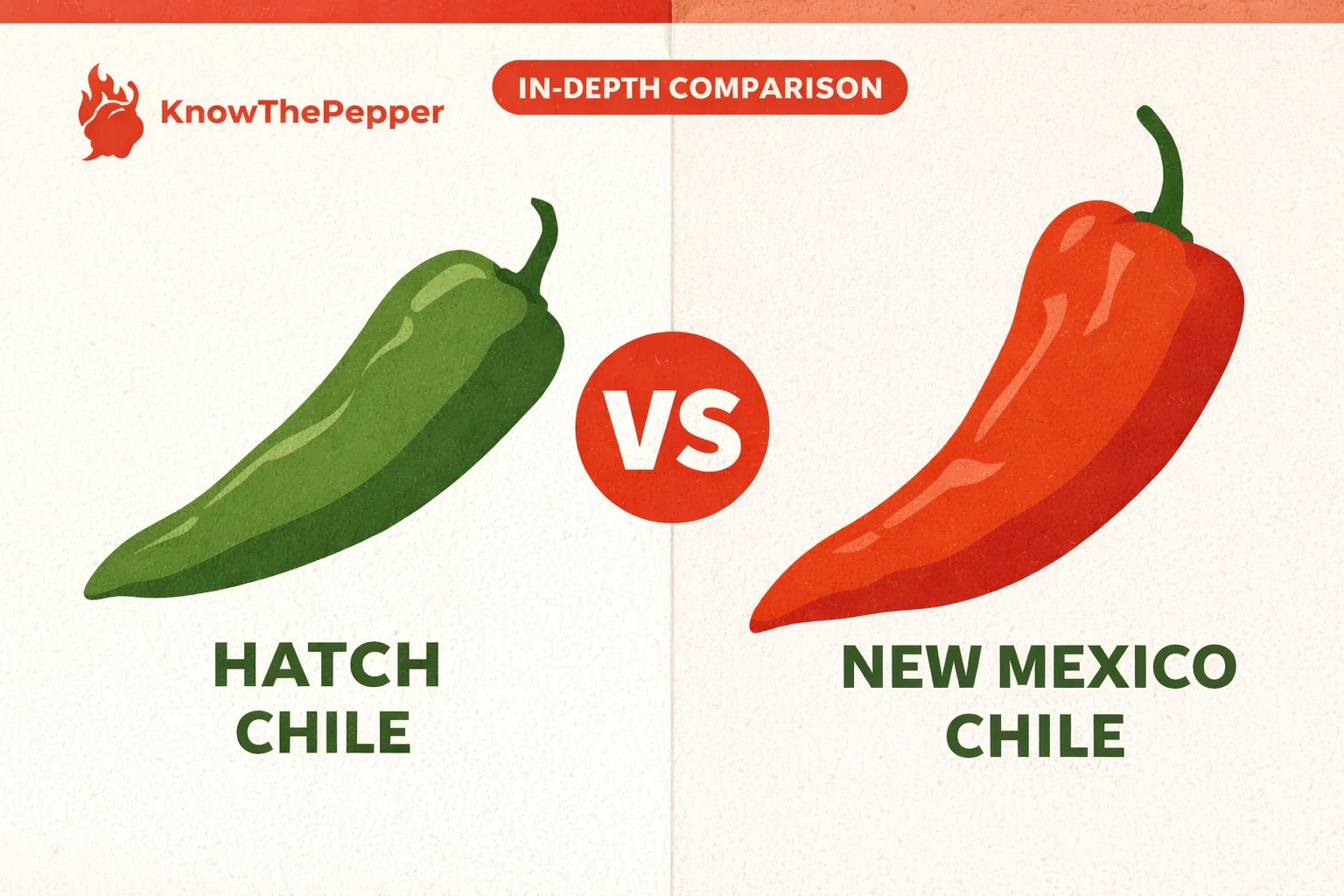
Hatch Chile measures 1K–8K SHU while New Mexico Chile registers 1K–8K SHU — roughly equal in heat. Hatch Chile is known for its earthy and sweet flavor (C. annuum), while New Mexico Chile offers earthy and sweet notes (C. annuum).
- Species: Both are C. annuum
- Best for: Hatch Chile excels in everyday cooking and salsas, New Mexico Chile in fresh salsas and mild recipes
Hatch Chile vs New Mexico Chile Comparison
Hatch Chile vs New Mexico Chile Heat Levels
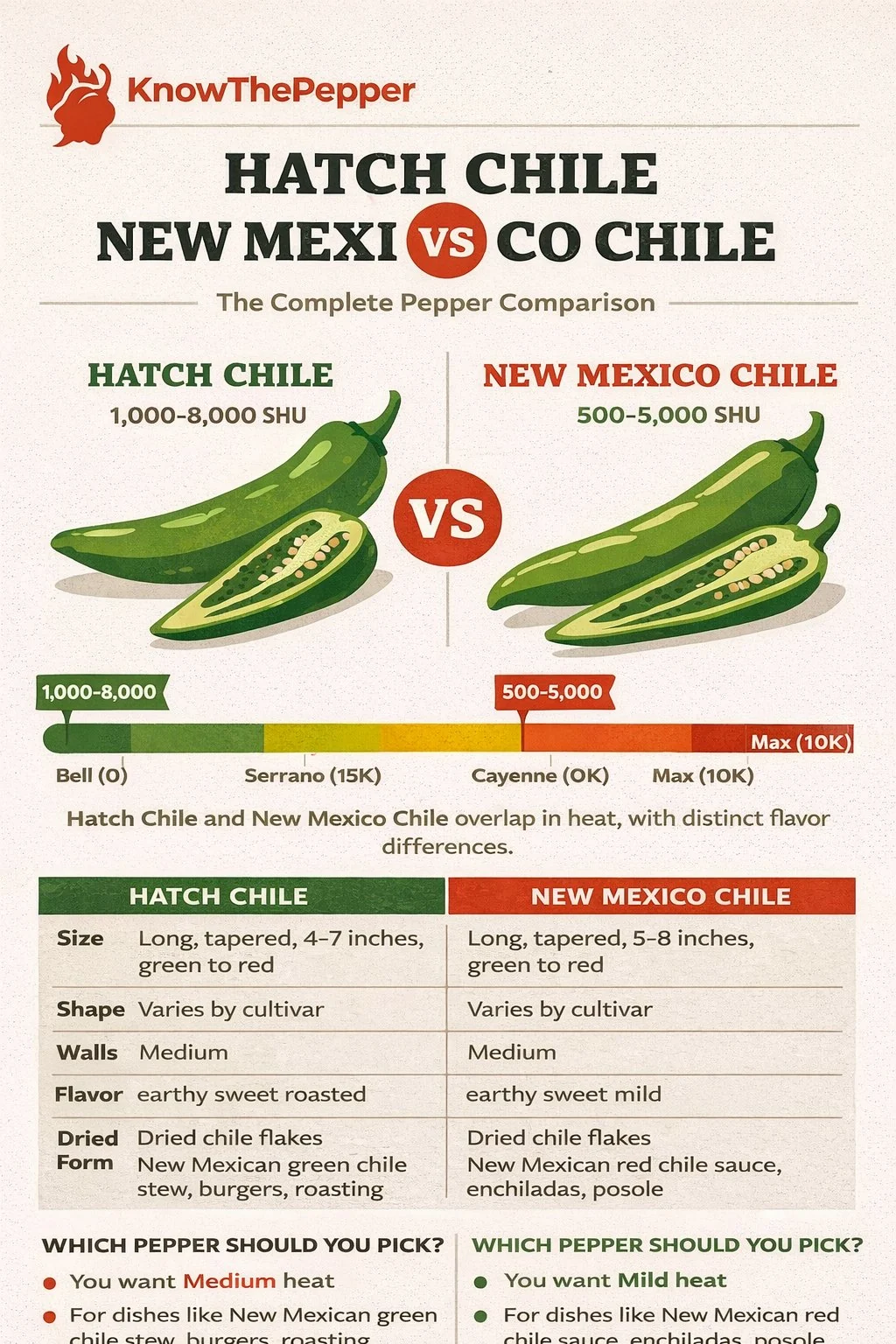
Both peppers sit in the 1,000-8,000 SHU range, which places them firmly in the medium heat classification — hotter than a bell pepper but well below the jalapeño's typical 2,500-8,000 SHU ceiling. At their mildest, both clock in around 1,000 SHU, roughly one-third the heat of an average jalapeño. At their peak, an 8,000 SHU specimen matches the hottest jalapeños you'd pull from a grocery bin.
The critical thing to understand: there is no heat difference between these two peppers in any measurable, consistent sense. A New Mexico Chile grown in Hatch, New Mexico becomes a Hatch Chile by location alone — the SHU range does not change. What does change heat within either category is the specific variety (NuMex Big Jim, Heritage 6-4, Sandia) and growing conditions like soil mineral content, irrigation timing, and temperature stress during pod development.
For practical cooking purposes, treat them as interchangeable on the Scoville heat ranking index. Neither requires the capsaicin-neutralizing dairy buffer you'd need after biting into a habanero. The burn is clean, front-of-mouth, and fades relatively quickly — characteristic of C. annuum varieties across the American pepper origins tradition.
Flavor Profile Comparison
Few peppers carry the geographic identity that the Hatch Chile does.
Here's something that trips up even experienced cooks: the New Mexico chile and the Anaheim pepper share common ancestry, but they've diverged significantly through decades of selective breeding.
The flavor profile description for both is earthy and sweet — and that overlap is not a simplification. These peppers share genetic lineage, regional soil chemistry, and centuries of cultivation history in the same high-desert corridor of the American Southwest. The famous Hatch flavor — that roasted, slightly smoky sweetness with a mineral backbone — is the New Mexico Chile flavor. They are the same thing grown in the same place.
Where genuine flavor variation exists, it comes from variety selection and roasting method, not from some botanical distinction between "Hatch" and "New Mexico." The Heritage 6-4 variety leans more vegetal and grassy when fresh. NuMex Big Jim develops deeper sweetness at full red ripeness. Sandia runs hotter with a sharper, more pungent edge.
Fresh green pods from either category taste bright, grassy, and mildly sweet. Roasted, they shift dramatically — the skin chars, the sugars caramelize, and that signature earthy depth emerges. Dried red New Mexico Chiles take on a brick-like, raisin-adjacent sweetness that differs substantially from the fresh green version. For a comparison that shows actual flavor divergence, the Hatch Chile versus poblano heat and flavor gap is far more instructive than any Hatch-vs-New-Mexico breakdown.
Culinary Uses for Hatch Chile and New Mexico Chile
The honest culinary advice here: buy whichever you can find, because the recipes treat them identically. Both work beautifully in green chile stew (the New Mexico staple), enchilada sauce, chile verde, roasted chile omelets, and green chile cheeseburgers.
For roasting, place whole pods directly over a gas flame or under a broiler until the skin blisters and blackens on all sides — usually 4-6 minutes per side under a broiler at 500°F. Steam them in a sealed bag for 10 minutes afterward, then peel. The flesh underneath will be silky, smoky, and ready for any application.
Dried red New Mexico Chiles (the same pod left to ripen and dehydrate) serve a different culinary purpose entirely. Rehydrated in hot water for 20-30 minutes, they form the base of traditional red chile sauce — earthy, brick-red, and mildly sweet. This is the sauce that goes on Christmas-style plates in New Mexico restaurants (ordering "Christmas" means you want both red and green).
Substitution is straightforward. Anaheim peppers work as a mild stand-in when neither is available, though the Anaheim versus New Mexico Chile flavor comparison shows the Anaheim runs slightly milder and less complex. Guajillo dried chiles can approximate the red chile sauce application — the guajillo versus New Mexico Chile head-to-head breaks down exactly where they diverge in depth and heat.
For fresh substitution, use a 1:1 ratio in any recipe. For dried red pods, guajillos substitute at 1:1 with a slight fruity shift in the sauce.
Which Should You Choose?
If you are standing in a grocery store trying to decide between a bag labeled "Hatch Chile" and one labeled "New Mexico Chile," the decision is essentially marketing. Buy whichever is fresher or more affordable.
The real distinctions worth caring about: fresh green versus dried red (dramatically different applications), and variety selection (Big Jim for size and mild sweetness, Sandia for more heat, Heritage 6-4 for traditional flavor). Those choices matter. The label does not.
Hatch Chiles carry a premium price and cultural cachet tied to their specific valley origin — if you are making a dish where provenance matters to you or your guests, that premium may be worth it. For everyday cooking, a New Mexico Chile grown anywhere in the state delivers the same earthy Southwest medium heat that defines this pepper category.
For anyone curious about the C. annuum botanical classification that both share, or how cultivation affects heat development, the growing context matters more than the name on the bag.
Can You Substitute One for the Other?
Yes — direct substitution works. Hatch Chile and New Mexico Chile are close enough in heat to swap at roughly 1:1. The main difference will be flavor. For more swap options, explore ranked alternatives with conversion ratios.
Growing Hatch Chile vs New Mexico Chile
If you’re deciding which pepper to grow at home, consider your climate and patience level. Hatch Chile and New Mexico Chile have different maturation times and temperature preferences. Hotter varieties generally need a longer, warmer growing season to develop their full capsaicin content. Our zone-based planting date tool can pinpoint the best sowing window for your area.
Growing Hatch chiles outside New Mexico is possible, but manage expectations - the valley's specific terroir is genuinely difficult to replicate. That said, the cultivars themselves grow well across USDA zones 5-10 with proper care.
Start seeds indoors 8-10 weeks before last frost. Hatch varieties need soil temperatures above 65°F to germinate reliably - bottom heat helps significantly.
These plants prefer well-drained, slightly alkaline soil with pH around **6.5-7.
New Mexico chile thrives in hot, dry conditions — it was bred for the Southwest's climate. That said, it performs well across [*C.
Start seeds indoors 8–10 weeks before last frost. Germination is reliable at 80–85°F soil temperature.
Spacing matters: 18–24 inches between plants. These grow 2–3 feet tall with decent lateral spread, and heavy pod sets benefit from cage support.
History & Origin of Hatch Chile and New Mexico Chile
Both peppers carry centuries of culinary heritage. Hatch Chile traces its roots to USA, while New Mexico Chile originates from USA. Understanding their backstory helps explain why each pepper developed its distinctive traits.
Buying & Storage
Whether you’re shopping for Hatch Chile or New Mexico Chile, the same quality indicators apply. Fresh peppers should feel firm and heavy for their size, with taut, glossy skin and no soft or wet spots. Minor stem cracks known as “corking” are perfectly normal and often indicate a mature, flavorful pod.
- Firm pods with taut skin and consistent color
- Should feel heavy relative to size
- Minor stem cracks (“corking”) are normal
- Avoid anything soft, shriveled, or with dark wet spots
- Fresh: Paper bag, crisper drawer — 1–2 weeks
- Frozen: Wash, dry, freeze on sheet pan — 6+ months
- Dried: Airtight, away from light — up to 1 year
The Verdict: Hatch Chile vs New Mexico Chile
Hatch Chile and New Mexico Chile sit in the same heat tier but serve different roles. Hatch Chile delivers its distinctive earthy and sweet character. New Mexico Chile, with its earthy and sweet profile, excels in everyday cooking.
Frequently Asked Questions
Related Comparisons
Sources pending verification.